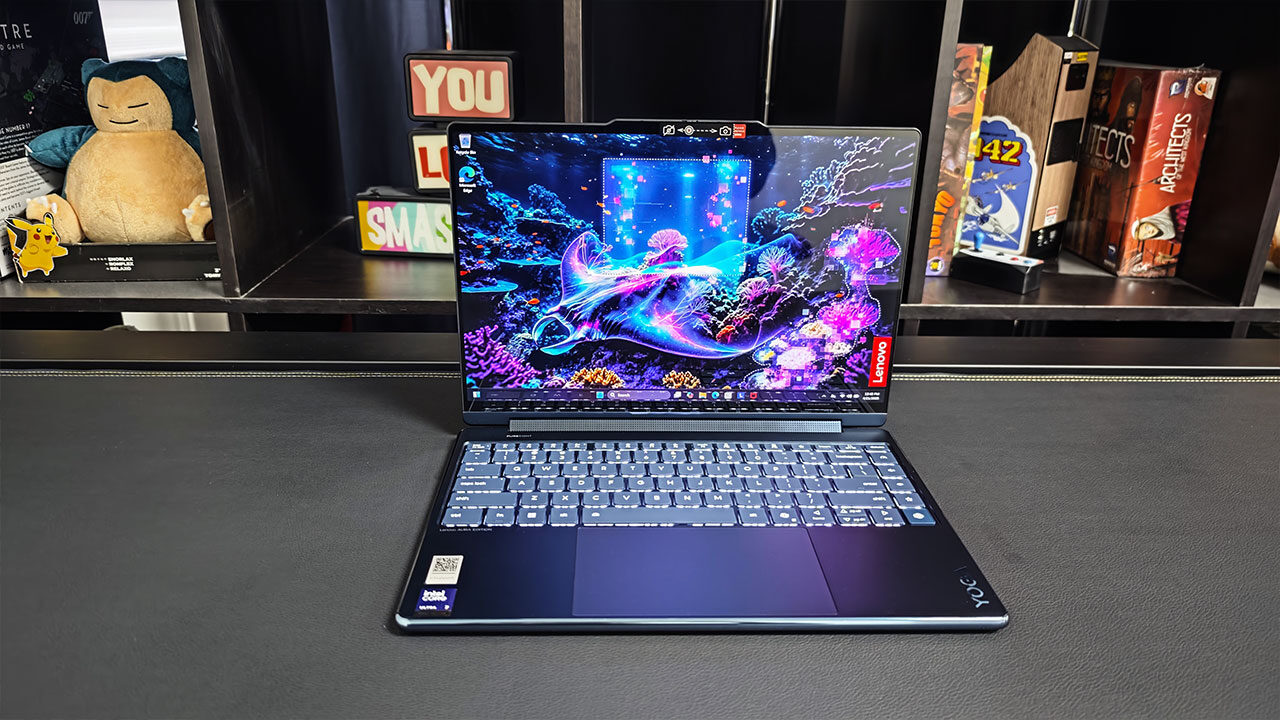
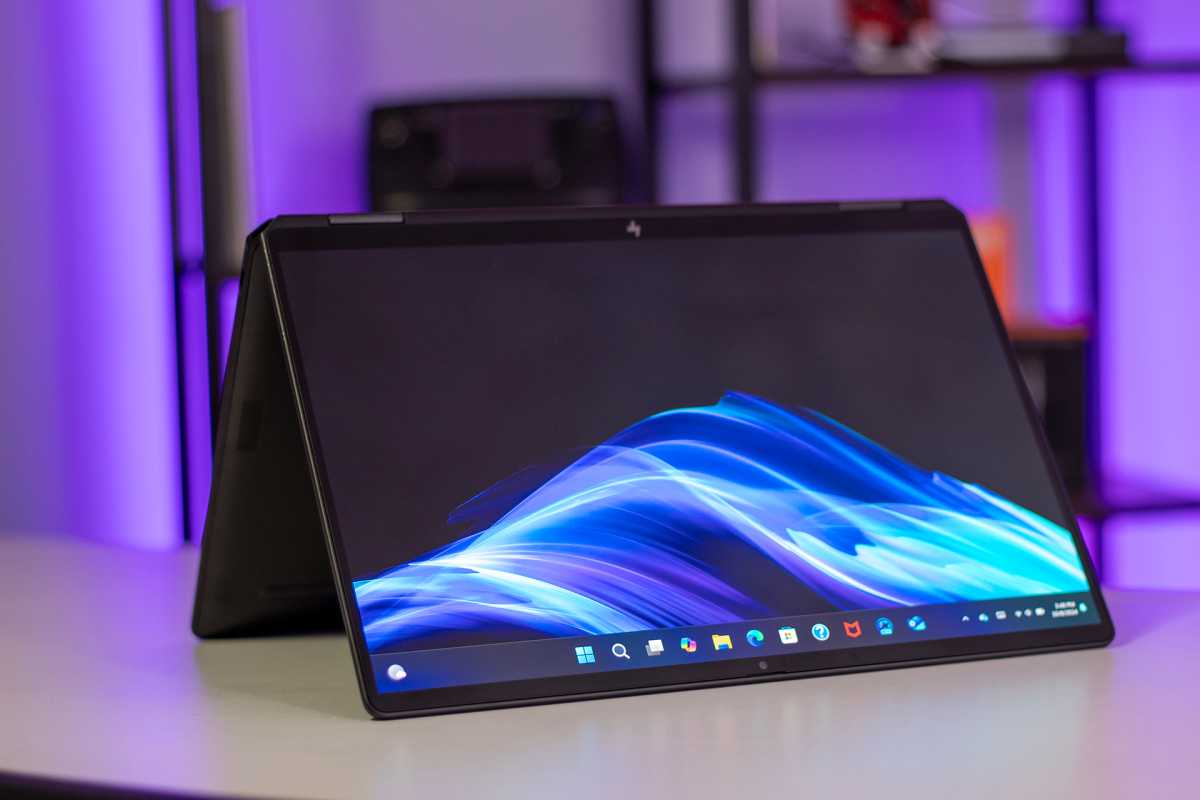
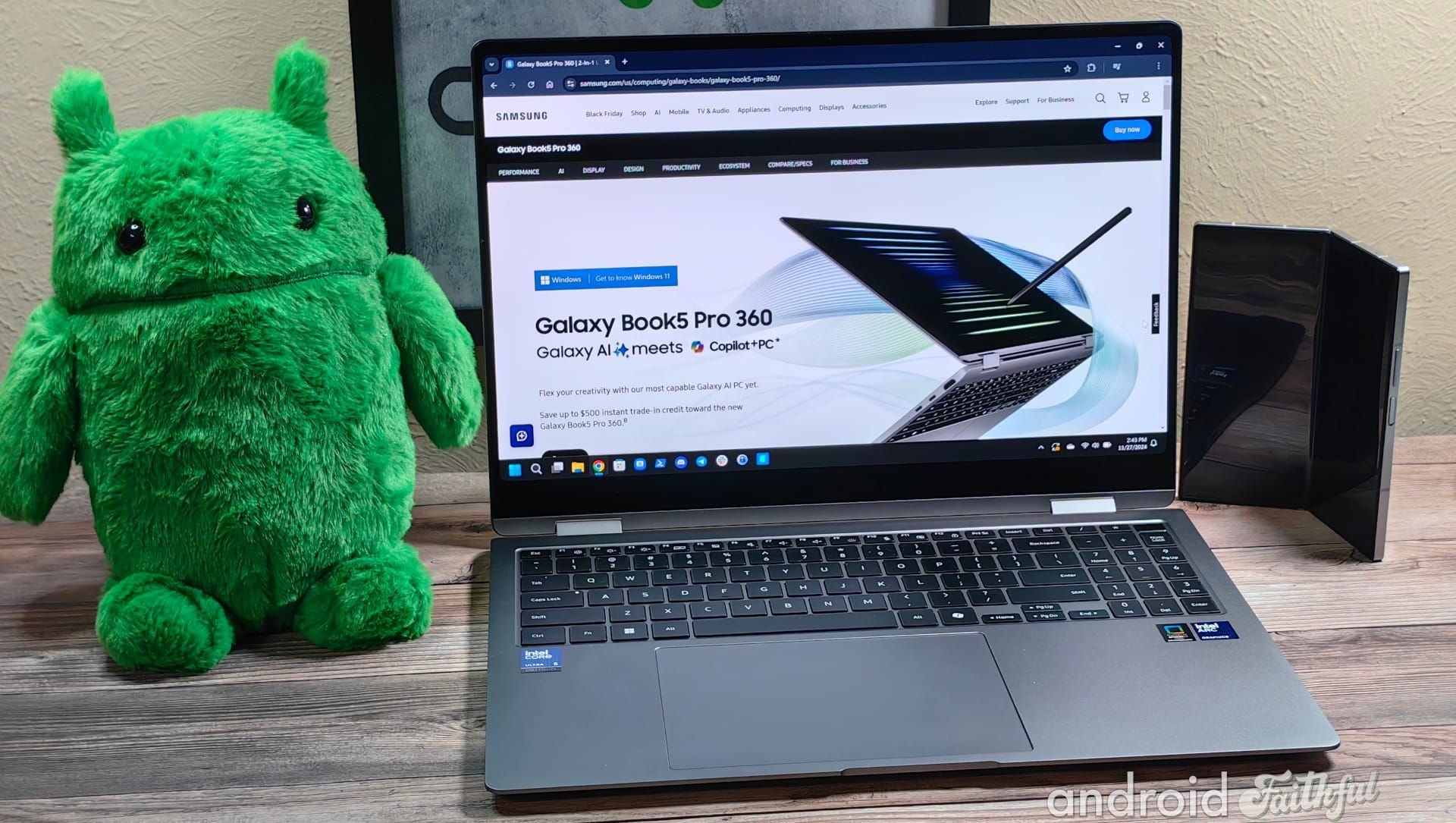
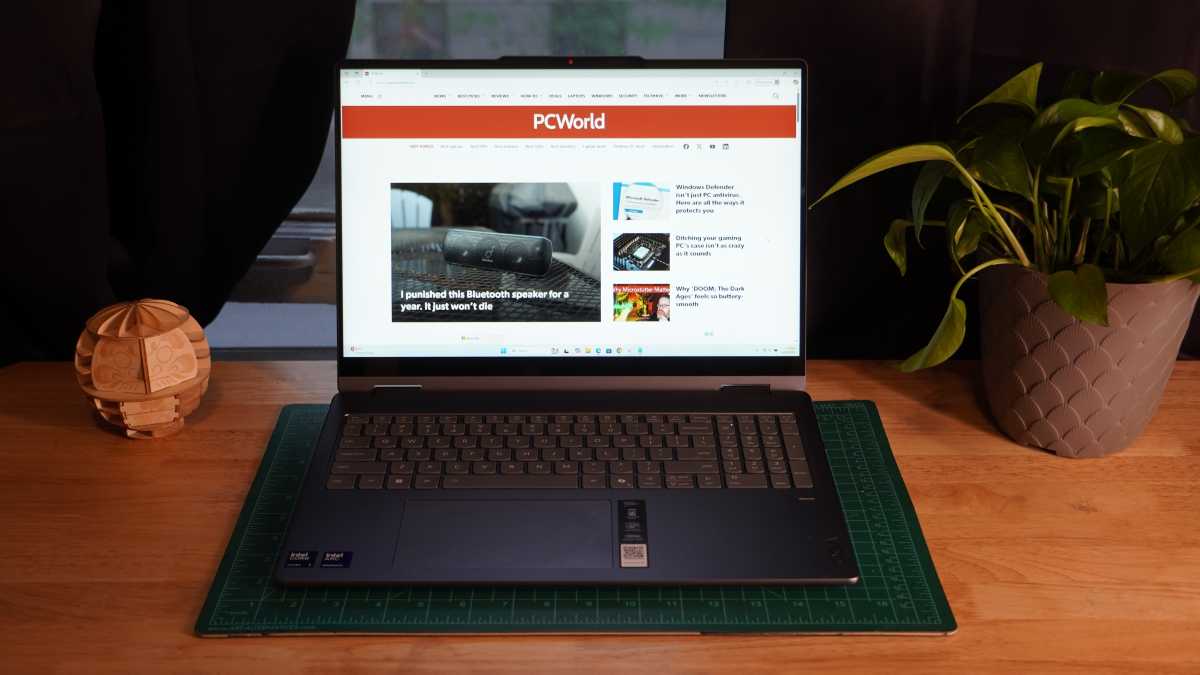
The Lenovo Yoga 7i 2-in-1 is the solid midrange choice, provided you pick the right configuration. The optional 14-inch OLED earns praise as among the better midrange panels, the build is sturdy, and PCWorld measured around 19 hours of battery. The catch reviewers stress: the base IPS display is weak, so the OLED version is the one to buy. It is capable for everyday work but not heavy creative tasks.
Full review
Real-World Performance
The Yoga 7i 2-in-1 uses the same efficient Intel Core Ultra 7 256V Lunar Lake chip as the pricier picks in this roundup, and reviewers found it perfectly capable for mainstream use. Laptop Mag concluded it 'delivers pretty good value for your money with plenty of performance for students and casual users,' and Hitech Century, which scored it 3.9/5, praised 'decent performance overall for general computing duties like paperwork, spreadsheets, video calls and the like.' PCWorld agreed it is 'fine for everyday productivity with great battery life,' measuring around 19 hours in its video test.
The clear limitation, which PCWorld stressed, is creative work: 'its performance can't handle some of the heavier demands of creative workloads.' That is the same Lunar Lake ceiling that affects every machine here, but it matters more on a midrange device that some buyers might hope to stretch into light editing. For office tasks, browsing, streaming and study, the Yoga 7i is responsive and, crucially, lasts all day on a charge.
Build Quality and Design
Lenovo's convertible build quality carries down to the midrange, and the Yoga 7i feels sturdy and well-assembled with a smooth, confident 360-degree hinge. It inherits the family's comfortable keyboard and clean design language, and OLED configurations include a Yoga Pen in the box for inking, matching the stylus bundles on the pricier Yoga 9i and Samsung Galaxy Book5 Pro 360. The 14-inch version is reasonably portable at around 3.1 pounds, while the 16-inch variants are noticeably bulkier.
Connectivity is modern, with Wi-Fi 7, Thunderbolt 4 and a fingerprint reader. The overall impression reviewers conveyed is of a dependable, durable machine, PCWorld and Laptop Mag both described it as long-lasting and solidly made. It does not feel as luxurious as the Yoga 9i or HP OmniBook Ultra Flip 14, but it is a genuine Lenovo convertible rather than a budget compromise, and the construction is a clear strength.
Display and the OLED Caveat
Display is where the Yoga 7i story gets complicated, and where configuration choice is everything. The base IPS panels drew sharp criticism: PCWorld said the standard display is 'bad enough that it may as well be monochrome for how well it'll work in creative endeavors,' and Laptop Mag called the 16-inch IPS display 'the Yoga's incredibly disappointing display, its Achilles' heel.' Those are damning assessments of the entry-level screens.
The OLED configuration is a completely different experience. Hitech Century, reviewing an OLED sample, found it 'among the better ones out there, serving up deep blacks and lifelike colour rendition onscreen.' For 2026 Lenovo finally offers OLED options on this line, and reviewers are unanimous that the OLED is the one to buy. That split is the single most important thing to understand about the Yoga 7i: skip the IPS, choose the WUXGA OLED, and the laptop becomes genuinely good rather than compromised.
Where It Falls Short
The base-display problem is the headline weakness, and it is severe enough that buying the wrong configuration results in a laptop reviewers actively warn creatives away from. Even with the OLED, the Yoga 7i's Lunar Lake performance cannot handle heavy creative workloads, limiting it to everyday and light tasks.
Value is the other concern. Reviewers repeatedly pointed out that the Yoga 7i can feel overpriced for what it is, with one noting that the competing HP OmniBook X Flip 16 offers an efficient Core Ultra 7 256V and a more impressive 3K OLED touchscreen for considerably less money. When a rival in this very roundup undercuts it on price while matching or beating its display, the Yoga 7i's midrange positioning gets squeezed, which is why it ranks behind the more clearly compelling options here.
Who It's Best For
The Yoga 7i 2-in-1 is a sensible choice for students and everyday users who want a sturdy, long-lasting Lenovo convertible and are willing to pay up for the OLED display option. If you value build quality, battery life and the Lenovo keyboard, and you configure it correctly, it is a dependable daily machine with a bundled pen for note-taking.
It is not the right pick if you are tempted by the cheaper base IPS model, which reviewers warn against, or if you want the best value, where the HP OmniBook X Flip 16 is the smarter big-screen buy. Anyone wanting a more premium experience should step up to the Lenovo Yoga 9i, and creative professionals should look beyond this Lunar Lake class entirely. Configured with OLED for the right buyer, though, it earns its place as a solid midrange option.
Value at This Price
At around $1,099 for the OLED configuration, the Yoga 7i sits below the premium Lenovo Yoga 9i, HP OmniBook Ultra Flip 14 and Samsung Galaxy Book5 Pro 360, but its value is complicated by two things. First, the must-avoid base IPS panel means the headline low prices attach to a configuration reviewers dislike, so the real cost of a good Yoga 7i is higher than the entry figure suggests. Second, the HP OmniBook X Flip 16 in this same roundup offers a comparable or better OLED for less, directly undercutting the Yoga 7i's pitch. The result is a laptop that is genuinely good when configured with OLED and matched to everyday needs, but one whose value proposition is weaker than its Lenovo pedigree implies. For a buyer committed to the Lenovo ecosystem and the OLED screen, it is a fair deal; for a pure value shopper, the HP alternative is hard to ignore.
Strengths
- +Optional 14-inch OLED config is among the better midrange displays
- +Sturdy, well-built convertible chassis with a smooth hinge
- +Long battery life, around 19 hours in PCWorld testing
- +Efficient Intel Core Ultra 7 256V Lunar Lake platform
- +Bundled Yoga Pen on OLED configurations
Watch-outs
- −Base IPS display is weak; reviewers urge choosing OLED
- −Performance struggles with heavy creative workloads
- −Can feel overpriced versus the HP OmniBook X Flip 16
- −Heavier 16-inch versions are bulky
How it compares
The Lenovo Yoga 7i 2-in-1 is the midrange step down from the premium Lenovo Yoga 9i 2-in-1, sharing the brand's build quality and bundled pen but with a less impressive display unless you choose OLED. It costs less than the Yoga 9i, HP OmniBook Ultra Flip 14 and Samsung Galaxy Book5 Pro 360, but reviewers note the HP OmniBook X Flip 16 offers a comparable OLED for less money, making the Yoga 7i a tougher value sell.
Who this is for
At a glance: Students and everyday users who want a sturdy Lenovo convertible with long battery life and will pay up for the OLED display option.
Why you’d buy the Lenovo Yoga 7i 2-in-1
- Optional 14-inch OLED config is among the better midrange displays.
- Sturdy, well-built convertible chassis with a smooth hinge.
- Long battery life, around 19 hours in PCWorld testing.
Why you’d skip it
- Base IPS display is weak; reviewers urge choosing OLED.
- Performance struggles with heavy creative workloads.
- Can feel overpriced versus the HP OmniBook X Flip 16.
Rating sources
“The OLED display on our Lenovo Yoga 7i 2-in-1 review sample is among the better ones out there, serving up deep blacks and lifelike colour rendition onscreen.”
“The 2025 Lenovo Yoga 7i 2-in-1 is fine for everyday productivity with great battery life, but creatives should steer clear of the base display.”
“The Yoga 7i 2-in-1 16 delivers pretty good value for your money with plenty of performance for students and casual users.”
Our 4.3 score is the average of these published ratings. Ratings marked * were derived from the reviewer’s written analysis or video transcript — the publisher didn’t print an explicit numeric score, so we inferred one from their own words. Click through to verify. More about methodology.