Verdict
The Best 4Aggregated review·19 sources·updated September 27, 2026·checked September 12, 2026

Best External SSDs

Top 4 external SSDs ranked by aggregate score from 19 published reviews.

This guide aggregates 19 published reviews across 4 products; the thinnest-sourced pick rests on 3. How we rank.

Verdict is reader-supported. As an Amazon Associate we earn from qualifying purchases. Some links on this page are affiliate links — if you click through and buy, we may earn a small commission at no extra cost to you. Our ratings are sourced from independent publications, not sponsors.
Quick answer

Corsair EX400U (1 TB) is our top pick for external ssds — an averaged 4.4/5 across 5 published reviews at about $309.33. Runner-up: Samsung T7 Shield.

At a glance4 products ▾
5 sources
$309.33
$309.33 · Check Price on Amazon
5 sources
Check Price on Amazon
6 sources1 derived
$194.99
$194.99 · Check Price on Amazon
3 sources1 derived
Check Price on Amazon

Derived means the reviewer published no score, so one was inferred from their written verdict. Everything else is a number the publisher printed. How we rank.

The full ranking

How we rank →
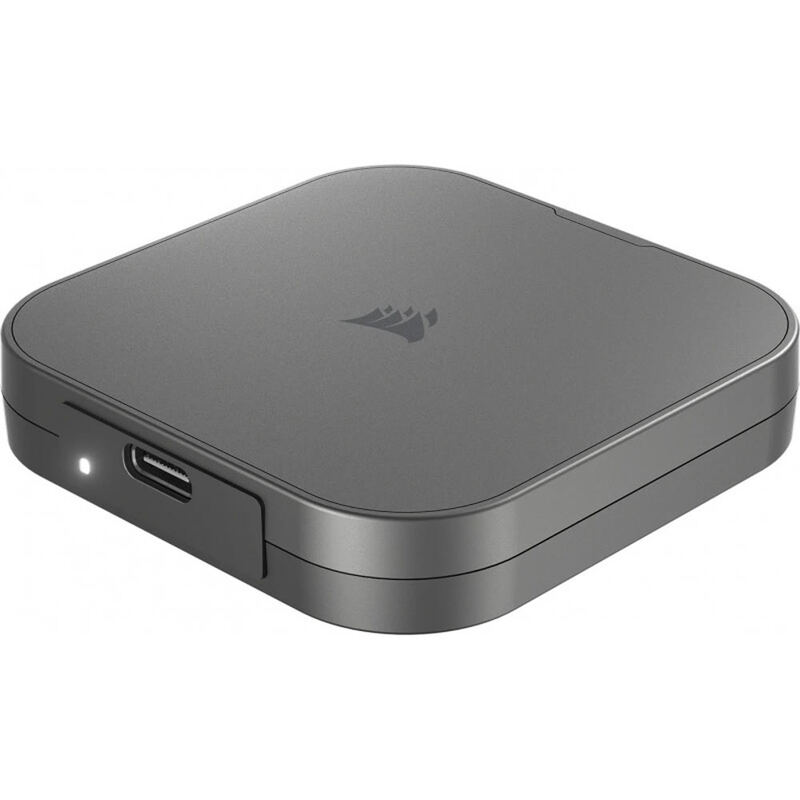
Corsair EX400U (1 TB)
#1 · Top Score
Corsair EX400U (1 TB)
5 sources$309.33as of Sep 27
▾Why it's ranked here

The SSD Review clocked the Corsair EX400U at up to 4GB/s read on Thunderbolt 5 systems while warning that motherboard implementations often limit USB4 speeds. PCMag's Tony Hoffman singled out the unusual magnetic Magsafe connector, which lets the drive attach securely to metal surfaces such as the Corsair 6500x case. Phison controllers and KIOXIA memory earned praise for build quality, though reviewers repeated the caveat: without USB4 support on the host device, expect significant speed bottlenecks. Buy it for a high-end USB4/Thunderbolt setup where secure physical attachment matters, not for a machine with standard USB 3.2 ports.

Strengths
  • — Achieves up to 4GB/s read and 3.6GB/s write speeds on compatible USB4/Thunderbolt 4 systems
  • — Features a unique magnetic Magsafe connector for secure attachment to metal surfaces
Watch-outs
  • — Performance drops significantly to 2GB/s on USB 3.2 ports and 1GB/s on lower-speed connections
  • — Not waterproof despite being shock resistant
Samsung T7 Shield
#2
★ Premium Pick
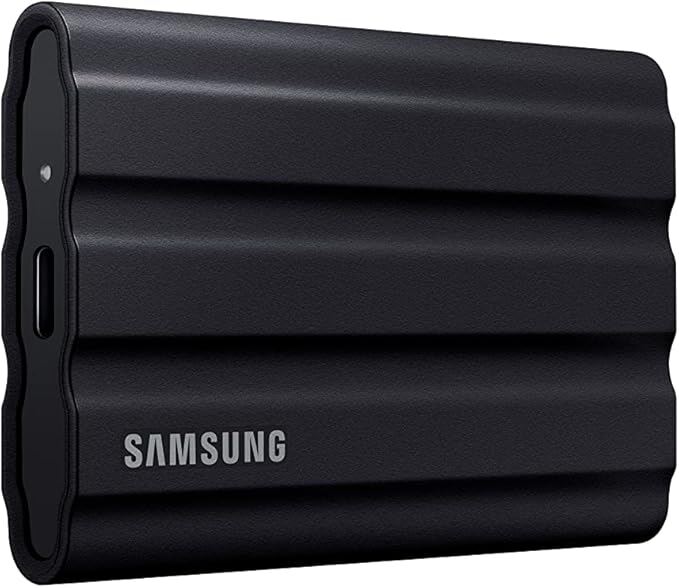
Samsung T7 Shield
5 sources
▾Why it's ranked here

Reviewers rate the Samsung T7 Shield mainly on toughness: IP65 water and dust resistance plus 3-meter drop protection make it a reliable travel and outdoor drive. They also point to AES 256-bit hardware encryption and a 4TB capacity that is rare in Samsung's portable lineup. The soft silicone exterior attracts dust, and the top transfer speed of 1050MB/s only arrives if the host supports 10Gbps USB. Pick it when durability and security matter more than sleek looks or peak speed on older hardware.

Strengths
  • — IP65-certified water and dust resistance
  • — 3-meter drop resistance for durability
Watch-outs
  • — Silicone exterior casing attracts dust and lint
  • — Requires 10Gbps USB port for maximum 1050MB/s speeds
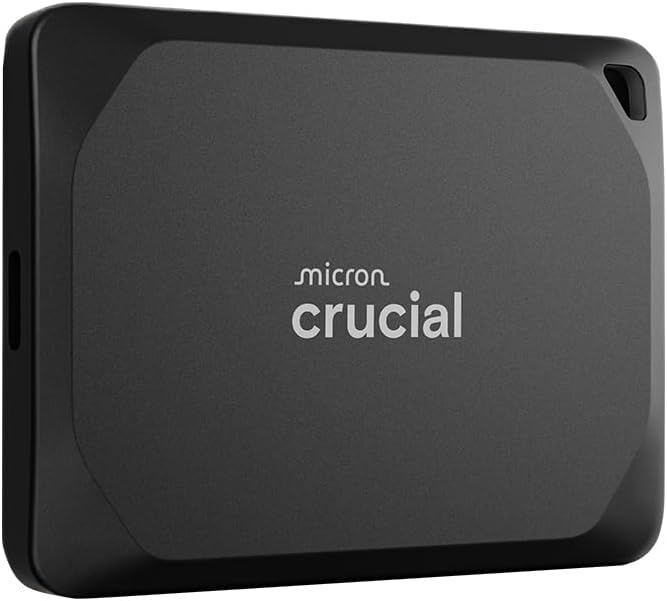
Crucial X10 Pro
#3
Crucial X10 Pro
6 sources1 derived$194.99as of Sep 27
▾Why it's ranked here

The SSD Review and StorageReview both frame the Crucial X10 Pro as a high-performance portable drive for media professionals, moving data over USB 3.2 Gen 2x2. They praise the ultra-compact aluminum build and the security package, hardware encryption plus a 5-year warranty, that separates it from the base X10. Some testers saw sustained write performance dip below Crucial's maximum claims under heavy loads. Get it if you have a compatible 20Gbps port and value speed and durability over cost; on older USB ports the slower, cheaper X9 Pro makes more sense.

Strengths
  • — Supports USB 3.2 Gen 2x2 interface for up to 20Gbps transfer speeds
  • — Compact 65 x 50mm unibody anodized aluminum chassis weighing 1.48 ounces
Watch-outs
  • — Real-world sustained write speeds may fall short of the advertised 2,000MB/s peak
  • — Higher price point compared to standard USB 3.2 Gen 2 portable SSDs
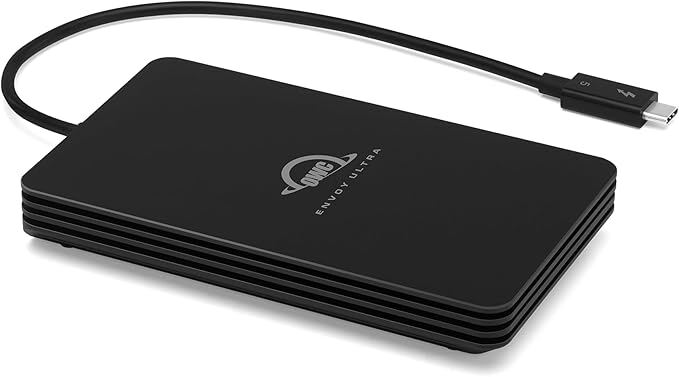
OWC Envoy Ultra
#4
OWC Envoy Ultra
3 sources1 derived
▾Why it's ranked here

OWC bills the Envoy Ultra as the world's first Thunderbolt 5 bus-powered 8TB drive, pairing rugged durability with high-speed storage aimed at creative professionals. Coverage focuses on its speed, with MacRumors noting it is not the most compact SSD and that full speed requires a Thunderbolt 5 host. Video creators who need fast, rugged portable storage and have a Thunderbolt 5 machine are the fit.

Strengths
  • — World's first Thunderbolt 5 bus-powered 8TB drive in its class
  • — Rugged, blazing fast SSD design, per MacRumors
Watch-outs
  • — Full speed is limited to Thunderbolt 5 hosts; Thunderbolt 4 and USB4 cap it at 40 Gbps, per MacRumors
Reviews aggregated from
Tom's HardwareThessdreviewPCMagDongknowsAdamtalkstechSsdtesterTechGearLab

Spec comparison

4 products
vs
SpecCorsair EX400U (1 TB)Samsung T7 Shield
InterfaceUSB4 (40Gbps)USB 3.2 Gen 2
Capacity1 TB4TB
Max Read Speed3.5 GB/s1050MB/s
Max Write Speed3500 MB/s1000MB/s
Form FactorPortablePortable External SSD
NAND TypeTLCV-NAND

Frequently asked questions

Which external ssd should I buy?
Corsair EX400U (1 TB) holds the top score for external ssds — 4.4/5 averaged from 4 published reviews. The SSD Review clocked the Corsair EX400U at up to 4GB/s read on Thunderbolt 5 systems while warning that motherboard implementations often limit USB4 speeds. PCMag's Tony Hoffman singled out the unusual magnetic Magsafe connector, which lets the drive attach securely to metal surfaces such as the Corsair 6500x case. Phison controllers and KIOXIA memory earned praise for build quality, though reviewers repeated the caveat: without USB4 support on the host device, expect significant speed bottlenecks. Buy it for a high-end USB4/Thunderbolt setup where secure physical attachment matters, not for a machine with standard USB 3.2 ports.
When was this guide last updated?
This guide was last re-checked in September 2026. Prices, links, and source ratings are re-verified on a rolling basis, and the ranking updates when the underlying scores change.

Related guides

Browse all →