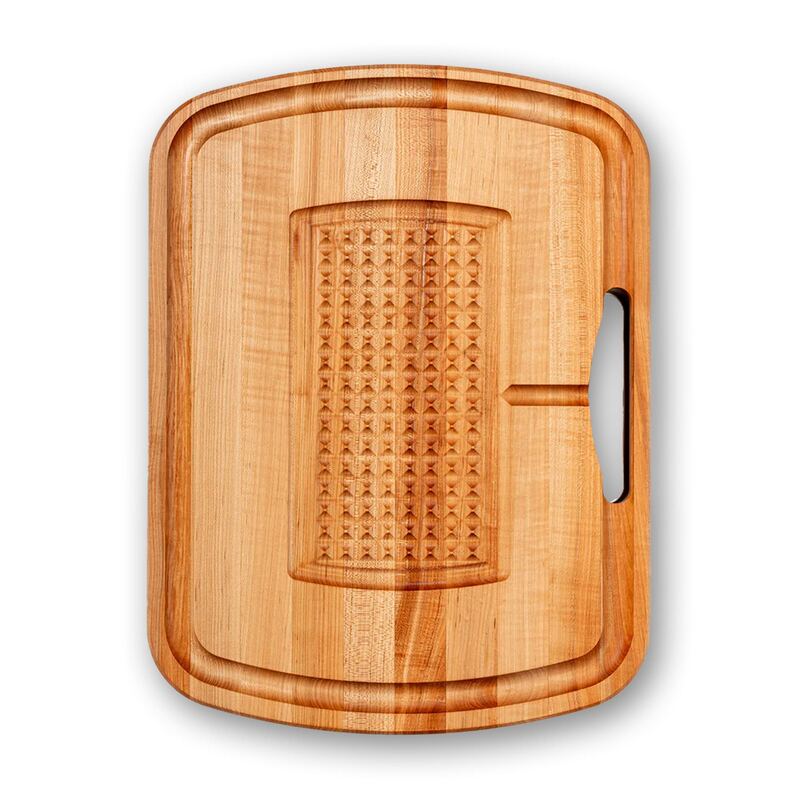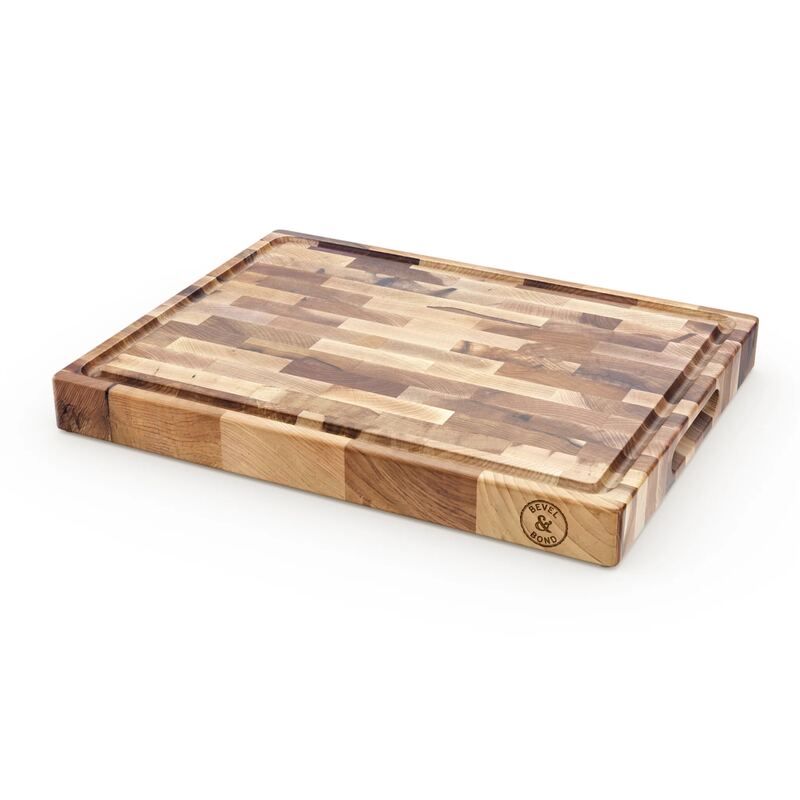
Made in Dorset, Vermont by a family-owned company since 1944, this board features over fifty pairs of hands touching each unit before shipping and includes a lifetime guarantee covering defects and damage. While the flagship reversible model uses edge-grain construction for carving roasts, serious eats found that end-grain options are better suited for nightly chopping to preserve knife sharpness. The end-grain maple boards start at $140 and reach up to $340 for larger sizes, reflecting the labor-intensive staggered block construction. Shoppers seeking a specialized tool for large meats will appreciate the poultry well and juice trench, but those wanting an everyday chopping surface should look elsewhere toward the more expensive professional end-grain line.
- — Made in Dorset, Vermont since 1944 by a family-owned company with over 50 pairs of hands touching each board before shipping, according to Bevel and Bond.
- — Comes with a lifetime guarantee that covers manufacturer defects and shipping damage, per Bevel and Bond.
- — Sustainably harvested North American hardwoods are used, with the shop running close to zero waste.
- — The flagship Maple Reversible Carving Board is edge-grain construction rather than end-grain.
- — End-grain maple options are expensive, starting at $140 and reaching up to $340 for larger sizes, per Bevel and Bond.