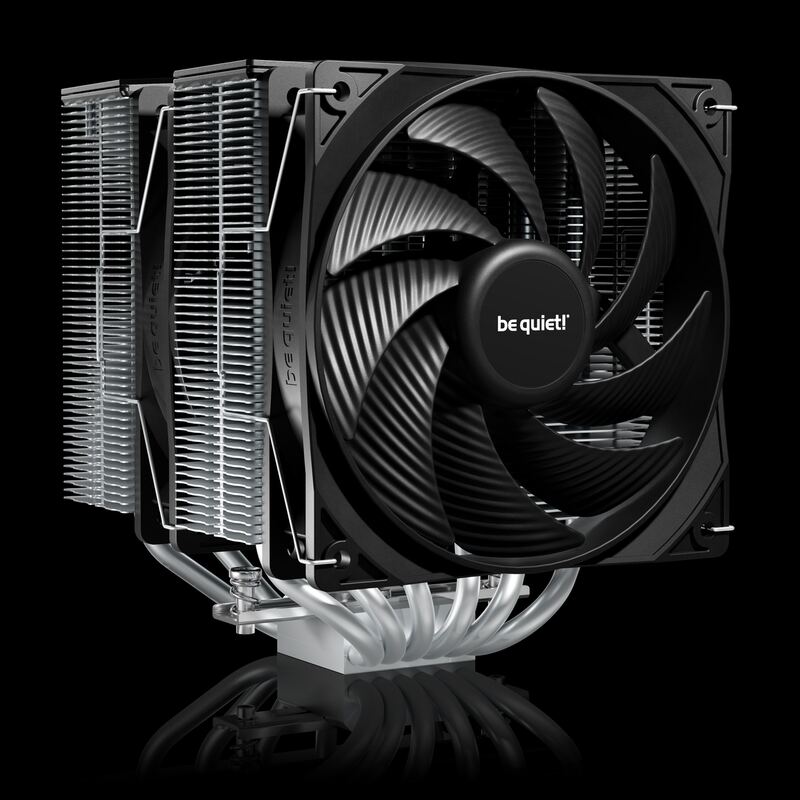
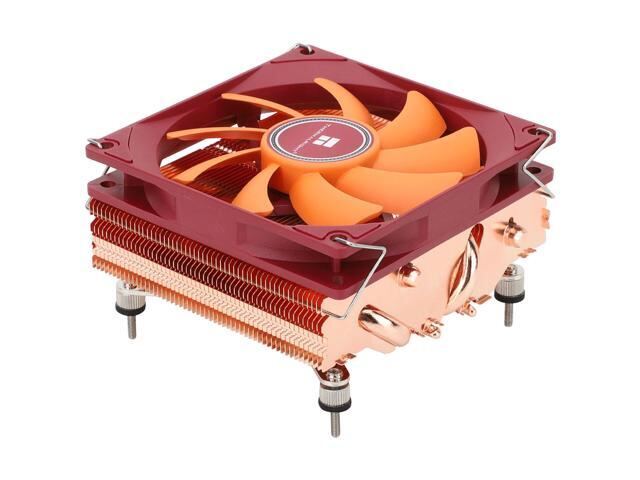
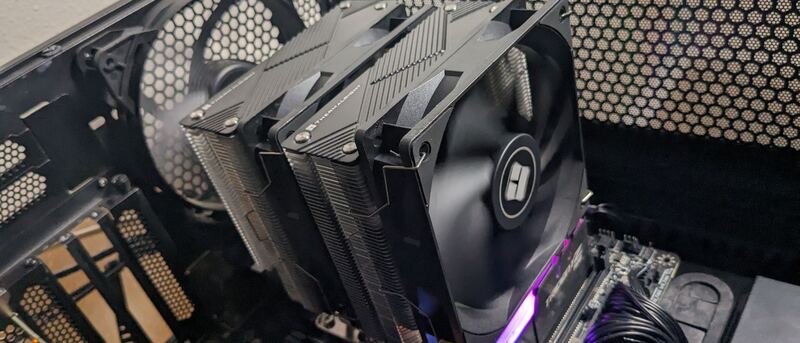
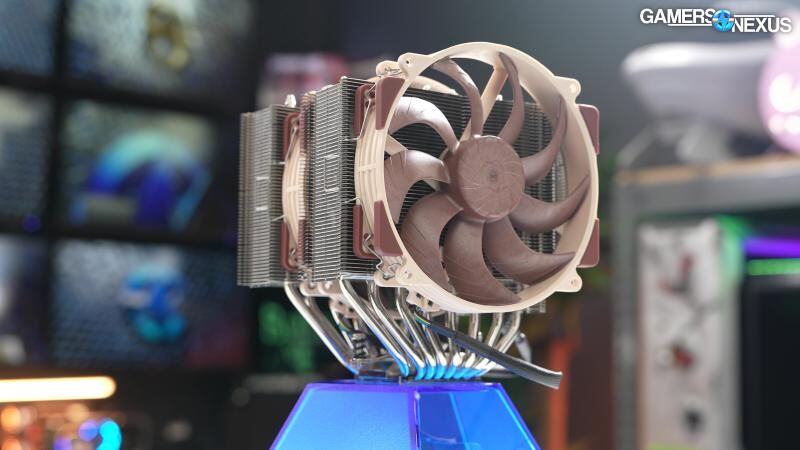
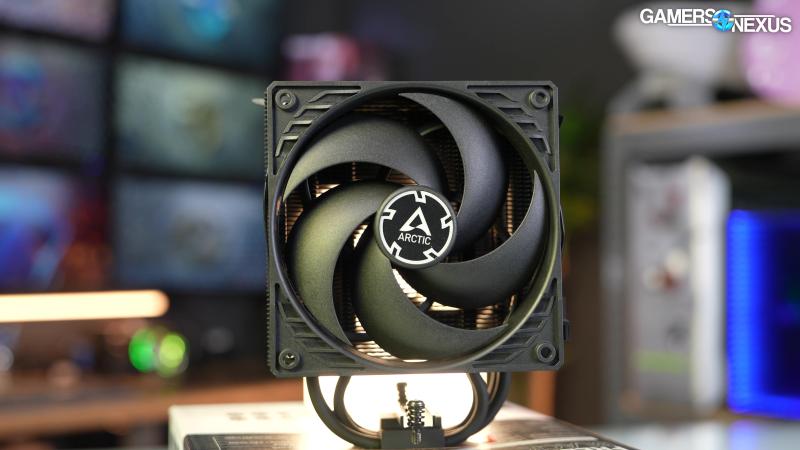
The cooler features a single-tower design with a fat tower that improves airflow, and its fan mount uses four screws for a firm connection. However, performance is middling on AMD CPUs compared to competition. The Freezer 36 follows the prior Freezer 34 Esports Duo and avoids the mistakes of the Freezer 50, which was criticized for strapping plastic appendages to a cooler.
Full review
Intel-specific mounting requirements
The Arctic Freezer 36 requires users to install an included contact frame when mounting on Intel CPUs, a design choice that sets it apart from many competitors. This contact frame is specifically engineered for Intel's newer LGA1700 and LGA1851 sockets, which Tom's Hardware notes as a limitation for users with older Intel platforms. The necessity of this frame means that the cooler is not compatible with older Intel sockets such as LGA1200 or LGA115x without purchasing an optional accessory. HWCooling.net describes this as a trade-off, noting that while the Arctic ILM provides more rigidity than the motherboard's original retention bracket, it also removes support for older Intel platforms. This requirement impacts the cooler's versatility and may complicate installation for users unfamiliar with the process, though the inclusion of clear instructions and a YouTube guide is noted as helpful by Vortez.
Cooling performance on AMD platforms
Performance on AMD CPUs is described as middling compared to Intel, with GamersNexus measuring the cooler's performance on AMD Ryzen processors and noting it falls short of what competitors like the Thermalright Peerless Assassin offer. The Freezer 36's design, which uses a single tower with four heatpipes, is less effective on AMD platforms where the heat spreader is typically larger than what the cooler's contact patch can efficiently cover. HWCooling.net confirms that while the cooler handles high loads well on both Intel and AMD, it performs significantly better on Intel due to the contact frame's improved thermal interface. Vortez.com adds that the cooler's thermal performance is adequate for mid-tier CPUs but may struggle with high-end AMD processors that generate more heat, particularly under sustained loads.
Tom's Hardware found that the Arctic Freezer 36 performs on par with the Deepcool AK400, which is a more expensive alternative, but falls short of twin-tower coolers like the Noctua NH-D12L. The cooler's single-tower design, while space-efficient, is noted as sensitive to CPU temperature and can get overwhelmed by high heat loads, particularly on AMD platforms. The fan response is described as aggressive, with RPMs fluctuating significantly based on load, which can result in inconsistent noise levels. This behavior is typical of single-tower designs, which tend to ramp up quickly to manage heat but also drop off rapidly, leading to a less pleasant user experience in terms of noise control.
Fan mounting and noise characteristics
The Arctic Freezer 36 features a unique fan mounting system that uses a push-pin mechanism rather than traditional steel clips, a design that GamersNexus describes as 'reinventing the wheel' but ultimately effective. The system involves four Phillips 2 screws that snap into plastic snap-ins on the heat sink, providing a firm connection and a satisfying snap. However, this design does reduce the finned surface area, as noted by GamersNexus, and requires a deeper cut for the plastic pop-in locations. Despite this, the system works on any fan, offering flexibility for users who wish to upgrade or replace fans. HWCooling.net praises the fan mounting system as clever and functional, though they note that the cooler's two fans contribute to its overall noise profile.
Noise output is generally considered low for its fan type, with Vortez.com stating that the two 120mm fans are quiet at load and produce less audible hum than similar roof-mounted fans on AIO radiators. The fans are described as rifle-bearing, which contributes to their relatively low noise levels. However, the aggressive fan curves mean that the cooler can become quite noisy under high load, as the fans ramp up quickly to manage heat. Tom's Hardware notes that while the cooler's fans are not optimized for silent operation, they are quieter than many similar designs. The noise level is described as acceptable for most users, particularly when compared to the higher-end coolers that offer more aggressive cooling but at the cost of increased noise.
Size and compatibility with system components
The Arctic Freezer 36 is designed to be compact, with a height of 159mm and a width of 104mm, making it compatible with most standard PC cases and ensuring it does not interfere with memory slots or PCIe slots. HWCooling.net emphasizes that the cooler's slim profile allows it to fit under DIMM slots, avoiding interference with memory modules, which is a significant advantage over dual-tower coolers. The depth of the cooler is 126mm, which is relatively shallow compared to many dual-tower designs. This design allows for better clearance with PCIe x16 slots and memory modules, a feature that Vortez.com highlights as a major benefit. The cooler's dimensions are such that it avoids compatibility issues with most mid-range cases, though Vortez.com notes that the cooler is slightly taller than some alternatives, which could be a concern for very tight cases.
The cooler's single-tower design is also noted for its ability to maintain airflow efficiently, with the dual-fan configuration helping to pull air through the 54mm deep tower. This design approach allows Arctic to reduce the total surface area compared to some dual-tower coolers, but still achieve good thermal performance. The cooler's ability to maintain a flush mount on all sides contributes to efficient airflow, although this also means that some 'overspray' air that would normally cool the VRM is lost. Despite this, the cooler is designed to work well with most modern motherboards and systems, as confirmed by multiple reviewers.
Installation and build quality
Installation of the Arctic Freezer 36 is described as straightforward, with clear instructions and a helpful YouTube video guide provided by Vortez.com. The process is noted to be simple, especially for users familiar with CPU cooler installation. However, the requirement for an Intel-specific contact frame adds a layer of complexity, particularly for users who are not experienced with this type of installation. HWCooling.net points out that while the cooler's mounting bracket is designed to prevent motherboard flexing, it must be tightened evenly and with adequate force to avoid damaging the motherboard. The build quality is generally praised, with Vortez.com noting that Arctic has done a great job in making the directions easy to follow. The cooler's aesthetic design is also highlighted, with the Black model being particularly praised for its minimalist look that complements most systems.
HWCooling.net also notes that the cooler's fans are of the P12 PWM PT A-RGB model, which are 120mm with a traditional 25mm thickness, operating within a range of 200–2000 rpm. The fans are described as having fluid bearings, which contribute to their quiet operation. The cooler's overall build quality is considered solid, with the fans and heatsink constructed to provide reliable performance over time. The inclusion of multiple variants, including white and RGB options, allows users to choose a design that fits their aesthetic preferences. The cooler is also available in different models, such as the Freezer 36 CO, which comes with different fans that use dual ball bearings for greater tolerance to harsh operating conditions. The Freezer 36 CO is noted to be slightly noisier due to the ball bearings, but it offers greater durability in demanding environments.
Value proposition and market positioning
The Arctic Freezer 36 is positioned as a value-driven product, with GamersNexus noting that it offers 'really good value when it's on sale at $27.71.' The original MSRP is listed at $52, but the cooler is available at a discounted price for a limited time, making it attractive to budget-conscious buyers. Vortez.com highlights that the cooler is very hard to beat for those on tight budgets. The performance is described as good for mid-tier CPUs from both AMD and Intel, making it a solid choice for users who do not require the highest performance cooling. The inclusion of a contact frame for Intel sockets is seen as a premium feature, though it also adds to the cost. Despite this, the cooler is considered a strong value proposition, especially when compared to similar products in the market.
HWCooling.net emphasizes that the Freezer 36 can handle significantly higher loads compared to similar and typically cheaper designs with four heatpipes, which is a key selling point. The cooler's ability to perform well on both Intel and AMD platforms, albeit with a slight edge on Intel, makes it a versatile choice. The price/performance ratio is considered excellent, with the cooler offering features and performance that are typically found in more expensive models. The availability of multiple variants, including white and RGB options, allows users to choose a design that fits their aesthetic preferences while still maintaining the same performance standards. The cooler's 6-year warranty is also noted as a positive feature, providing peace of mind for users who invest in the product.
Strengths
- +Offers good value when on sale
- +Uses a single-tower design with a fat tower for better airflow
- +Features a fan mount that snaps in with four Phillips 2 screws for firm connection
- +Provides flush mounting on all sides for efficient air flow
Watch-outs
- −Requires installation of an included contact frame for Intel CPUs
- −Performance is middling on AMD CPUs compared to competition
How it compares
The Arctic Freezer 36 offers good value when on sale but is outperformed by the Thermalright Phantom Spirit 120 SE, which includes an extra heat pipe and better airflow direction. Compared to the be quiet! Pure Rock Pro 3 Black, it lacks dual fans and a more advanced design, though it's more affordable and easier to install without requiring a contact frame for Intel CPUs.
Rating sources
“The Arctic Freezer 36 offers really good value when it's on sale at $27.71”
Our 3.6 score is the average of the 4 scored reviews above; 4 more reviewed it without printing a score and are not in the average. Ratings marked * were derived from the reviewer’s written analysis or video transcript — the publisher didn’t print an explicit numeric score, so we inferred one from their own words. Click through to verify. More about methodology.