Arctic P14 PWM PST fans deliver exceptional value in the low-end segment, with HWCooling.net praising their high airflow-to-noise ratio and efficiency through obstacles. The design features five large curved blades optimized for performance, while the PWM PST variant supports both pulse control and daisy chaining. hwcooling.net notes the fans' affordability and strong results, though they warn of potential blade-frame contact issues due to flexible materials and a small hub that may affect longevity. These fans are ideal for budget-conscious users seeking efficient cooling solutions.

Full review
Airflow performance in detail
The Arctic P14 PWM PST delivers 72.8 CFM airflow at maximum speed, according to official specifications from HWCooling.net. This performance figure is consistent with the manufacturer's claims and aligns with the fan's design as a budget-friendly 140mm solution. The fan's five-blade configuration, with curved leading edges up to 65mm long, is engineered to minimize airflow loss through obstacles, a key advantage in radiator applications. The design prioritizes blade width and length over blade count, which helps maintain static pressure and airflow even when facing resistance. HWCooling.net noted that the P14 PWM PST's airflow performance is among the best in its price segment, especially when compared to similar fans in the 140mm format. The fan's ability to maintain high airflow while keeping noise levels low makes it a strong contender for users seeking efficient cooling without excessive acoustic impact.
In contrast, the Arctic P14 Pro PST variant shows enhanced performance with a static pressure rating of 5.2 mmH2O at maximum RPM, a significant improvement over the standard P14 PWM PST. This increased static pressure translates to better airflow on liquid cooling radiators, where resistance is higher. The Pro version's seven-blade design, compared to the five-blade configuration of the PWM PST, contributes to this performance boost. The additional blades create tighter spacing, which increases pressure and reduces airflow loss. While the standard P14 PWM PST achieves 72.8 CFM at 2.4 mmH2O static pressure, the Pro version's 5.2 mmH2O static pressure rating suggests it can maintain higher airflow even under more demanding conditions. This makes the Pro variant more suitable for users who need maximum cooling performance in tight spaces or high-resistance environments.
Noise output and acoustic characteristics
This level of noise output is considered very low for a fan of this size and performance, making it ideal for quiet computing environments. The fan's fluid dynamic bearing design contributes to its low noise performance, especially at lower RPMs. The bearing type is noted as a key factor in reducing operational noise, which is a common preference among users who prioritize acoustic comfort. The fan's ability to operate quietly while maintaining high airflow is a significant advantage in systems where noise control is a priority, such as home offices or media centers.
However, the P14 Slim PWM PST variant, tested by ocinside.de, shows slightly different acoustic characteristics. While both fans maintain low noise output, the Slim version runs slightly slower than the standard P14 PWM PST, producing 31-40 dBA at low speeds and 31-45 dBA at higher speeds when measured at 20cm distance. The difference in performance is minimal, with only about a 1°C temperature difference in CPU cooling between the two variants. The Slim fan's design, which is 11mm narrower than the standard P14, results in slightly less airflow but no significant degradation in cooling performance. This makes the Slim variant suitable for systems with limited space, where the slight performance trade-off is acceptable for the space savings.
Daisy-chaining capability and electrical design
The Arctic P14 PWM PST supports daisy-chaining through its PST (PWM Sharing Technology) variant, which allows multiple fans to be connected to a single motherboard header. This feature is implemented through a second connector that enables parallel wiring, where voltage remains constant but current increases. HWCooling.net notes that the fan's cable is 40 cm long to the 4-pin male connector and 50 cm to the female connector, with a flat cable type that prevents fraying. The parallel connection design is beneficial for radiator setups where multiple fans are required, as it simplifies installation and reduces cable clutter. However, users must be cautious when connecting multiple fans to a single header, as the total current draw can exceed the recommended 1 A limit for motherboard headers. For systems with more than four fans, it's advisable to use a header with higher current tolerance or a dedicated fan controller.
The PST variant also includes support for semi-passive mode, where the fan turns off at low PWM duty cycles below 5%, a feature introduced in the latest revision (4th generation). This addition enhances energy efficiency and reduces unnecessary noise in low-load scenarios. The fan's PWM control range spans from 200 to 1700 RPM, with a zero RPM mode activated at less than 5% PWM signals. This capability allows for precise control over fan speed, optimizing performance and noise levels according to system demands. The fan's electrical specifications include a rated voltage of 12 VDC, a starting voltage of 3.9 V, and a power consumption of 1.44W. These figures are consistent with the fan's design as a low-power, efficient solution for budget-conscious users.
Blade design and aerodynamic efficiency
The Arctic P14 PWM PST features five large blades with curved leading edges up to 65mm long, designed to maximize airflow while minimizing resistance. This blade configuration is optimized for performance in environments with obstacles, such as radiator fins, where airflow loss can be significant. The blade design is a departure from the traditional approach of narrower blades, which would increase the gap between blades and reduce static pressure. Instead, Arctic's approach focuses on blade width and length to ensure that airflow remains high even when encountering resistance. The fan's impeller hub is relatively small at 41.6 mm diameter, which allows for more blade surface area but also reduces robustness compared to larger hubs. This design choice reflects a balance between airflow optimization and structural integrity.
In contrast, the Arctic P14 Pro PST features a redesigned seven-blade configuration that improves static pressure and airflow. The additional blades create tighter spacing, which enhances pressure and reduces airflow loss. The impeller ring in the Pro version helps suppress microturbulence, which increases airflow and pressure. The ring also contributes to reduced vibration at high speeds, which is crucial for maintaining performance and longevity. The Pro version's ability to reach up to 2500 RPM at maximum speed is a significant improvement over the previous P14 generation, though it comes with a trade-off in noise levels. The enhanced aerodynamic design of the Pro variant makes it more suitable for demanding cooling applications, such as high-performance liquid cooling systems.
Build quality and mechanical considerations
The Arctic P14 PWM PST uses PBT blades with a thickness of approximately 3.4 mm at the tips, which are designed to be rigid enough to withstand operational stress while maintaining flexibility in critical areas. This design choice allows for a balance between structural integrity and cost efficiency. The fan's frame is made of a sturdy black material, and the mounting corners feature recessed areas that align with mounting holes. The absence of anti-vibration pads is noted, as Arctic's fluid dynamic bearing design is intended to minimize vibration and noise. However, users should be aware that cheaper materials may affect long-term durability, especially in high-temperature or dusty environments. The fan's overall build quality is considered solid for its price point, though it may not match the longevity of higher-end alternatives.
Despite the size reduction, the Slim variant maintains nearly identical cooling performance, with only a 1°C temperature difference in CPU testing. The fan's design includes a flat cable with 400mm of cable length to the 4-pin male connector and an additional 85mm extension to the female connector. The cable is designed to prevent fraying, unlike some competitors who use mesh-insulated wires. The Slim variant's reduced size makes it ideal for systems with limited space, such as compact cases or radiators where blade clearance is critical. The fan's ability to maintain performance while reducing physical footprint is a key advantage for users with space constraints.
Performance in real-world applications
In practical testing, the Arctic P14 PWM PST demonstrated its value in a 280mm AIO water cooling system with an AMD Ryzen 5600X CPU, as tested by ocinside.de. The fan was mounted on a radiator and subjected to Prime 95 Blend Test, which generated 86 watts of heat from the processor. The P14 Slim PWM PST ran about 1°C warmer than the standard P14 fan, a negligible difference that suggests no significant degradation in cooling performance. The test also included a Prime 95 Small-FFT stress test, which caused an extreme temperature increase in the CPU core. Again, the difference between the two fans was minimal, with the Slim variant running only 1°C higher. These results confirm that the Slim variant is suitable for users who need to save space without sacrificing cooling efficiency.
HWCooling.net's testing revealed that the Arctic P14 PWM PST is particularly effective in its segment, offering top-tier airflow per unit of noise. The fan's design is optimized for environments with obstacles, such as radiators, where static pressure is crucial. The fan's ability to maintain high airflow while keeping noise levels low makes it ideal for quiet computing environments. The P14 PWM PST's performance is especially notable in comparison to other budget-friendly fans in the 140mm format. The fan's value proposition is strengthened by its low cost and high performance, making it a strong choice for users seeking efficient cooling without a premium price tag.
Strengths
- +Achieves top airflow per unit of noise among 140 mm fans
- +Features five large curved blades for efficient airflow through obstacles
- +Includes PWM support with semi-passive mode (0 dBA at low duty cycle)
- +Supports daisy chaining via built-in PST splitter with parallel electrical connection
Watch-outs
- −Blades are made from relatively flexible PBT material that may contact the frame
- −Small impeller hub (41.6 mm) may reduce robustness and lifespan
How it compares
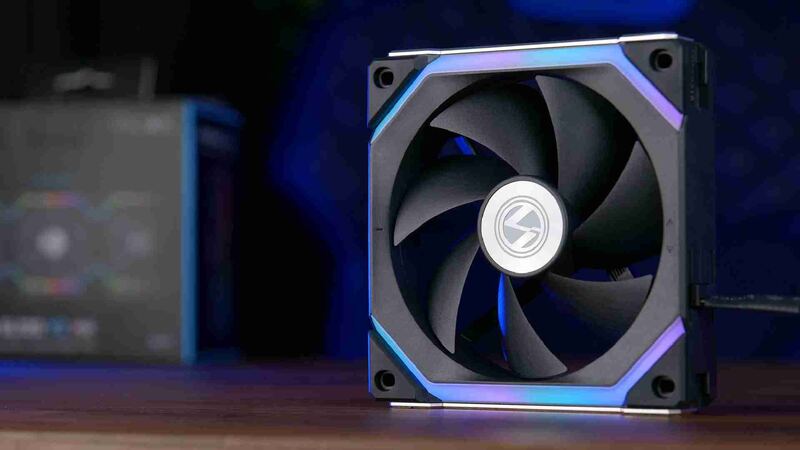
The Arctic P14 PST PWM offers the best airflow-to-noise ratio among 140mm fans. While it lacks RGB lighting and daisy-chaining capabilities found in the Lian Li Uni Fan SL120 V2 Standard, its budget-friendly price makes it ideal for those prioritizing performance over features.
Rating sources
“The Arctic P14 fan certainly fits in the top 5 most popular solutions in the 140mm format. Overall, across all price ranges.”
Our 4.1 score is the average of the 2 scored reviews above; 3 more reviewed it without printing a score and are not in the average. Ratings marked * were derived from the reviewer’s written analysis or video transcript — the publisher didn’t print an explicit numeric score, so we inferred one from their own words. Click through to verify. More about methodology.