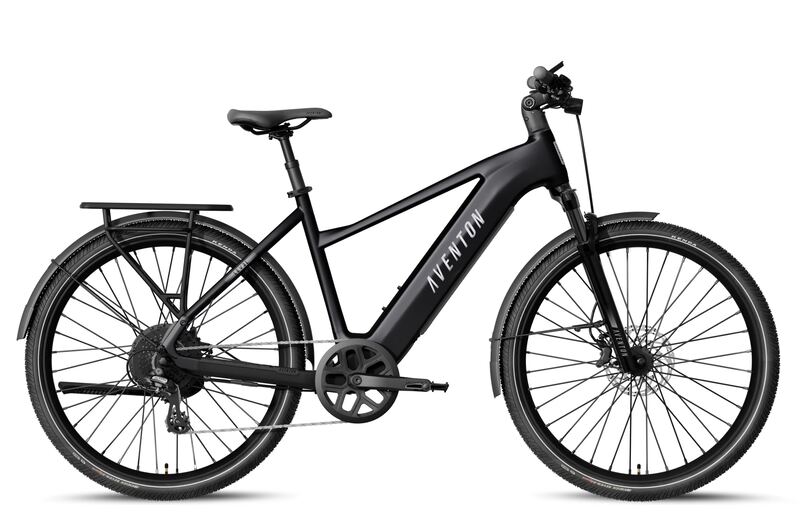
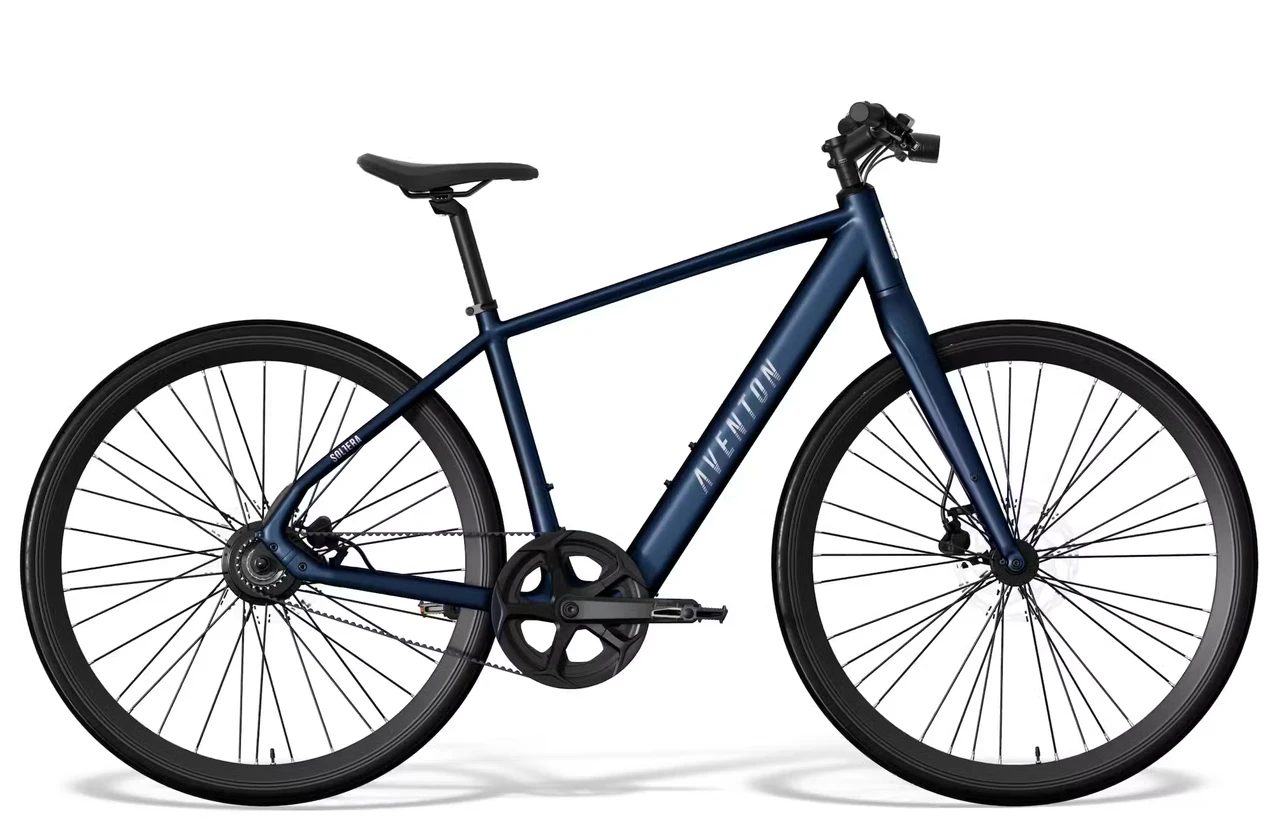
The Aventon Soltera 3 ADV features a lightweight aluminum frame and a Gates Carbon Belt Drive that eliminates chain maintenance, creating a clean, stealthy aesthetic. Electric Bike Journal found that the double-sided torque sensor delivers natural pedal assist, while Ebike Escape verified its manageable weight for carrying up stairs or onto transit racks. However, the single-speed drivetrain makes steep hill starts difficult without significant motor assistance, and the integrated battery requires tools to remove for indoor charging. It fits flat-terrain commuters who value low maintenance and agility, but those needing versatility on hilly routes should look elsewhere.
Full review
Belt drive maintenance and stealth aesthetics
The Aventon Soltera 3 ADV replaces the traditional chain with a Gates Carbon Belt Drive, a shift that fundamentally alters how the bike is maintained. Ebike Escape noted that this belt system requires virtually no maintenance for over ten thousand miles, eliminating grease stains on clothing and the constant tension adjustments typical of metal chains. Electric Bike Journal highlighted that this drivetrain operates silently and cleanly, allowing riders to forget they are on an electric bicycle entirely.
This clean design extends to the frame construction itself. Electric Bike Report observed that the single-speed setup removes shifters from the handlebars, contributing to an uncluttered cockpit that feels straightforward and approachable. The matte finishes available in Storm Blue, Matte Black, and Sterling Silver complement this understated vibe. While some reviewers initially worried about the barebones appearance upon unboxing, Vice noted that once on the road, the premium build quality and sleek integration won them over completely. The lack of external wires or bulky battery packs ensures the bike does not shout its electric nature, appealing to riders who want a discreet urban commuter.
Weight reduction compared to previous models
Lightweight construction is the defining characteristic of this iteration. Ebike Escape verified that the large frame weighs 39.3 pounds on their scale, which is approximately nine pounds lighter than its predecessor, the Soltera 2.5. Electric Bike Journal reported a weight around thirty-seven pounds, noting that this lightness translates directly into confidence during everyday handling tasks like lifting the bike over curbs or up apartment stairs. The low mass allows the modest motor to feel significantly more powerful than its wattage suggests, similar to how a lightweight sports car accelerates briskly despite having an engine that might seem underpowered in a heavier vehicle.
The reduced weight also impacts handling dynamics on city streets. This agility is particularly beneficial for riders who need to maneuver through tight spaces or carry the bike onto public transit racks. The rigid aluminum fork further contributes to this weight savings while maintaining responsive steering geometry.
Torque sensor responsiveness and pedal assist feel
The Soltera 3 ADV utilizes a double-sided torque sensor paired with a 250-watt rear hub motor, creating a ride experience that closely mimics a traditional bicycle. Electric Bike Journal emphasized that the assistance reacts naturally to pedaling input rather than jerking the rider forward, making it feel like an extension of the legs. Magnetic Magazine appreciated how power reduces gradually near the twenty-mile-per-hour cutoff and returns around nineteen miles per hour, keeping pace predictable in traffic. The motor delivers forty newton-meters of torque, which provides a subtle but effective nudge that encourages active cycling rather than passive coasting.
Riders can adjust the assistance levels through Eco, Sport, and Turbo modes via the compact BC147 display. Electric Bike Report noted that Eco mode offers a quiet, smooth push suitable for flat terrain, while Sport mode serves as a reliable setting for paved roads with minor undulations. The torque sensor ensures that even at lower assist levels, the motor output feels proportional to effort. This setup appeals to cyclists who want exercise to remain part of their commute but still desire electric help on longer distances or when tired. The absence of a hand throttle reinforces this cyclist-focused identity, ensuring Class 1 compliance in many jurisdictions.
Single-speed gearing limits hill climbing
The single-speed drivetrain is the most significant compromise on this bike. Electric Bike Journal noted that while higher pedal-assist levels help maintain momentum on gentle slopes, riders will definitely feel the effort on steeper inclines without shifting gears.
This limitation dictates where the bike excels and where it struggles. In flat urban environments with steady cruising speeds between thirteen and sixteen miles per hour, the gearing feels comfortable and efficient. However, in hilly cities or areas with significant elevation changes, the lack of a lower gear means riders must rely heavily on motor assistance to avoid burning out their legs. Vice mentioned that while the lightweight frame helps mitigate some climbing difficulties, the single ratio remains a constraint for those who frequently encounter steep grades. Riders accustomed to multi-speed bicycles may find the fixed cadence frustrating during rapid acceleration or uphill sprints.
Integrated battery and charging logistics
The 366-watt-hour battery is fully integrated into the downtube, contributing to the bike's sleek silhouette but complicating indoor charging. Ebike Escape pointed out that while the non-removable design eliminates the need for a key or separate storage box, it also means the battery cannot be easily taken upstairs without tools. Rideaventon.zendesk confirms that removal requires loosening five bolts with a 2.5mm hex key, a process best left to bike shops if the cell pack ever needs replacement. This setup is ideal for riders who charge at their destination or have dedicated charging stations near where they park the bike.
Charging times are relatively fast compared to larger batteries. The integrated design protects the battery from theft and weather exposure, which is a significant advantage for urban commuters who leave their bikes outside. However, riders living in apartments without ground-floor charging access may find the inability to quickly remove the battery inconvenient. The trade-off between aesthetic cleanliness and charging flexibility is a deliberate choice by Aventon that suits specific lifestyles better than others.
Braking performance and lighting features
Stopping power comes from Tektro hydraulic disc brakes with 180mm rotors on both the front and rear wheels. Electric Bike Report confirmed that these brakes deliver reliable pressure suitable for city speeds, providing confidence during panic stops in traffic. The hydraulic system requires minimal maintenance compared to cable-actuated rim brakes often found on budget e-bikes. This omission was highlighted as a safety detail worth considering at this price point.
The lighting system includes integrated front headlights and rear taillights with built-in turn signals. Electric Bike Journal praised these features as thoughtful touches for commuters navigating busy streets. The rear lights illuminate when braking, though some users noted inconsistencies in the brightness modulation depending on settings. The turn signals are controlled via buttons on the handlebars and display clearly to other road users. While fenders are not included out of the box, hidden mounting points allow for easy installation if riders encounter wet conditions. The combination of hydraulic brakes and comprehensive lighting makes the Soltera 3 ADV a safe choice for daily urban commuting.
Fit options and payload capacity
Aventon expanded the fit options for this generation, offering four sizes to accommodate riders from five feet one inch to six feet four inches. Ebike Escape provided detailed sizing charts showing that the addition of an X-Large frame addresses previous complaints about taller riders feeling cramped. The payload capacity remains consistent at three hundred pounds across all sizes, making it suitable for heavier commuters or those carrying substantial gear.
The geometry strikes a balance between an upright commuter posture and a slight forward lean, offering comfort during longer rides. Electric Bike Journal found that at five feet eight inches on a medium frame, the reach felt natural and relaxed. The moderately wide handlebars provide a reassuring grip in traffic-filled streets. However, some reviewers noted that the stem lacks adjustability, which might require riders to experiment with spacers or aftermarket parts to achieve their preferred riding position. For most users within the specified height range, however, the stock configuration provides a comfortable and efficient riding posture.
Target audience for flat terrain commuters
The Soltera 3 ADV is best suited for riders who prioritize low maintenance, quiet performance, and lightweight design over raw power or versatility. Electric Bike Journal concluded that it deserves serious consideration for those seeking a simple, no-nonsense electric bike for commuting and everyday city riding. It is ideal for individuals who value the stealth aesthetic and do not want their e-bike to look like one. Riders who live in walk-up apartments without elevators will appreciate the thirty-seven-pound weight, while those with dedicated charging spaces at home or work will benefit from the integrated battery design.
Conversely, this bike is less ideal for riders whose daily routes include steep hills, require high-power pedal assist, or demand inclement weather protection out of the box. The single-speed gearing and lack of a throttle limit its utility in hilly terrain or for those who prefer motor assistance without pedaling. Magnetic Magazine suggested that while it suits producers and DJs looking for exercise during short afternoon rides, it may not satisfy commuters needing to carry heavy loads over varied topography. Shoppers who need an active cycling experience on flat ground will find this a strong fit; those who care more about hill climbing or all-weather utility should look elsewhere.
Strengths
- +Gates Carbon Belt Drive eliminates chain maintenance, grease, and noise while lasting over 10,000 miles.
- +Lightweight aluminum frame weighs approximately 37 pounds, making it easy to carry up stairs or onto transit racks.
- +Double-sided torque sensor provides natural, responsive pedal assist that feels like a traditional bicycle extension.
- +Integrated lighting system includes functional turn signals and internal cable routing for a clean stealth aesthetic.
Watch-outs
- −Single-speed drivetrain with only one gear ratio makes steep hill starts difficult without significant motor assistance.
- −Non-removable battery is integrated into the downtube, requiring tools to remove if charging indoors or replacing the cell pack.
- −Lacks a hand throttle and fenders out of the box, limiting utility in inclement weather for some commuters.
How it compares
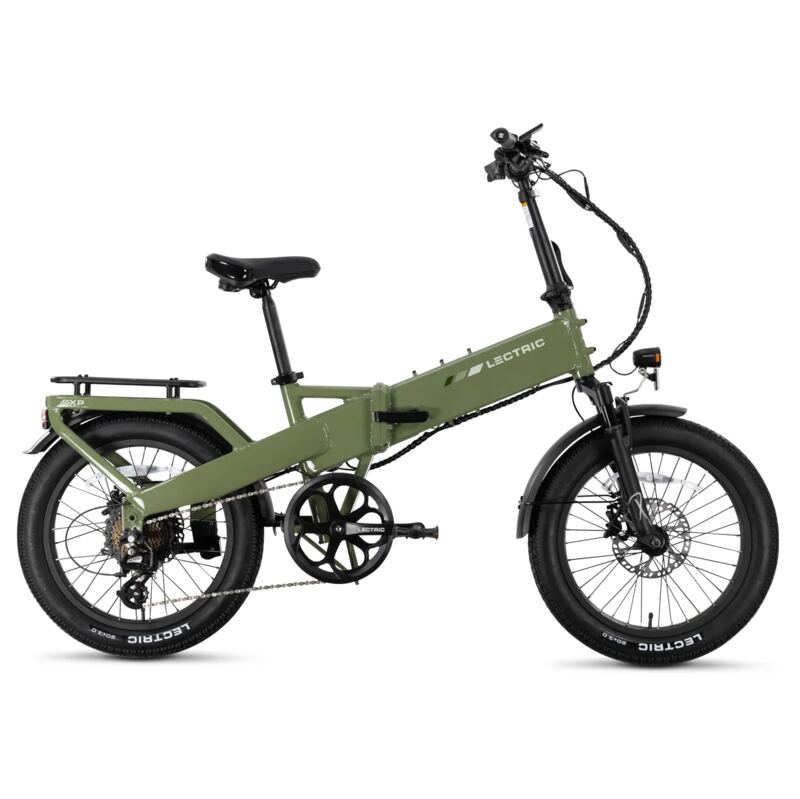
The Aventon Soltera 3 ADV is significantly lighter at 37 pounds compared to the heavy Lectric XP4 750, making it easy to carry upstairs.
Rating sources
“Final Verdict: Editors Choice Award Winner”
Our 4.6 score is the average of the 3 scored reviews above; 4 more reviewed it without printing a score and are not in the average. Ratings marked * were derived from the reviewer’s written analysis or video transcript — the publisher didn’t print an explicit numeric score, so we inferred one from their own words. Click through to verify. More about methodology.