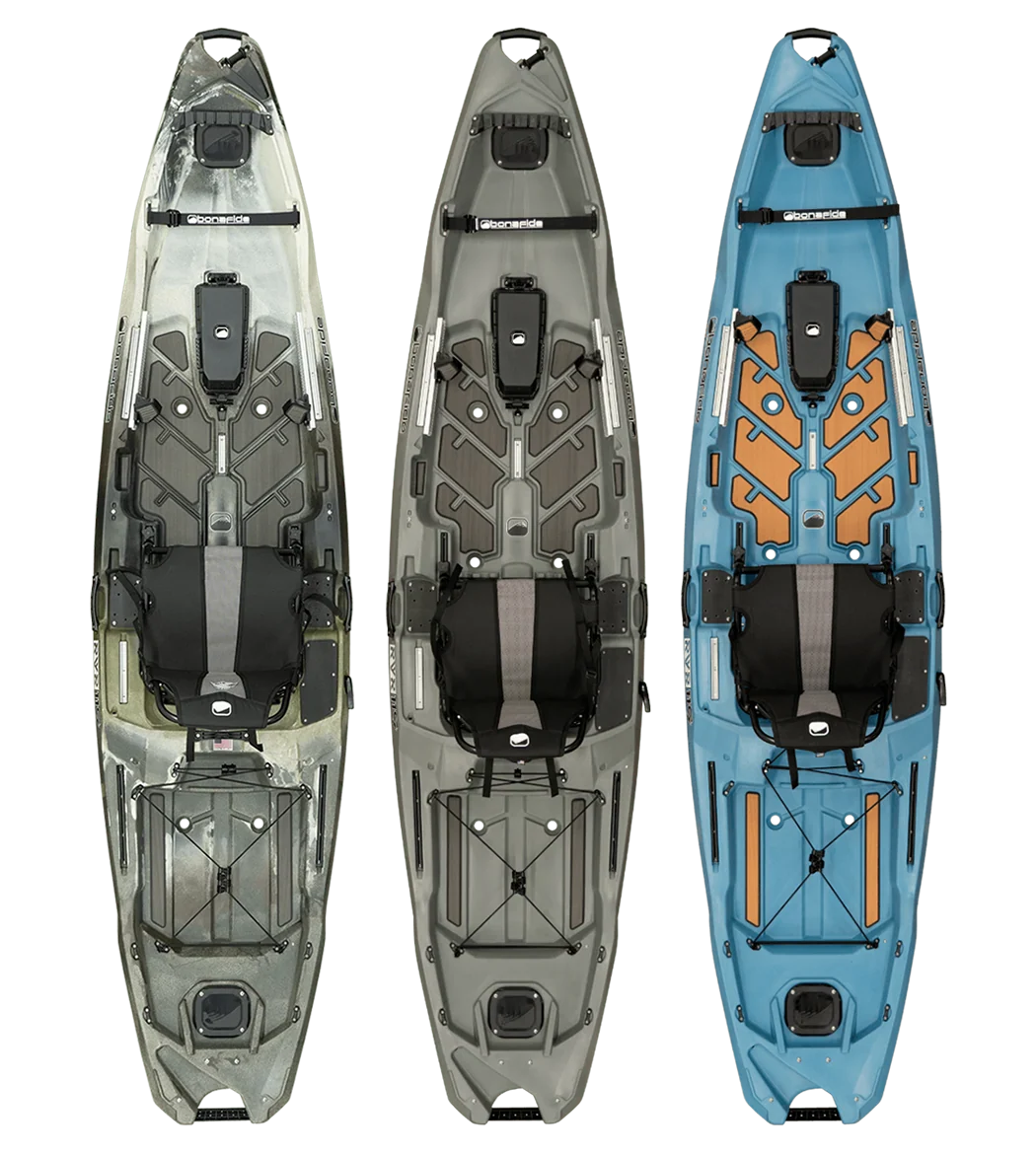
The Bonafide RVR features a modified pontoon-style hull with significant rocker and upswept ends, designed to run over rocks in swift currents while maintaining primary stability. Kayak Angler found that the open cockpit design angles sharply toward the seat for rapid self-bailing through large scuppers, though this lack of internal watertight hatches limits dry storage capacity. The adjustable HiRise seat frame slides fore and aft to balance weight distribution when adding a motor or paddling efficiently. At 85 pounds with factory-installed parts, it is heavier than some competitors but supports a 425-pound capacity for serious river anglers who prioritize maneuverability over gear protection.
Full review
Pontoon hull geometry in rocky rapids
The Bonafide RVR is built on a modified pontoon-style hull with a sharp entry, designed specifically to handle the violent forces of moving water. Kayak Angler reported that chief designer Hans Nutz gave the boat a significant rocker with a bend in the keel from bow to stern. This geometry allows the kayak to run over rocks and shoals rather than catching an edge on them. The hull is not just flat; it features upswept ends at both the bow and stern, which helps the craft handle moving water coming from either direction without swamping or nosediving into waves.
This specific hull shape creates a distinct advantage in swift currents where traditional V-hulls might struggle to maintain stability over uneven riverbeds. The pontoon-style design provides excellent primary stability, giving anglers confidence when standing up to cast or fight fish near dangerous obstacles. While the rocker makes it highly maneuverable for weaving through tight rock gardens and deadfalls, the wide 35-inch beam ensures that this agility does not come at the cost of being tippy in rough water.
Open cockpit drainage efficiency
Unlike decked kayaks that rely on hatches to keep gear dry, the RVR features an open cockpit from bow to stern. To maintain hull integrity without internal compartments, Nutz designed the deck to angle sharply toward the seat. This slope channels any water taken over the sides or splashed in during rapids directly into huge scuppers for rapid drainage. Kayak Angler noted that this design choice ensures the boat self-bails quickly, preventing water from pooling and weighing down the craft after running a Class II or III rapid.
The absence of hatches is a deliberate trade-off for speed and simplicity in river environments where wet conditions are inevitable. While this means anglers cannot store dry gear inside the hull itself, the open design eliminates potential leak points and reduces overall weight compared to sealed kayaks. The deck channels are molded directly into the plastic, creating a seamless path for water to exit without getting trapped under foot braces or seating areas.
HiRise seat fore-aft balancing
The RVR utilizes Bonafide's HiRise seating system, which elevates the angler for better visibility and casting angles over river obstacles. A critical feature of this seat is its ability to slide fore and aft along a heavy-duty frame. Nutz explained that moving the seat forward balances the boat when adding weight to the stern, such as a motor and battery. Conversely, sliding it back lifts the bow for greater paddling efficiency when running without propulsion.
This adjustable balance point allows anglers to optimize the kayak's trim depending on their current task. When fishing with an electric motor mounted at the transom, shifting the seat forward prevents the stern from sitting too low in the water, which could increase drag and reduce steering responsiveness. For pure paddling sessions, moving the weight back ensures the bow cuts through waves effectively rather than plowing into them.
Horizontal rod storage integration
River anglers need to keep rods secure and out of the way while navigating tight spaces under overhanging trees. The RVR addresses this with dedicated horizontal rod storage solutions, including a strap in the bow to support rod tips and space underneath the seat for reels. This layout keeps tackle accessible but safely stowed during high-speed runs or when maneuvering through brush.
The design prioritizes quick access without cluttering the cockpit floor. By routing rod butt storage under the seat and tip support in the bow, the kayak maintains a clear central area for standing and moving around. This is particularly useful in shallow water where anglers might need to wade or drag the boat over sandbars while keeping their gear ready for immediate use.
Anchor Wizard windlass mounting
The transom of the RVR is shaped to accept a motor and Power-Pole bracket, but it also features specific mounts for Anchor Wizard windlasses on each side of the seat. Below-deck anchor rode routing directs lines to both the bow and stern, allowing for precise positioning in currents without manual handling. This setup enables anglers to deploy anchors from either end while remaining seated, a crucial advantage when holding position in fast-moving water.
The inclusion of pre-molded throttle landings alongside these windlass mounts highlights the boat's focus on integrated propulsion control. Anglers can run cables through pre-tapped holes that exit at specific ports, keeping wiring organized and protected from damage during rocky runs. This level of integration reduces the need for aftermarket drilling or custom fabrication to achieve a clean, functional setup.
Removable sonar pod utility
A standout feature on the RVR is the fully removable stainless steel pod located in the stern channel. This compartment houses space for a small battery and electronics, such as a fish finder or down-imaging unit. Unlike fixed installations that require waterproofing every time you load the boat, this pod can be completely removed when not in use or taken home to charge devices safely.
This modularity simplifies maintenance and security. Anglers who transport their kayaks on roof racks or trailers do not need to worry about water ingress into sensitive electronics during transit. The pod clicks securely into place with latches, providing a stable platform for mounting sonar units while keeping the stern channel clear of loose cables or exposed gear.
Weight capacity versus weight
The RVR weighs 85 pounds when fully kitted out with factory-installed parts like track mounts and foot braces. This listed weight includes all hardware, offering a realistic picture of the effort required to load and unload the kayak compared to competitors that may advertise lighter shot weights without components. The boat supports a total capacity of 425 pounds for paddler plus gear, which is substantial for a river-focused craft.
This high capacity allows anglers to carry heavy batteries, large tackle boxes, and multiple rods without compromising stability or performance. The 85-pound weight remains manageable for most adults to drag across shallow shoals or lift onto a truck bed, especially given the six grab handles distributed around the hull. This balance of lightness and load-bearing capability makes it versatile for both solo trips and extended fishing excursions.
Electric motor compatibility
The RVR is designed to work seamlessly with electric motors like the Torqeedo Travel Ultralight, which weighs just 26 pounds and provides up to three hours of runtime. The stern channel accommodates the motor mount while leaving room for a drag chain deployment system molded directly into the hull. This integration allows anglers to use both propulsion methods depending on current speed and personal preference.
The pre-routed cable channels and dedicated foot control areas make adding systems like the Wizard Foot Controlled System straightforward. Anglers can maintain hands-free operation while fighting fish or casting, using their feet to adjust motor speed. The kayak's wide beam ensures that this added hardware does not significantly impact tracking or stability in calm waters.
Catchboard and gear track layout
The deck features a dedicated 26-inch catchboard slot positioned at an angle to facilitate accurate fish measuring. This angled design keeps the board out of the way of leg movement while providing a clear surface for marking lengths. Additional gear tracks under the seat allow for mounting accessories like YakAttack BlackPak trays, which hold lunch, drinks, and sunglasses within easy reach.
This thoughtful layout maximizes usable space without creating clutter. The angled catchboard ensures that measuring fish is efficient and safe, reducing the risk of slipping or damaging the board. Combined with the under-seat storage options, anglers can keep essential items organized and dry on the deck rather than searching through hatches.
Strengths
- +Modified pontoon-style hull with significant rocker and upswept bow/stern designed to run over rocks and handle swift river currents.
- +Open cockpit design with angled deck channels that drain water quickly through large scuppers for rapid self-bailing in rapids.
- +Adjustable HiRise seat frame slides fore and aft to balance weight distribution when adding a motor or paddling efficiently.
Watch-outs
- −Lacks internal watertight hatches as the hull is open from bow to stern, limiting dry storage capacity compared to decked kayaks.
- −Factory weight of 85 lbs (with installed parts) makes it heavier than some competitors that list only shot weights.
How it compares
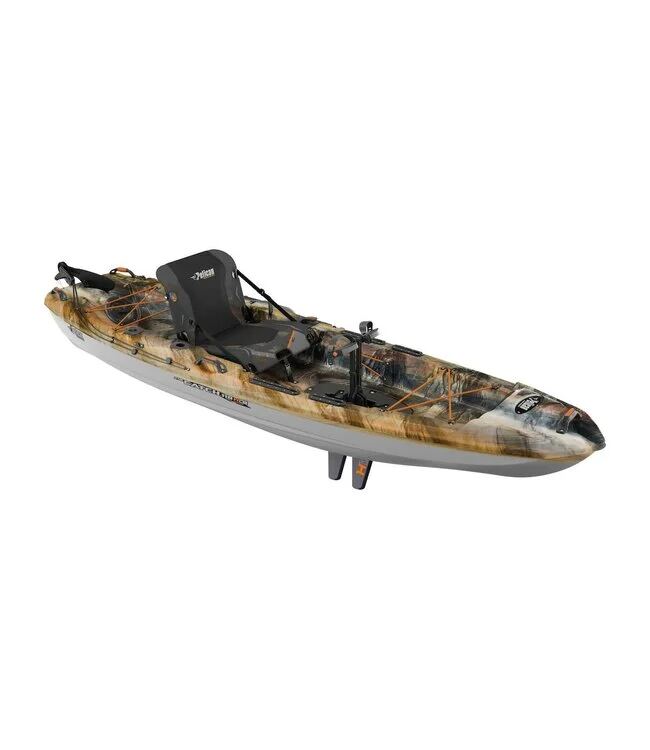
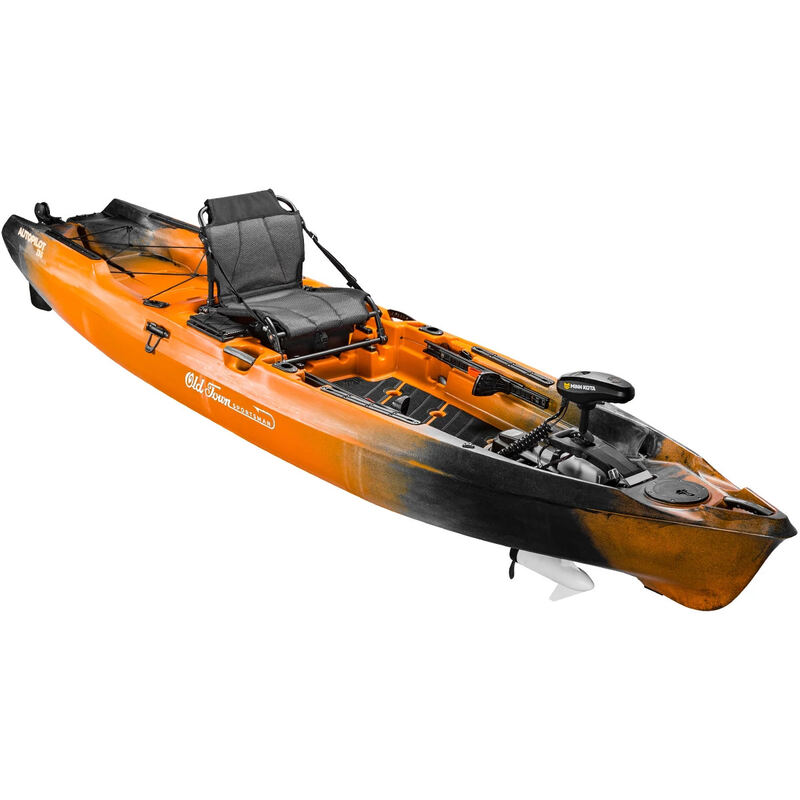
The Bonafide RVR is specifically engineered for swift river currents and rock navigation, unlike the Old Town Sportsman AutoPilot 120 which prioritizes open-water GPS positioning. While it offers a higher weight capacity than the Pelican Catch Kicker 110 HDII, its 85-pound factory weight makes it significantly heavier to transport than that thermoformed competitor.
Rating sources
“So size-wise in my opinion, it's that perfect sweet spot, right? Compact for rivers and sketchy launches, but wide and long enough to carry all the gear that you need and to stand comfortably.”
Our 4.5 score is the average of the 1 scored review above; 3 more reviewed it without printing a score and are not in the average. Ratings marked * were derived from the reviewer’s written analysis or video transcript — the publisher didn’t print an explicit numeric score, so we inferred one from their own words. Click through to verify. More about methodology.