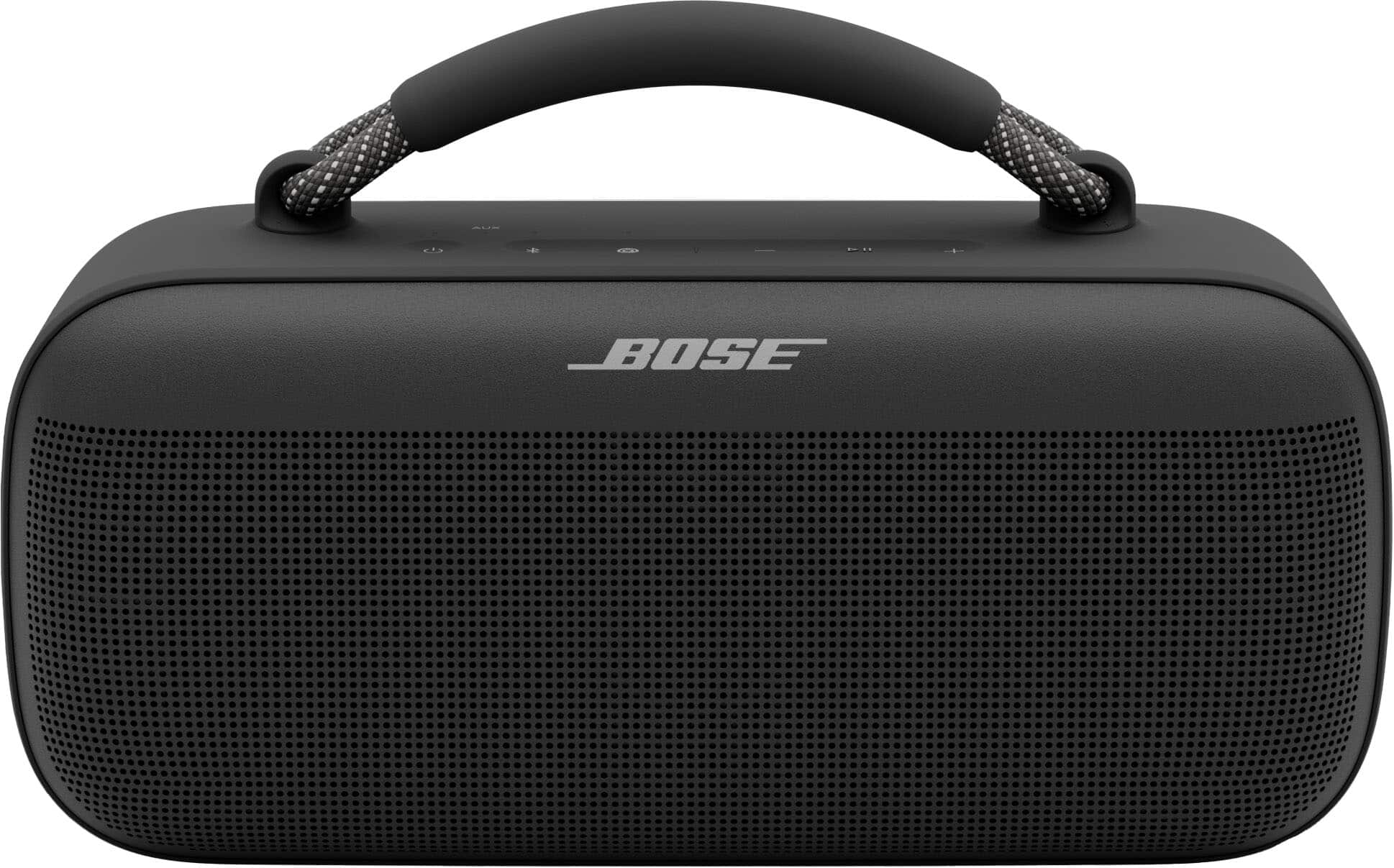
The SoundLink Max is Bose's largest portable speaker and its first run at the patio-party category. Tom's Guide, TechRadar and What Hi-Fi all praised the build quality, the swappable rope handle and the 20-hour battery, though What Hi-Fi flagged the default sound as overly bass-heavy until you tame it in the Bose app. Its 2.13 kg weight, IP67 rating and aptX Adaptive support make it the most genuinely portable and premium speaker on this list.
Full review
Bass-heavy tuning excels in open outdoor spaces
What Hi-Fi calls the SoundLink Max's character 'more natural warmth than the likes of the Dali Katch,' praising its full-bodied sound but flagging the default bass tuning as 'too bombastic' for their taste. Tom's Guide describes it as 'expansive stereo sound' suitable for life on the move, and TechRadar concurs that the sound is 'as big and heavy as the speaker it comes from.' The two racetrack transducers paired with twin passive radiators deliver genuine stereo width when you stand within roughly 4–6 feet of the speaker.
Outdoors, the bass-forward tuning works in the Bose's favour — open spaces eat low frequencies, and the SoundLink Max's default profile compensates. SoundGuys recommended dropping bass in the Bose app for tiled patios or hard surfaces where bass reflects too much. The aptX Adaptive codec (when paired with a Snapdragon Sound-certified phone) gives audibly cleaner mids and treble than the SBC-only Boombox 3 or Hyperboom.
Great for small gatherings but lacks large party power
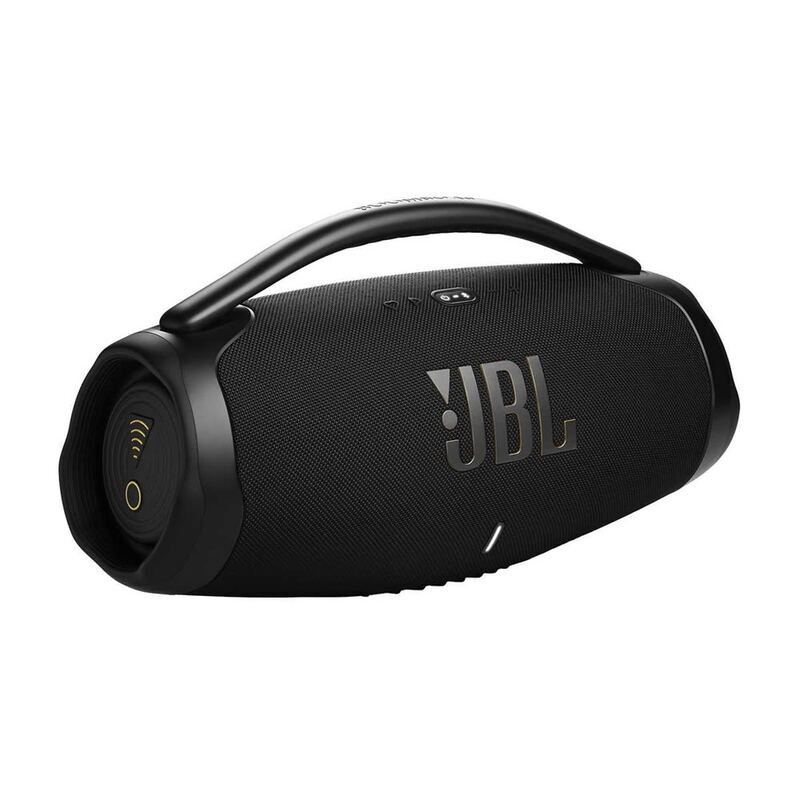
Bose doesn't publish wattage figures, but at maximum volume the SoundLink Max comfortably fills a small patio or deck for 8–15 people. It can't keep up with the Boombox 3 or Hyperboom in a true backyard-fill scenario — the cabinet and drivers are smaller. TechRadar called it 'a very enjoyable companion with sound that is as big and heavy as the speaker it comes from,' which is praise for the form-factor-to-output ratio but an honest acknowledgment of its limits.
For intimate outdoor entertaining — dinner on the patio, a small group around a fire pit, a Sunday afternoon on the deck — it's the right tool. For a 30-person yard party, you want the Boombox 3 or Hyperboom instead. The SoundLink Max's strength is being a portable speaker you can also use outdoors, rather than a dedicated outdoor speaker that you can sometimes carry.
Rugged build with vulnerable ports and easy carrying
The SoundLink Max is the best-built speaker in this category. SoundGuys describes the housing as 'metal grills protect[ing] its drivers and passive radiators, and the rest of the enclosure is wrapped in the same soft-grip siliconized rubber you'll find on the SoundLink Flex.' The IP67 rating means full dust protection plus submersion in 1 meter of water for 30 minutes — the same protection level as the Boombox 3 and a clear step above the Hyperboom's splash-only IPX4.
One real concern: SoundGuys explicitly flagged that 'no tab or flap protects these ports; they could easily get sand in them if you're a regular beachgoer.' The USB-C and AUX jacks are exposed. The rubberized finish also collects dust, lint, and fingerprints visibly — Bose intends for you to wipe it down between uses. The removable rope handle (a soft climbing-rope loop) is the killer ergonomic feature: it swaps for a shoulder strap and makes one-hand carry trivial.
Solid 20 hour battery life with fast USB-C charging
Bose rates the SoundLink Max at 20 hours; SoundGuys and What Hi-Fi both observed this is broadly accurate at moderate volume but drops noticeably at maximum loudness, which is true of every speaker on this list. Recharge is 5 hours via USB-C, faster than the Boombox 3's 6.5 hours. There's a USB-C charge-out feature for topping up phones, and Bluetooth multipoint supports up to 6 paired devices with 2 active at once.
Replaceable battery? No. This is a sealed unit. For a 5+ year ownership horizon that's a real concern, but for most buyers the 20-hour figure on a fresh battery is more than enough for an all-day outing.
Superior Bluetooth audio with limited smart connectivity
The Bose app offers a three-band custom EQ (bass / mid / treble), SimpleSync pairing with other Bose speakers and soundbars (lets you stream to a SoundLink Max and a Bose soundbar simultaneously), and Party Mode for stereo-pairing two SoundLink Max units. There's no Wi-Fi, no AirPlay, no Alexa/Google integration on the SoundLink Max itself — for those features you'd need a Sonos Move 2 or the Wi-Fi variant of the Boombox 3.
The big technical advantage over the JBL and UE speakers in this list is Bluetooth 5.4 with aptX Adaptive support. When paired with a Snapdragon Sound-certified Android phone, the SoundLink Max delivers genuinely better-resolved mids and treble than competing SBC-only speakers. iPhone users see no benefit — Apple devices stick to AAC, which the SoundLink Max also supports.
Bassy out of the box until you tame the EQ
SoundGuys' core complaint is the $399 price for what is, on paper, less raw output than the cheaper-on-sale JBL Boombox 3 or UE Hyperboom. 'With its steep price of $399, the Bose SoundLink Max is for listeners who want a premium Bluetooth speaker with a decent feature set for use around the house but can also handle a trip to the pool or the beach.' That's the right framing — you're paying for build quality and aptX Adaptive, not for SPL.
Secondary complaints: the exposed USB-C and AUX ports are a real liability at the beach, the rubberized finish collects dust visibly, control buttons aren't backlit for night use, and the heavy default bass tuning needs taming in the app for some listening environments. What Hi-Fi observed: 'Out of the box, the Bose sounds bassy. Very bassy.'
The easiest speaker here to actually grab and carry
Buy the SoundLink Max if you want the most premium, most carry-friendly outdoor speaker in the under-$500 range, you'll use it for patio dinners and smaller gatherings rather than full yard parties, and you value IP67 protection plus the aptX Adaptive codec for genuinely better sound on Android. The removable rope handle is the practical differentiator — it makes this speaker genuinely easy to grab and walk with.
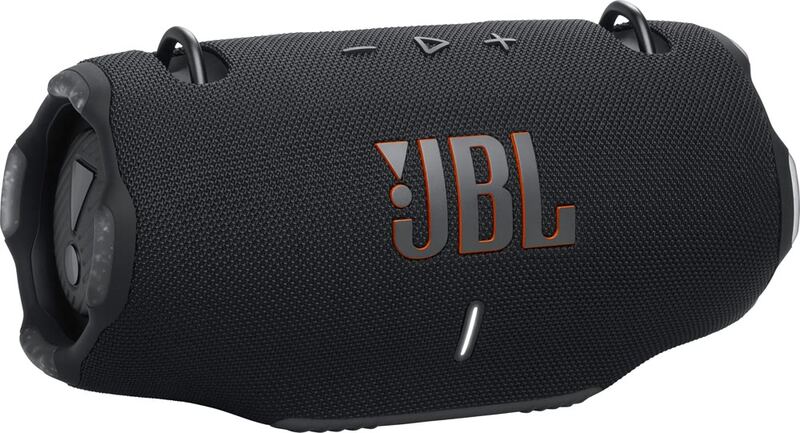
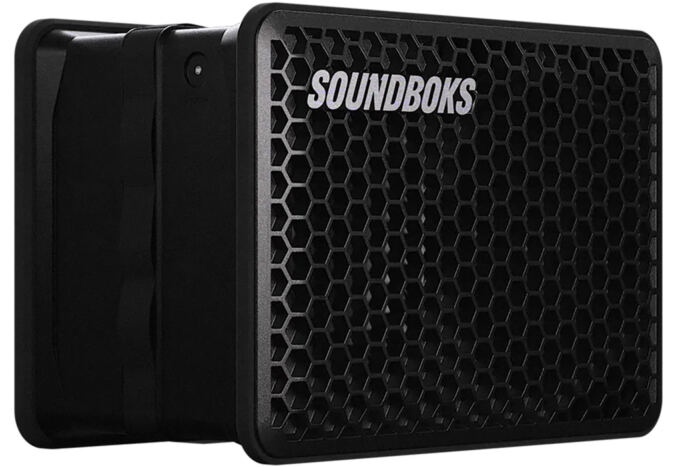
Skip it if you need to fill a large yard with sound (Boombox 3 or Hyperboom are louder), if you want the absolute longest battery life (Soundboks Go's 40 hours dwarfs it), or if you're price-sensitive (the JBL Xtreme 4 covers 85% of the same use case for $100 less).
SimpleSync streams from a Bose soundbar to the patio
At $399 MSRP, the SoundLink Max is the most expensive option here per liter of speaker volume, but the premium materials and aptX Adaptive support justify the price for buyers who care about those things. TechRadar's review summary fits the category: 'the biggest, burliest model in the company's already well-stocked and well-reviewed SoundLink concept.' If you find it on sale near $329, it becomes a genuinely compelling alternative to the Boombox 3 for patio listeners who don't need max SPL.
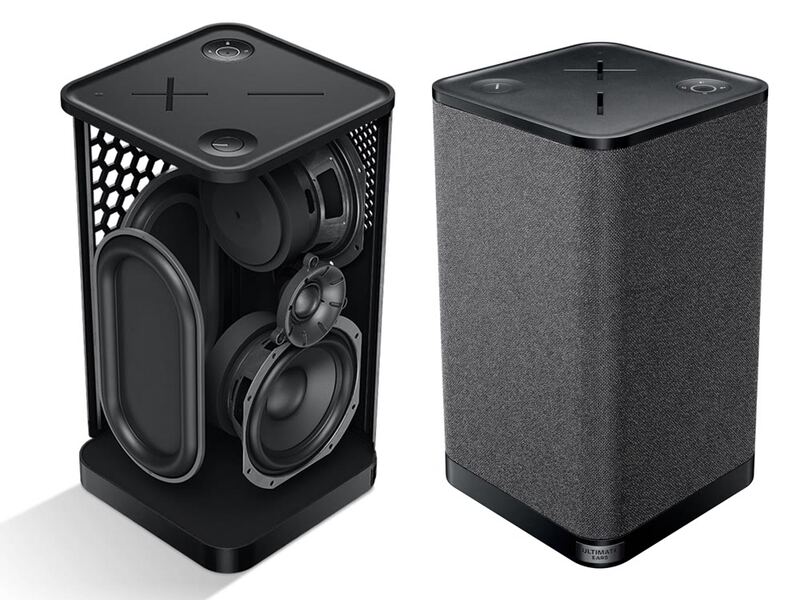
Versus the UE Hyperboom at the same price, the SoundLink Max gives up output but gains IP67 protection, easier portability, and aptX Adaptive. Pick based on whether you'll mostly listen on a deck (Hyperboom wins on volume and adaptive EQ) or actually carry the speaker around (SoundLink Max wins on build and handle).
The Bose brand premium is also real here. SoundGuys notes that for the same $399, you could buy a Tribit StormBox Blast or similar third-tier brand and get more raw watts — but you give up the build quality, the Bose app's reliability, and the multi-year firmware support that Bose typically delivers. For buyers who'd rather own a speaker that still looks and works well in five years than chase pure spec-sheet output, the SoundLink Max is the cleanest choice on this list.
One final consideration: SimpleSync integration with other Bose products (soundbars, Smart Speakers) means buyers already invested in the Bose ecosystem get more value than newcomers. If you have a Bose home soundbar, the SoundLink Max can stream from it to your patio — none of the other speakers here offer that kind of brand-anchored multi-room scenario without committing to a separate Wi-Fi platform like Sonos.
Strengths
- +IP67 dust and water rating handles pool splashes, dust storms, and brief submersion
- +Removable rope handle swaps for a shoulder strap, making it the easiest one-hand carry in this list
- +20-hour rated battery covers a full day outdoors
- +Bluetooth 5.4 with aptX Adaptive codec (Snapdragon Sound certified)
- +Compact 4.7 lb (2.13 kg) cabinet fits on a patio shelf without dominating it
Watch-outs
- −$399 MSRP is steep for the output level (smaller drivers than JBL Boombox 3 or UE Hyperboom)
- −What Hi-Fi reviewers called the default bass tuning 'too bombastic' out of the box
- −Exposed USB-C and AUX ports collect sand and dust — no port flap
- −Rubberized finish picks up debris and fingerprints
- −No physical volume buttons that are backlit for nighttime use
How it compares
The SoundLink Max is the most refined and easiest-to-carry speaker in this list — its 2.13 kg weight is roughly a third of the JBL Boombox 3's 6.7 kg and a fifth of the Soundboks Go's 20 lb. The trade-off is raw output: it can't match the Boombox 3 or UE Hyperboom for backyard fill, and the Soundboks Go is in another league entirely. But the IP67 rating and aptX Adaptive codec put it above the IPX4-only Hyperboom for genuine pool/beach use.
Rating sources
“The Bose SoundLink Max is the most powerful addition to the brand's SoundLink lineup of portable Bluetooth speakers.”
“delivers fun and entertainment in spades”
“The SoundLink Max delivers expansive stereo sound, a 20-hour battery life and is one of the most practical portable speakers for life on the move.”
“the biggest, burliest model in the company's already well-stocked and well-reviewed SoundLink concept”
Our 4.4 score is the average of these published ratings. More about methodology.