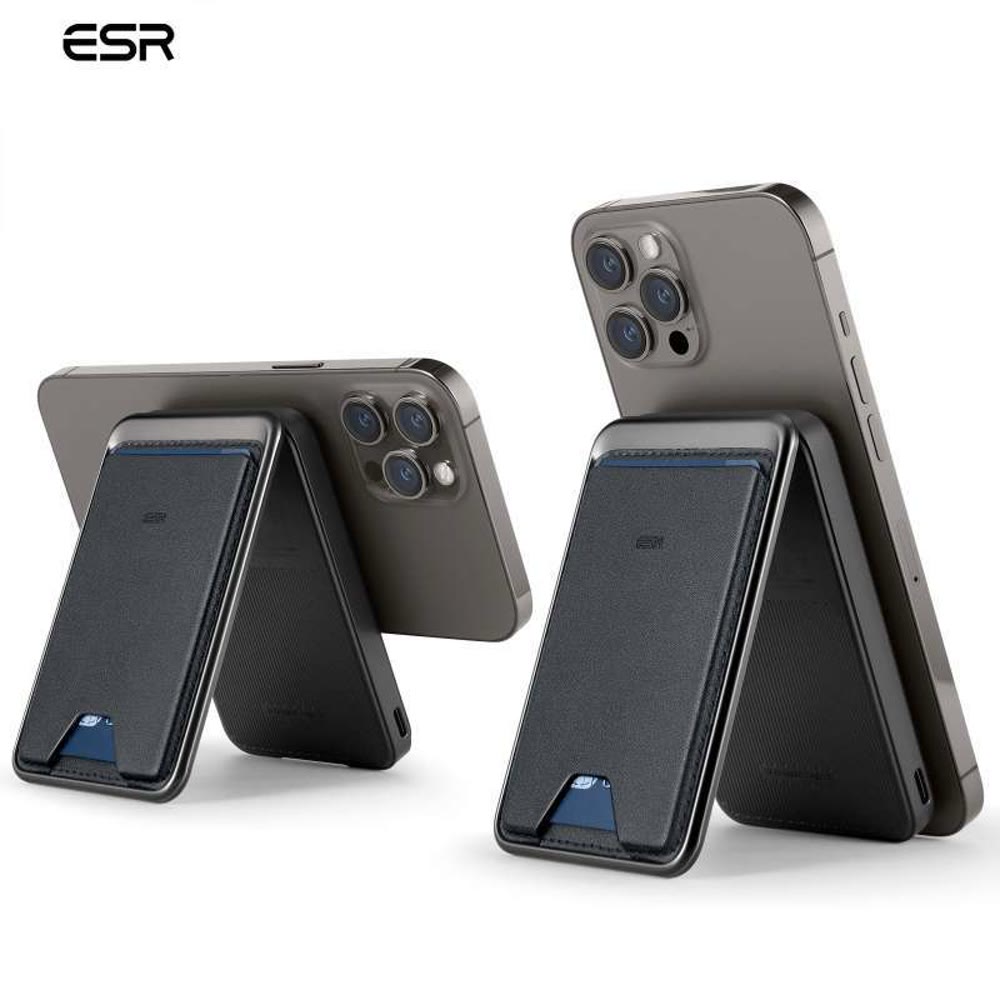
The ESR HaloLock MagSafe Power Bank charges iPhones reliably and adds an integrated kickstand, at the cost of some bulk. iMore rated the MagSafe connection sturdy and the 10,000mAh capacity useful for travel. artiss.blog was less impressed, criticizing the bulkiness and the excessive plastic packaging. It charges at 7.5W over MagSafe and includes a USB-C port so you can charge two devices, though it doesn't sit flush with smaller iPhones in cases.
Full review
213 grams against Apple's 114
This is a chunky object by MagSafe standards: 213 grams and 18mm thick, where Apple's own battery pack is 114g and 12mm, according to artiss.blog. It is a slab of black plastic with none of the soft-touch finish that rival packs use, and while it feels solid it is not something that disappears into a trouser pocket. On smaller iPhones in cases it does not sit flush, which is the practical version of the same complaint. Buyers trading bulk for capacity should know which way that trade runs before ordering.
Ten thousand milliamp-hours, and what that buys
The cell is 10,000mAh, against 1,460mAh in Apple's official pack, and in practice that is close to two full charges of a large iPhone rather than the partial top-up the Apple unit manages. David Artiss at artiss.blog calls the price good for a pack of that size, and James Smythe at Mighty Gadget goes further, describing it as an outright bargain next to the official MagSafe Battery Pack. Capacity is the reason to accept the weight.
20W over the cable, 7.5W over the magnet
According to Mighty Gadget, wireless output through the magnetic pad is 7.5W, which is the ordinary figure for this class and slower than most people expect the first time. The USB-C port is the fast path at 20W, and it also lets the pack charge a non-Apple phone or run pass-through so the phone and the bank both fill from one wall socket. Running two devices at once drops the wireless side further. There is no Lightning input, so a buyer with a bag full of Lightning cables needs one more USB-C cable than before.
The kickstand is the reason to pick this one
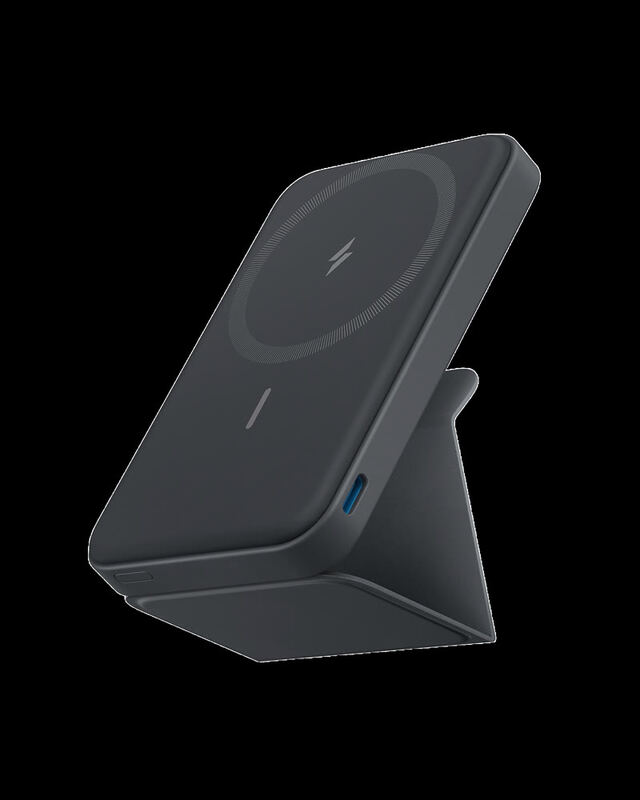
A stand folds out of the top edge and holds the phone at an angle in landscape or portrait, which iMore's Gerald Lynch singles out as the feature that makes the pack worth carrying — it turns a charging brick into a propped-up screen for video, calls and iOS StandBy mode, which needs the phone landscape and powered. A button on the lower left toggles the stand independently of charging, so it works as a stand without draining the cell. Status LEDs along the bottom edge report the remaining charge.
Packaging reviewers went out of their way to criticise
The box is the part of this product that drew the sharpest words. Artiss describes an oversized carton wrapped around a large plastic blister pack, a plastic tie and a stack of leaflets, all for an object that would fit in a padded envelope. It has no bearing on how the pack performs, but it is the kind of detail that matters to buyers choosing between otherwise similar accessories.
Magnets that loosen, and heat that does not build
Heat management is a quiet strength: the pack stays cool through long sessions where some competing magnetic banks get uncomfortably warm. Against that, a minority of owners report the magnetic hold weakening over time, which is usually debris on the contact face rather than the magnets themselves but is worth watching on a pack that is meant to hang off the back of a phone in a bag.
Strengths
- +Reliable MagSafe connection that feels sturdy, per iMore
- +Good capacity with 10,000mAh battery
- +Handy kickstand for propping up iPhone
Watch-outs
- −A bit too chunky to be pocketable, per iMore
- −Doesn't sit flush with smaller iPhones in cases
- −Disappointing packaging with excessive plastic
How it compares
The ESR HaloLock provides a sturdy MagSafe connection and 10K mAh capacity, but it's bulkier than the Apple or Ugreen models and doesn't sit flush with smaller iPhones in cases. Compared to the Baseus, it lacks the built-in USB-C cable and LED display, making it less feature-rich despite similar capacity.
Rating sources
Our 3.9 score is the average of these published ratings. More about methodology.