eufy's Permanent Outdoor Lights S4 put bright, customizable LEDs on your roofline, with RGBWW color mixing and app control. WIRED reviewer Kat Merck praised how much use they get year-round, well past Christmas and Halloween into holiday displays and special events. A radar motion sensor is included, and mounting works with screws or adhesive, though installation means ladder work and takes a while. At $300-$599 they cost more than basic options, and they are brighter and smarter than competitors like Cync ($143) and Govee ($440). Homes with accessible roof eaves and flat surfaces are the fit, with professional installation worth it for tricky architectural features.
Full review
Matter, Thread and the eufy ecosystem
The S4 speaks Wi-Fi, Thread and Matter, which puts it within reach of Apple Home, Google Home and Alexa without a proprietary bridge. Owners already running eufy cameras or locks get the more interesting version of this: lights that react to a camera event rather than to a schedule. Wired's Kat Merck judged the integration functional but not groundbreaking next to other smart lighting systems, which is a fair reading — the protocol support is current, the automations are ordinary. The app handles scheduling, scene creation and remote control, and it is far more approachable for picking presets than for building anything custom.
A radar sensor most rivals leave out
The bundled radar sensor is what separates this from a strip of app-controlled roofline LEDs. eufy specifies 12-meter range and a 120-degree field of view, and the Follow Glow effect animates a ripple along the run when it detects someone. Detection zones can be drawn in the app, though Explore and Renovate's coverage makes clear those zones need careful calibration before the lights stop reacting to passing traffic or a swaying branch. Treated as a welcome-home flourish and a mild deterrent it earns its place; treated as security it does not, because this is a lighting product with a motion trigger, not a monitored system.
Installation is measured in ladder hours
Nothing about mounting these is quick. Each light is positioned and fixed individually, either with screws or the 3M VHB adhesive pads, along the full length of an eave, which means a ladder, a plan and a free afternoon, and considerably more than that on a multi-level house. Explore and Renovate rated the job manageable for a determined DIYer while stressing that measuring and laying out the run before starting is what keeps the cable straight and the spacing even. The screws are small and easy to drop from height. Homes with awkward architectural detail are where paying an installer stops looking like an indulgence.
RGBWW colour and the preset theme library
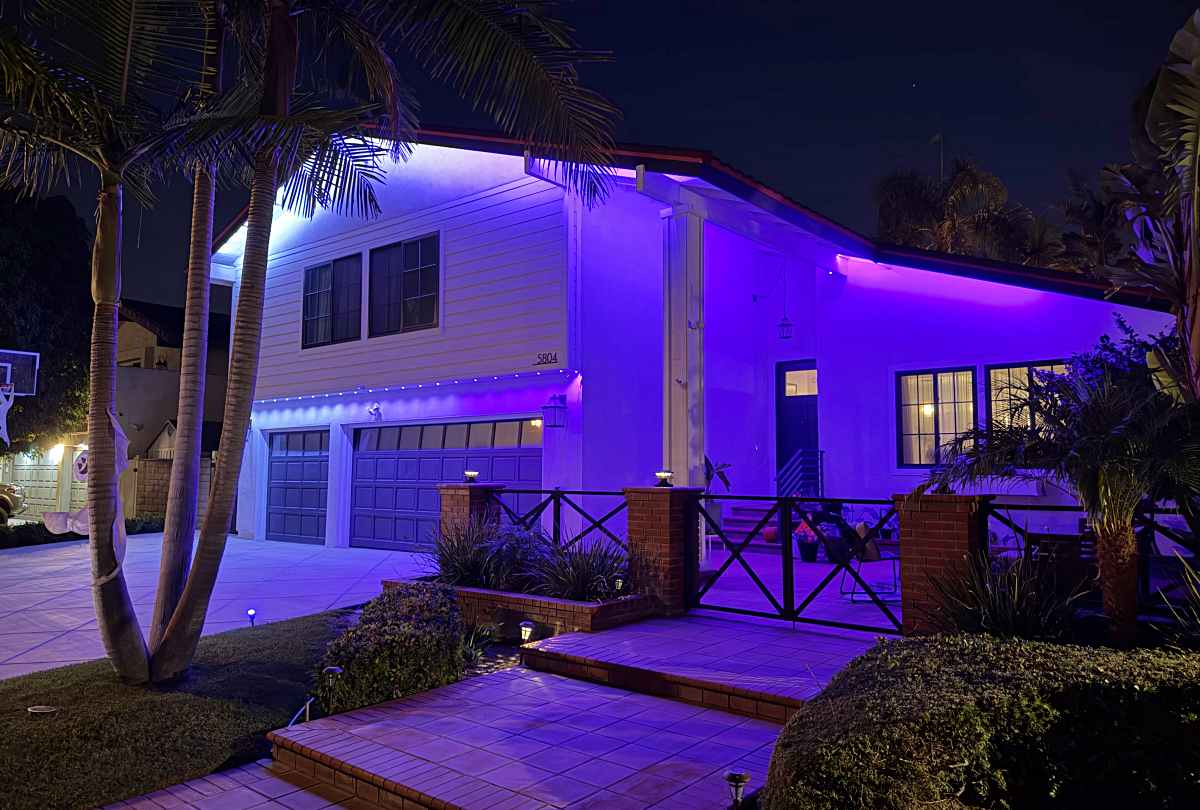
Each fixture combines RGB with warm and cool white at 60lm per LED, which at full output is enough to wash a facade rather than merely outline it. The colour temperature range runs from 1500K to 9000K, and Explore and Renovate noted it can look inconsistent at low output. The preset library is where most owners will actually live: dozens of holiday themes, music sync, and an AI scene generator that turns a written idea into a lighting pattern. Wired found the seasonal presets genuinely effective, and it is the year-round use — parties, sports colours, ordinary evenings — that stops the outlay reading as Christmas-only spending.
Weather resistance a light strip cannot match
Rated IP67 and running on 100-240V mains, these are built to stay up through rain, snow and summer sun, which is the entire point of a permanent installation and the clearest advantage over seasonal string lights or an indoor-rated adhesive strip. The housings are plastic, so ultraviolet exposure will dull them eventually, and the controller wants a sheltered position rather than open weather. Adhesive mounting is the weak link in high wind, and screws are the right choice anywhere exposed. Wired's longer-term impressions through a Midwestern winter were positive, with periodic cleaning rather than failure being the maintenance story.
Fiddly app and holiday-season running costs
Two things keep this off an easy recommendation. The app rewards patience — building multi-scene holiday schedules is fiddly, and anyone new to smart home software will spend real time before it clicks. And the running cost is not nothing: Explore and Renovate flagged that leaving a full roofline lit through a holiday season shows up on the electricity bill, and the brightness that impresses in a demo is more than most streets need on an ordinary evening. Add a price well above basic string lights and above several competing permanent systems, and the result is capable hardware that is hard to justify for casual use.
Strengths
- +LED RGBWW color mixing technology provides bright and colorful lighting with 60lm per LED
- +App control allows for dozens of preset holiday themes and custom scene creation
- +Radar motion sensor enables human detection and trigger lighting effects
- +Weatherproof design with screw or 3M VHB peel-and-stick adhesive mounting options
Watch-outs
- −Installation process is time-consuming and requires ladder use, especially on multi-level homes
- −Mounting system requires individual light placement and screwing, which is tedious and fidgety
- −Price point of $300-$599 is higher than basic string lights or some competitors like Cync
How it compares
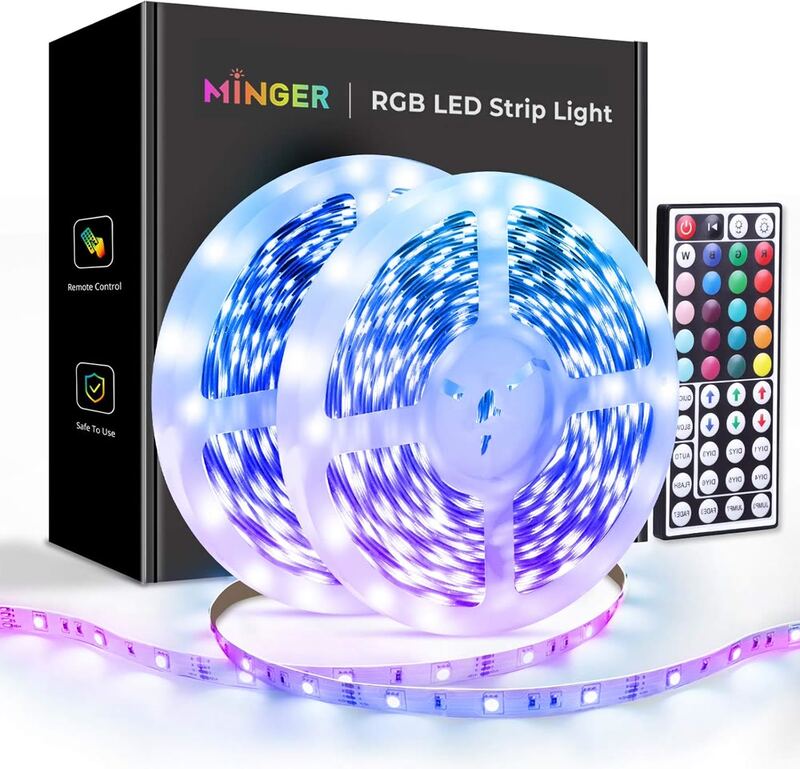
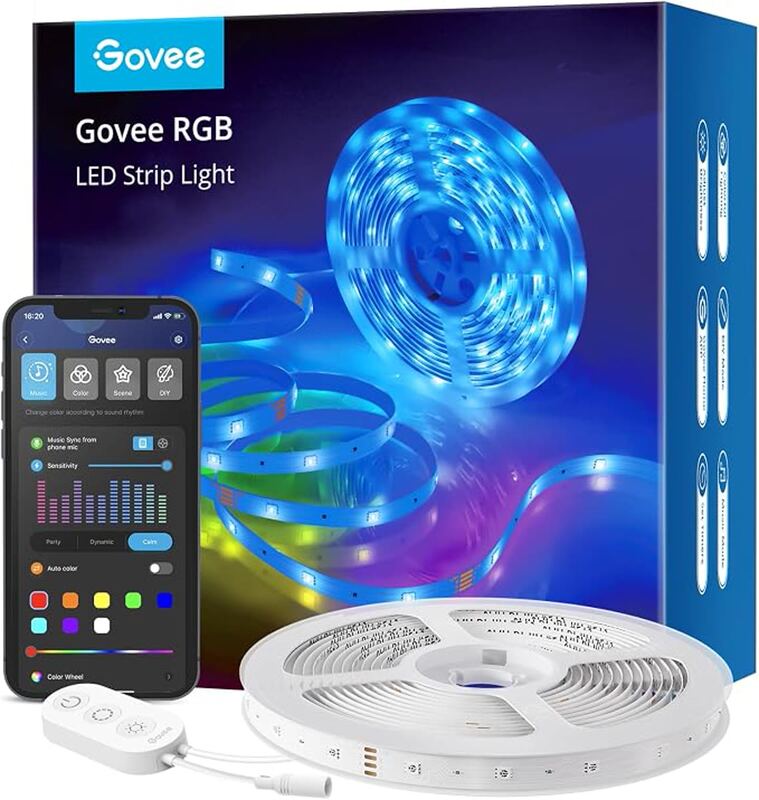
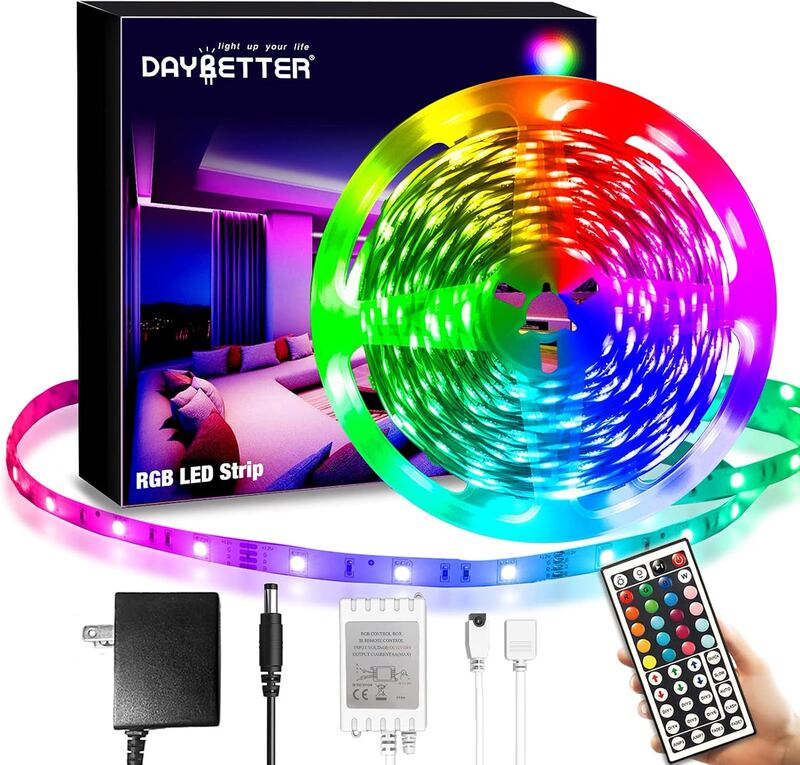
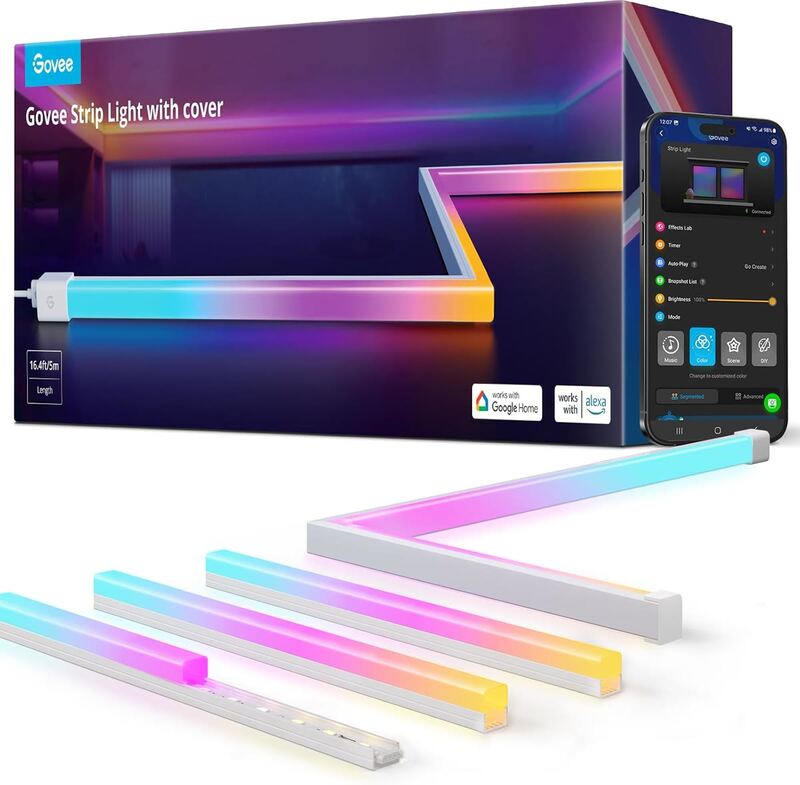
The eufy Permanent Outdoor Lights provide a more robust weatherproof solution compared to the DAYBETTER strips, which are not suitable for outdoor use. However, they are significantly more expensive than the Govee Smart WiFi LED Strip Lights and lack the smart home app integration and WiFi connectivity of Govee's offerings. Unlike the MINGER strips, eufy lights are not designed for DIY customization but rather for permanent outdoor installations with preset themes and motion sensors.
Rating sources
“Our favorite options are from Govee ($440, 100 feet) and Eufy ($300, 100 feet) ; both are great sets you can cut and splice to customize to your home's roofline.”
Our 4.5 score is the average of the 2 scored reviews above; 1 more reviewed it without printing a score and is not in the average. Ratings marked * were derived from the reviewer’s written analysis or video transcript — the publisher didn’t print an explicit numeric score, so we inferred one from their own words. Click through to verify. More about methodology.