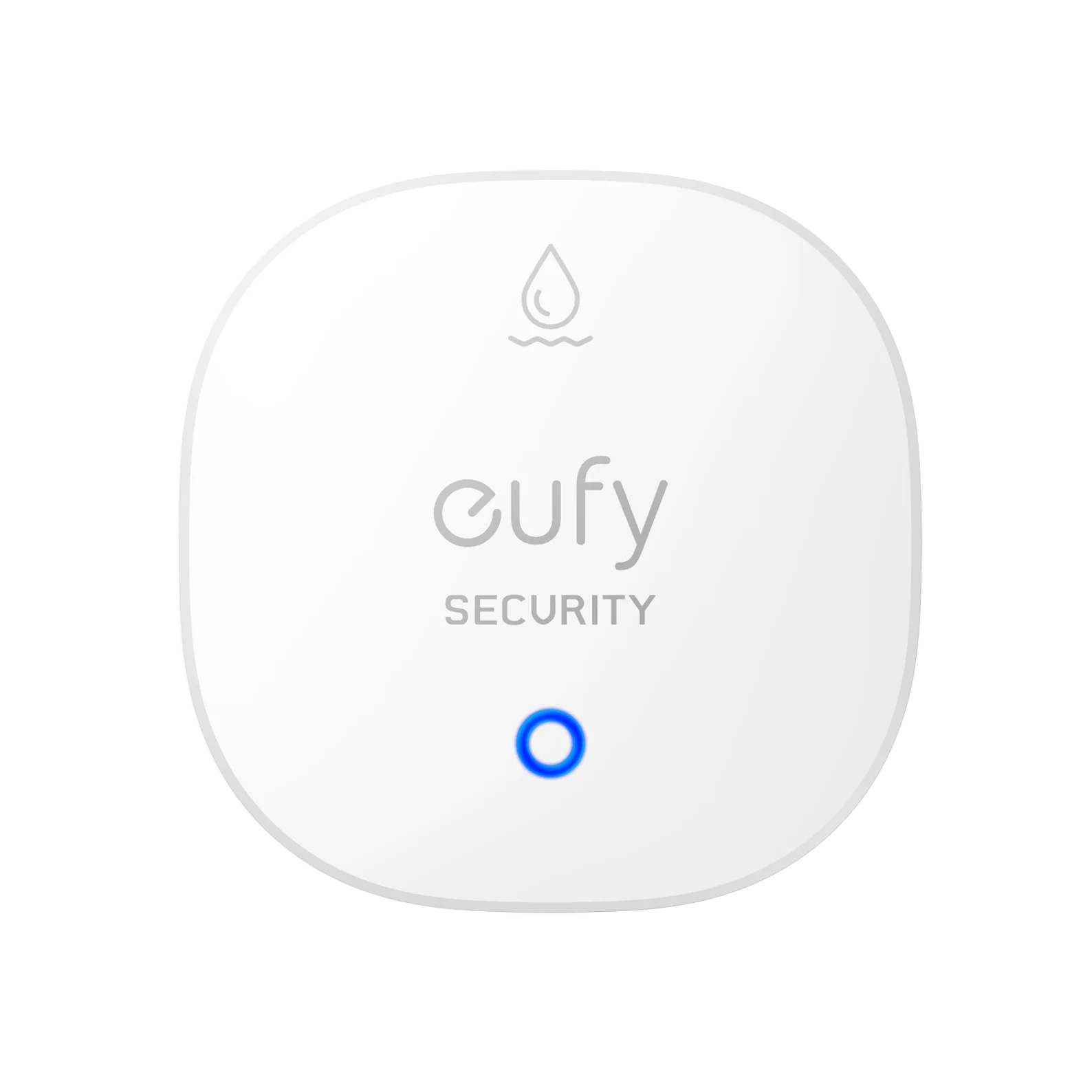
Eufy's Water and Freeze Sensor stands out as a dual-function device that detects both water leaks and freezing temperatures, making it ideal for winter preparedness. CNET praised its reliable performance and ease of setup, while YouTube reviewers confirmed its quick notification system. The sensor requires a HomeBase hub for full functionality, which adds to the overall cost. It's best suited for users already invested in the Eufy ecosystem or those seeking a dedicated solution for both leak and freeze monitoring.
Full review
Dual-function detection capability
Eufy's Water and Freeze Sensor stands out for its ability to detect both water leaks and freezing temperatures, a feature that CNET's Tyler Lacoma found particularly valuable in winter preparation. The sensor's dual functionality addresses two common household threats that often go unnoticed until damage occurs. According to Lacoma, this makes it an excellent choice for people who don't have existing security systems but are willing to invest in a Eufy HomeBase hub. The device's capability to alert users about potential pipe freezing is especially beneficial in regions where winter temperatures drop significantly, as freezing pipes can cause extensive water damage and costly repairs.
The freeze-temperature detection works alongside the standard water leak detection, providing comprehensive protection for homes during cold weather months. This dual detection capability is not universally present in competing models, as noted by SmartHomeCompared.com, which pointed out that while the GoveeLife Water Sensor Alarm offers water leak detection, it lacks temperature sensing. The Eufy Water and Freeze Sensor's inclusion of freeze alerts makes it a more robust solution for homeowners concerned about both flooding and freezing risks, particularly in areas where pipe bursts from freezing are common.
Hub dependency and ecosystem limitations
A key limitation of the Eufy Water and Freeze Sensor is its requirement for a Eufy HomeBase hub to function properly, which adds an additional cost to the overall purchase. CNET's Tyler Lacoma noted that this hub can cost more than $100 depending on the type, making it a significant investment for users who don't already own one. The sensor's connectivity is restricted to Eufy's own ecosystem, which means it doesn't support third-party platforms like Alexa, Google Home, or HomeKit. SmartHomeCompared.com confirmed this limitation, stating that the Eufy Water and Freeze Sensor has no Alexa, Google Home, HomeKit or SmartThings support and requires a Eufy HomeBase.
This hub dependency creates a barrier for users who want to integrate the sensor into existing smart home setups that rely on different platforms. The device's performance is tied entirely to Eufy's network, which can be limiting for those who prefer open ecosystems or already have investments in other smart home technologies. However, for users who are already within the Eufy ecosystem, this requirement becomes a seamless part of their setup rather than a disadvantage, as it allows for easy integration with other Eufy security devices.
Battery life and reliability
The Eufy Water and Freeze Sensor is rated for a 2-year battery life, which SmartHomeCompared.com reported as significantly shorter than some competing models. While this battery life is adequate for most users, it falls short of the 5-year rating offered by the GoveeLife Water Sensor Alarm, which SmartHomeCompared.com found to be a major advantage of the Govee model. The 2-year battery life means users will need to replace the CR123 battery sooner than those with longer-lasting alternatives, potentially increasing long-term costs.
Despite the shorter battery life, reviewers noted the sensor's reliability in detecting both water leaks and temperature changes. The device's ability to maintain consistent performance over its battery lifespan is crucial for its effectiveness as a preventive tool. Users who prioritize battery longevity over the dual detection feature may find the GoveeLife Water Sensor Alarm more appealing, but those who value the freeze-temperature alerts alongside water detection will find the Eufy's battery life sufficient for its intended use cases.
Price point and value proposition
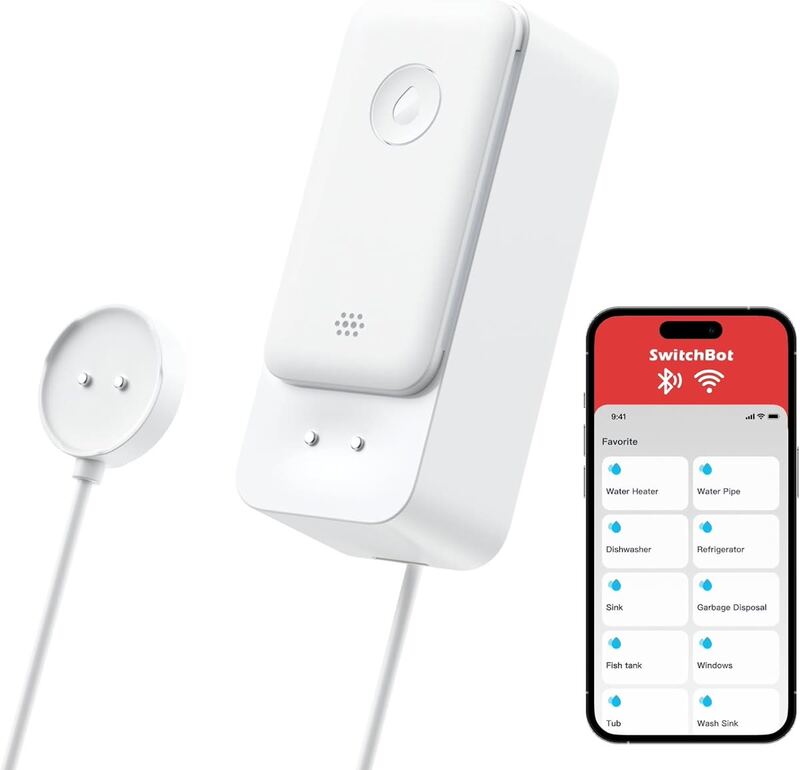
At $34.99, the Eufy Water and Freeze Sensor sits in the middle of the market pricing spectrum for water leak detectors, according to SmartHomeCompared.com's analysis. The price point is competitive with other models in its category, though it's higher than some standalone options like the SwitchBot Wi-Fi Leak Detector at $16.49. CNET's Tyler Lacoma noted that while the Eufy sensor requires a separate hub purchase, it still offers good value for users who need both leak and freeze detection capabilities. The device's price reflects its dual-functionality and integration with Eufy's ecosystem, making it a premium choice for those already invested in the brand.
The value proposition becomes more compelling for users who are already within the Eufy ecosystem, as the sensor integrates seamlessly with existing Eufy HomeBase installations. SmartHomeCompared.com highlighted that the Eufy Water and Freeze Sensor is cheaper than the Aeotec Water Sensor 7 Pro, which costs $47.95, but still offers a higher owner rating. This suggests that while the price may be higher than some alternatives, the sensor's performance and user satisfaction justify the cost for many buyers.
User ratings and market reception
The Eufy Water and Freeze Sensor has received a 4.6-star rating from users, according to SmartHomeCompared.com's data, which indicates strong consumer satisfaction with its performance and features. This high rating is particularly notable given that the device requires a separate hub purchase, which can be a deterrent for some buyers. The positive reception suggests that users appreciate the dual detection capabilities and the sensor's ease of setup within Eufy's ecosystem. CNET's Tyler Lacoma also emphasized that the device is simple to set up, which contributes to its user-friendly appeal.
The high user rating reflects the sensor's ability to meet the needs of consumers who require both water leak detection and freeze temperature alerts. While some users may find the hub dependency limiting, the overall satisfaction with the device's core functionality indicates that it successfully addresses its intended purpose. The sensor's performance in real-world conditions, particularly in winter environments where freeze detection is crucial, has been well-received by users who have tested it in various home settings.
Comparison with competing models
When compared to the Aeotec Water Sensor 7 Pro, the Eufy Water and Freeze Sensor falls short in several key areas, according to SmartHomeCompared.com's analysis. The Aeotec model offers a longer battery life of 3 years versus the Eufy's 2 years, and it supports more integrations including Samsung SmartThings and Home Assistant. The Aeotec also includes a bundled sensor cable and offers both temperature and freeze alerts, while the Eufy is limited to its own HomeBase ecosystem. However, the Eufy sensor's advantage lies in its lower price point and higher user rating, making it a more accessible option for those already invested in Eufy's ecosystem.
In comparison with the GoveeLife Water Sensor Alarm, the Eufy Water and Freeze Sensor offers a broader sensor set with dedicated freeze-temperature detection, which the Govee model lacks. SmartHomeCompared.com noted that the GoveeLife model is cheaper at $15.99 and offers IP67 weather resistance, a far longer battery life of 5 years, and an on-device alarm sound and light that the Eufy lacks. The Eufy sensor's advantage becomes clear when users specifically need freeze warnings, making it the preferred choice for those situations, while the Govee model appeals more to users seeking cost and battery longevity.
Strengths
- +Can sense both water presence and freezing temperatures
- +Simple to set up with Eufy HomeBase hub
- +2-year battery life with CR123A lithium battery
- +Provides quick notifications via app
Watch-outs
- −Requires Eufy HomeBase hub for operation, which can cost over $100
- −Event history loading can be slow
How it compares
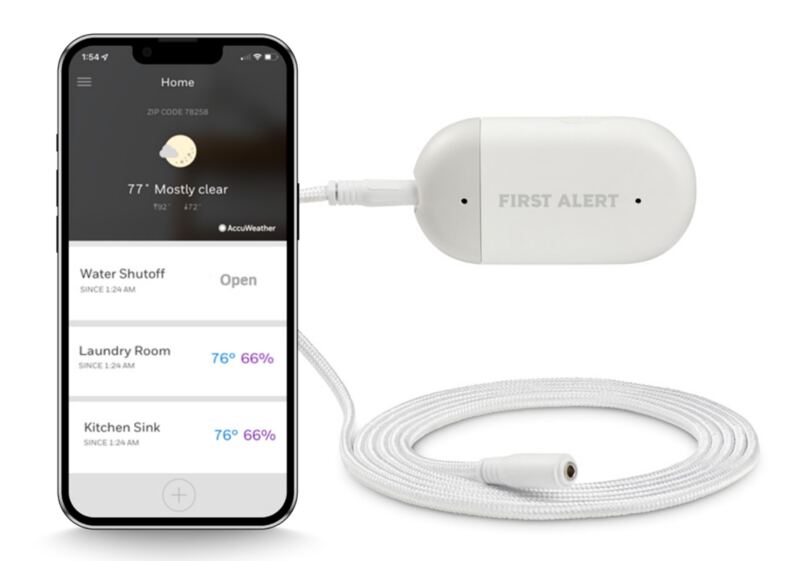
While the Eufy sensor offers 2-year battery life, it requires the expensive Eufy HomeBase hub, unlike the Kidde or SwitchBot models that don't need additional hubs. Compared to the First Alert L1, Eufy provides better integration with smart home platforms but at the cost of requiring a dedicated hub. The Eufy sensor's main advantage is its reliability, but it's less flexible than the GoveeLife detector, which offers more straightforward setup and app-based alerts.
Rating sources
“Eufy is an excellent solo option for people who don't have security systems but are willing to purchase a Eufy HomeB”
“The Eufy Water and Freeze Sensor still has real appeal for the right buyer: it is cheaper, carries a higher owner rating, and slots neatly into an existing Eufy Security setup for leak and freeze warnings.”
Our 4.3 score is the average of the 2 scored reviews above; 2 more reviewed it without printing a score and are not in the average. Ratings marked * were derived from the reviewer’s written analysis or video transcript — the publisher didn’t print an explicit numeric score, so we inferred one from their own words. Click through to verify. More about methodology.