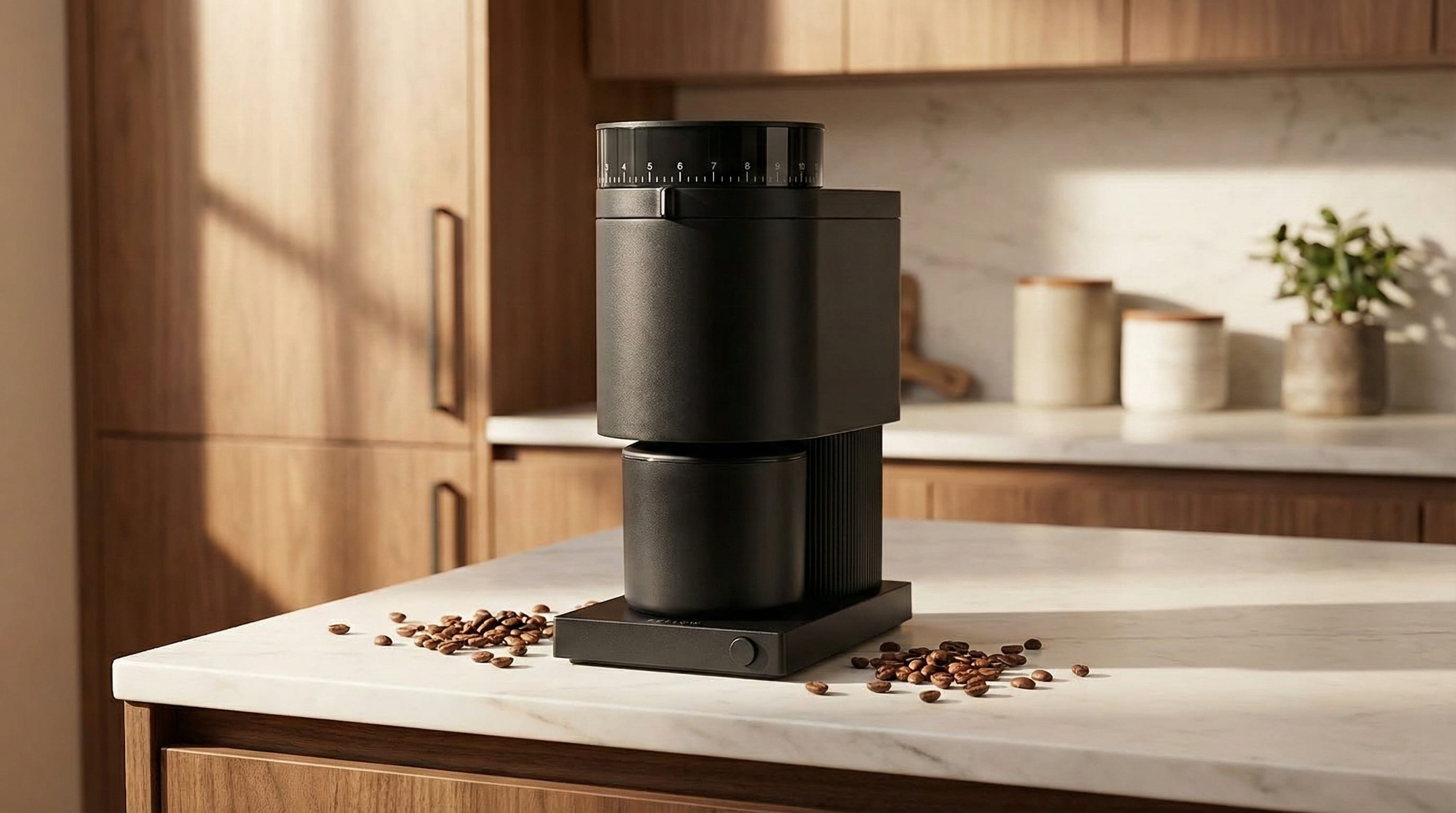
The Fellow Opus grinds filter coffee well enough to embarrass more expensive machines and espresso well enough to get by. WIRED scored it 9 out of 10 and Coffeeness 90 out of 100, both circling the same two things: how quiet it is and how little coffee it keeps. Anti-static treatment holds retention under 0.2g. The housing is mostly plastic, there is no portafilter holder, and the burrs run out of resolution at the finest settings.
Full review
41 stepped settings on 41mm conical burrs
The Opus uses 41mm conical burrs across 41 stepped settings, with an internal adjuster underneath that shifts the whole range when the burrs eventually wear or when the visible steps do not land where a brew wants them. Conical geometry is what lets it reach espresso fineness at all, which Fellow's earlier flat-burr grinders could not. For pour-over, French press and everything between, the step spacing is fine enough that adjacent settings are a real change rather than a placebo.
Retention under 0.2 grams
Static is what makes cheap grinders messy, and the anti-static treatment here is the feature that actually works. The Coffee Locator measured retention under 0.2g against 0.5 to 1.0g for comparable grinders, which in practice means the catch cup comes off without a cloud of grounds on the bench and yesterday's coffee is not contaminating today's. Single-dosing becomes viable as a result. It is not zero, so a purist chasing sub-1g accountability on every shot will still find something to complain about.
Quiet enough to grind with the bedroom door open
WIRED's Jaina Grey describes a machine quiet enough to grind without waking the house, and this is the most underrated thing about it, since most burr grinders at any price are unpleasant first thing in the morning. Six newton-metres of torque does the work slowly and without the shriek, and an automatic stop ends the cycle rather than running the motor dry. The 110g hopper is small on purpose, which encourages grinding what gets brewed instead of leaving beans to stale.
Mostly plastic, and it feels it
The housing is largely plastic where earlier Fellow grinders used more aluminium, and Grey is direct about it feeling less substantial than the price suggests. The black-and-white styling still looks good on a bench. The cord is short at 3 feet, which constrains where the grinder can live, and there is no portafilter holder, an odd omission on a grinder marketed as espresso-capable, so the catch cup gets dosed into a portafilter by hand.
Espresso is capable, not exceptional
At the fine end the burrs run out of resolution. The Opus will pull a decent shot, particularly on medium roasts and in milk drinks, and it will frustrate anyone working light roasts as ristretto where one step is the difference between a choked shot and a gusher. The Coffee Locator's advice is the right one: buy it if filter coffee is most of what gets brewed and espresso is occasional, and buy something stepless if the ratio runs the other way. Gear Patrol's 4.5 out of 5 fits a grinder judged as an all-rounder rather than an espresso specialist.
Strengths
- +Genuine anti-static tech delivers under 0.2g retention vs. 0.5-1.0g in comparable grinders
- +Exceptional filter coffee performance rivaling grinders at $400-500
- +Intuitive operation with near-zero learning curve and excellent first-use results
- +Compact footprint at 5.9" × 7.3" saves counter space vs. owning multiple specialized grinders
Watch-outs
- −Burrs run out of resolution at the finest espresso settings, especially on light roasts
- −Housing is mostly plastic where earlier Fellow grinders used aluminium
- −No portafilter holder, and the cord is only 3 feet
- −110g hopper limits batch size for anyone grinding for a crowd
How it compares
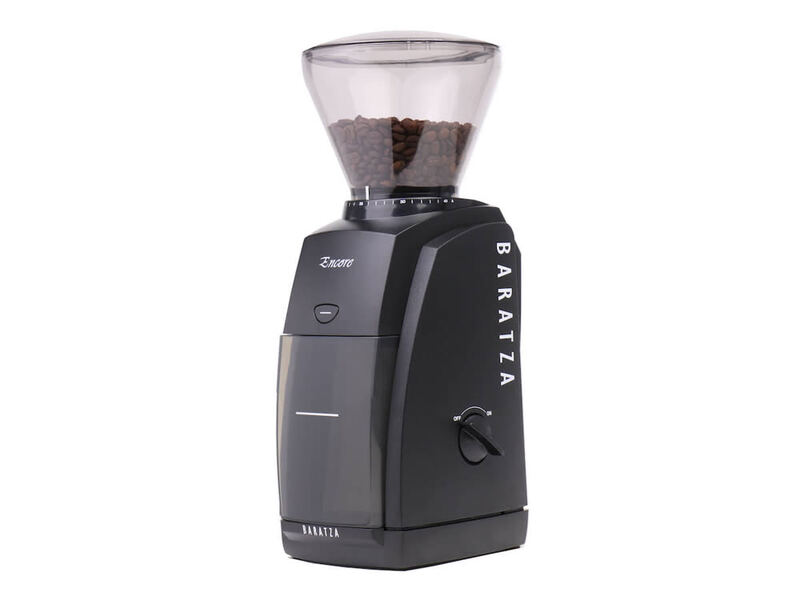
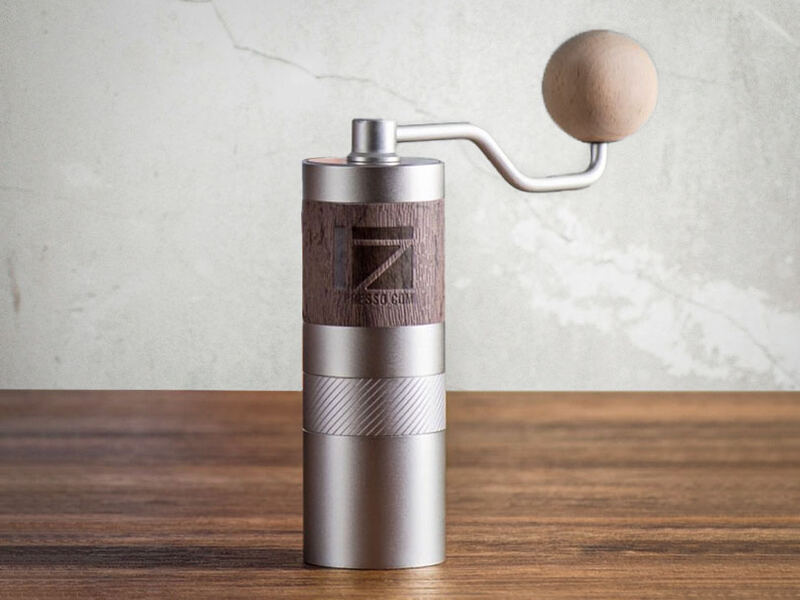
The Fellow Opus offers exceptional anti-static technology and versatility that outperforms the Baratza Encore in filter coffee, but it's not as precise as the Baratza Virtuoso Plus for espresso. While it's more affordable than the 1Zpresso J-Max, it lacks the ultra-fine adjustment capabilities needed for light roast ristrettos, making it ideal for multi-method brewers prioritizing ease over precision.
Rating sources
“So, is the Opus an Ode replacement or better positioned alongside? We found out.”
Our 4.5 score is the average of these published ratings. Ratings marked * were derived from the reviewer’s written analysis or video transcript — the publisher didn’t print an explicit numeric score, so we inferred one from their own words. Click through to verify. More about methodology.