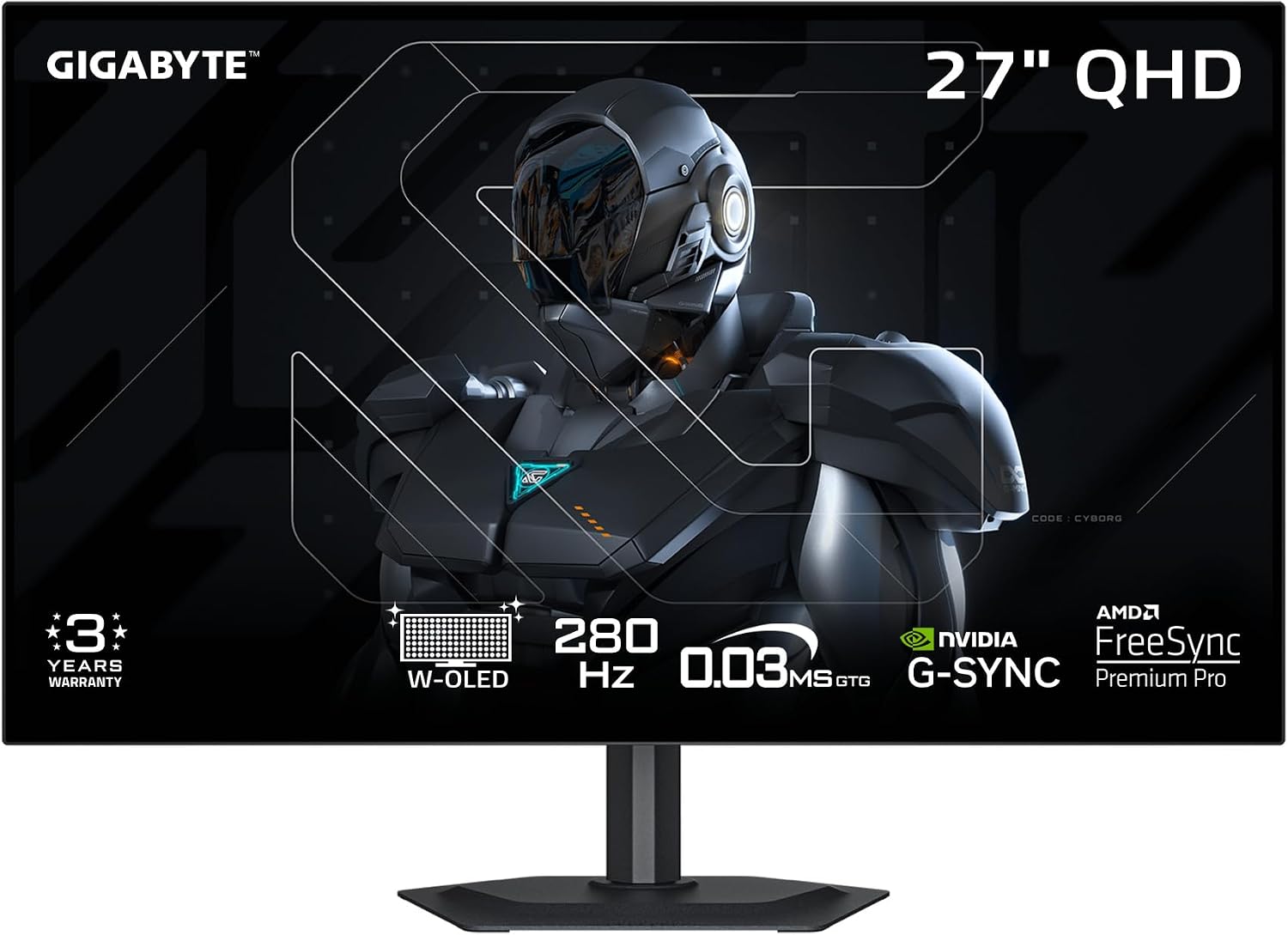
The Gigabyte MO27Q28G is a 26.5-inch 1440p WOLED gaming monitor running at 280Hz, built on LG's fourth-generation tandem panel and rated for 1500 nits peak. Tom's Hardware and Club386 both scored it 4.5 out of 5, crediting the brightness and the wider colour gamut tandem WOLED brings, while PCMag was a step cooler at 4 out of 5. The recurring complaints are black crush under HDR, subpixel text fringing and vertical banding on dark fields. It suits gamers who want OLED motion clarity at high refresh rates rather than anyone doing colour-critical or text-heavy work.
Full review
LG's tandem WOLED panel, brighter by design
The MO27Q28G is built on LG's fourth-generation Primary RGB Tandem WOLED panel, which stacks two emissive layers where earlier screens used one. The practical result is more brightness for the same power draw, and it is why a WOLED monitor can now quote 1500 nits peak instead of conceding the brightness argument to QD-OLED. Club386 described the panel as putting QD-OLED rivals on notice, and Tom's Hardware credited both the peak brightness and the colour improvements over earlier WOLED screens. The panel itself is 26.5 inches at 2560 x 1440, a sensible density for a desk — sharp enough for text without needing a graphics card that can drive 4K at these frame rates.
280Hz with a 0.03ms response time
Gigabyte quotes 280Hz and a 0.03ms grey-to-grey response, and OLED is the one panel technology where a figure that small is credible rather than marketing. Motion is clean, with none of the smearing a fast IPS still shows on dark transitions, and adaptive sync runs from 48Hz upward under both AMD FreeSync Premium Pro and Nvidia G-Sync, so neither graphics camp is left out. Club386 found the panel as smooth in motion as it is sharp. There is also an Ultra Clear black-frame-insertion mode that trades brightness for motion clarity at halved refresh rates — a niche setting, but a real one for anyone who values clarity over peak luminance.
HyperNits and DisplayHDR True Black 500
HDR is where the tandem panel earns its keep. The monitor carries VESA DisplayHDR True Black 500 certification, and Gigabyte's HyperNits setting pushes brightness further under HDR — Club386 described a high mode for maximum output and a medium mode giving a gentler lift suited to darker rooms. Per-pixel black levels do the rest; in a dim room the contrast is not something an LCD can answer at any price. The caveat is the one every OLED shares. Peak brightness figures describe small highlights, not a full white field, so a bright room flattens the HDR effect more than the headline number suggests.
Colour volume beyond traditional WOLED
Coverage is quoted at 99.5% of DCI-P3 and 84% of BT.2020, which is genuinely wide for a WOLED and closes much of the historic gap to QD-OLED. Tom's Hardware picked out the colour improvements over conventional WOLED as one of the monitor's real advances, and Club386 reported the same broad gamut figures. What those numbers do not promise is accuracy out of the box: wide gamut and correct gamut are different things, and anyone doing colour-managed work should plan to calibrate rather than trust the factory preset. For gaming and general desktop use the default modes are punchy and perfectly usable as they ship.
Text fringing, black crush and banding
The complaints are the familiar OLED set plus one panel-specific issue. Tom's Hardware flagged black crush under HDR, where shadow detail collapses into flat black, and subpixel fringing that shows as coloured edges around small text — a consequence of the WOLED subpixel layout rather than a fault in any individual unit. Club386 also picked up minor uniformity issues alongside the same text fringing. Vertical banding on dark uniform fields is a recurring complaint against this panel, and while it can settle as the screen breaks in, it is worth checking inside the return window. None of this stops it being a good gaming monitor; all of it argues against buying it mainly for documents.
Strengths
- +280Hz refresh rate with low input lag and exceptional pixel response
- +Impressive brightness performance under SDR and some HDR scenes, per Club386
- +Improved color volume and gamut exceeding traditional WOLED and some QD-OLED
- +Ultra Clear BFI (Black Frame Insertion) setting for 240Hz-like clarity at 120Hz
Watch-outs
- −Black crush issues at higher refresh rates, particularly under HDR
- −Subpixel layout may cause text fringing and eye fatigue for some users
- −Vertical banding issues persist, though may reduce over time
How it compares
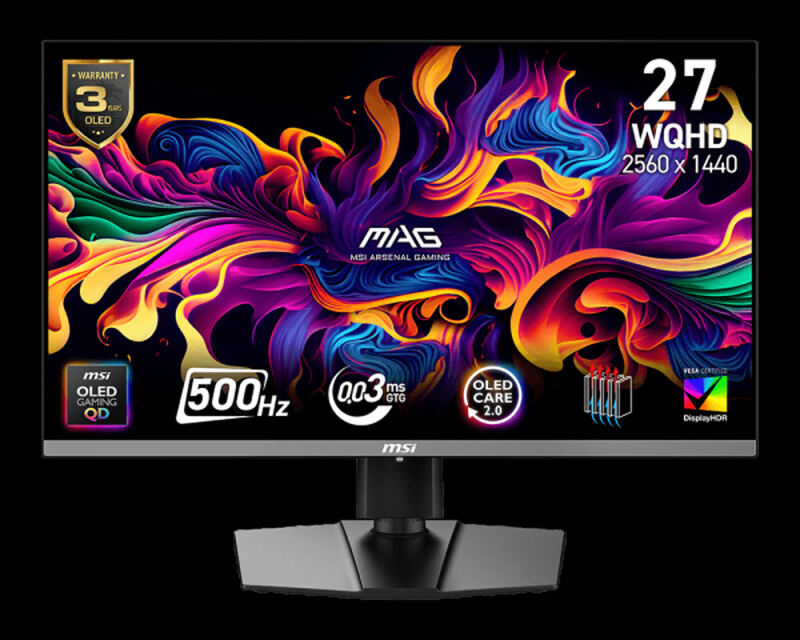
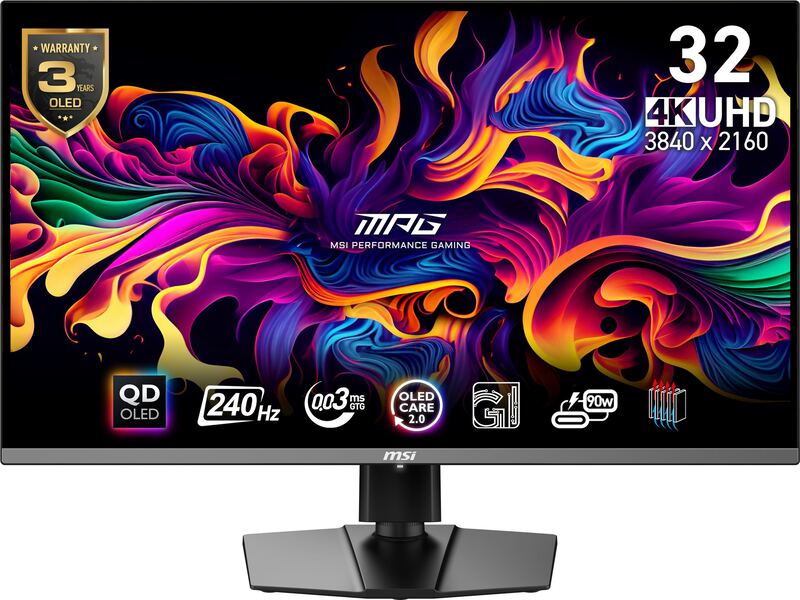
The Gigabyte MO27Q28G delivers the highest refresh rate at 280Hz, outperforming the Swift OLED's 540Hz in terms of practical gaming performance, but lacks the color accuracy of the MSI MAG 272QP QD-OLED X50. Unlike the MSI MPG 321URX QD-OLED, it doesn't support 4K resolution and offers less brightness than the MSI MAG 272QP QD-OLED X50.
Rating sources
Our 4.3 score is the average of these published ratings. More about methodology.