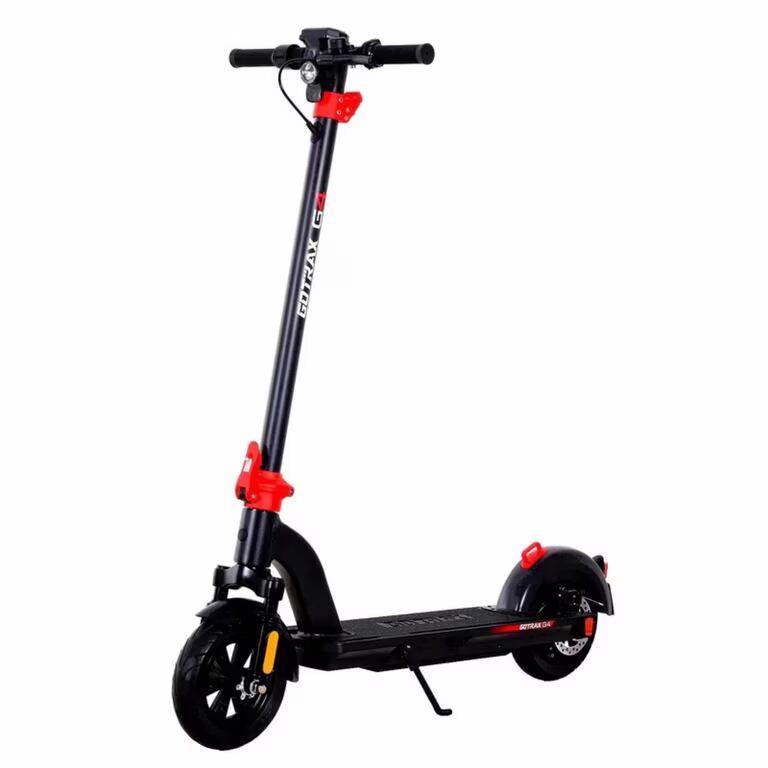
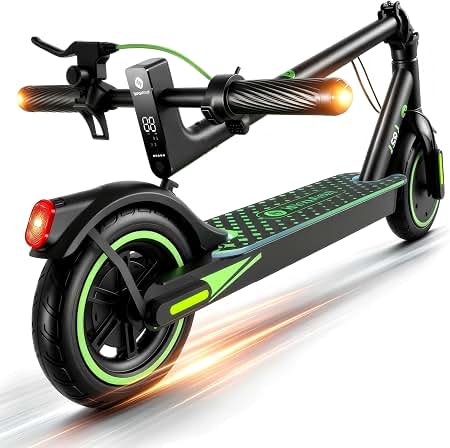
TechGearLab found that the Gotrax GXL V2 offers a comfortable ride and reliable braking thanks to its 8.5-inch pneumatic tires and dual E-ABS system, making it safe for beginners. However, the scooter suffers from limited real-world range of approximately five to ten miles and an underpowered 250-watt motor that struggles significantly on steep inclines or with heavier riders. RiderGuide noted that acceleration is sluggish without manual kicking, further restricting performance in hilly terrain. This model fits short, flat urban commutes where portability matters most, but those needing hill climbing ability or long-distance travel should look elsewhere.
Full review
Pneumatic tires and braking define ride comfort
TechGearLab measured an effective range of just seven miles during its standardized evaluation, a figure that fell significantly short of the manufacturer's advertised twelve-mile claim. The outlet noted that the scooter began to slow considerably as the battery drained halfway through the test run, tapering off into a crawl rather than maintaining consistent power until empty. This early voltage drop means riders cannot rely on the digital display for accurate remaining distance calculations near the end of a trip.
Despite the range shortfall, TechGearLab awarded the GXL V2 high marks for ride comfort and braking performance, identifying these as the scooter's primary strengths over its rivals in the budget category.
The braking system combines front electronic anti-lock brakes with a rear mechanical disc brake, delivering stopping power that TechGearLab found to be among the best in its class. The inclusion of E-ABS prevents wheel lockup during hard stops on slick surfaces, adding a layer of safety typically reserved for higher-end models. This dual-brake setup allows the scooter to stop reliably within short distances, making it a safe option for beginners navigating busy city sidewalks and bike lanes.
250-watt motor struggles on inclines
Hill climbing performance reveals the limitations of the single 250-watt brushless DC motor. RiderGuide documented a hill climb test over a 200-foot stretch with a 10% grade, where the scooter completed the ascent in 20.9 seconds at an average speed of 6.5 mph.
The low power output means the scooter feels sluggish when starting from a stop or accelerating into traffic, requiring patience rather than agility. RiderGuide noted that while the motor can handle moderate urban inclines with supplemental pedaling kicks, steep hills will drain the battery rapidly and reduce overall range. Riders who live in hilly areas should consider this underpowered drivetrain as a major constraint before committing to the purchase.
Real-world range degrades quickly
The outlet attributed this variance to rigorous testing conditions that included frequent stops, varied terrain, and continuous acceleration rather than steady cruising. This discrepancy underscores how sensitive the 187.2Wh battery is to riding style and environmental factors.
A YouTube reviewer who owned the scooter for one year reported a severe degradation in range after twelve months of use, dropping from an initial five to five-and-a-half miles per charge down to just four to four-and-a-half miles. The owner noted that this decline occurred despite regular maintenance and proper tire inflation, suggesting that the battery cells may not hold their capacity well over time for daily commuters who rely on every available mile.
The battery gauge itself can be unreliable during operation. A separate YouTube reviewer observed that the display flickers between one bar and three or four bars while riding over bumps, making it difficult to judge remaining power accurately. The reviewer also warned that taking the scooter down a massive hill immediately after charging caused a voltage spike that fried the top console, indicating potential vulnerability in the electrical system under specific stress conditions.
Build quality shows wear over time
Circuit Wizardry detailed a repair scenario where the throttle mechanism failed due to issues with internal potentiometers, which act as variable resistors for the scooter's control board. The reviewer found that replacing these components required significant disassembly and epoxy work because previous owners had often lost original fasteners during attempted repairs. This highlights that while the scooter is mechanically simple, electronic failures can be difficult for average users to fix without technical expertise.
A three-year update review from YouTube documented structural loosening in the folding mechanism and handlebar stem after extended use. The reviewer noted that the release lever became increasingly difficult to operate in cold weather, and the locking pin developed a noticeable wobble that persisted even after tightening bolts. This mechanical play can create handling instability at higher speeds or over rough pavement, requiring regular maintenance to ensure safety.
The motor also exhibited signs of wear in long-term use, with one reviewer describing a grinding sound that occurred specifically when accelerating from low speeds under load. The noise disappeared once the scooter reached five miles per hour but raised concerns about internal gear or bearing degradation. While the scooter remained functional for three years, this mechanical anomaly suggests that longevity may vary significantly based on usage patterns and terrain.
Portability suits short urban commutes
TechGearLab awarded high portability scores for this weight class, noting that the quick-release folding mechanism allows users to collapse the scooter into a compact package suitable for carrying onto public transit or storing under office desks.
EScooterNerds measured the folded dimensions at 44 by 16.9 by 16.1 inches, confirming that the scooter fits easily into most car trunks and tight apartment corners. The reinforced aluminum alloy frame provides sufficient rigidity for daily folding and unfolding without excessive flex, though the lack of adjustable handlebars limits customization for riders outside the average height range.
The IP54 water resistance rating allows the scooter to withstand light rain and wet pavement, but users should avoid deep puddles or submersion. EScooterNerds reported no issues during light rain tests, while another third-party test noted a single battery malfunction after exposure to heavier moisture. This variability suggests that while the scooter is weather-resistant for casual urban use, it is not built for all-weather reliability in harsh climates.
Strengths
- +8.5-inch pneumatic tires provide a relatively comfortable ride on urban surfaces.
- +Dual braking system combines front electronic anti-lock brakes with a rear mechanical disc brake for reliable stopping power.
- +Includes cruise control and LED headlight, features typically found on higher-end models.
- +Lightweight 26-27 lb frame folds quickly for easy portability and storage.
Watch-outs
- −Limited range of approximately 5 to 10 miles under real-world conditions falls short of the manufacturer's claims.
- −Underpowered 250-watt motor struggles with steep inclines and performance drops significantly near the weight limit.
- −Low top speed of roughly 13.5 to 16 mph restricts usage on faster roads or for experienced riders.
How it compares
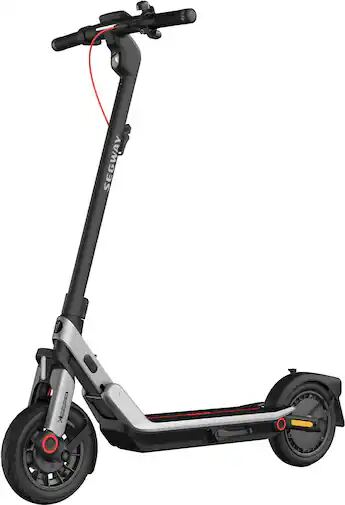
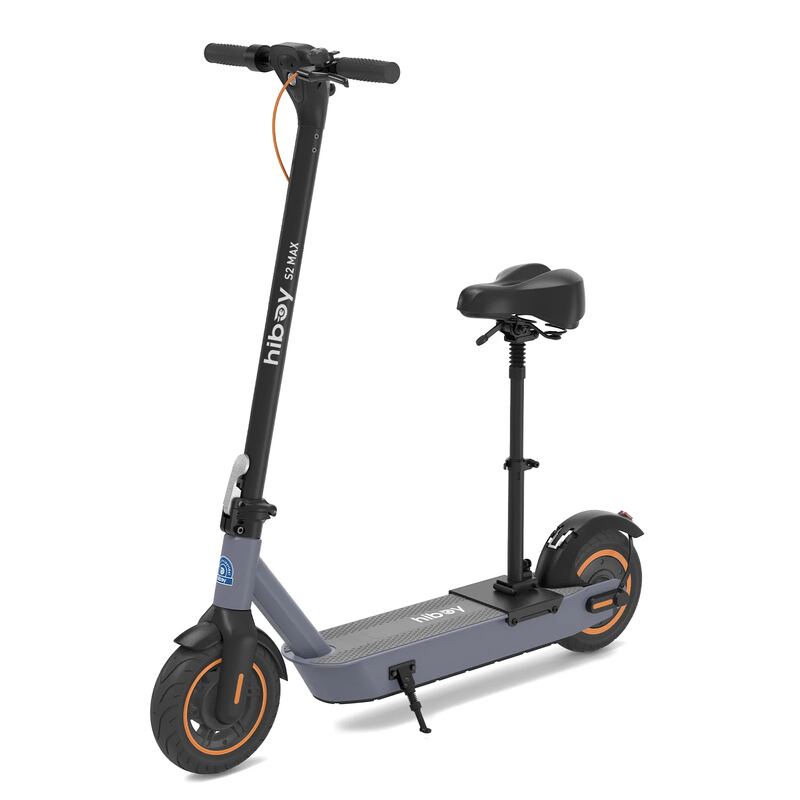
The Gotrax GXL V2 is significantly lighter at 27.4 lb compared to the Segway E3 Pro's 40 lb, making it a superior choice for portability and easy storage. Conversely, its 250W motor struggles with steep inclines where the Hiboy S2 Max’s 500W motor provides strong acceleration and handles hills effectively.
Rating sources
“The GoTrax GXL V2 Commuter is a reliable, budget-friendly electric scooter with solid quality.”
Our 4.2 score is the average of the 3 scored reviews above; 2 more reviewed it without printing a score and are not in the average. Ratings marked * were derived from the reviewer’s written analysis or video transcript — the publisher didn’t print an explicit numeric score, so we inferred one from their own words. Click through to verify. More about methodology.