Every other inverter generator gets measured against the Honda EU2200i. Bob Vila ranks it the top small inverter and Consumer Reports rates it 4.6/5, both citing quiet operation, clean sine-wave power and Honda's reputation for engines that outlast their owners. You pay roughly triple what a Westinghouse or WEN costs, and the 0.95-gallon tank is the only objective weakness.
Full review
1,800 running watts from a commercial engine
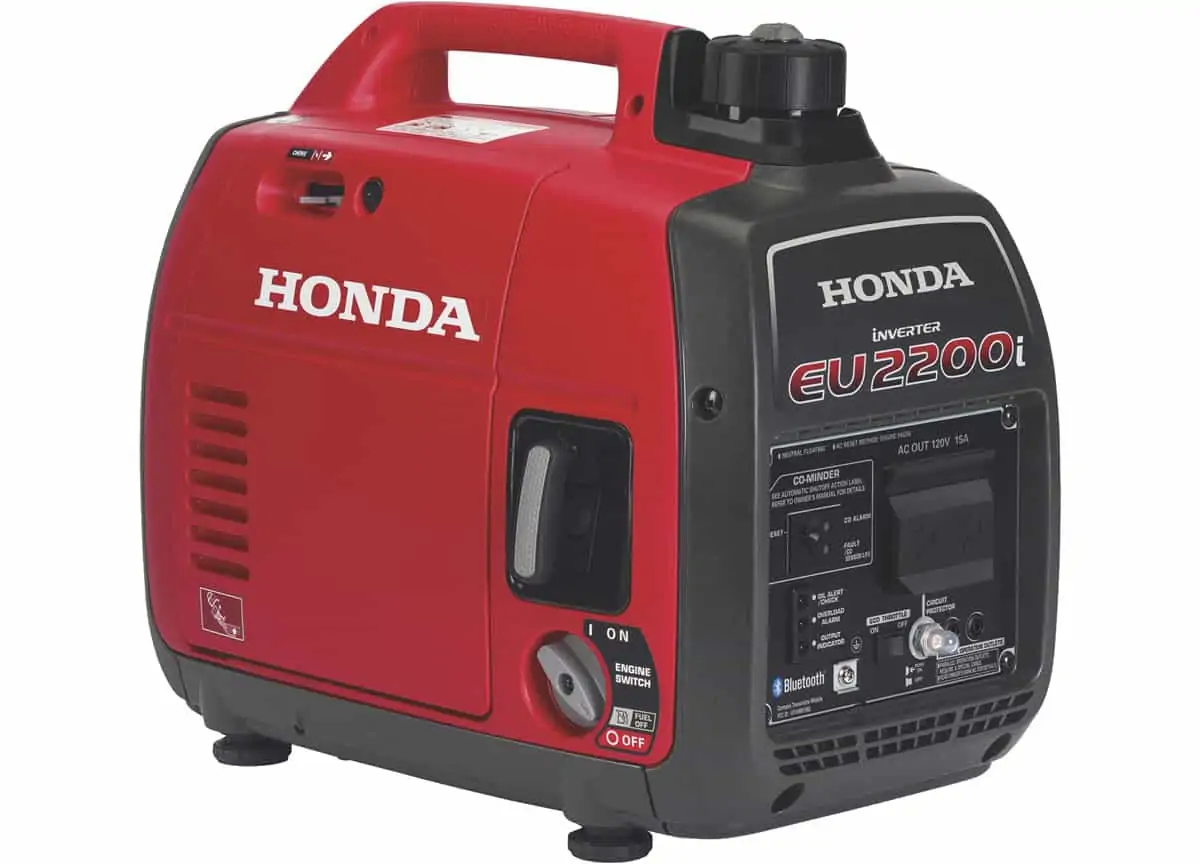
The EU2200i produces 1,800 running watts and 2,200 peak from a 121cc Honda GXR120 commercial-series engine, the same family Honda uses in pressure washers and concrete trowels that run all day. That 400-watt surge headroom is what starts a 13,500 BTU RV air conditioner where many 2,000-watt inverters trip. Two units can be paralleled for roughly 3,600 running watts, which is why RV owners commonly buy a second one instead of moving up to a bigger generator.
Generator Bible highlights that it makes 10% more power than the outgoing EU2000i at the same price. Total harmonic distortion stays under 3%, so a CPAP machine, a laptop or a sensitive medical device is safe on it — not something you can say about a conventional brush-style generator.
48 dBA is the number everyone quotes
At 25% load the unit reads 48 dBA at 23 feet, quieter than a normal conversation, climbing to 57 dBA at full load. In a campground with quiet hours it is one of the few generators that will not draw a complaint. Eco Throttle is what makes those numbers real: unplug a load and the engine idles down within a second or two, dropping noise and fuel burn together. Consumer Reports notes the same throttle-down approach appears on Yamaha's EF2000iS, and Honda's version hunts less when loads change quickly.
0.95 gallons is the compromise
The tank is the one objective complaint. At 25% load — a few lights and a phone charger — the EU2200i runs 8.1 hours, according to Bob Vila, enough for an overnight. At 50%, roughly a small refrigerator and a TV, it drops to about 4 hours, so a multi-day outage means refuelling every 4 to 8 hours around the clock. Doubling the tank would add roughly 6 pounds to a unit whose 47.4-lb weight is a headline feature, and Honda chose portability.
Owners running it for serious home backup typically add an external tank with an extended-run kit. Stock, this is a quiet portable for camping and tailgating that can also cover an evening outage without intervention.
Engines that outlast their owners
Honda's durability reputation holds up here: owners on RV and generator forums routinely report thousands of hours on units bought when the line first shipped, on nothing more than oil changes, spark plugs and the occasional carburettor cleaning. Bob Vila's top ranking rests on that record as much as on the noise figures. The plastic clamshell housing is the weak point — it will crack if the generator goes off a tailgate — but it is a cosmetic shell bolted over a metal subframe, and replacement housings are available through Honda parts retailers.
One duplex outlet and a $1,199 sticker
The price is the headline objection: roughly three times a comparable Westinghouse iGen2800 and twice what a Champion sells for. For someone who runs a generator twice a year that is very hard to justify. What the premium buys is engine service life measured in a decade and a resale floor — used units hold 70 to 80% of new pricing five years on, which is unheard of in this category.
The single duplex outlet is the other quibble. Two 120V/20A receptacles in one housing means a power strip the moment you want more than two devices, and the absence of a TT-30R RV outlet means carrying a 15A-to-30A adapter. Honda's answer is the Companion variant with the 30A receptacle, which pushes a matched pair past $2,400 before the parallel cable kit.
A decade, or don't bother
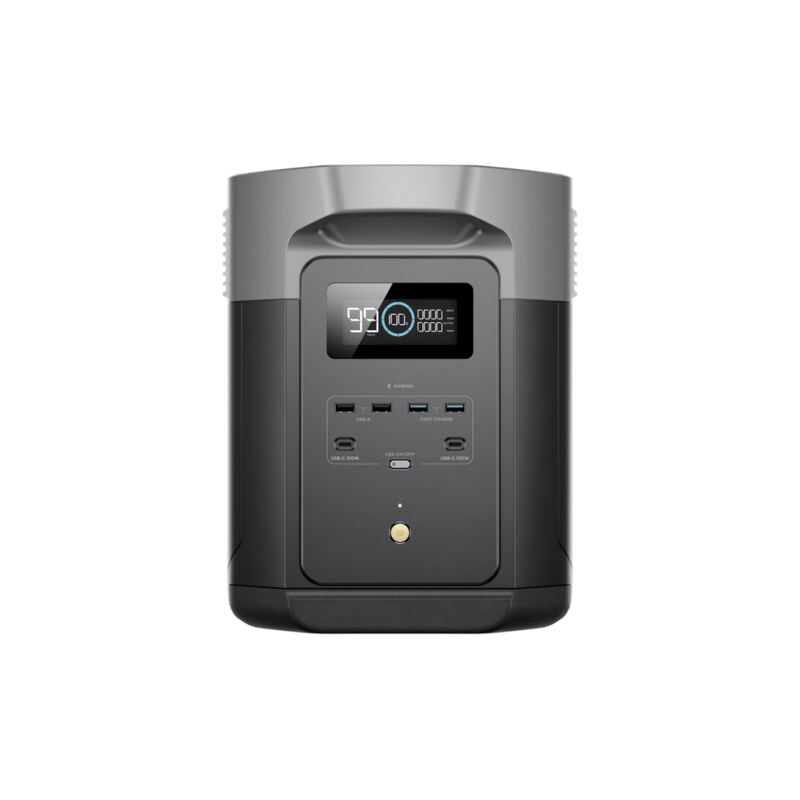
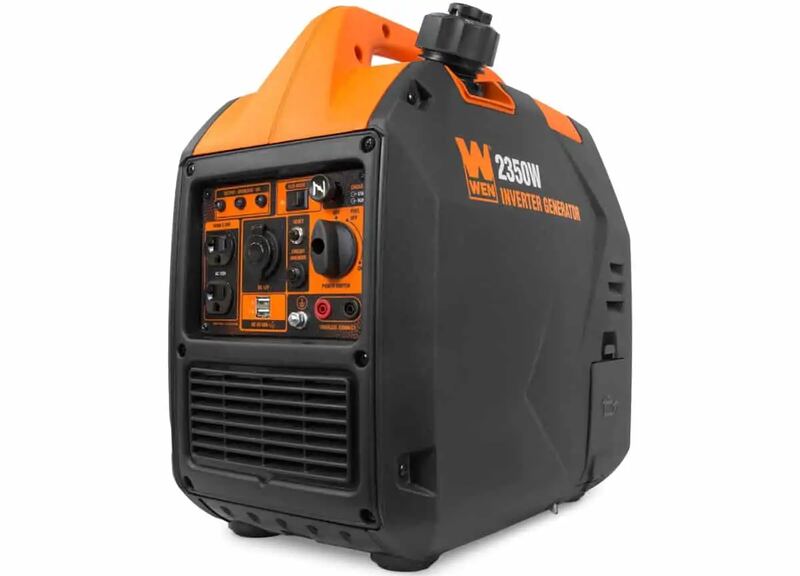
This is a quality play rather than a value play, and the maths only works if you amortise it over ten years or more. RV owners camping twenty-plus nights a year, households in hurricane and ice-storm country, and contractors who need quiet jobsite power all get there. Anyone who needs power once a year for a backyard event should buy a Westinghouse iGen2800 or a WEN 56235i first and find out whether they actually use it. Against a battery station like the EcoFlow Delta 2 Max, the Honda loses on indoor safety, instant start and silence, and wins the moment an outage runs past the point where a battery can be recharged.
Strengths
- +Industry-benchmark 48-57 dBA noise level — quieter than normal conversation at quarter load
- +Honda GXR120 commercial engine known for 10+ year reliability with basic maintenance
- +Under 3% Total Harmonic Distortion produces clean power safe for laptops, phones, and CPAP machines, per Generator Bible
- +Bob Vila found the 47.4 lb suitcase form factor with built-in handle genuinely one-hand portable
- +Parallel-capable to pair two units for 3,600 running watts when you need RV air conditioner startup
Watch-outs
- −Premium pricing roughly 3x the cost of comparable Westinghouse or WEN 2200W inverters
- −Tiny 0.95-gallon tank limits runtime to 4 hours at 50% load before refueling
- −Single duplex 120V outlet means power strips are mandatory for multi-device camping use
How it compares
Quieter and more refined than the Westinghouse iGen2800 and WEN 56235i at roughly triple the price. The EcoFlow Delta 2 Max battery station beats it for indoor use and short outages, but the Honda runs as long as you keep feeding it gas — battery stations need a recharge source.
Rating sources
“Lightweight and compact with whisper-quiet operation”
“Right at the top of the echelon of 2000-watt generators for noise, performance, and reliability”
Our 4.8 score is the average of the 2 scored reviews above; 1 more reviewed it without printing a score and is not in the average. Ratings marked * were derived from the reviewer’s written analysis or video transcript — the publisher didn’t print an explicit numeric score, so we inferred one from their own words. Click through to verify. More about methodology.