One ND3-ND400 (1.5-9 stop) variable filter replaces a whole bag of fixed ones, which is why the Hoya Variable Density II is a strong all-round ND filter kit-in-one. Digital Camera World made it its favorite variable ND overall, praising 'negligible impact on sharpness, contrast and color rendition,' and a multi-filter comparison put the Hoya first for least color shift. The catch is the usual variable-ND 'X' pattern at maximum.

Full review
Rated least color shift for moving water
The Hoya Variable Density II is the variable ND that reviewers reach for first, and Digital Camera World named it 'my favorite variable ND overall.' In their testing, 'the filter performed very well throughout its entire density range, with negligible impact on sharpness, contrast and color rendition' — exactly what you want from a filter you will leave on the lens through a whole shoot.
The practical appeal of a variable ND is that it replaces a whole kit of fixed filters: one ring covers ND3 to ND400, or roughly 1.5 to 9 stops, so you can dial in exactly the exposure you need for milky water, blurred clouds or daytime video without swapping glass. For most landscape and video work, that range covers everything from a mild slowdown to a serious long exposure.
Blue cast appears only at maximum density
Color neutrality is the Hoya's defining strength. Variable NDs are notorious for adding casts, but reviewers consistently rate the VD II among the most neutral in its class, with only a slight blue cast creeping in at the very top of the range. As Digital Camera World and comparison testers note, pulling back roughly one stop from maximum eliminates that cast entirely, leaving clean, accurate color.
Sharpness holds up well throughout the range, which is not a given with variable filters that stack two polarizing elements. The trade-off, common to all variable NDs, is the cross-polarization 'X' pattern that appears as a darkened X across the frame if you push to the absolute maximum or use a very wide lens. Stay a stop below max and it disappears.
Oversized front element reduces vignetting
The Mark II improves on the original in two meaningful ways. First, it has an oversized front element that, as reviewers note, 'minimizes the risk of vignetting' on wide-angle lenses — a real benefit for landscape shooters working at 16-24mm. Second, Hoya added a small screw-in control knob: you thread the supplied knurled knob into the side of the frame, which makes adjusting density easier and, crucially for video, keeps your fingers out of the shot during a clip.
The filter is built from multi-coated optical glass in a slim frame and is available in the common thread sizes from 52mm to 82mm. It feels like a premium piece of glass, and the knob system gives it a more deliberate, video-friendly handling than the bare-ring designs of cheaper variable NDs.
Screw-in knob keeps fingers out of the shot
Color neutrality, sharpness retention and handling are the recurring praise points. Digital Camera World's 'favorite variable ND overall' verdict and the comparison test that ranked it best for color shift both point to the same conclusion: the Hoya gets the fundamentals right. The screw-in knob is frequently singled out as a genuinely useful feature for video shooters who adjust density on the fly.
Reviewers also value the wide ND3-ND400 range, which means a single Hoya can stand in for several fixed filters. For a photographer who wants to carry less and still cover everything from a light slowdown to a multi-second exposure, that versatility is the whole point.
Widest range of any variable ND here
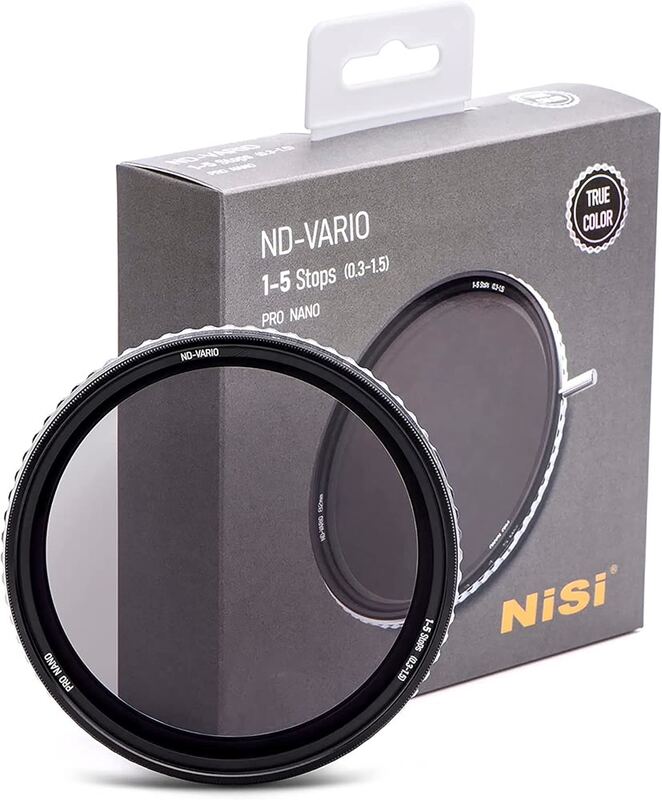
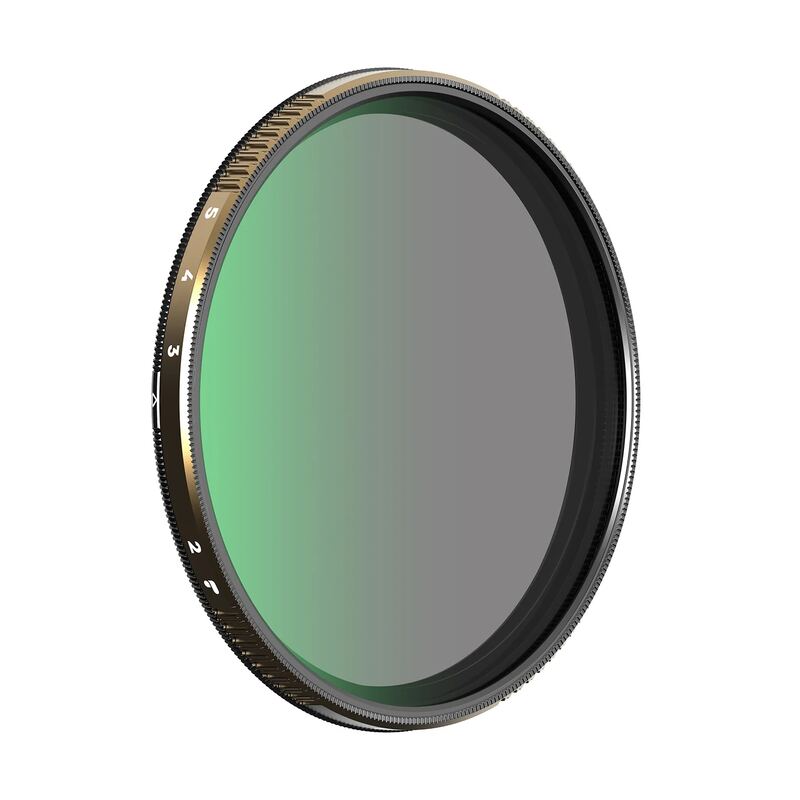
Among the variable NDs here, the Hoya offers the widest range — 1.5 to 9 stops, versus the NiSi True Color ND-Vario's 1-5 stops and the PolarPro VND Peter McKinnon Edition's 2-5 stops (with a separate 6-9 stop version). That makes it the most flexible single filter, though the hard-stopped NiSi and PolarPro give more precise, repeatable density selection for video.
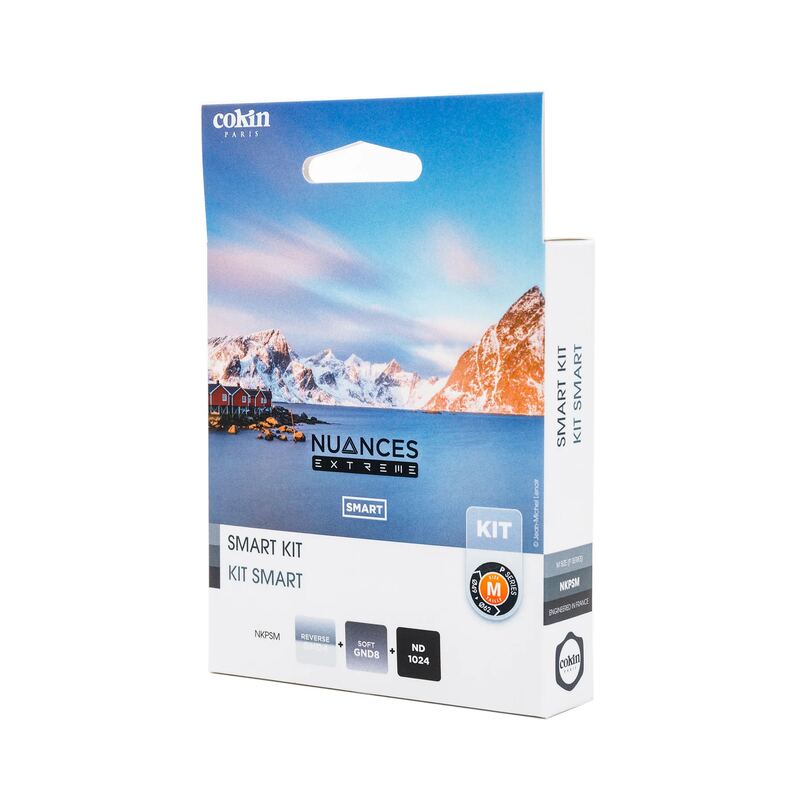
Against the fixed Cokin Nuances Extreme kit, the difference is philosophy: the Hoya is one variable filter that covers a range continuously, while the Cokin is a set of discrete square filters that deliver guaranteed neutrality at exact stops for critical long exposures. For convenience and travel-light shooting, the Hoya wins; for the most demanding, color-critical long exposures, a fixed kit like the Cokin has the edge.
Can't match a fixed filter's exact neutrality
The Hoya shares the inherent limitations of all variable NDs. The cross-polarization 'X' pattern appears if you push to maximum density or shoot very wide, and Digital Camera World was explicit that you 'get the typical cross-polarization effect, which shows up as a darkened area in the shape of an X across the image frame.' The fix is simple — stay a stop below max — but it means the usable range is slightly less than the headline 9 stops.
There is also a slight blue cast at the very top of the range, again resolved by pulling back a stop. And as a variable ND, it cannot match a fixed filter's guaranteed neutrality at an exact, repeatable density, which matters for the most critical color-managed long-exposure work. For the vast majority of shooters, none of this outweighs the convenience.
Best all-round pick for travel-light shooters
Choose the Hoya Variable Density II if you want a single, do-it-all ND that covers the widest range with excellent color neutrality — ideal for landscape photographers and videographers who want to travel light and adjust density on the fly. The screw-in knob makes it especially well suited to video, where smooth, finger-free density changes matter.
If you need hard-stopped, repeatable density selection for professional video, the NiSi True Color ND-Vario or PolarPro VND are more precise; if you shoot color-critical long exposures and want guaranteed neutrality at exact stops, the fixed Cokin Nuances Extreme kit is the better tool. But as an all-round variable ND, the Hoya is a strong pick.
Strengths
- +Generous ND3-ND400 range covers 1.5 to 9 stops in one filter
- +Negligible impact on sharpness, contrast and color through the range
- +Oversized front element reduces vignetting on wide lenses, per Digital Camera World
- +Screw-in control knob makes density changes easy, great for video, per Digital Camera World
- +Among the most color-neutral variable NDs in comparison tests
Watch-outs
- −Cross-polarization 'X' pattern appears at the maximum setting, per ePhotozine
- −Slight blue cast at the very top of the range (pull back a stop)
- −Variable ND, so not a true fixed-stop set for critical long exposures
How it compares
The Hoya Variable Density II covers a wider range (1.5-9 stops) than the NiSi True Color ND-Vario (1-5 stops) or PolarPro VND (2-5 stops), and unlike the fixed Cokin Nuances Extreme kit it does it all in a single screw-in filter rather than a set.
Rating sources
“The filter performed very well throughout its entire density range, with negligible impact on sharpness, contrast and color rendition.”
Our 4.5 score is the average of these published ratings. Ratings marked * were derived from the reviewer’s written analysis or video transcript — the publisher didn’t print an explicit numeric score, so we inferred one from their own words. Click through to verify. More about methodology.