The Infant Optics DXR-8 Pro is the privacy-first choice: a closed-loop 2.4 GHz monitor with no Wi-Fi, no app, and no cloud account. Its 5-inch parent unit, interchangeable lens, and full remote pan/tilt/zoom beat every other non-Wi-Fi monitor for in-home flexibility. Battery life costs it points and the hardware feels dated next to newer Wi-Fi 1080p competitors, but for parents who refuse to put their nursery on the internet, this is the standard.

Full review
A closed loop with nothing to hack
The DXR-8 Pro's defining feature is what it does not have: no Wi-Fi, no cloud account, no app. The camera and the parent unit talk over a 2.4 GHz FHSS link, and nobody outside the house can see or hear the nursery. No system is truly unhackable, but removing the internet attack surface entirely is a structural difference from every Wi-Fi monitor on this list rather than a security setting you have to trust someone else to maintain.
The same architecture removes a whole class of nuisances. There is no firmware update to fail, no login to lose, no two-factor to re-establish when you change phones — you plug it in, press one button to pair, and it works. Babygearessentials calls it their preferred plug-and-play video monitor for exactly that reason, and even Babygearlab, which grades it well below its competitors, allows that the simple interface is a strong point.
Active Noise Reduction against a white-noise machine
Range in the home runs well past 500 feet through walls and close to the advertised 1,000 feet outdoors in line of sight. The feature that earns its keep, though, is Active Noise Reduction: it filters the constant low-frequency hum of a white-noise machine, a fan or HVAC out of the audio so what surfaces is the baby. That is harder to do than it sounds and it is well executed here.
A swappable lens, and a motor you can hear
The 5-inch LCD parent unit is chunky in a way that reads as durable rather than elegant, with physical buttons around the screen for pan, tilt and zoom. The camera takes an interchangeable lens, so a wide-angle can be fitted without buying a second camera — flexibility no Wi-Fi camera at this price matches, and something Babygearlab singled out as unique even while marking the monitor down elsewhere. The pan/tilt motor is mechanical and audible up close, which some parents find intrusive when leaning over the crib at night.
720p is enough in the room, not across it
On a 5-inch screen at nursery distance, 720p is sharp enough, and the IR night vision is one of the cleaner implementations in the closed-loop class — Babygearessentials rated the picture among the best on the market within that category. Daytime colour is accurate and the screen is bright enough to read in a lit room without lighting up a bedroom at night.
Put it beside a 1080p or 2K Wi-Fi camera and the resolution gap is immediate. For confirming that a baby is breathing and lying safely it does not matter; for mounting the camera further back to cover a whole room it does, which is why the wide-angle lens is the recommended addition for a larger nursery.
Babygearlab scored it 5.8 out of 10
That score is worth taking seriously even though other reviewers grade it higher. Babygearlab's reviewers called out disappointing video and battery life for the asking price and said the unit looked and felt outdated. Parent-unit runtime is the practical complaint — with the screen on, you are charging it nightly.
The missing app is deliberate, and it is still a limitation: there is no way to check on the baby from work, from a hotel, or from anywhere outside radio range, and pan, tilt and zoom are screen-side only. If one parent is away, the monitor does nothing at all for them.
Four cameras, and no cloud to switch off
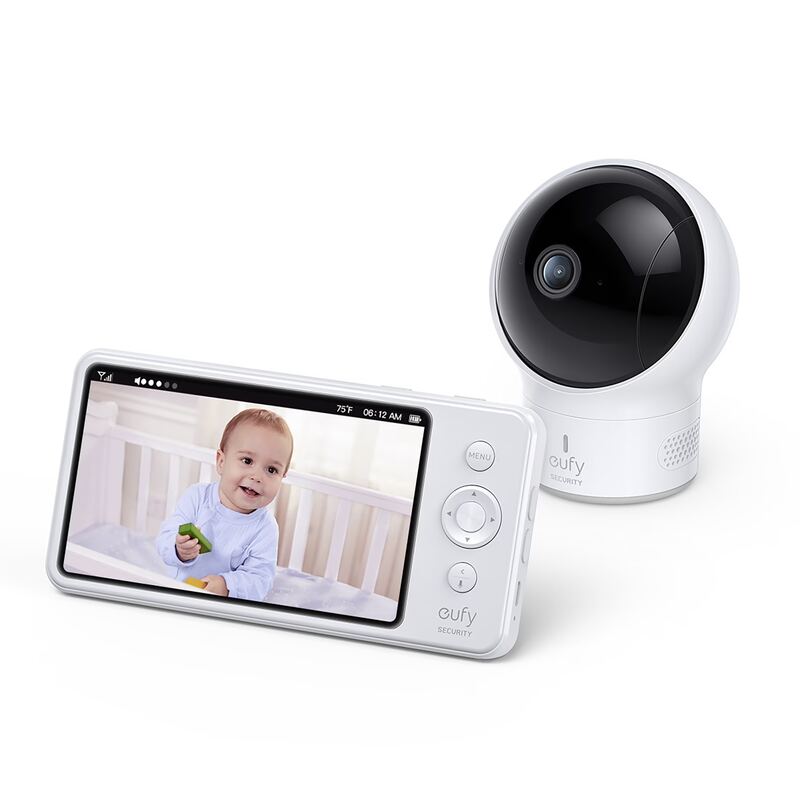
Against the Eufy SpaceView Pro the DXR-8 Pro wins on lens flexibility and on expanding to four cameras rather than two, and loses on parent-unit battery life and on price. Both are legitimate non-Wi-Fi monitors, and the choice really comes down to camera flexibility against battery longevity.
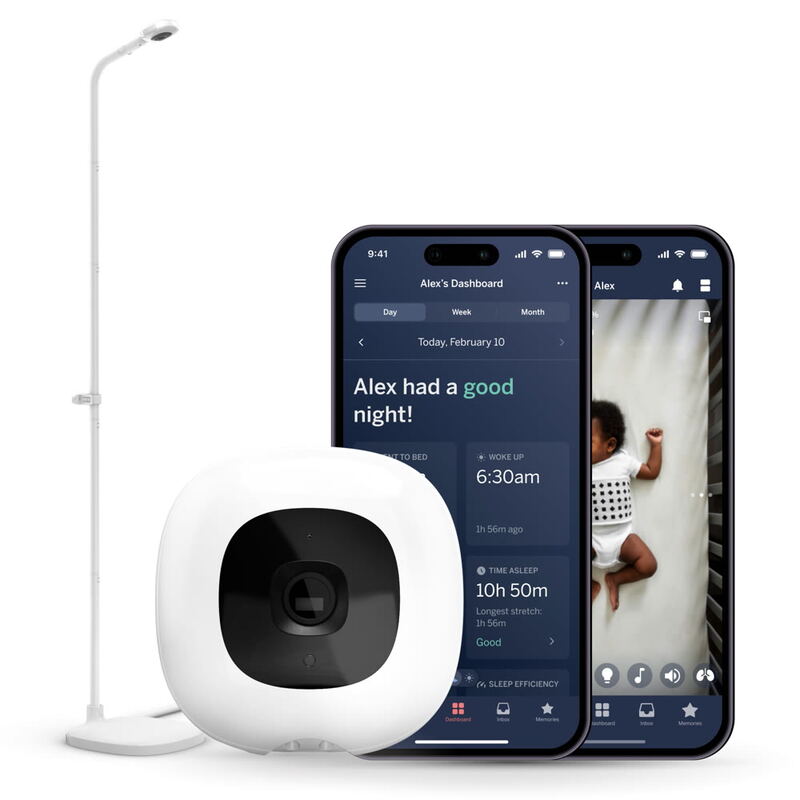
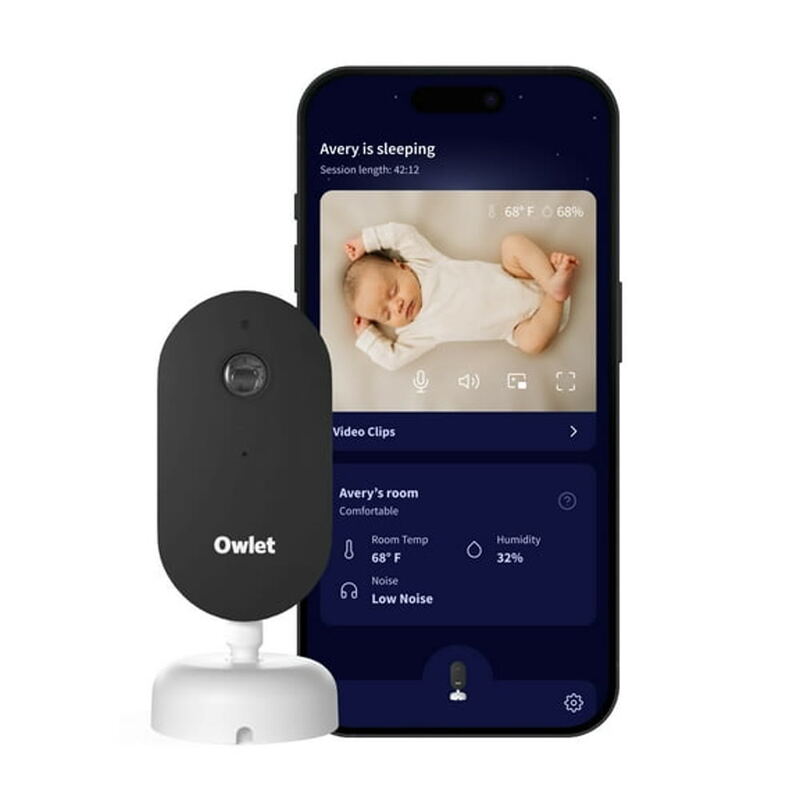
Against the Nanit Pro and the Owlet Dream Duo it is not competing on features at all — those offer remote viewing, sleep analytics and health tracking, none of which work without Wi-Fi. The honest test is whether you can state your reason for refusing a Wi-Fi camera. If you can, this gives up the least in exchange. If 'no Wi-Fi' is a vague preference, the smart monitors offer more for the money. One durability point does sit with the closed loop, though: there is no cloud service that can be discontinued and leave the camera useless.
Strengths
- +Closed-loop 2.4 GHz FHSS connection that's effectively impossible to remotely hack (no Wi-Fi, no app, no cloud)
- +5-inch 720p HD parent unit with patented Active Noise Reduction filtering out fans, air purifiers, white noise
- +Interchangeable lens system lets you swap to a wider field of view without buying a second camera
- +Pan/tilt/zoom plus remote thermometer all controlled directly from the handheld parent unit
- +Expandable to 4 cameras so you can monitor multiple rooms or multiple children without a second system
Watch-outs
- −Parent-unit battery life is mediocre relative to the Eufy SpaceView Pro (Babygearlab marked it down on this)
- −720p resolution starts to look dated next to the Nanit Pro and Owlet Cam at 1080p / 2K
- −Pan/tilt motor is audible at night — some parents disable it after the first week
- −No mobile app means no remote viewing when you're away from home
How it compares
Picks the same privacy/no-Wi-Fi lane as the Eufy SpaceView Pro, but with a more flexible camera (interchangeable lens, pan/tilt motor) and 1-year shorter battery life. Lacks the smart-app features of the Nanit Pro and the FDA-cleared health tracking of the Owlet Dream Duo, but neither of those work without Wi-Fi.
Rating sources
“Background noise reduction and simple interface are this unit's strong points, but we don't recommend it for parents who want a monitor with long-lasting battery life.”
“The picture and sound quality on the parent's monitor is one of the best on the market. A feature-rich video baby monitor system and our preferred Plug & Play video monitor.”
Our 3.6 score is the average of these published ratings. More about methodology.