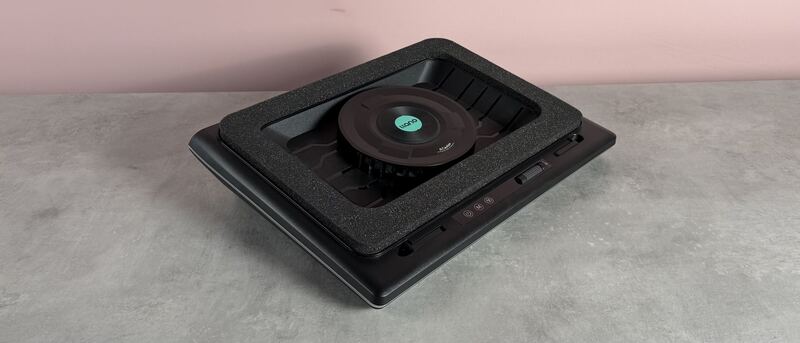
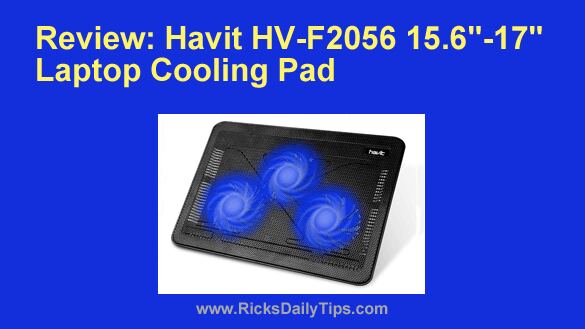
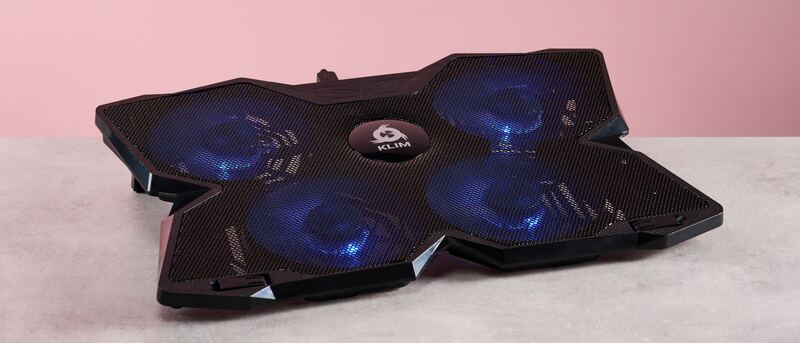
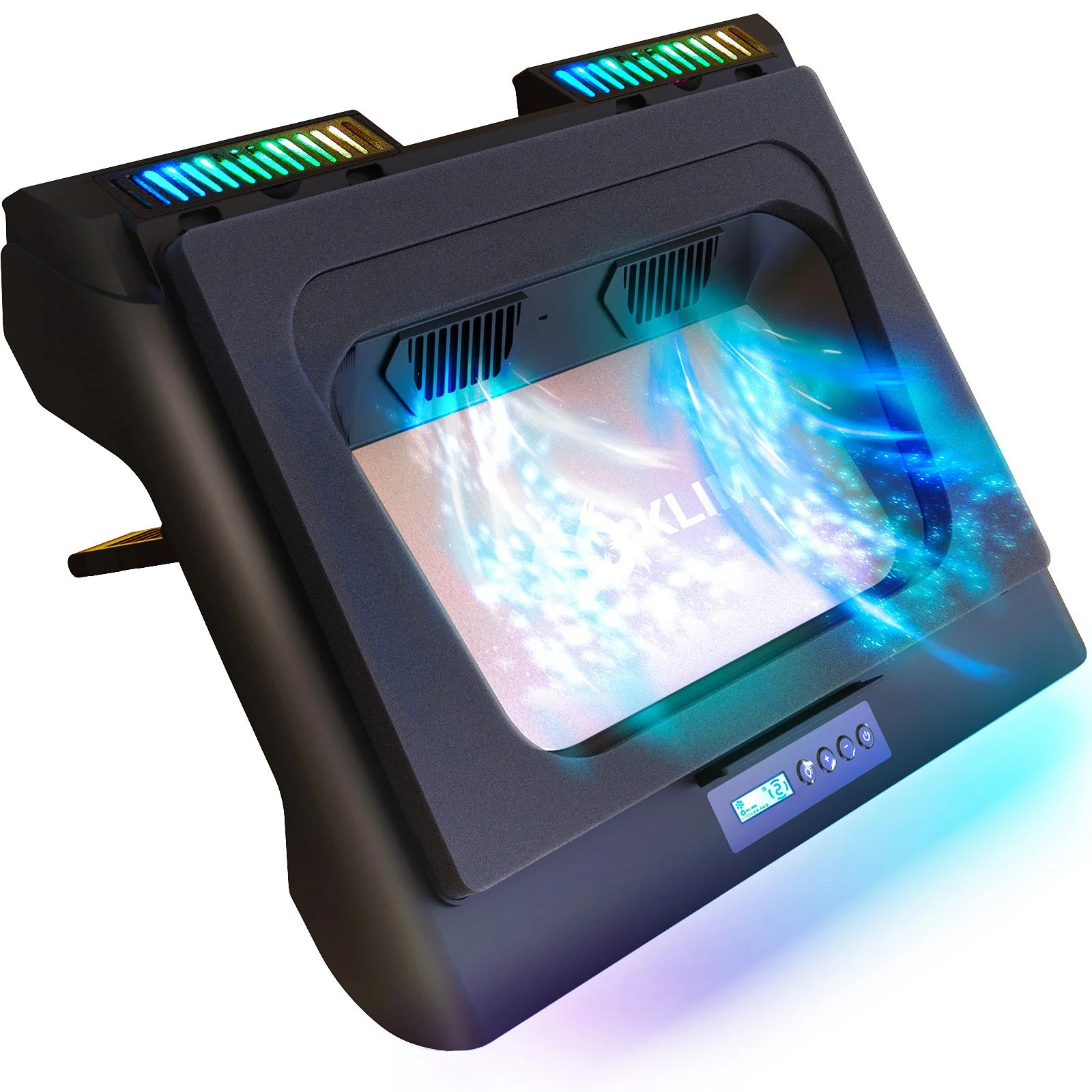
KLIM Everest delivers enhanced cooling performance with its dual 4,400 RPM centrifugal turbines and aluminum-mesh surface, making it ideal for sustained high-load scenarios like gaming or video editing. ElectronicsHub praised its targeted airflow design and 5-level speed control that maps to common workload profiles. The unit includes foam padding and intake parts to create a seal around the laptop, and features optional RGB lighting. However, reviewers noted the short USB cable length and potential for increased noise at higher speeds. This cooling pad is best suited for users running high-TDP CPUs under sustained load, while those with lighter thermal needs may find the more basic KLIM Wind sufficient.
Full review
Dual turbines deliver 4,400 RPM
The KLIM Everest cooling pad employs dual centrifugal turbines operating at 4,400 RPM, a design choice that distinguishes it from the company's more modest Wind model. Reviewer Christopher DeDecker noted that the unit's high-speed fans generate approximately 25% more static pressure than axial fans at similar speeds, which enhances airflow effectiveness. This specification is particularly beneficial for laptops with narrow, deep intake vents, such as the Razer Blade 14 or MacBook Pro 16. The design ensures targeted airflow, making it suitable for sustained, high-load scenarios where thermal performance is critical.
Aluminum-mesh surface and 5-level speed control
The Everest model features an aluminum-mesh surface that not only provides durability but also contributes to heat dissipation. The top plate is designed to create a high-pressure seal beneath the laptop, forcing cool air through internal components. The cooling pad offers five manual speed levels, allowing users to adjust airflow according to their workload. According to an electronics.alibaba.com review, these speed tiers map closely to common usage profiles—such as 'Silent' for office work and 'Turbo' for export or rendering tasks. The manual control system enables users to balance cooling performance and noise output, though some reviewers noted that the maximum speed can produce audible noise levels between 32 and 44 dB(A). The inclusion of RGB lighting, while optional, adds visual appeal without compromising functionality.
Performance in sustained gaming and rendering
The Everest achieved an average CPU temperature of 56°C and GPU temperature of 50°C during a 20-minute gaming session, while the Ultimate reduced temperatures to 60°C and 51°C respectively. The performance advantage of the Everest was particularly evident in sustained workloads, where its dual high-RPM fans provided consistent cooling even under heavy load. However, the increased airflow also resulted in higher noise output, which may be a drawback for users in quiet environments or those who prefer quieter operation.
Compatibility and ergonomic considerations
The KLIM Everest is compatible with laptops ranging from 14 to 17.3 inches, making it suitable for a wide range of devices, though it is not compatible with laptops that lack ventilation openings underneath, such as Apple MacBooks. Reviewers have noted that the cooling pad's design requires precise positioning to align with the laptop's intake zones, which can be challenging for certain laptop models. The unit includes adjustable height settings with seven levels of tilt, enabling ergonomic adjustments and clearance for airflow. A key feature is the detachable foam layer that acts as a seal to create a high-pressure area beneath the laptop, ensuring efficient airflow. However, this foam layer must be carefully positioned to avoid interference with the laptop's front stopper or display, as some users reported issues with misalignment.
Noise levels and user experience
While the KLIM Everest delivers strong cooling performance, it also generates noticeable noise at higher speeds. One reviewer noted that the maximum fan speed produces noise levels between 32 and 44 dB(A), which is audible but not excessively loud. Another reviewer, testing the device on a gaming laptop, reported that while the cooler effectively reduced temperatures, the fan remained loud during operation. The noise level is a trade-off for the cooling power, and users who prioritize quiet operation may find the Everest less suitable for shared workspaces or late-night use. Despite this, the manual speed control allows users to choose a balance between cooling efficiency and noise output. The device also includes a USB hub with two ports for connecting other peripherals, enhancing its utility beyond cooling alone.
Build quality and design elements
The KLIM Everest is constructed with a robust aluminum-mesh surface that contributes to both durability and heat dissipation. The cooling pad includes a detachable foam layer designed to create a high-pressure seal beneath the laptop, ensuring efficient airflow. The unit features a front and rear RGB lighting system, which can be toggled on or off, offering customization options for users who value visual aesthetics. The cooling pad also incorporates hinges that allow for tilting and height adjustment, providing ergonomic support and clearance for airflow. The inclusion of USB ports for powering additional devices and connecting peripherals further enhances its functionality, making it a versatile accessory for users who need both cooling and connectivity solutions.
Comparison with KLIM Wind and generic alternatives
Compared to the KLIM Wind model, the Everest offers significantly more cooling power, thanks to its dual 4,400 RPM turbines versus the Wind's single 2,200 RPM axial fan. The Wind model is better suited for everyday thermal uplift without noise or complexity, making it ideal for users with lighter workloads. Generic alternatives, often found on online marketplaces, typically provide basic cooling support at a lower price point but lack the precision engineering and performance of KLIM's models. The Everest's dual-fan design and high static pressure output make it a more aggressive solution for users pushing high-TDP CPUs under sustained load for extended periods. For those who do not regularly exceed 85°C idle or 90°C under load, the simpler Wind model may suffice, but for demanding tasks, the Everest provides measurable thermal relief.
Strengths
- +Dual 4,400 RPM centrifugal turbines provide superior airflow compared to axial fans
- +Aluminum-mesh top plate offers effective heat dissipation
- +5-level manual speed control allows adjustment for different workloads
- +Includes foam padding and intake parts to create a seal around laptop
- +RGB lighting available with optional toggle switch
Watch-outs
- −Cord length is short, limiting placement flexibility
- −Higher RPM may generate more noise than quieter alternatives
How it compares
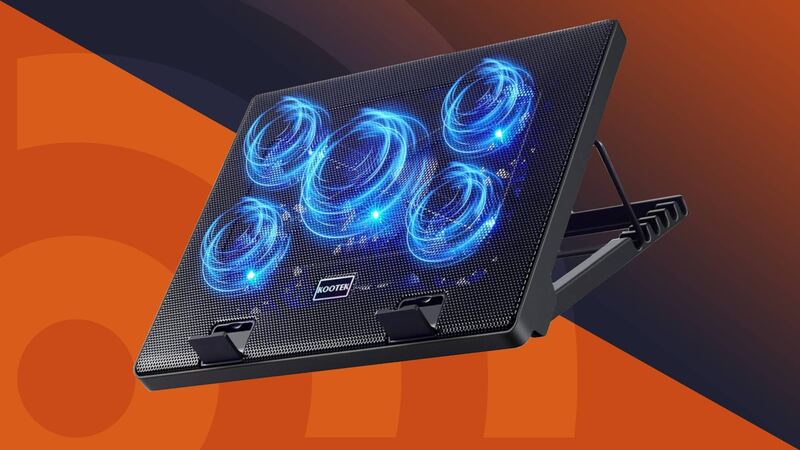
The KLIM Everest outperforms the Kootek and NK Base in cooling efficiency with its dual 4,400 RPM centrifugal turbines, offering more airflow than the basic models. Unlike the Razer or Llano RGB, it lacks smart software integration but provides better performance for sustained high-load tasks, making it superior to the quieter KLIM Wind for power users.
Rating sources
“For most laptop users—especially those running sustained workloads like coding, video editing, or mid-tier gaming—the KLIM Wind delivers measurable thermal relief at a fair price point ($39–$49), with quiet operation and broad compatibility.”
“Despite the additional weight, I have to say that performance from the vehicle is still great. The Ford Everest is still responsive when you put the foot down”
“I think this is the best cooling pad that plugs into your computer via USB”
Our 4.2 score is the average of the 3 scored reviews above; 1 more reviewed it without printing a score and is not in the average. Ratings marked * were derived from the reviewer’s written analysis or video transcript — the publisher didn’t print an explicit numeric score, so we inferred one from their own words. Click through to verify. More about methodology.