The Knog Bandicoot 250 is praised as a game-changing ultralight headlamp that balances power, comfort, and affordability. Reviewer Michael Lanza of The Big Outside called it a 'great all-around value' for backpacking, hiking, climbing, and trail running, noting its 250 lumens of brightness and 2.1 oz weight. The lamp is rechargeable, easy to operate, and features a silicone housing that adjusts to fit most head sizes. However, some users found the reading lights too angled downward for comfortable reading while lying down. This headlamp is ideal for outdoor enthusiasts seeking a lightweight, reliable light source but may not suit those needing maximum waterproofing.

Full review
Design and Build Quality
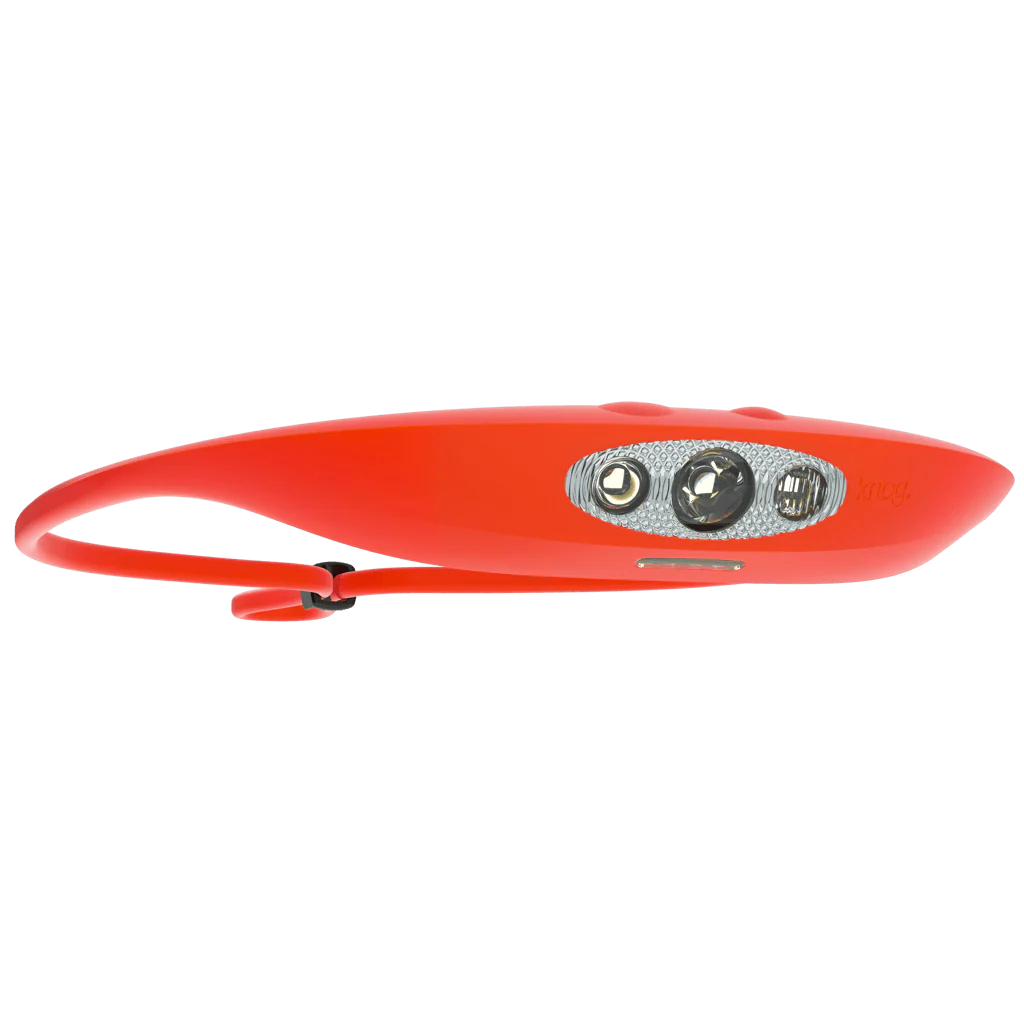
The Knog Bandicoot 250 stands out with its distinctive silicone headband design that seamlessly integrates the LED module. According to The Big Outside's Michael Lanza, the headlamp's construction features a durable silicone housing adjustable to fit head circumferences between 30-70cm, accommodating both large and small heads. The silicone band's matte finish provides non-slip grip but tends to attract dust, as noted by Stephen Knight's review. The light module itself weighs just 58g, making it remarkably lightweight for its 250-lumen output. The integration is so seamless that Lanza observed the headlamp doesn't bounce or snag in hair, allowing users to forget they're wearing it during extended use. The IP67 rating ensures protection against dust and water immersion up to one meter for 30 minutes, a feature tested and confirmed by Knight's practical applications in workshop settings and outdoor environments.
However, the design presents some drawbacks. Knight noted that the non-replaceable internal battery limits lifespan to approximately three years of heavy use, a concern for long-term durability. The USB-A charging port requires removal of the module from the silicone band, which can be cumbersome during frequent charging scenarios. Additionally, the charging process takes nearly four hours from empty, which reviewers like Knight found relatively slow. The silicone headband, while comfortable, may leave temporary forehead imprints and could be prone to wear over extended use, though replacements are available as per Knog's specifications.
Lighting Performance and Features
The Bandicoot 250 delivers a balanced lighting profile with seven LEDs providing 200 lumens spot, 50 lumens ambient, 4 lumens red, and 6 lumens reading lights. RTINGS measured the peak brightness at 250 lumens with a 40-meter throw, though this varies with brightness settings. The light offers five default modes: spot, ambient, red, reading, and combo/boost mode that combines spot and ambient LEDs. According to The Big Outside, the light provides up to 32 hours of runtime in red mode and 25 hours in reading mode, with 8 hours at maximum brightness. Knight's testing revealed that the light's runtime varies significantly based on brightness level, with 22 hours at ambient (50 lumens) and 12 hours at spot level (200 lumens). The red light is particularly praised for preserving night vision, while the reading lights, though angled too far downward for some users, serve their intended function of providing illumination for reading or close work.
The headlamp's unique feature is its Knog ModeMaker app, which allows users to customize modes, brightness levels, and mode order. Knight emphasized that the app is particularly useful for setting up lights for extended use, such as weekend scout camps, where he could program specific settings to ensure adequate runtime. However, the app's reliance on desktop software raises concerns about long-term accessibility, as noted by BudgetLightForum user Lightbringer, who questioned what happens if the app becomes unavailable. The app also enables FL1 mode, a setting not mentioned in the manual, which provides a unique lighting configuration for specialized applications. Despite the app's flexibility, the physical button interface remains the primary control method, with short and long presses for mode switching and brightness adjustment, though some reviewers found the interface less intuitive than alternatives like Sofirn or Olight devices.
User Interface and Controls
The Bandicoot 250 employs a dual-button control system on top of the light module, with Button 1 on the right and Button 2 on the left when worn. Knight described the interface as functional but not optimal, noting that short presses turn the light on for battery status, while long presses (1 second) activate the last memorized mode. A three-second press on both buttons locks or unlocks the device, with visual indicators of red flashes for lockout and white flashes for unlocked status. The button layout for changing modes and brightness differs from user preferences noted by Knight, who prefers short presses for on/off and long presses for mode changes. The mode sequence defaults to spot > ambient > red > reading, with the boost/combo mode activated via double-click on Button 1, though this requires exiting to the last memorized mode with a single click.
The physical interface includes a unique feature where the reading lights function as a battery indicator when the light is off. Knight noted that the system's flexibility comes from the ModeMaker app, which allows for drag-and-drop mode ordering and brightness adjustments, but the app is not strictly necessary for operation. Users can still operate the light with the physical buttons, though the lack of a direct on/off button and the need to cycle through modes manually can be inconvenient during active use. The app's desktop-based design, while offering extensive customization, creates a dependency that some users find problematic, especially in scenarios where access to a computer is limited. The interface also lacks programmable settings for strobe modes, which could be beneficial for specialized applications like light painting.
Real-World Performance
Field testing by The Big Outside's Michael Lanza during a nine-day, 130-mile hike on the John Muir Trail confirmed the Bandicoot 250's practical utility across diverse outdoor conditions. Lanza found the light's 250-lumen output sufficient for trail navigation and general outdoor activities, with the silicone band's comfort allowing for extended wear without discomfort. The IP67 rating proved effective in wet conditions, and the light's durability was evident in its ability to maintain adequate charge through the entire hiking period. The light's four modes covered most user needs, including trail running and street biking, with the red light preserving night vision effectively. However, the reading lights' downward angle was noted as problematic for reading while lying on an air mattress, a specific use case that may limit its versatility for some users.
Stephen Knight's review highlighted the light's practical applications beyond traditional headlamp use, such as workshop illumination and bikepacking scenarios. Knight found the light particularly useful for inspecting frame tubes and hub components, where its compact size and multiple beam types provided adequate illumination. The light's 60g weight and USB rechargeability made it ideal for inclusion in travel kits and bikepacking packs. However, Knight also noted that the light's power output, while adequate for most activities, was insufficient for high-speed mountain biking or demanding technical terrain where a more powerful light might be preferred. The PWM (Pulse Width Modulation) was criticized by Knight and other reviewers as potentially causing visual discomfort during close work or rapid movement, though it was considered acceptable for general use.
Where It Falls Short
Despite its innovative design and features, the Bandicoot 250 has several notable shortcomings that limit its appeal. The most significant issue is the non-replaceable internal battery, which Knog does not specify the capacity for, leading to concerns about longevity. Knight noted that the battery is likely to last only three years of heavy use, which is problematic for users seeking long-term reliability. The slow charging time of nearly four hours from empty is another drawback, particularly for users who frequently charge the light. The silicone headband, while comfortable, can leave temporary forehead imprints and may be prone to wear over time, though replacements are available.
The PWM (Pulse Width Modulation) is a significant concern for many reviewers, with Knight and BudgetLightForum user Jeff51 both expressing strong dislike for visible PWM effects, which can cause headaches during close work or rapid movement. The ModeMaker app, while offering extensive customization, creates a dependency that some users find inconvenient, particularly when access to a computer is limited. The app's potential obsolescence, as noted by Lightbringer, raises long-term viability concerns, especially given past issues with similar apps like Gnarbox. Additionally, the reading lights' downward angle is problematic for reading while lying down, limiting the light's versatility for specific applications. The physical button interface, while functional, is less intuitive than alternatives, with some users preferring short presses for on/off and long presses for mode changes.
Who It's Best For
The Knog Bandicoot 250 is best suited for users seeking a lightweight, rechargeable headlamp for general outdoor activities, camping, hiking, and light-duty bike riding. The Big Outside's Michael Lanza recommended it for backpackers, hikers, climbers, trail runners, and other outdoor enthusiasts who value comfort, simplicity, and a wide range of lighting modes. The light's IP67 rating and silicone construction make it ideal for wet conditions and active use, while its 250-lumen output provides sufficient illumination for most applications. The light's compact size and 60g weight make it particularly appealing for bikepacking and travel scenarios where weight and space are considerations.
However, the Bandicoot 250 is not ideal for users requiring maximum brightness for technical mountain biking or high-speed trail riding, where lights with 300+ lumens might be preferred. The non-replaceable battery and slow charging time make it less suitable for frequent users or those who demand maximum longevity. The visible PWM effect is a significant drawback for users engaged in close work or rapid movement, while the downward angle of the reading lights limits its utility for reading while lying down. The ModeMaker app dependency may also be a barrier for users who prefer simpler, app-free operation. For those seeking a versatile, lightweight, and affordable headlamp for general outdoor use, the Bandicoot 250 remains a strong contender, but users with specific demands or technical requirements may find better alternatives.
How It Compares to Alternatives
The Bandicoot 250 competes with other ultralight headlamps in the $50 price range, offering a unique combination of silicone construction, rechargeability, and app-based customization. Compared to the Petzl Zipka, which offers 300 lumens with AAA batteries, the Bandicoot 250's 250 lumens is less powerful but more compact and lighter. The light's silicone band design and integrated USB charging system distinguish it from traditional headlamps, though it lacks the power output of higher-end models. BudgetLightForum reviewers noted that while the Bandicoot 250's PWM is among the worst they've tested, it's still a significant improvement over older halogen models, though it falls short of the smooth operation found in premium lights. The light's customization through the ModeMaker app sets it apart from competitors, though this feature creates a dependency that some users find problematic.
In comparison to other ultralight headlamps, the Bandicoot 250's 58g weight and 250-lumen output provide a good balance of performance and portability. While it may not match the power of some competitors, its unique design and features make it a strong choice for users who value comfort, simplicity, and the ability to customize lighting modes. The light's IP67 rating and durability make it more robust than many alternatives, though its non-replaceable battery and slow charging time are drawbacks that differentiate it from models with replaceable batteries or faster charging capabilities. The Bandicoot 250's versatility across multiple outdoor activities, from hiking to bikepacking, makes it a solid all-around choice, though users seeking maximum performance or specific features may find better alternatives.
Value at This Price
At $25 (originally $49.99), the Bandicoot 250 offers excellent value for its features and performance. The Big Outside's Michael Lanza described it as a 'great all-around value for backpacking, hiking, climbing, trail running, and other outdoors activities,' emphasizing its combination of power, comfort, simplicity, and affordability. The light's rechargeability eliminates the need for disposable batteries, providing long-term cost savings. The inclusion of the silicone headband and integrated USB charging system adds significant value, particularly for users who prioritize portability and convenience. Knight noted that the light's versatility extends beyond traditional headlamp use, making it useful in workshops and for various outdoor applications, further justifying its price point.
However, the value proposition is somewhat diminished by the non-replaceable battery and slow charging time, which may be problematic for heavy users. The reliance on the ModeMaker app for customization creates a dependency that could be seen as a premium feature or a limitation, depending on user preferences. The light's 250-lumen output, while sufficient for most applications, is less powerful than some competitors, which may affect its value for users requiring maximum brightness. Despite these drawbacks, the Bandicoot 250's unique design, durability, and range of features make it a strong value proposition for users seeking a versatile, lightweight, and affordable headlamp for general outdoor use.
Strengths
- +250 lumens of brightness with 100+ foot range suitable for hiking and trail running
- +Ultra-lightweight at 2.1 oz./59.5g, comfortable for extended wear
- +Rechargeable with USB plug-in charging, no cords needed
- +Adjustable silicone housing fits head circumferences from 30-70cm
Watch-outs
- −Reading lights are angled too far downward for comfortable reading
- −IP67 rating offers limited waterproofing (1 meter for 30 minutes)
How it compares
The Knog Bandicoot 250 is significantly lighter than the BioLite Range 500, which weighs 2.6 oz versus 2.1 oz, and offers better adjustability with a silicone housing. However, it lacks the 500 lumens output of the BioLite and doesn't feature the gesture control of the Sofirn HS21.
Who this is for
At a glance: ultralight backpackers.
Why you’d buy the Knog Bandicoot 250
- 250 lumens of brightness with 100+ foot range suitable for hiking and trail running.
- Ultra-lightweight at 2.1 oz./59.5g, comfortable for extended wear.
- Rechargeable with USB plug-in charging, no cords needed.
Why you’d skip it
- Reading lights are angled too far downward for comfortable reading.
- IP67 rating offers limited waterproofing (1 meter for 30 minutes).
Rating sources
“It’s powerful, rechargeable, lighter than most competitors, and cheaper than many.”
“The Knog Full-Monty Lighting Setup: Blinder X 2300, R-150 & Bandicoot 250 — I'm willing to wager that when it comes to technological progression, few bike components or accessories have advanced as much as lights in the last twenty years.”
“The PWM is some of the worst I've tested in recent years though - real shame, as otherwise it is a very impressive ultralight headlamp.”
Our 4.3 score is the average of these published ratings. Ratings marked * were derived from the reviewer’s written analysis or video transcript — the publisher didn’t print an explicit numeric score, so we inferred one from their own words. Click through to verify. More about methodology.