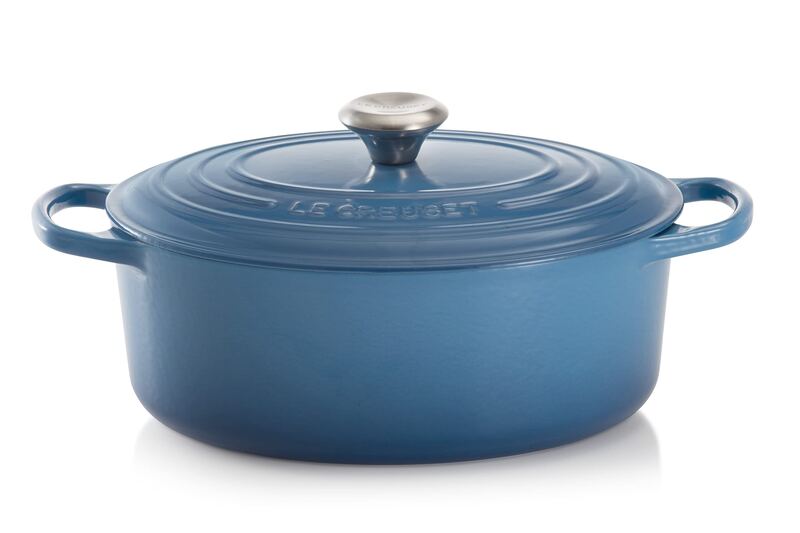
Serious Eats and Food & Wine both treat the 7.25-quart round as a buy-once pot, citing enamel that shrugs off scorch marks and years of use without chipping. Good Housekeeping points to even heating and heat retention as the reason it browns and braises well. It weighs 12 pounds 13 ounces with the lid, costs around $298.93, and the stock knob caps oven use at 480 degrees.
Full review
7.25 quarts, 12 pounds 13 ounces with the lid
This is the size most people should own: enough for a large braise, a batch of stock or a loaf, without being unmanageable. It is heavy at 12 pounds 13 ounces with the lid on, and the wide side handles are the only reason it moves comfortably between stovetop and oven. In a small sink it is genuinely awkward to wash.
Enamel that survives scorch marks and decades
Serious Eats reported the enamel resisting stains and cleaning up even after burnt-on messes, and Food & Wine's reviewer has used the same pot for over a decade, dishwasher cycles and a cross-country move included. The manufacturer recommends hand washing to keep the coating at its best, and splatters on the outside are best wiped off before they bake on.
A cream interior that shows the fond
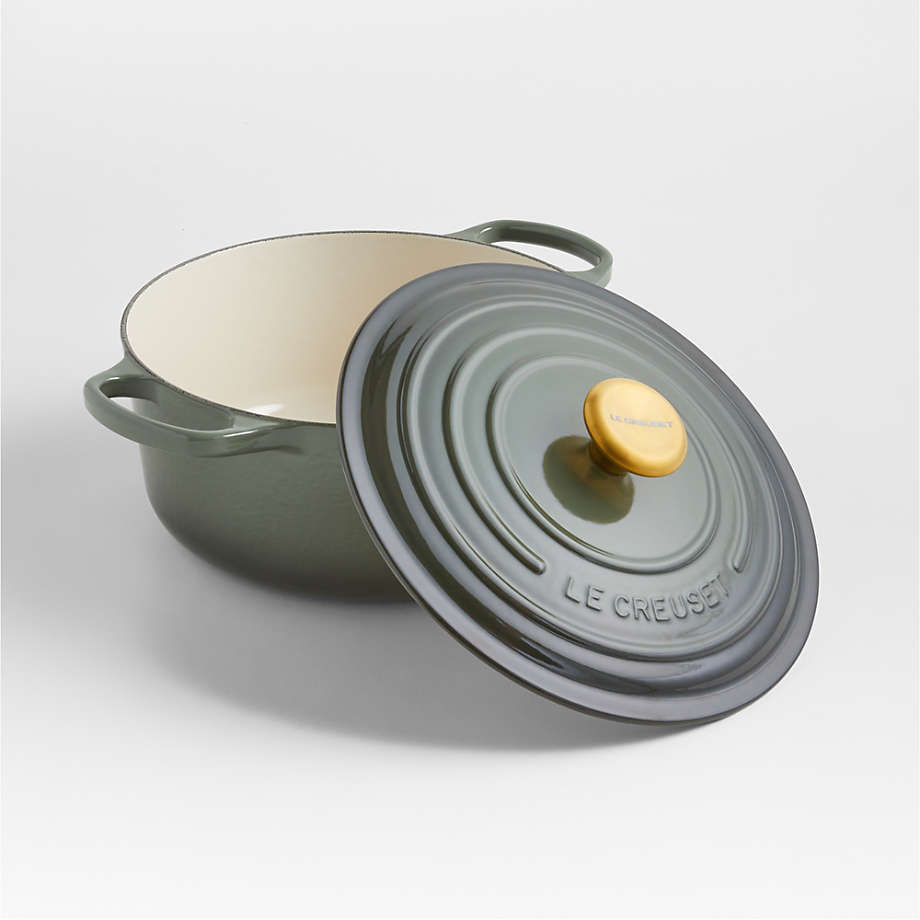
The pale enamel inside is a working feature rather than decoration, because it shows exactly how dark the browning has gone, which matters when the next step is deglazing. Straight sides and a tight lid trap steam for braising, and the wide base gives real searing area instead of crowding the meat. Good Housekeeping pointed to even heat and retention as the pot's core strength.
The knob stops at 480 degrees
The pot itself is rated to 500 degrees, but the phenolic knob supplied with it is only good to 480, which is under the temperature most no-knead bread recipes call for. A stainless replacement knob solves it and is an extra purchase on a pot that already costs plenty. It is the single most common complaint about the design.
The price is the argument against it
Around $298.93 buys a pot that will outlast its buyer, and the lifetime warranty has covered things as small as a damaged knob. It also buys performance that a much cheaper enameled pot mostly matches for the first few years. Anyone cooking for one or two, or braising twice a year, is paying for durability they will never use up.
Strengths
- +Handmade with chip-resistant enameled cast iron that lasts decades
- +Versatile for sauteing, searing, braising, and oven use
- +Even heat distribution and heavy bottom prevent burning
- +Easy to clean, dishwasher safe, and maintains color over time
Watch-outs
- −The stock phenolic knob is only oven-safe to 480 degrees, short of most bread recipes
- −12 pounds 13 ounces with the lid is heavy to lift and awkward in a small sink
- −The manufacturer recommends hand washing, so the enamel is best kept out of the dishwasher
- −Hard to justify for anyone who braises a couple of times a year
How it compares
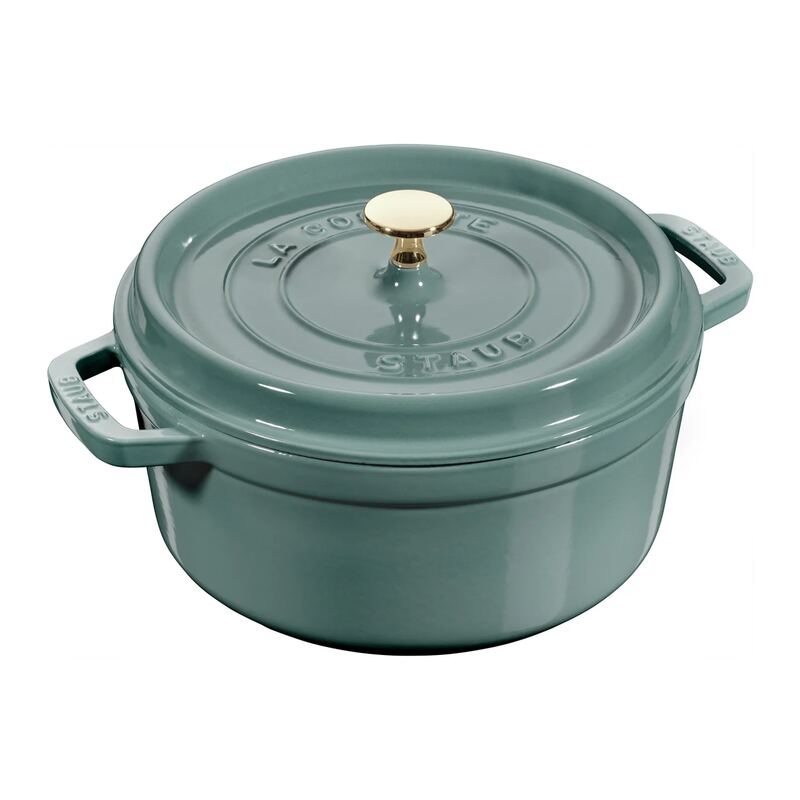
Staub's cocotte has a self-basting lid and a dark interior that hides staining; the cream enamel here makes it easier to judge browning and to see what is being deglazed. A Lodge enameled Dutch oven does most of the same work for a fraction of the money and will not survive the same abuse.
Rating sources
“I’ll also admit that Le Creuset ruined all other Dutch ovens for me. The more I’ve compared this Dutch oven to others as an editor – including testing them in-house – the more I believe investing in a Le Creuset always pays off.”
“The Le Creuset stood out like Venus on her seashell. She may be pretty, but Venus ain't no pushover, and the same goes for the Le Creuset Dutch oven.”
“I've personally been using the same Le Creuset Dutch oven for more than 20 years. (She's a stately gray the brand doesn't even offer anymore.)”
Our 4.8 score is the average of these published ratings. Ratings marked * were derived from the reviewer’s written analysis or video transcript — the publisher didn’t print an explicit numeric score, so we inferred one from their own words. Click through to verify. More about methodology.