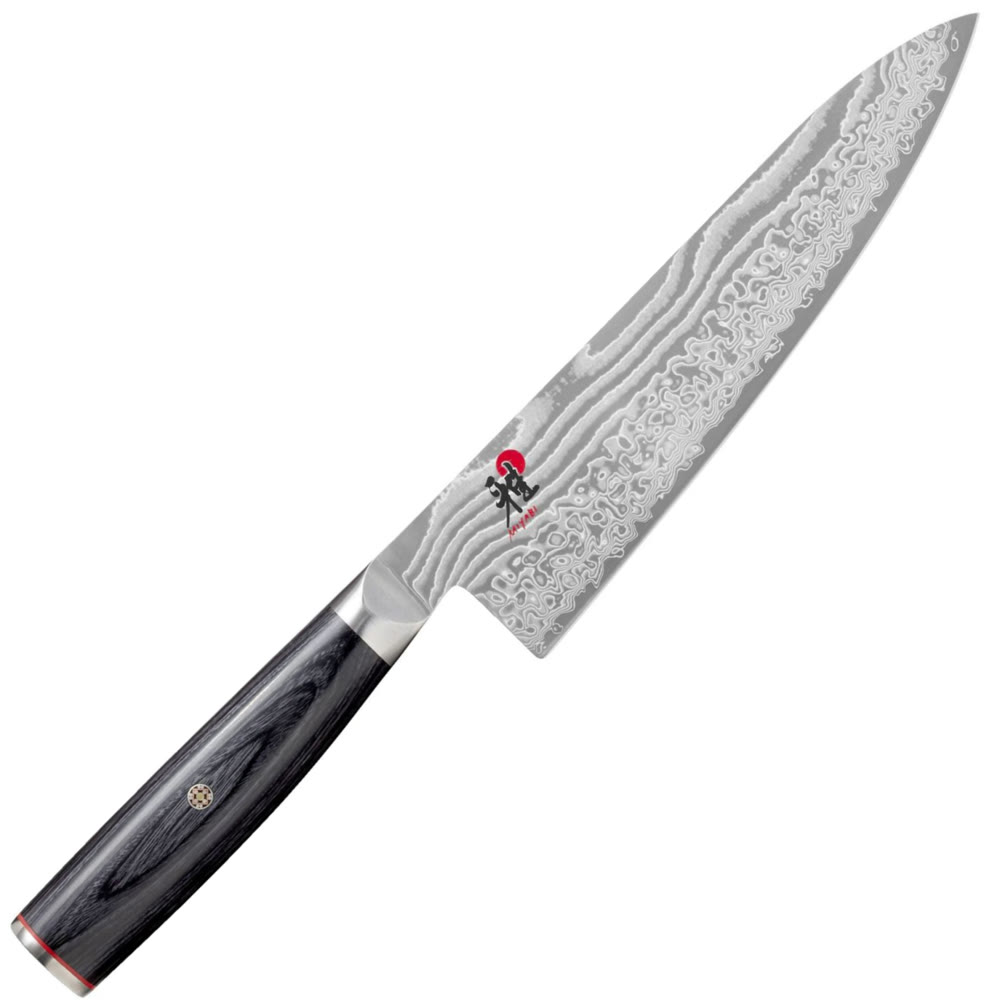
The Miyabi Kaizen II 8-inch Chef's Knife pairs traditional Japanese craftsmanship with modern engineering. Reviewers praised the FC61 steel core wrapped in a 48-layer Damascus pattern for sharpness and durability, and the double FRIODUR ice-hardened blade for edge retention and corrosion resistance. The black pakkawood handle, D-shaped, drew notes about grip and balance. Some reviewers mentioned the asymmetrical bevel and the need for initial sharpening. The verdict lands on it as a solid investment for beginners and experienced cooks alike who want a high-quality Japanese knife.
Full review
FC61 core under 48 layers of Damascus
Zwilling forges the Kaizen II around an FC61 steel core wrapped in a 48-layer Damascus pattern that is acid-darkened for contrast. The blade is ice-hardened twice under Zwilling's FRIODUR process and rated 60 to 62 on the Rockwell scale, which is the number that governs how long an edge lasts between sharpenings. The handle is black pakkawood with a rounded D-shaped bolster, and the knife is finished in Seki.
Sharp out of the box, with an uneven bevel
The Hungry Onion reviewer found the knife slicing paper straight from the box and put it through diced onions and peppers, zucchini matchsticks and shredded cabbage without complaint. The same reviewer found the cutting bevel is not symmetrical, with a flatter angle on one side and a steeper one on the other, which matters as soon as you sharpen to a set angle. It is a quirk of the hand-honing rather than a defect, but it makes maintenance less predictable than it should be.
Thinner behind the edge than a Tojiro DP
Behind the edge the blade measures 0.7mm against 0.9mm on a Tojiro DP gyuto of similar length, so it enters food more easily and behaves less forgivingly in heavy work. That geometry is a precision advantage and a durability liability at once, because thin edges chip when they meet bone or frozen food. Mincing, chopping, slicing and dicing are the honest envelope for it.
Hand-wash care against a lifetime warranty
Zwilling backs the knife for life, but a warranty does not cover an edge chipped through misuse, and the knife needs hand washing and drying to keep its finish and its pakkawood in good order. The owner accounts that exist are short-term, so how the FC61 edge holds up over years of daily prep is still an open question. At this price the case rests on the fit, the geometry and the Seki finishing rather than on a documented service life.
Strengths
- +Handcrafted in Seki, Japan with lifetime warranty
- +FC61 steel core with 48-layer Damascus pattern for durability and sharpness
- +Double FRIODUR ice-hardened blade offers superior toughness and corrosion resistance
- +Ergonomic D-shaped black pakkawood handle provides comfortable grip and balance
Watch-outs
- −Blade has asymmetrical bevel with different edge angles on each side
- −May require initial sharpening as it's not ready to use out of the box
How it compares
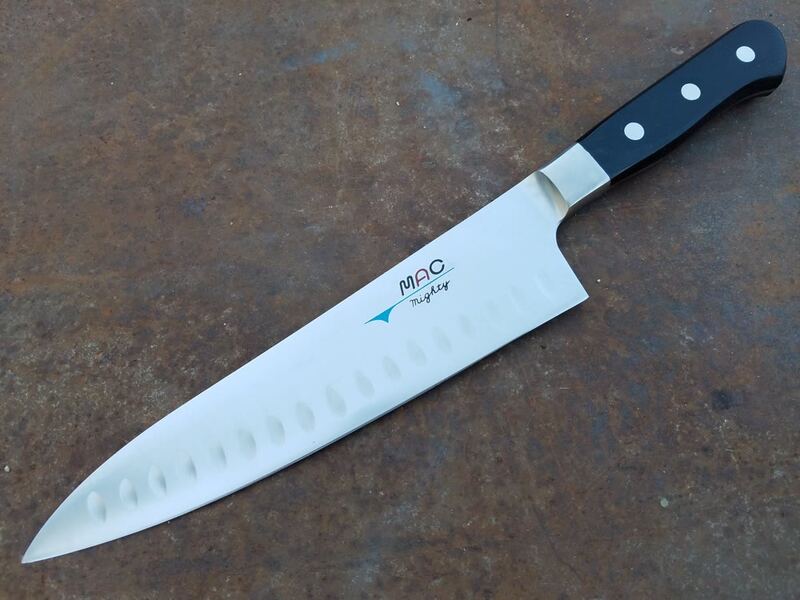
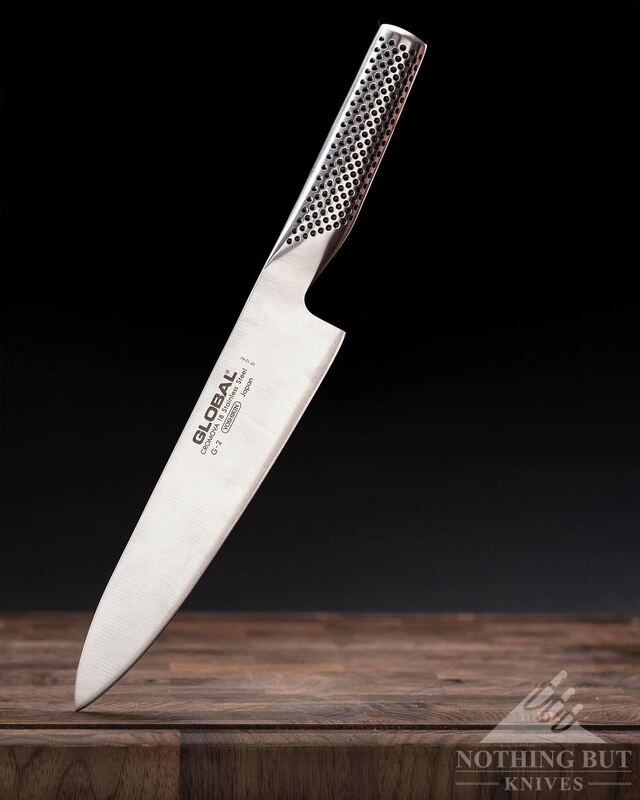
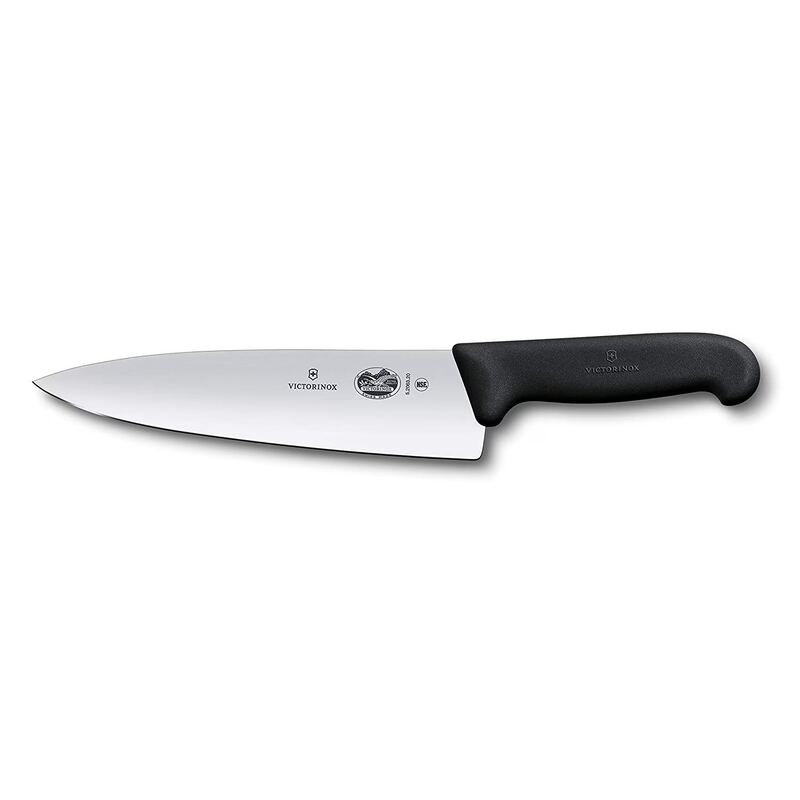
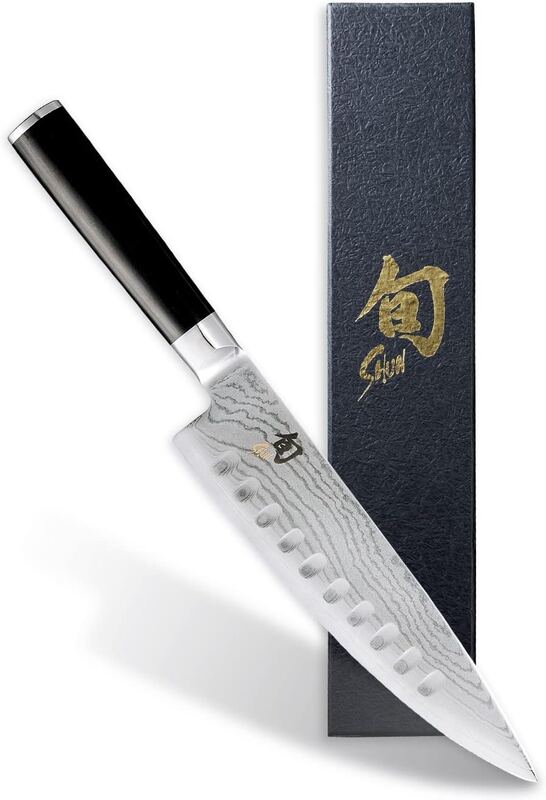
The Miyabi Kaizen II offers unmatched craftsmanship and durability with its FC61 steel and double FRIODUR hardening, surpassing the Wusthof Classic and Shun Classic in longevity. While it's more expensive than the Victorinox Fibrox Pro, it provides superior edge retention and is more forgiving than the MAC MHC-80's extreme sharpness.
Rating sources
Our 4.0 score is the average of these published ratings. Ratings marked * were derived from the reviewer’s written analysis or video transcript — the publisher didn’t print an explicit numeric score, so we inferred one from their own words. Click through to verify. More about methodology.