The Ninja FrostVault 30 QT earns its spot on the strength of one genuinely useful idea: a sealed Dry Zone drawer that keeps food at refrigerator temperature without burying it in melting ice. Reviewers from GearJunkie to Tom's Guide praised both the dry storage and the cooler's solid multi-day ice retention. It is heavier than its capacity suggests and the base version skips wheels, but for picnics, tailgates, and boat days where you want dry, easy-access food, nothing else here matches it.
Full review
The Dry Zone Drawer
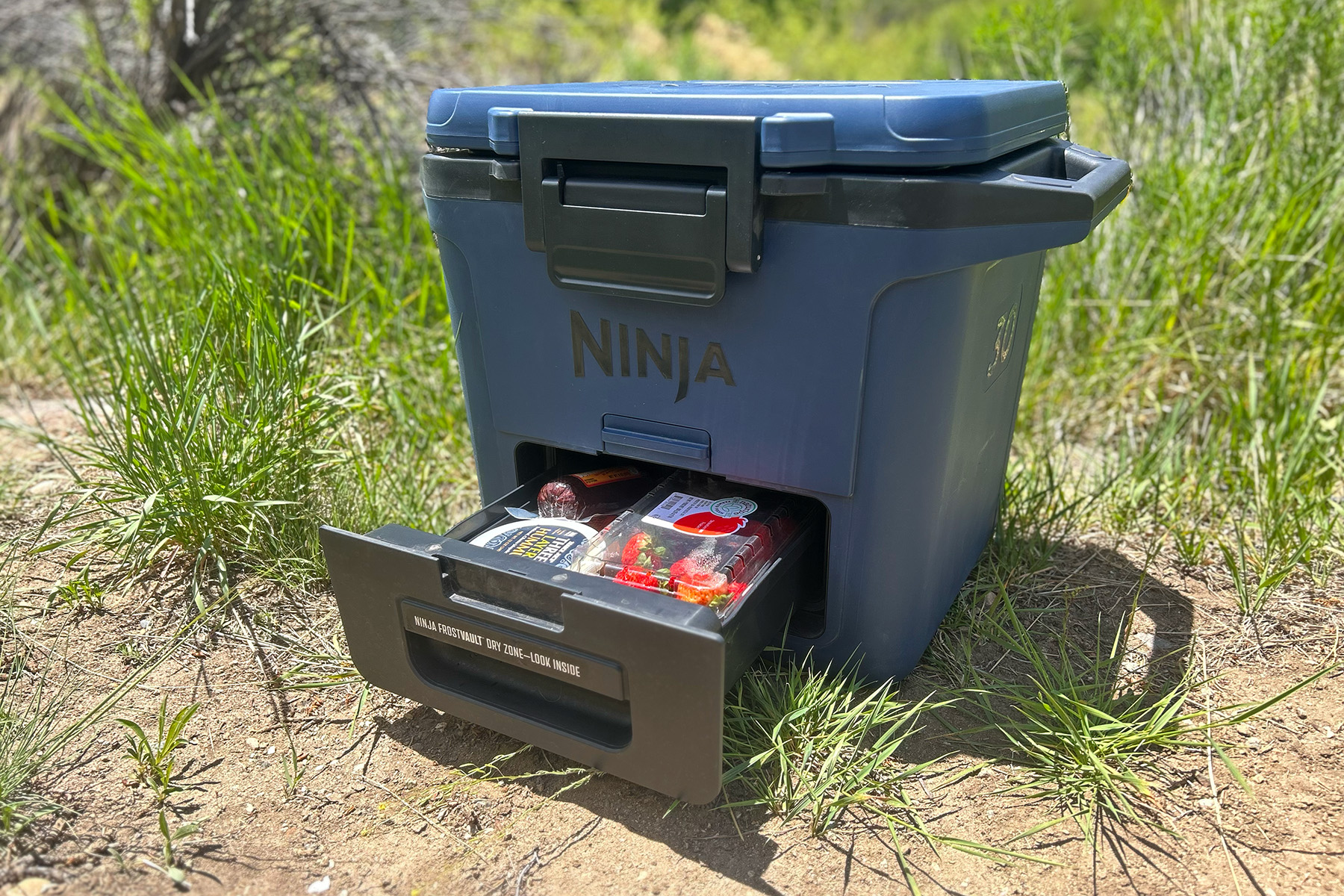
The FrostVault's signature feature is a pull-out Dry Zone drawer that sits beneath the main ice cavity and stays sealed off from the meltwater. It is chilled by the ice above it but never gets wet, which means cheese, sandwiches, and produce stay cold and intact instead of floating in slush. GearJunkie noted that after only one hour, items placed in the drawer became as cold as they would have if placed in a standard refrigerator.
It is a genuinely novel idea that addresses a problem every cooler owner knows: the soggy, crushed, hard-to-find food at the bottom of the ice. 9to5toys, who tested it extensively, said the FrostVault keeps certain foods completely separate from the main storage compartment without sacrificing food-safe temperatures. For day trips and tailgates, the convenience is hard to overstate, and it is the kind of feature that, once you have used it, makes going back to a single-cavity cooler feel like a step backward.
Real-World Cooling Performance
Ice retention is strong for the category. Tom's Guide reported keeping drinks perfectly cold for eight whole days, with ice only melting after five, and 9to5toys independently found the ice didn't completely melt until about five days after it was poured in. Those are excellent numbers for a 30-quart cooler under $200.
GearJunkie offers the realistic counterweight, awarding the FrostVault 8.0 out of 10 and noting that relative to other coolers it lost ice a little more quickly, partly because the divided design carries a smaller ice volume and partly because testers opened it frequently. Their overall verdict was that the Ninja's ice retention is competitive and on par with other high-end coolers, which matches the broader consensus. The takeaway is that you should not expect a divided 30-quart cooler to out-chill a single-cavity 50-quart box, but for its size and the convenience it offers, the retention is more than respectable.
Dry Zone drawer cuts usable wet capacity
The FrostVault is built like a premium cooler, with thick insulated walls and lid and a reassuringly solid feel. GearJunkie strapped it to a hitch-mounted cargo tray and drove across four states, concluding it is plenty durable for the average camper's needs. The latches, hinges, and drain plug all operate cleanly.
The trade for the Dry Zone architecture is interior efficiency. Splitting the cooler into a wet upper cavity and a dry lower drawer means it holds less than a single-cavity cooler of the same external size, and the shape is bulkier. It is a deliberate design compromise that makes sense only if you actually use the dry drawer.
Materials and finish are a clear step above bargain coolers. The lid seats on a real gasket, the drawer slides on sturdy rails, and the latches close with the kind of resistance that signals a proper seal rather than a loose fit. Ninja, better known for kitchen appliances, brought that appliance-grade attention to fit and finish to its first cooler, and it shows in the way the FrostVault feels in hand.
Capacity and Layout
The 30-quart FrostVault swallows about 48 cans without ice, or roughly 28 cans alongside 15 pounds of ice, in the main cavity, with the Dry Zone drawer adding separate room below for the food you want kept dry. Tom's Guide noted fitting four bags of ice and ten cans in the top section with room to spare, which is generous for the footprint.
The split layout changes how you pack. Drinks and ice go up top, while sandwiches, cheese, fruit, and anything you do not want soaked go in the drawer underneath. For a family picnic or a day on the boat, that separation is the whole point: you stop digging through cold water to find lunch, and the food comes out dry and intact. It is a genuinely different packing experience from every other cooler here.
Forgotten food in the drawer still spoils
The biggest practical drawback is weight: at around 20 pounds empty, the FrostVault 30 is heavy for a 30-quart cooler, and the base model has no wheels. Loaded for a beach day it is a real two-handed carry, which undercuts some of the portability you would expect from a smaller cooler.
The Dry Zone also demands discipline. As GearJunkie's reviewer learned the hard way, the summer sausage, cheese, and hummus all spoiled when the drawer was left unemptied after a trip. The drawer keeps food cold during a trip but is not a refrigerator, and forgotten contents will go bad. Finally, the list price sits near the top of the under-$200 range, so you pay for the novelty, though street prices have come down enough to soften that complaint.
There is also an opportunity cost baked into the divided design. Because the lower drawer is dedicated to dry storage, the FrostVault holds less wet, iced capacity than a single-cavity cooler of the same external dimensions, and the bulkier shape can be harder to pack into a tightly loaded trunk. If you would always rather have more raw ice space than a dry compartment, that is a real reason to look at a conventional cooler instead.
Street price has dropped to about $162
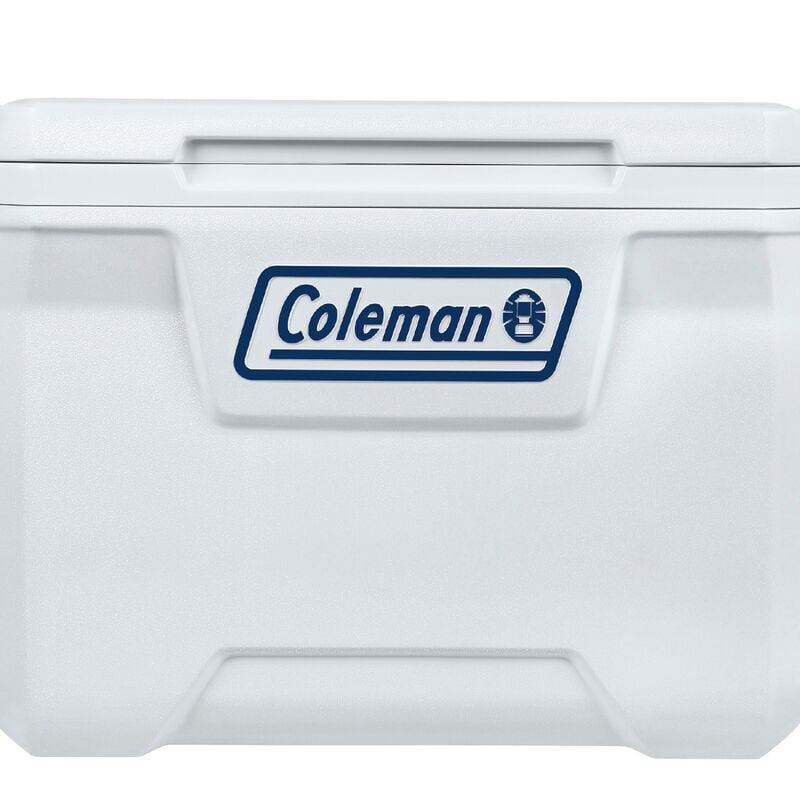
Judged purely on quarts of ice retention per dollar, the FrostVault is not the value leader here; the Coleman and Igloo chests undercut it badly on price-per-quart. Its value case rests entirely on the Dry Zone. If dry, cold, easy-to-reach food matters to how you use a cooler, the drawer is worth the premium and there is no direct competitor under $200.
If you would never use the dry compartment, you are paying for a feature you will not touch, and the RTIC Ultra-Light 32 offers a lighter, simpler package for less. The FrostVault is a specialist, and it is excellent at the job it specializes in. The good news for value-minded buyers is that street prices have settled well below the original list, often around $162, which narrows the premium and makes the Dry Zone much easier to justify.
First cooler from a kitchen-appliance brand
The FrostVault is the most appliance-like cooler in this group, and early durability signs are positive. GearJunkie's cross-country cargo-tray test put real stress on the body and hardware and came away calling it plenty durable for the average camper's needs, with no reported failures of the latches, hinges, or the all-important drawer mechanism.
The one component to watch over time is the Dry Zone drawer itself, since it is the moving part that a single-cavity cooler simply does not have. Keeping the rails clean and not overloading the drawer should keep it sliding smoothly. As a first-generation product from a brand new to coolers, it lacks the decade-long track record of a Coleman or Igloo, but nothing in the testing suggests it will not hold up to normal use.
Keeps sandwiches out of the ice water
Pick the Ninja FrostVault 30 if you do day trips, tailgates, picnics, or boat outings where you want food kept cold and dry and instantly accessible. It is the obvious choice for anyone tired of fishing soggy sandwiches out of ice water, and the convenience is the kind you appreciate on every single outing rather than just occasionally.
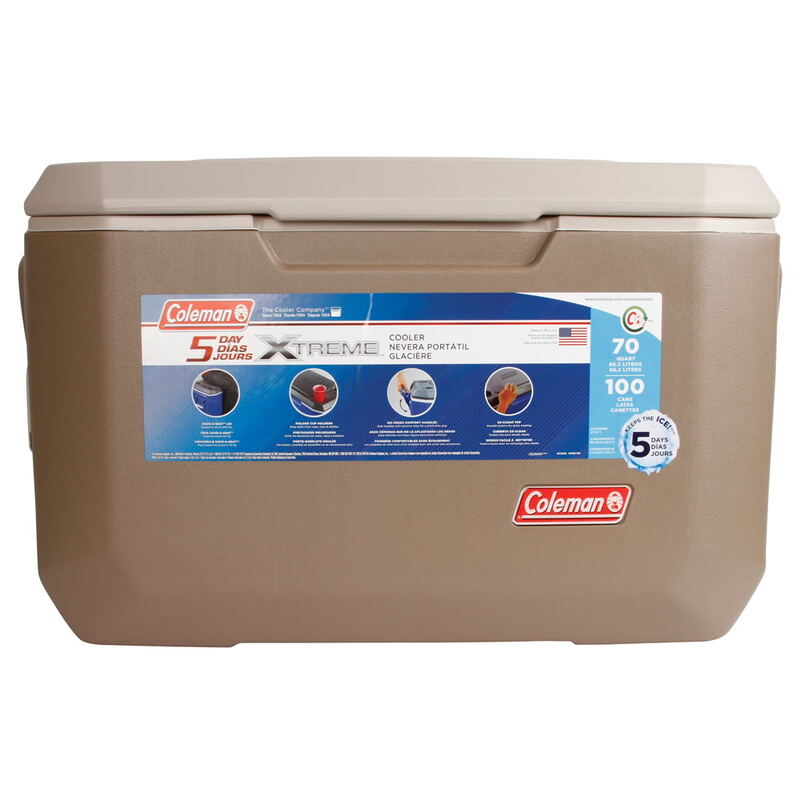
Skip it if portability is your priority (it is heavy and wheel-less), if you need maximum capacity for a crowd (look at the Coleman Xtreme 70 or alternative tough-build coolers), or if you would never use the Dry Zone and just want the most cold storage for your money. For the right user, though, it is the most thoughtfully designed cooler on this list.
Strengths
- +Unique fridge-temp Dry Zone drawer keeps food cold and dry, separate from the melting ice
- +Tom's Guide kept drinks cold for eight days with ice still present after five in their test
- +Heavy-duty insulated build that testers strapped to a cargo tray and hauled across four states
- +Dry Zone chills contents to refrigerator temperature within about an hour
- +Genuinely novel design that solves the soggy-sandwich problem most coolers ignore
Watch-outs
- −Heavy for its 30-quart size, and the base model has no wheels
- −GearJunkie found it lost ice slightly faster than some rivals with larger ice volumes
- −The Dry Zone is easy to forget to empty, and food left in it can spoil
- −List price near the top of the under-$200 bracket
How it compares
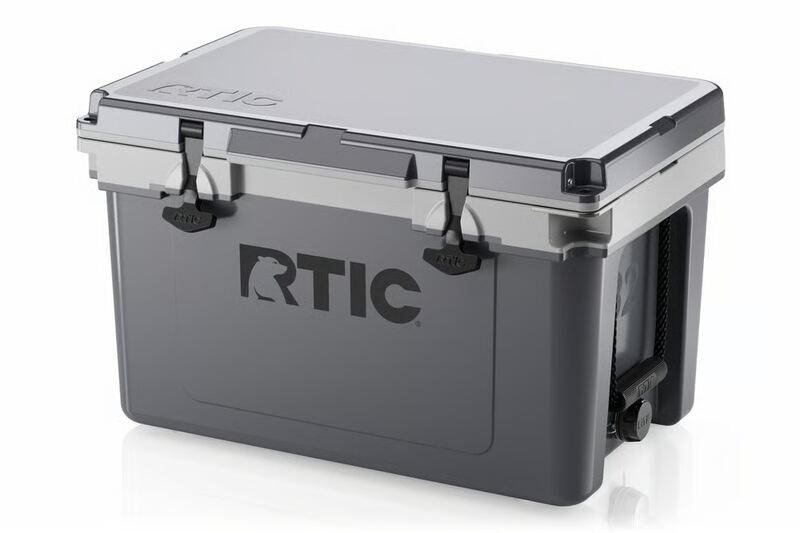
The only cooler here with a dedicated dry-storage drawer, which sets it apart from the RTIC Ultra-Light 32 and the budget Coleman chests. It is heavier per quart than the RTIC Ultra-Light 32 and holds less than the Coleman Xtreme 70, trading raw capacity for its clever Dry Zone design.
Rating sources
“Overall, the Ninja's ice retention is competitive and on par with other high-end coolers.”
“It keeps cans perfectly cold for eight whole days, with ice only melting after 5, which is beyond impressive.”
“the ice didn't completely melt until about 5 days after I poured it into the cooler”
Our 4.3 score is the average of these published ratings. Ratings marked * were derived from the reviewer’s written analysis or video transcript — the publisher didn’t print an explicit numeric score, so we inferred one from their own words. Click through to verify. More about methodology.