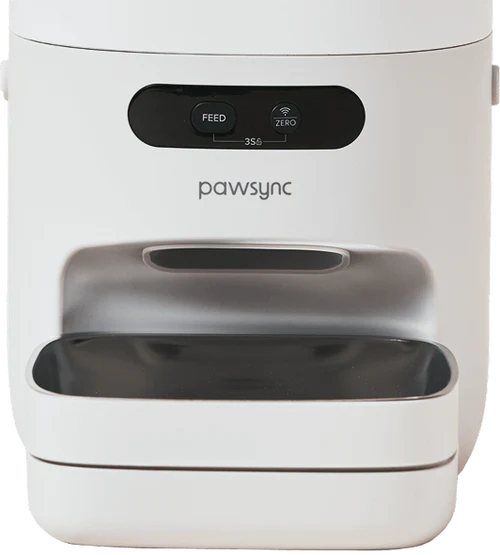
The Pawsync Smart Pet Feeder is a Wi-Fi hopper feeder built around a scale: it weighs each portion instead of counting auger turns, which makes it a tool for controlling a pet's intake rather than just keeping the bowl full. CNET's John Carlsen used it to hold his cat to a set ration after a health scare and came away positive, matching Serious Insights; a video review landed at 4 out of 5. The constraints are kibble between 4mm and 15mm, dry food only, and a battery backup you have to buy the batteries for. Cats and small dogs on measured diets are the buyers.
Full review
Portioning by grams instead of scoops
The scale is the reason to look at this feeder over a cheaper timer. Most automatic feeders count auger rotations and hope; the Pawsync weighs what it drops, down to portions of around 9 grams, and calibrates against the calorie figures on the food bag so the app can talk in daily intake rather than in scoops. CNET's John Carlsen, writing after a health scare with his cat, credited that capability with letting him hold a prescribed ration and confirm it was being met. For an animal on a weight-loss plan or a vet-set intake, weighing is a functional difference rather than a specification-sheet one.
Ten meals a day, scheduled remotely
Scheduling runs through a Wi-Fi app that accepts up to 10 meals a day, each split into as many as 10 portions, with regular and slow-feed modes and per-weekday scheduling. The app asks for the pet's age, weight and breed, proposes a daily intake from that, then tracks consumption against it and reports what was actually eaten. Notifications cover every dispense and a low hopper. Setup is quick once the phone pairs. There is also a voice-recording feature that calls the animal to the bowl at mealtimes, which reads as a gimmick and turns out to matter for a cat trained to the sound of a person in the kitchen.
Jam clearing that usually catches itself
Kibble bridging over the outlet is the standard failure of every hopper feeder, and Pawsync's answer is an auger that reverses and re-rotates when it meets resistance. It works often enough that long stretches pass without intervention, which is the difference between a feeder you can leave for a weekend and one you cannot. It is not absolute: smaller kibble in particular still finds ways to clog, and the recovery routine does not always clear it. A jam at 8 a.m. means an animal that does not eat until somebody notices, so the dispense and low-food notifications are worth leaving switched on rather than muting after the first week.
Six days of backup you supply
Power is mains-first, from a 5V adapter, with three D cells as backup. Those batteries are not in the box, and they carry the feeder for roughly six days — enough to cover an outage or a tripped breaker while nobody is home, not enough to treat as a running mode. The network side degrades gracefully as well: a stored schedule keeps dispensing while the Wi-Fi is down, and only remote control and tracking stop. Buy the batteries with the feeder and fit them on day one, because the situation they exist for is precisely the one where nobody is there to install them.
Kibble from 4mm to 15mm only
The hard limit is food size: 4mm to 15mm, which covers most cat kibble and small-dog food and excludes the larger pieces big breeds eat. Wet food is out entirely. Capacity is 3.6 litres, roughly 15 cups, so a fortnight or so for one cat and considerably less for two, and the scale wants recalibrating whenever the food changes brand or formula — a real nuisance for anyone rotating flavours. Against that, the assessments are consistent, positive from CNET and Serious Insights and 4 out of 5 from a video review, and at $80 it undercuts smart feeders that add a camera and weigh nothing at all.
Strengths
- +Built-in scale enables precise portion control by weight instead of volume
- +Wi-Fi connectivity allows remote monitoring and scheduling via smartphone app
- +Tracks food intake and provides reports on daily consumption for health management
- +Dual power source system ensures feeding continues during Wi-Fi outages or power loss, per Serious Insights
Watch-outs
- −Battery backup only lasts about 6 days, requiring frequent recharging, per Petsacular
- −Jam fix technology occasionally fails to resolve clogs with smaller kibble, per Petsacular
- −Only supports kibble sizes between 4mm and 15mm, limiting compatibility with large dog breeds, per CNET
How it compares
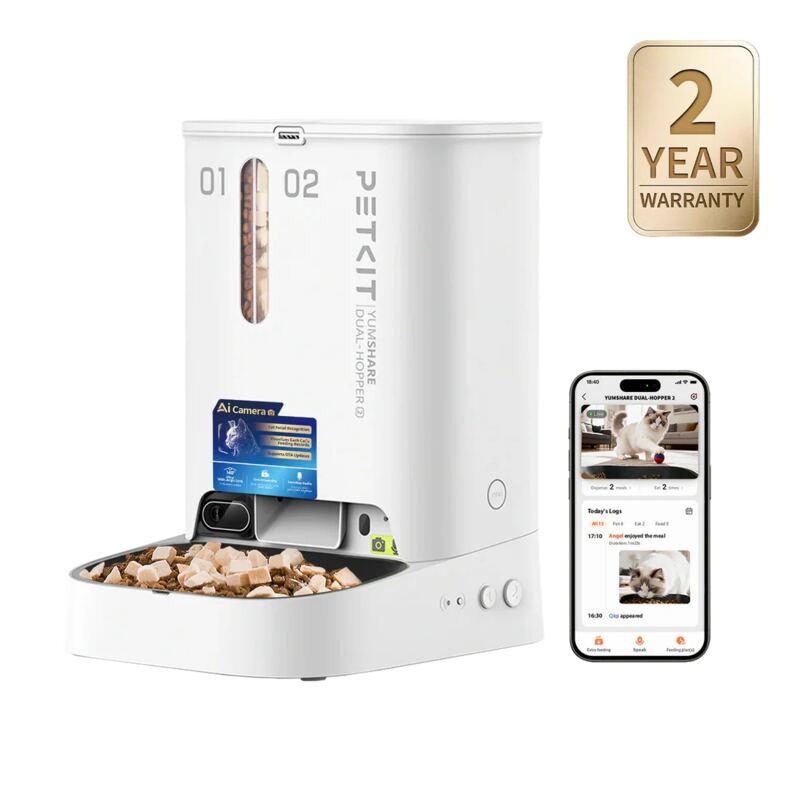
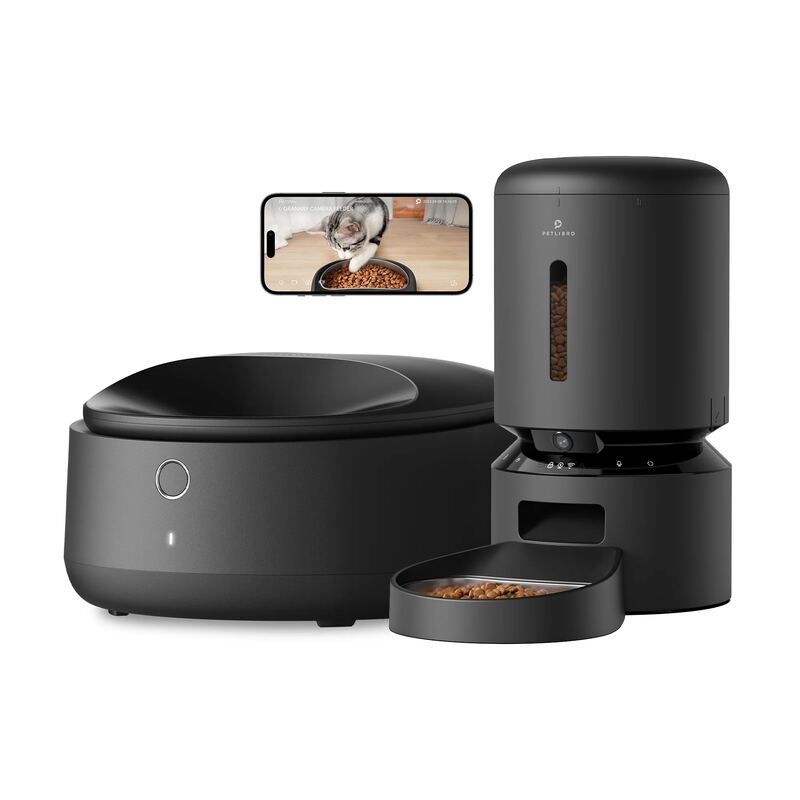
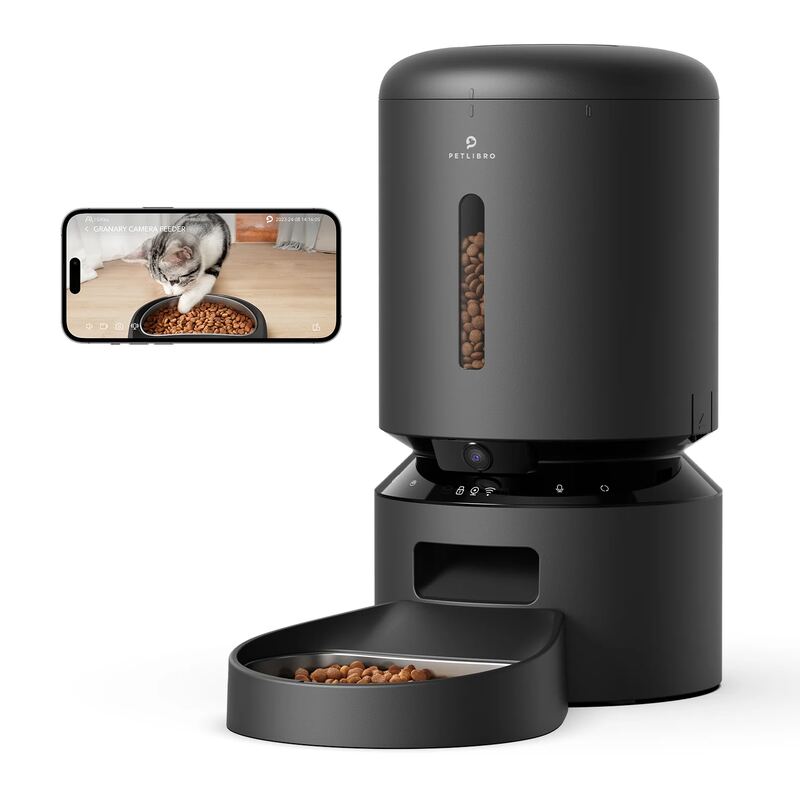
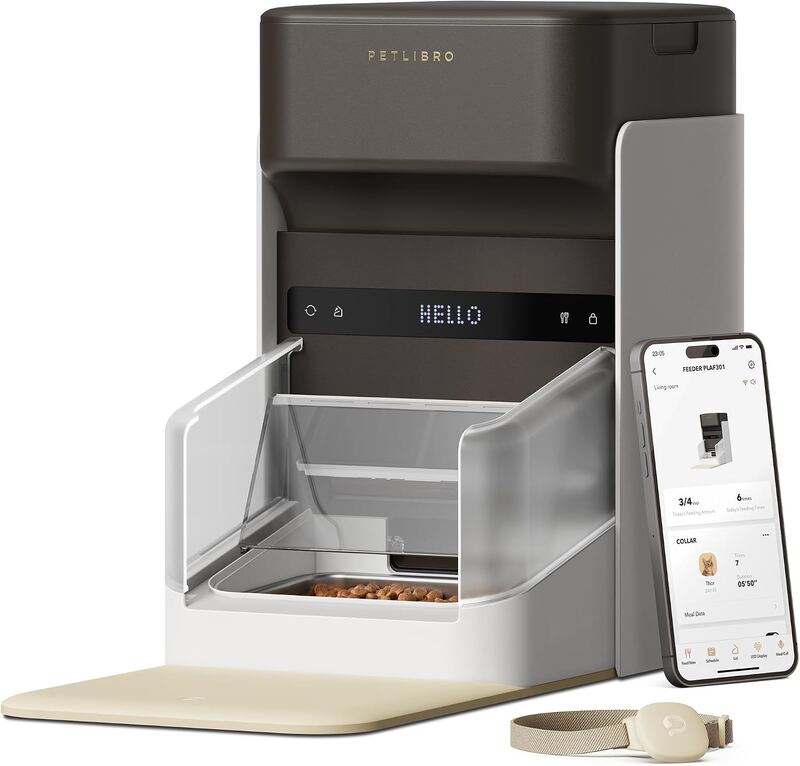
The Pawsync Smart Pet Feeder excels in precise portion control by weight compared to the Petlibro Automatic Cat Feeder, which lacks a built-in scale. Unlike the Petkit YumShare Dual-Hopper 2, the Pawsync doesn't offer AI facial recognition or two-way audio, but it provides detailed intake tracking and health reports. Compared to the Petlibro Granary Smart Camera Feeder, the Pawsync lacks a camera and smart features, but it offers better weight-based control and is more suitable for cats and small dogs.
Rating sources
“This budget-friendly smart feeder with intake monitoring transformed how we manage our pets nutrition.”
“The $99.99 Pawsync Smart Pet Feeder delivers precise, scheduled feeding with smart features at an accessible price, though its smaller capacity and portion limitations may require consideration for some pet owners, but its great for those with smaller pets such as cats.”
“The PAW SINK automatic cat feeder is a high-tech solution for pet owners looking for more control over their pet's feeding schedule.”
Our 4.3 score is the average of these published ratings. Ratings marked * were derived from the reviewer’s written analysis or video transcript — the publisher didn’t print an explicit numeric score, so we inferred one from their own words. Click through to verify. More about methodology.