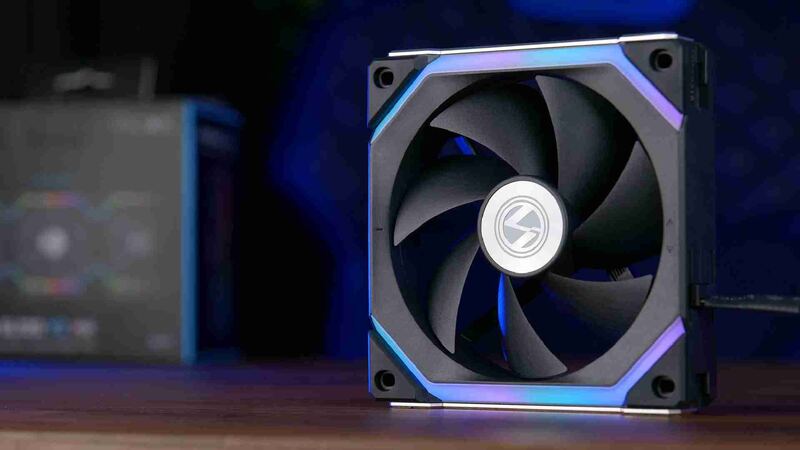
The Phanteks T30 R PST is a 120mm fan that outperforms the Noctua NF-A12x25 PWM in airflow and static pressure, thanks to its 7-blade design with a larger rotor and LCP material for reduced vibration. HWCooling.net noted its unique architecture with a deeper rotor and fewer blades that compensate with wider blade width for higher airflow and static pressure. The fan's three-stage PWM switch limits noise at high speeds, though its increased thickness of 30mm may cause compatibility issues. While it delivers superior performance, the design lacks the smooth finish of premium competitors.
Full review
30mm thickness advantage
The Phanteks T30 R PST stands out in the 120mm fan market due to its 30mm thickness, which is 5mm greater than standard fans like the Noctua NF-A12x25 PWM. This increased thickness is not merely cosmetic, as HWCooling.net notes that the extra dimension allows for a deeper rotor design, which contributes significantly to the fan's performance characteristics. The deeper rotor, combined with a unique blade configuration, enables the T30 to achieve higher airflow and static pressure compared to its competitors. This design choice was intentional, as Phanteks aimed to create the most efficient 120mm fan possible, rather than simply matching existing designs.
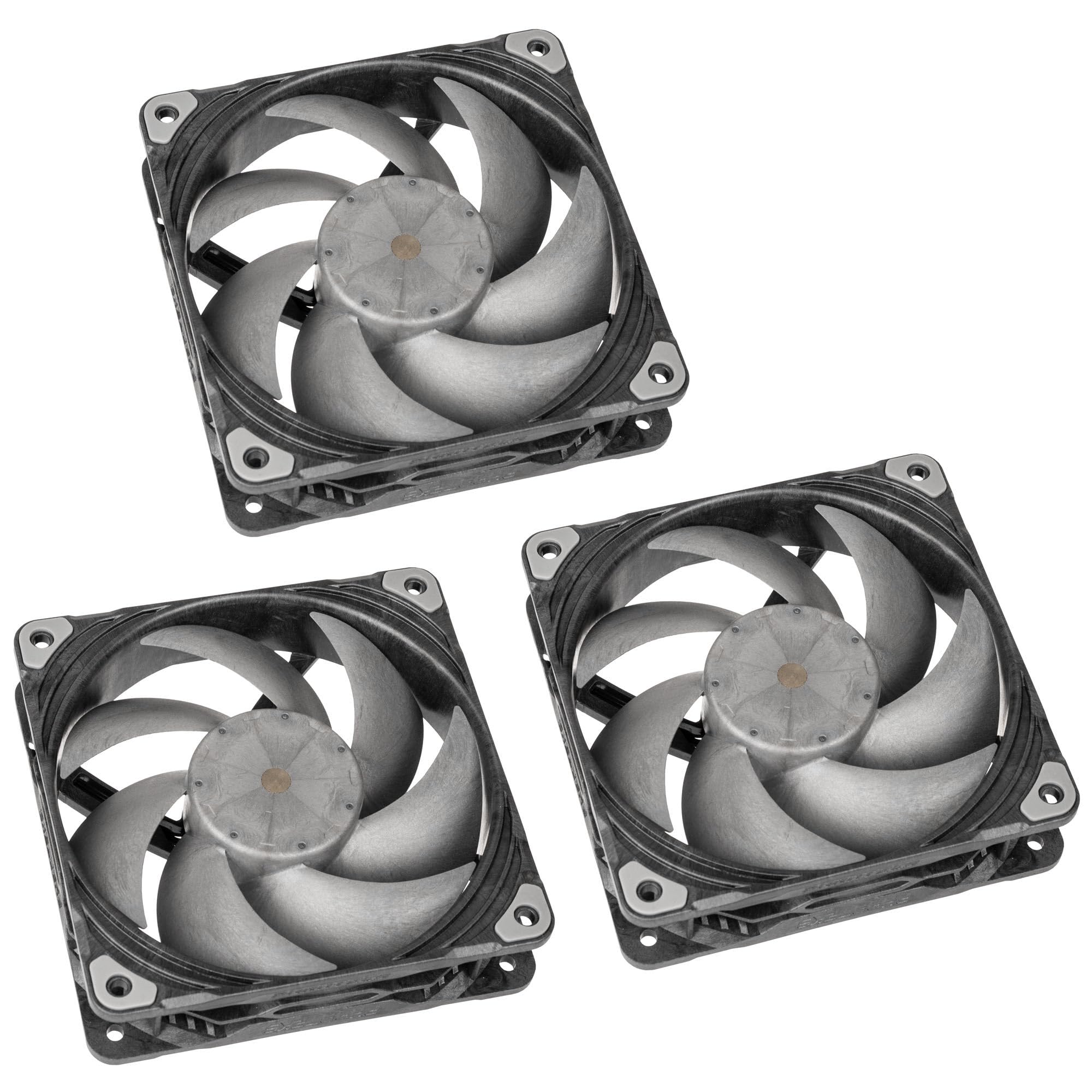
The extra 5mm thickness provides a substantial advantage in terms of airflow generation and static pressure, which are crucial for effective cooling in high-performance systems. HWCooling.net emphasizes that this is not just about the frame protruding more, but that the rotor itself is deeper, making it a key element in the fan's superior performance. The T30's design also incorporates a larger active area of the total cross-section, which contributes to higher airflow. This is particularly important when considering that the blades are positioned only about 0.5mm from the frame, creating a narrow gap that enhances static pressure. The larger blade width compensates for the fewer number of blades, which helps maintain efficiency while reducing noise.
7-blade design with LCP construction
Unlike most 120mm fans that use 8 or 9 blades, the Phanteks T30 R PST employs a unique 7-blade configuration. This design choice was made to reduce noise by minimizing the number of leading edges that cut through air, according to HWCooling.net. The fewer blades also contribute to reduced vibration, which is a significant advantage over competitors like the Arctic P12 that suffer from vibration issues. HWCooling.net notes that the T30's design is halfway between the Arctic P12 and other designs, using fewer blades but with wider blade width to compensate for potential static pressure loss.
The construction of the T30's blades and frame uses LCP (Liquid Crystal Polymer), a material that provides significantly higher tensile strength than PBT used in Arctic fans, while also having lower thermal expansion. This material choice was specifically made to address vibration issues that plague fans with fewer blades. HWCooling.net explains that the LCP material allows for better blade tip reinforcement, which is crucial for a fan with a heavy rotor. The material also contributes to the fan's overall durability and performance under various operating conditions, as it maintains its structural integrity better than traditional plastics.
Magnetic levitation bearing performance
The Phanteks T30 R PST features a magnetic levitation bearing, which is a significant advantage over traditional ball bearings. Hardware Busters confirms that this bearing type offers improved reliability, especially in harsh operating conditions where fluid dynamic bearings might struggle with high temperatures. The MagLev bearing eliminates the contact between the fan shaft and bearing, which prevents the wear and friction issues common with ball bearings, particularly as lubricants degrade over time. This design choice allows the T30 to maintain consistent performance without the noise degradation that typically occurs with ball bearings over extended use.
Hardware Busters notes that the MagLev bearing technology was developed through years of collaboration with Sunon, a company that pioneered this bearing type in 1999. The bearing's design provides smoother operation, lower minimum speeds, and reduced power draw compared to 4-pole motors. This is particularly beneficial for a fan with a robust rotor like the T30, as it allows for more efficient operation across the entire speed range. The bearing's design also contributes to the fan's ability to maintain low vibration levels, which is crucial for maintaining quiet operation at all speeds.
Three operational modes
The Phanteks T30 R PST includes a three-stage switch that limits the upper limit of PWM duty cycle, providing users with different operational modes. Hardware Busters reports that the fan defaults to Performance mode, where maximum speed is capped at 2000 rpm, with an average of 1993 rpm across three samples. In Hybrid mode, the maximum speed is limited to about 1212 rpm, while Advanced mode allows the fan to reach up to 2984 rpm. The minimum speeds also vary by mode, with Hybrid mode having the highest minimum speed at about 489 rpm, compared to 294 rpm in Performance mode. This flexibility allows users to optimize performance based on their specific cooling needs and noise tolerance requirements.
The three operational modes provide a range of performance options, from maximum airflow and pressure in Advanced mode to more energy-efficient operation in Hybrid mode. Hardware Busters notes that the T30's performance is particularly notable in its ability to deliver high airflow without increased noise output, which is achieved through its optimized blade design and magnetic levitation bearing. The fan's ability to operate efficiently across different modes makes it suitable for various applications, from high-performance gaming systems to quiet office environments where noise control is important.
Performance metrics and efficiency
Performance testing by Hardware Busters reveals that the Phanteks T30 R PST delivers exceptional airflow and static pressure while maintaining low noise levels. The fan achieves a maximum airflow of 3.79 m/sec at peak speed. Despite its high maximum speed of 3000 rpm, the T30 maintains excellent efficiency, with the fan achieving the fourth-best airflow-to-noise ratio on test. The noise-normalized test results show that the T30 ranks fourth in airflow while requiring only 1,100 rpm to achieve optimal performance. This efficiency is particularly impressive given the fan's high maximum speed and thick profile.
Custom PC measured the T30's noise output at peak speed, finding it to be 40 dBA, which is unsurprisingly high for a fan with such a maximum speed. However, the fan's performance at lower speeds is where it truly excels, with low noise levels and excellent airflow. The fan's ability to deliver high airflow at low speeds while maintaining minimal noise output makes it particularly suitable for systems where quiet operation is important. The T30's performance in the noise-normalized tests demonstrates its ability to maintain high efficiency across different operating conditions, making it a versatile choice for various cooling applications.
Compatibility and mounting considerations
The increased thickness of the Phanteks T30 R PST creates compatibility challenges for some systems, particularly those with limited clearance. HWCooling.net notes that the extra 5mm can cause interference with motherboard VRM coolers, RAM, or other components in tight spaces. This is especially problematic in larger radiators where clearance at the top of the chassis may be limited. The fan requires longer screws for mounting on radiators, which is a necessary consideration for users installing the fan on liquid cooling solutions. The design also means that users must account for the increased thickness when planning their system layouts.
Hardware Busters highlights that the T30's 30mm thickness means that mounting may require special consideration for compatibility with various cases and cooling solutions. The fan's design necessitates longer screws for radiator mounting, and users must ensure that their system has sufficient clearance for the fan's increased profile. The fan's thick profile also means that it may not fit in all cases, particularly those with limited clearance at the top or sides. Users should carefully verify their system compatibility before purchasing, as the extra thickness can create installation challenges in some configurations.
Build quality and warranty
The Phanteks T30 R PST features excellent build quality, as confirmed by Hardware Busters, which notes the fan's industrial-grade components and extended warranty of six years. The fan's construction includes a robust LCP frame and blades, which contribute to its durability and performance. The fan's design also incorporates balancing materials within the hub, with two rings of different radius that contain additional balancing material in their segments. This attention to detail in the manufacturing process ensures that the fan operates smoothly and quietly even at high speeds, as noted by HWCooling.net.
Hardware Busters emphasizes that the T30's build quality is evident in its extended warranty period of six years, which reflects Phanteks' confidence in the fan's reliability. The fan's components are described as industrial-grade, contributing to its long-term performance and durability. The inclusion of rubber dampeners in the corners of the fan also helps reduce vibration and noise, which is particularly important given the fan's high airflow capabilities. The overall construction quality of the T30 makes it a solid investment for users seeking high-performance cooling solutions.
Price and value proposition
The Phanteks T30 R PST is positioned as a premium product, with a price point of approximately $30 for a single fan or $86 for a triple-pack. Custom PC notes that while the price is substantial, the fan delivers 'mega performance and efficiency' that justifies the cost. The fan's performance metrics, including its high airflow, static pressure, and low noise levels, make it a strong contender for users who require maximum cooling performance. The inclusion of accessories such as a 50cm PWM extension cable, radiator screws with 6-32 threads, and extended screws for Phanteks Halos RGB fan frames adds value to the package.
Hardware Busters notes that while the T30 is not affordable at $31 for a single fan, it offers high airflow and static pressure performance that makes it a worthwhile investment for users who need maximum cooling capabilities. The fan's three operational modes, magnetic levitation bearing, and optimized blade design all contribute to its premium positioning. The lack of RGB lighting may be a drawback for some users, but the fan's performance characteristics make it a strong choice for those prioritizing cooling efficiency over aesthetic features. The fan's ability to deliver exceptional performance across different operating conditions justifies its premium price point for users who demand the best cooling solutions.
Strengths
- +Outperforms Noctua NF-A12x25 PWM in airflow and static pressure
- +Uses 7-blade design with larger rotor for improved efficiency
- +Features LCP material for reduced vibration and better balance
- +Includes three-stage PWM switch to limit noise at high speeds
Watch-outs
- −Cosmetic design lacks the smoothness of competitors like Noctua
- −The 30mm thickness may lead to compatibility problems.
How it compares
The Phanteks T30 R PST outperforms the Noctua NF-A12x25 chromax.black.swap in airflow and static pressure, making it superior to the Corsair iCUE QL120 RGB White and Thermaltake Riing Quad 12 RGB Radiator Fan TT Premium Edition in performance. However, it lacks the aesthetic customization options of the Noctua fan and the RGB lighting of the Corsair model, and its thicker design may cause compatibility issues.
Rating sources
“The Phanteks T30 doesnt like second places, and in the vast majority of cases it doesnt get to them, outperforming competing fans in its format (120mm) by a good chunk when optimally setup.”
“The Phanteks T30-120 is among the best fans I have evaluated so far, and only the second one that I had handled with my Long Win LW-9266 Fan PQ performance measurement apparatus”
Our 3.9 score is the average of the 4 scored reviews above; 1 more reviewed it without printing a score and is not in the average. Ratings marked * were derived from the reviewer’s written analysis or video transcript — the publisher didn’t print an explicit numeric score, so we inferred one from their own words. Click through to verify. More about methodology.