The Philips Hue White and Color Ambiance A19 is the best smart bulb overall, the unanimous top pick across PCWorld, TechHive, and others for years running. Its Zigbee mesh (via the Hue Bridge) is the most reliable in smart lighting, the light quality is class-leading, and the ecosystem dwarfs every rival. Price is the catch: roughly $50 per bulb plus a recommended Bridge makes this the premium choice.
Full review
Zigbee mesh handles 50-plus bulbs without lag
The Philips Hue White and Color Ambiance A19 has been the default best smart bulb for years, and the reasons hold up under scrutiny. PCWorld, which has reviewed every generation, found that 'the quality of light these new Hue bulbs produce is every bit as good as the bulbs that came before' — meaning natural, even, flicker-free color and white across the full range. TechHive's verdict on the line was blunt: 'This is the bulb to beat.' In day-to-day use the bulbs dim smoothly to very low levels without buzzing or color shift, which cheaper bulbs frequently struggle with.
Reliability is the real differentiator. When paired with the Hue Bridge, the bulbs communicate over a Zigbee mesh rather than your Wi-Fi, which keeps response times fast and consistent even with dozens of bulbs in the network. The Tested Hub noted 'the Hue Bridge integration enables 50+ bulb networks without lag,' something Wi-Fi bulbs simply cannot match at scale because each one consumes a slot on your router. For a whole-home system, this is the architectural reason Hue stays the reliability benchmark.
Color and Light Quality
Hue's color reproduction is the best in this roundup. The bulb produces 16 million colors plus a full tunable-white range from a warm 2000K candlelight up to a crisp 6500K daylight, and the transitions between them are seamless. Reviewers consistently single out Hue's white quality in particular: where many color bulbs render whites with a faint green or pink cast, Hue's whites look genuinely neutral, which matters for everyday use rather than just party scenes.
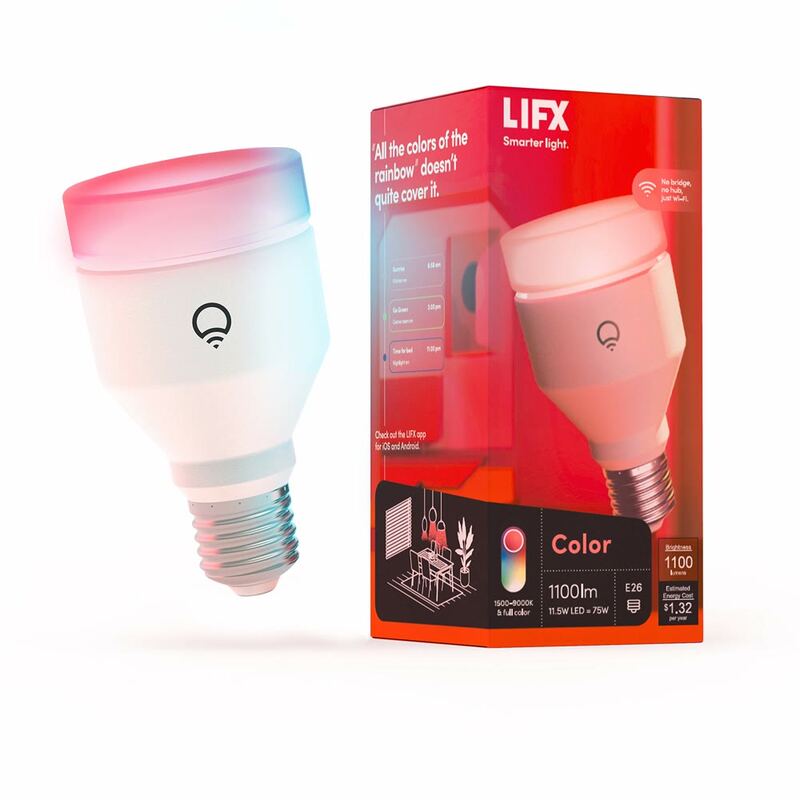
Brightness lands at 800 lumens for the standard 60W-equivalent A19, which is plenty for lamps and most fixtures. It's not the brightest bulb here — the LIFX A19 Color pushes 1,100 lumens — but Hue prioritizes color accuracy and consistency over raw output, and the result is light that simply looks better in a living room than the brighter but cooler-rendering alternatives.
Bluetooth alone caps out around ten bulbs
Setup can go two ways. Out of the box the bulbs work over Bluetooth with the Hue app, controlling up to about ten bulbs in a single room — fine for a starter setup. Add the Hue Bridge and the bulbs join the Zigbee mesh, unlocking remote access, richer automations, geofencing, and the full accessory ecosystem of dimmer switches, motion sensors, and light strips. PCWorld recommends the Bridge for anything beyond a single room.
The Hue app is the most polished in smart lighting, with mature scene management, scheduling, and entertainment sync. The ecosystem extends to Alexa, Google Assistant, and Apple HomeKit, and Hue's breadth of compatible products is, as PCWorld put it, 'bigger and broader than any other smart lighting family on the market.' That depth is a genuine long-term advantage as your system grows.
50 dollars a bulb, plus a 59-dollar bridge
Price is the obvious and significant drawback. The Tested Hub put it plainly: '$50 per bulb is real money compared to Wyze at $13,' and the recommended Hue Bridge adds about $59 on top. Outfitting a whole house with Hue costs several times what a Govee or Tapo build would. For buyers who just want a few smart bulbs, that premium is hard to justify.
The Bridge dependency is the other caveat. Without it you're limited to Bluetooth range and a reduced feature set, so the true Hue experience effectively requires buying the hub. There's nothing technically wrong with the Bluetooth-only mode, but it's clearly positioned as an entry ramp to the full, more expensive system rather than the destination.
Wins on quality, loses on value against rivals
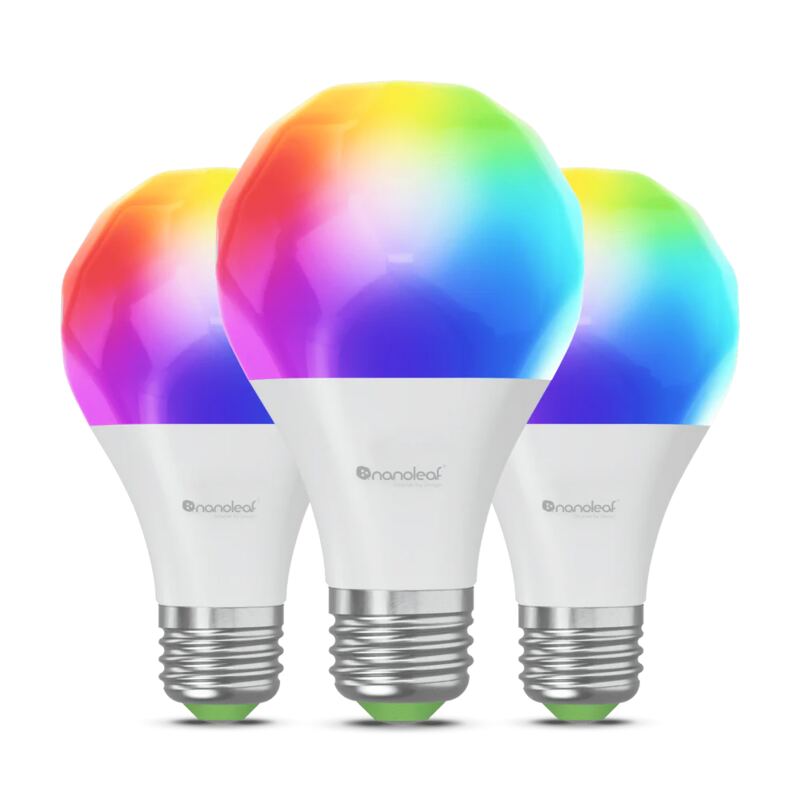
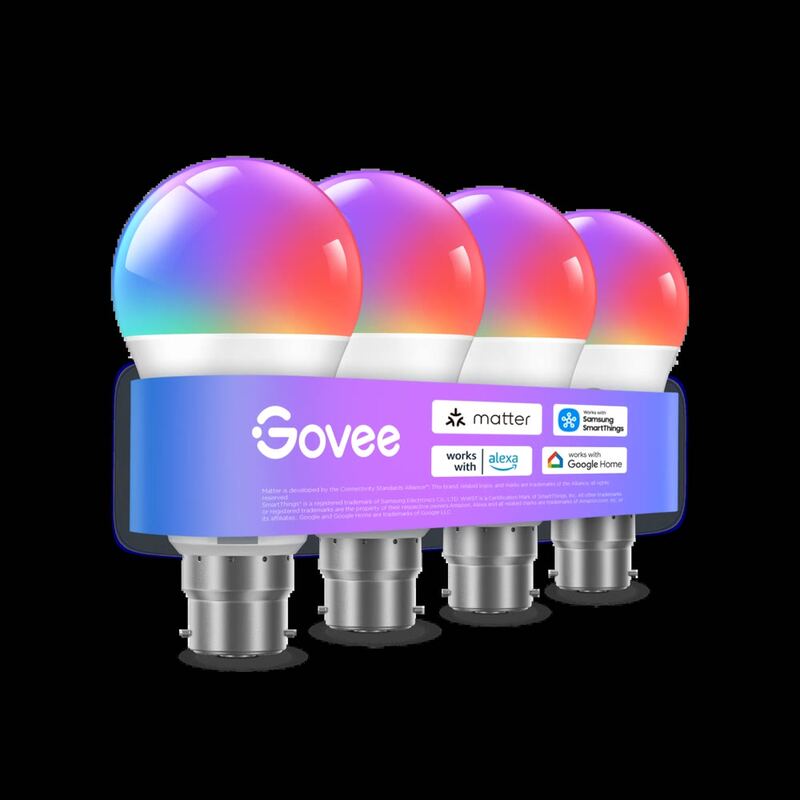
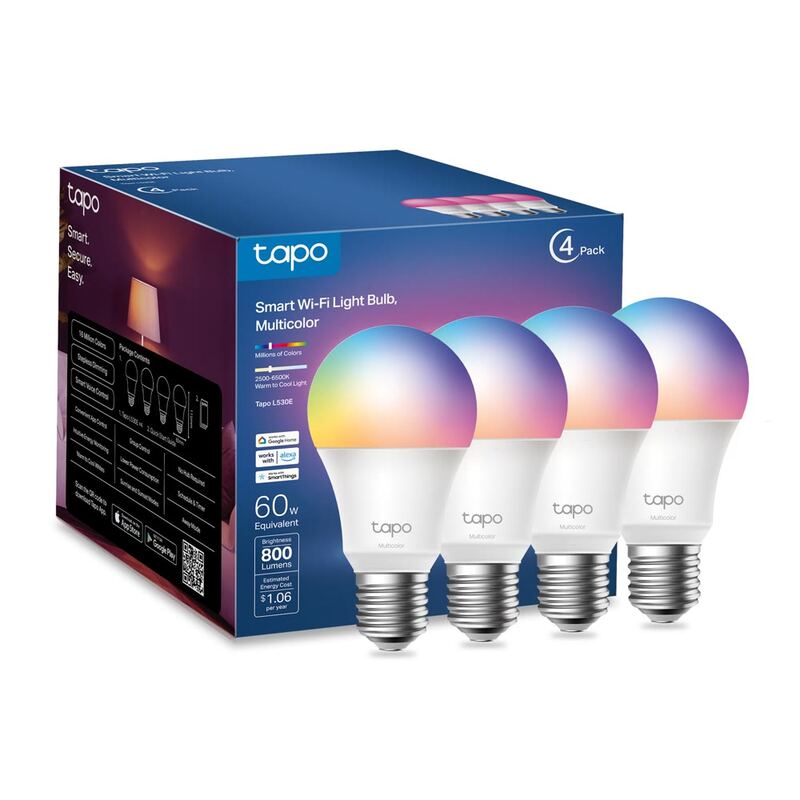
Against the Wi-Fi field, Hue trades higher cost and a hub requirement for markedly better reliability and ecosystem depth. The LIFX A19 Color is brighter and needs no hub, but it loads your Wi-Fi and lacks Hue's mesh scalability. The Nanoleaf Essentials A19 is Matter-and-Thread-native and far cheaper, making it the better future-proof value, but its ecosystem and app polish don't approach Hue's. The Tapo L530E and Govee Smart A19 are budget Wi-Fi bulbs that can't compete on light quality or scale.
The honest framing is that Hue wins on quality and loses on value. If you're building a large, serious lighting system and want the best, it's the answer. If you're price-sensitive or only need a handful of bulbs, one of the cheaper picks delivers most of the experience for a fraction of the cost.
Built for a large, dozens-of-bulbs installation
The Philips Hue White and Color Ambiance A19 is for buyers building a large or premium smart-lighting system who prioritize reliability, color quality, and a deep accessory ecosystem over upfront cost. If you plan to run dozens of bulbs, add dimmer switches and motion sensors, and want everything to just work for years, the Zigbee mesh and Hue ecosystem are worth the investment.
Skip it if you're price-sensitive or only want a few bulbs. The Nanoleaf Essentials A19 offers Matter future-proofing at a third of the cost, the Govee Smart A19 is the budget champion, and the LIFX A19 Color gives you brighter hub-free color. Hue is the best, but it is decisively the most expensive way to get there.
Strengths
- +Best-in-class light quality and smooth, flicker-free dimming
- +Zigbee mesh (via Hue Bridge) delivers fast, rock-solid reliability
- +Largest smart-lighting ecosystem with deepest app and accessory support
- +16 million colors plus full tunable-white range (2000K-6500K)
- +Works with Alexa, Google Assistant, and Apple HomeKit
Watch-outs
- −Most expensive bulb here at around $50 per bulb
- −Hue Bridge ($59) recommended to unlock full functionality and mesh
- −Bluetooth-only mode without the Bridge limits range and features
- −Overkill for anyone who just wants a few basic smart bulbs
How it compares
The premium benchmark of the group. It is more reliable at scale than the Wi-Fi-only LIFX A19 Color, TP-Link Tapo L530E, and Govee Smart A19 thanks to its Zigbee mesh, and its ecosystem is far deeper than the Matter-native Nanoleaf Essentials A19 — but it's also by far the most expensive and the only pick that benefits from a separate hub.
Rating sources
“The Hue Bridge integration enables 50+ bulb networks without lag.”
“The Philips Hue ecosystem is bigger and broader than any other smart lighting family on the market.”
“This is the bulb to beat.”
Archived — this review is no longer available at the publisher. The score above is the one they published.
Our 4.4 score is the average of these published ratings. More about methodology.