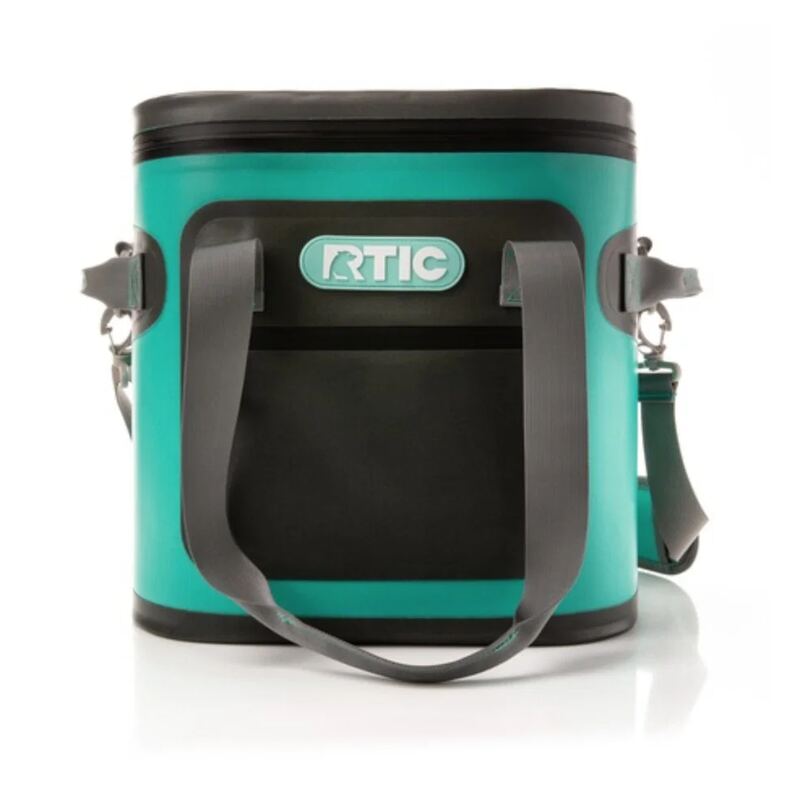
The RTIC Soft Pack 30 keeps showing up in head-to-head tests against YETI as the value pick. CleverHiker measured about four days before the ice fully melted. The zipper is stiff and it does not quite match the Flip 12, but at roughly a third of the price it is the best bang-for-buck technical soft cooler on the market.
Full review
Took four days to fully melt in high-desert testing
The Soft Pack 30 punches well above its price in ice retention. CleverHiker tested it in California's high desert and reported it took four days for the ice to fully melt, a result that lands within striking distance of YETI's far pricier bags. RTIC rates the cooler for up to two days of food-safe cold in normal use, and reviewers consistently find that realistic when the bag is pre-chilled and packed full. The gap between RTIC's conservative rating and CleverHiker's measured four-day melt time tells you the cooler tends to overdeliver against its own spec.
Capacity is the other strength. Thirty cans is enough for a family road trip or a group beach day, and the wide opening makes packing a block of ice and a case of drinks straightforward. GearJunkie made it their road-trip winner specifically because the leakproof body and easy-to-pack exterior handle the realities of a car full of melting ice, where a cooler that leaks turns into a wet back seat by the second rest stop.
In broader testing the Soft Pack 30 lands a half-step behind the very best on raw insulation but well ahead of budget coolers, which is exactly where its price positions it. OutdoorGearLab's scoring of the RTIC line noted it floats, comes in multiple colors, and is easy to load and unload, all practical virtues for the casual user who wants a cooler that performs without babying. For most buyers the real-world performance is indistinguishable from a YETI in everyday use.
Up to 1.5 inches of foam, and it floats
RTIC builds the Soft Pack 30 with up to 1.5 inches of closed-cell foam and fully welded leakproof seams, giving it a structured shape without a rigid internal frame. The EZ waterproof zipper seals tightly enough that CleverHiker confirmed it keeps water out and prevents leaks, and the whole bag floats. It is the kind of construction that, a few years ago, only YETI offered at three times the cost, and it is the main reason RTIC keeps appearing in head-to-head tests against far more expensive coolers.
The fabric exterior is durable but noticeably less premium than YETI's DryHide laminate. It scuffs more visibly over time and the finish picks up marks from dragging across rough surfaces. The removable shoulder strap works but its padding is thin, which becomes apparent when the cooler is loaded with 30 cans and ice and you are carrying it across a parking lot or down a beach path.
The overall design philosophy is clearly value-first: deliver the structural and waterproofing features that matter for performance, then spend nothing on the finishing touches that drive up YETI's price. For most buyers that is exactly the right set of trade-offs, and it is why reviewers describe the Soft Pack 30 as the bang-for-buck benchmark in technical soft coolers rather than a compromise.
Scored 8.4 out of 10 as the bang-for-buck benchmark
GearJunkie, CleverHiker, and OutdoorGearLab all rate the Soft Pack 30 highly on value. GearJunkie scored it 8.4 of 10 and OutdoorGearLab highlighted that it floats, comes in multiple colors, and is easy to load and unload.
CleverHiker's testing reinforced the practical appeal, confirming the tight-sealing zipper keeps water out and prevents leaks even after the cooler had been packed, drained, and repacked repeatedly. That kind of repeatable leakproofing at roughly a third of a YETI's price is the core reason the Soft Pack 30 earns a near-universal value endorsement, and why it consistently survives direct comparison testing rather than being dismissed as a budget alternative.
Gives up a day of ice life to the Flip 12
The stiff zipper is the most common gripe. The same tight seal that keeps water out makes the zipper hard to open and close, especially when the cooler is new, and it never becomes effortless. Several reviewers recommend working it open and closed a few times and applying zipper lubricant before the first trip.
Performance also trails the leaders by a meaningful margin. In direct head-to-head testing the Soft Pack 30 gives up a day or more of ice life to the YETI Hopper Flip 12, and OutdoorGearLab's broader soft-cooler scoring placed the RTIC line below YETI on insulation. For most buyers the gap is acceptable given the price, but it is real.
Built for road trips and family camping hauls
The Soft Pack 30 is the pick for road trippers, campers, and families who want serious capacity and leakproof construction without paying a premium. If you value dollars-per-can-of-cold over the absolute best ice retention or the most rugged shell, this is the smart buy. Buyers who need a smaller solo cooler should look at the RTIC Soft Pack 20, while those who want the longest ice life in a bombproof shell should step up to the Flip 12.
All-around value champion of this group
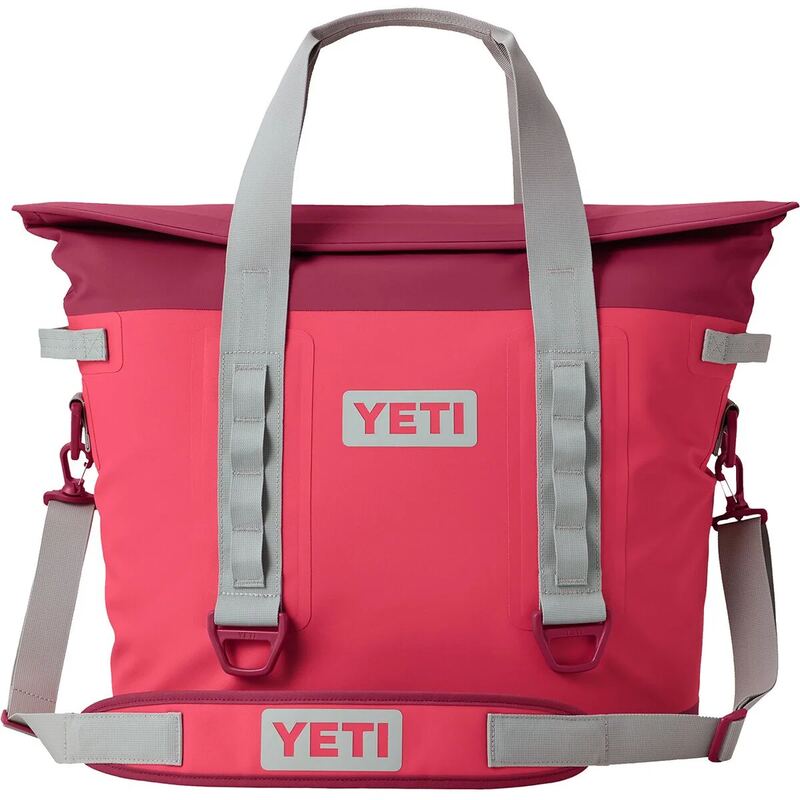
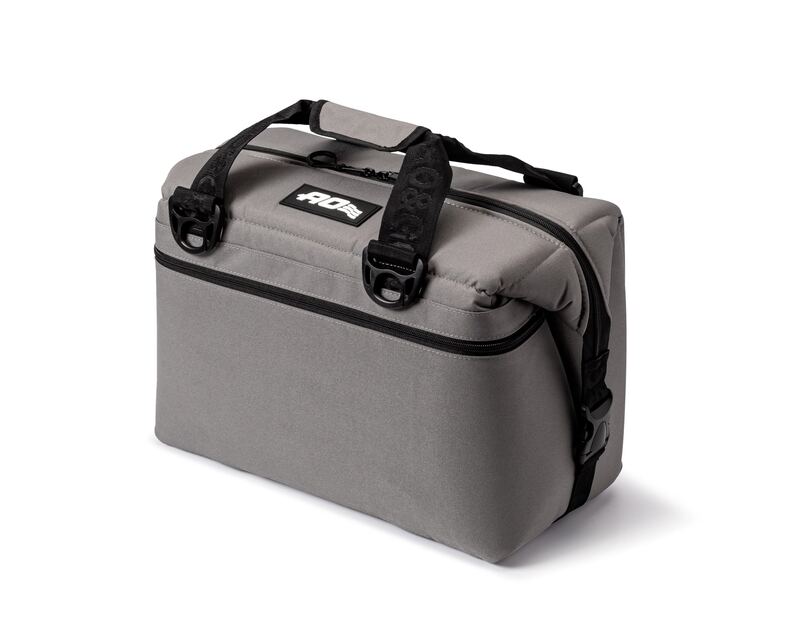
Against the YETI Hopper Flip 12, the Soft Pack 30 holds more cans and costs a fraction as much, but gives up some ice life and shell durability. Against the YETI Hopper M30 2.0, it is far cheaper and lighter but lacks the magnetic tote opening and the 42-can capacity. And against the AO Coolers Canvas 24 Pack, the RTIC wins clearly on weatherproofing and leakproofing while the AO wins on packability and weight. It is the all-around value champion of this group.
Strengths
- +Roughly a third the price of comparable YETI models while matching most of the performance
- +EZ waterproof zipper and welded seams kept the bag leakproof and floating in CleverHiker's testing
- +Held cold for about two days in real-world high-desert use
- +Wide opening and 30-can capacity swallow a full cooler of drinks for road trips
- +Up to 1.5 inches of closed-cell foam keeps the structured shape without a hard frame
Watch-outs
- −Tight-sealing zipper is stiff and tricky to open and close, especially when new
- −Ice retention trails the YETI Hopper Flip 12 by a day or more in head-to-head tests
- −Fabric finish scuffs more visibly than YETI's DryHide shell
- −Shoulder strap padding is thin under a full load
How it compares
Far cheaper than the YETI Hopper Flip 12 with similar ice life, holds more than the RTIC Soft Pack 20, and is more weatherproof than the canvas AO Coolers Canvas 24 Pack, though it lacks the tote capacity of the YETI Hopper M30 2.0.
Rating sources
“It took four days for the ice to fully melt.”
Our 3.9 score is the average of the 2 scored reviews above; 1 more reviewed it without printing a score and is not in the average. Ratings marked * were derived from the reviewer’s written analysis or video transcript — the publisher didn’t print an explicit numeric score, so we inferred one from their own words. Click through to verify. More about methodology.