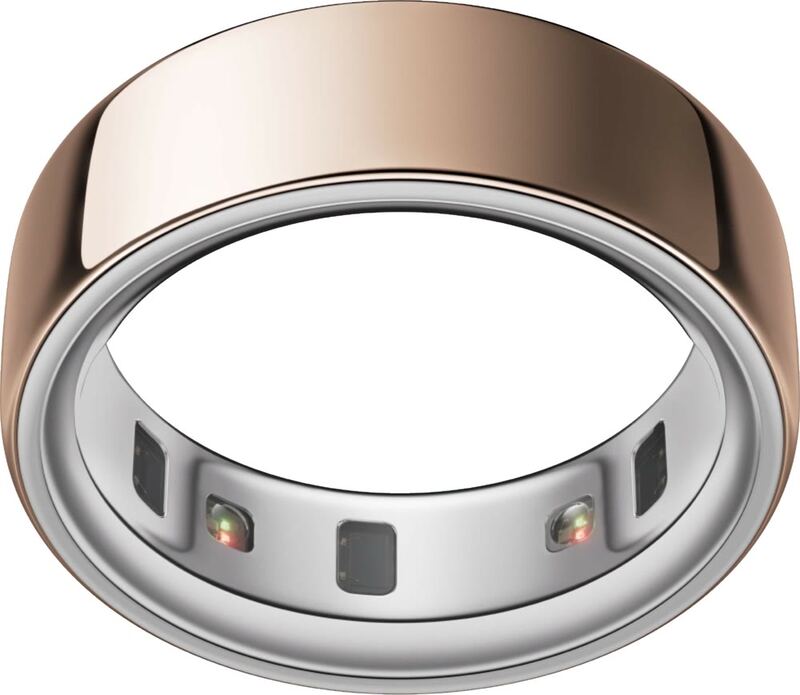
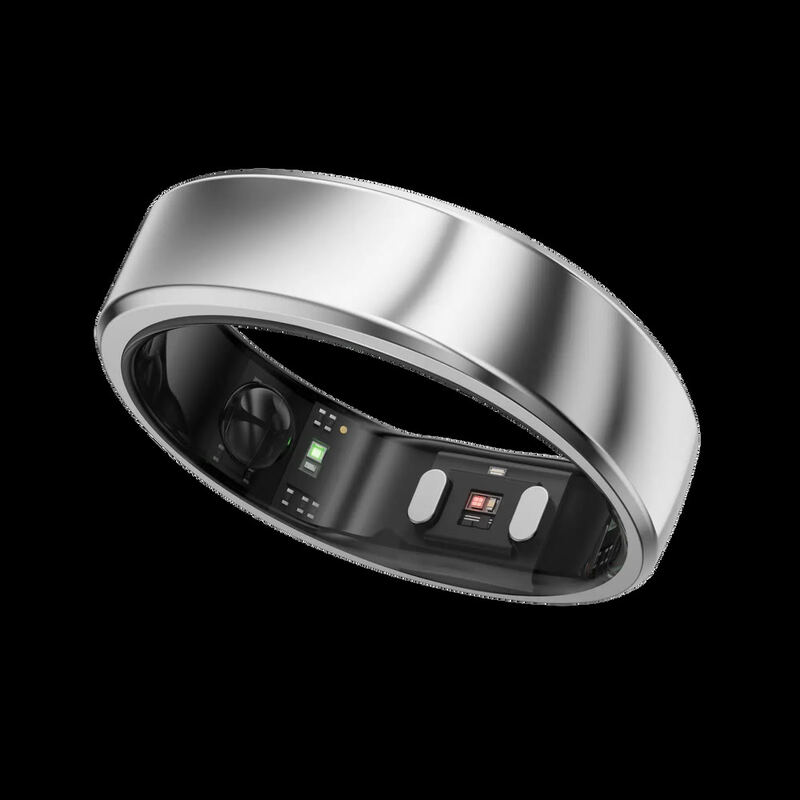
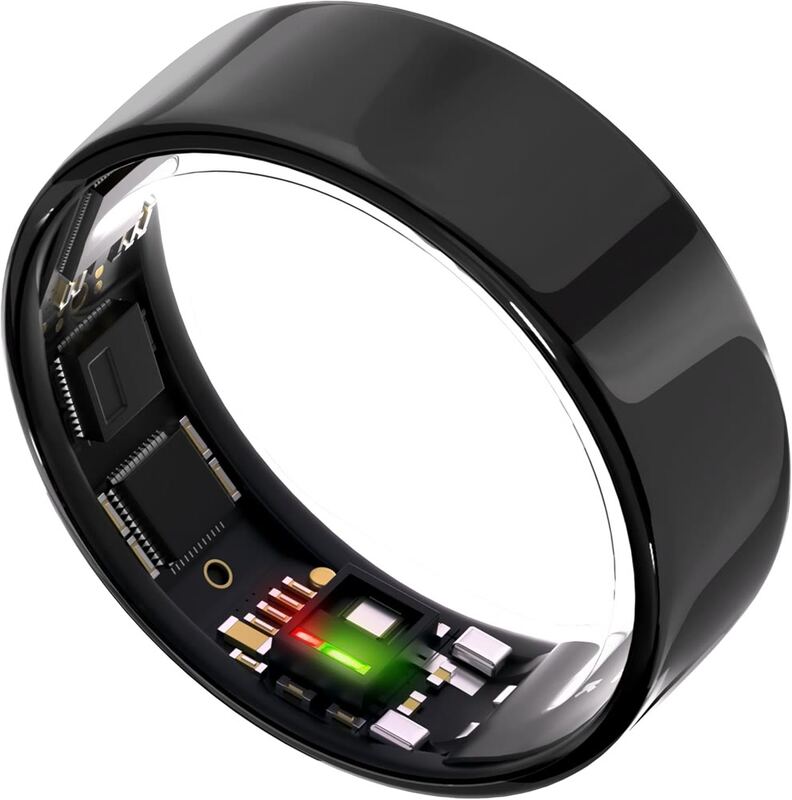
Samsung users get the most out of the Galaxy Ring, which handles notifications and controls smoothly inside that ecosystem. PCMag's Andrew Gebhart praised the comfortable design and accurate health tracking while noting the limited utility for everyone else. TechRadar highlighted the water resistance and all-day comfort. Outside Samsung's ecosystem it falls short, and heavy users may be disappointed by battery life. Samsung smartphone owners who want a minimalist wearable for health monitoring and basic smart features are the fit.
Full review
A titanium band you forget you are wearing
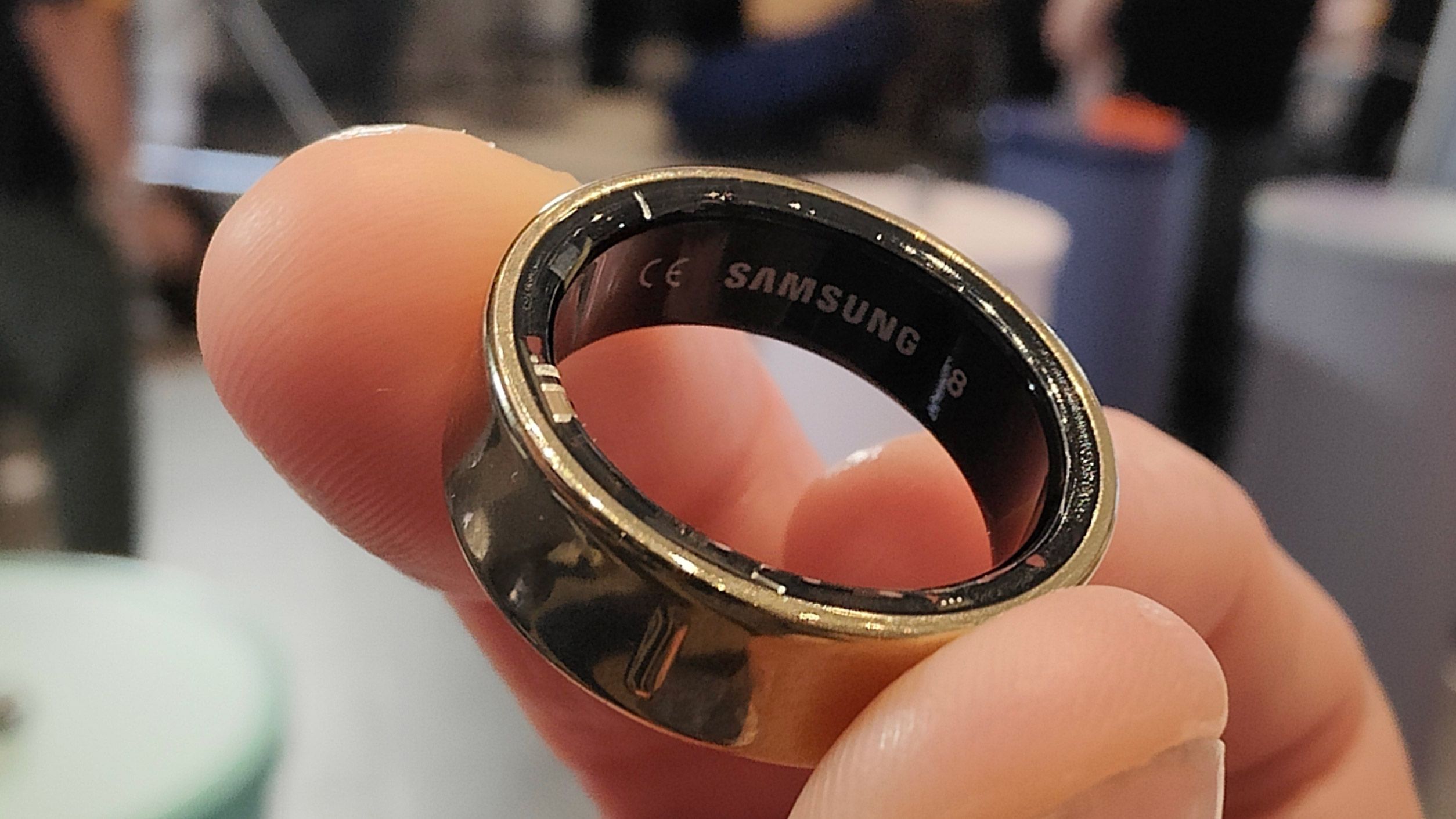
The Galaxy Ring is a plain titanium band with no screen and no buttons, so everything it collects is read later on a phone. The outer face is concave, which keeps most desk and door-handle scuffing off the widest part of the finish, and it comes in black, silver and gold with a free sizing kit, since a ring cannot be resized after purchase. TechRadar, which scored it 4.5 out of 5, singled out all-day comfort and the 10ATM water rating: it can be showered in, swum in and slept in, which is the whole point of a tracker you are meant to never take off. Most people settle on the index finger of the non-dominant hand.
Sleep, heart rate and an energy score
Sensors on the inner surface cover motion, optical heart rate and skin temperature, and Samsung Health turns those into a nightly sleep breakdown, resting heart rate trends, cycle tracking and a daily energy score meant to tell you how hard to push. Sleep is the strongest case for the format — TechRadar rated the sleep staging and heart-rate variability tracking highly, and a ring is simply easier to sleep in than a watch. Mashable was the most enthusiastic of the ring's reviewers at 4.9 out of 5. The energy score needs a week or two of baseline data before it means anything, so the first readings are worth ignoring rather than acting on.
Seven days per charge and a pocket case
Battery life is the practical advantage over a smartwatch. PCMag reported up to seven days on a charge, and ordinary use lands nearer six; either way the ring stops being something you think about daily. The charging case is a small puck that holds enough of its own charge for roughly one and a half further fills, so a long weekend needs no cable at all, and an LED ring around the perimeter shows charge state at a glance. It is also harder to lose than a bare charging dock. Charging is the only time the ring comes off, which is a fair trade against a watch that wants the mains every other night.
Samsung Health is the only way in
Everything the ring measures is presented through Samsung Health, and that app is the entire interface. PCMag found setup straightforward — pair over Bluetooth, set step, active-minute and calorie targets, choose favourite exercises — and the tracking window can be narrowed so evenings or weekends go unlogged. What the app does not do is go deep. The daily readouts are clear but thin next to a dedicated training platform, and a run recorded on the ring tells you far less than a running watch would. Owners of a Galaxy Watch get the better version of this arrangement, with the two devices splitting duties and the ring covering the gaps while the watch is charging.
No GPS, and autotracking covers walks and runs
Two limits define what this ring cannot do. There is no GPS, so any pace or distance figure comes from the phone in your pocket, and automatic exercise detection recognises walks and runs and very little else — cycling, swimming and gym sessions have to be started by hand or logged elsewhere. Skin temperature is measured but reported at a shallow level. And the ring is Android-only, with the full feature set reserved for Samsung phones, so iPhone owners are excluded outright. That is a larger exclusion than it sounds on a $399.99 device, and PCMag's 3.5 out of 5 is a fair reflection of how much the ring assumes you already own.
Priced above Oura, without a subscription
The comparison buyers actually make is with the Oura Ring 4, which asks less up front and then charges every month. Samsung asks more at the till and nothing afterwards, and across a couple of years that arithmetic favours Samsung — provided you stay on Android. Oura's analysis is deeper and its platform more mature; the Galaxy Ring's edge is comfort, battery life and the way it slots into a phone and watch already on the shelf. Tech Advisor's 4 out of 5 and Lifehacker's 4.5 out of 5 place it alongside the competition rather than ahead of it, which is about right for a first-generation product.
Strengths
- +Seamless integration with Samsung ecosystem for notifications and controls
- +Comfortable wear with lightweight design suitable for all-day use
- +Accurate heart rate monitoring and sleep tracking capabilities
- +Water resistant up to 50 meters for swimming and showering
Watch-outs
- −Locked to Android, and the full feature set needs a Samsung phone
- −No GPS, so pace and distance depend on carrying the phone
- −Automatic exercise detection only recognises walks and runs
How it compares
The Samsung Galaxy Ring excels in ecosystem integration for Samsung users, but it's less versatile than the Oura Ring Gen 4, which offers more comprehensive health data without requiring a subscription. Unlike the RingConn Gen 2 Air, it provides better health tracking, though it lacks the long battery life and third-party app support that the Ultrahuman Ring Air offers.
Rating sources
Our 4.3 score is the average of these published ratings. More about methodology.