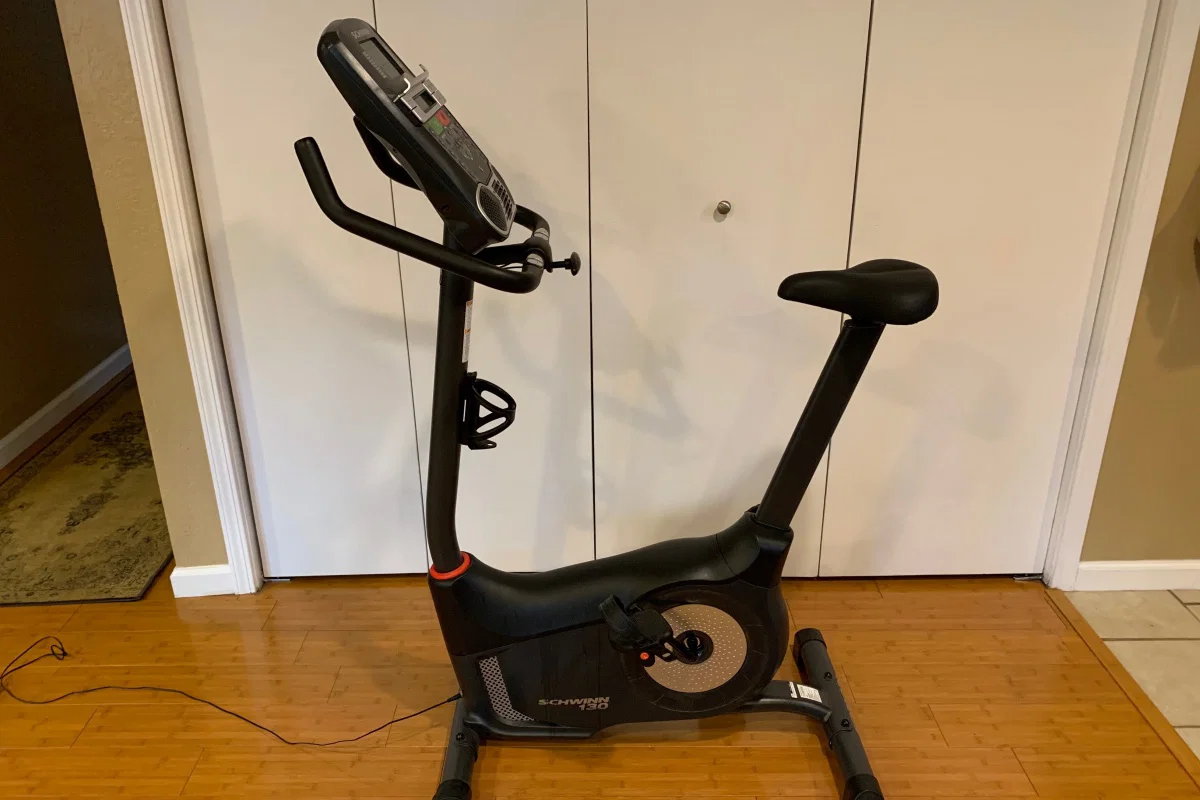
The Schwinn 130 is the most complete exercise bike you can buy near the $500 ceiling, and it is the only pick here with genuine connectivity. Sixteen levels of quiet magnetic resistance, 13 onboard programs, a dual-grip heart-rate sensor, and Bluetooth pairing to Zwift and Explore the World lift it above the bare-bones spin bikes that dominate this price band. OutdoorGearLab scored it 74/100 and ranked it #8 of 13 bikes tested, calling out its connected features specifically. It is an upright trainer rather than a road-bike-style spin bike, so it trades aggressive standing climbs for comfort and structured workouts.
Full review
Works with Zwift, a rare feature for a sub-$500 bike
The Schwinn 130 rides like a structured fitness bike rather than a studio spin cycle, and that distinction defines who should buy it. OutdoorGearLab, which scored it 74 out of 100 and placed it #8 of the 13 bikes in their fleet, gave it an 8.0 for exercise quality and noted that its 16 levels of magnetic resistance offer a usable range from easy recovery spins to genuinely challenging intervals. The resistance is electronically stepped rather than infinitely variable, so you select a level and the bike holds it steady, which makes it easy to repeat a workout precisely.
Where the 130 separates itself is connectivity. OutdoorGearLab tested it directly with Zwift and Explore the World and reported the Bluetooth link worked well, something almost no other sub-$500 bike offers. That turns the 130 from a static cardio machine into a bike you can ride through virtual courses, which testers said meaningfully raised the exercise quality. The trade-off is the 13-pound flywheel: it is lighter than a heavy spin flywheel, so the pedal stroke feels less like grinding up a road climb and more like a controlled stationary effort.
Backed by a 10-year frame warranty
The 130 uses an upright frame with a vertical seat post rather than the forward-leaning posture of an indoor cycling bike. It supports up to 300 pounds and weighs 61 pounds itself, giving it enough mass to stay planted during seated efforts without being a struggle to move on its built-in transport wheels. The 5-inch LCD is small but legible, displaying RPM, speed, distance, calories, time, and a heart-rate readout when you grip the contact sensors built into the handlebars.
Schwinn backs the frame with a 10-year warranty, two years on parts, and one year on electronics, which is a stronger frame guarantee than the budget spin bikes here carry. The pedals are toe-strap style with no SPD clip-in option, so cycling-shoe users will be limited to caged pedals. Assembly is straightforward and most of the heavy components arrive pre-installed.
The footprint, 42 inches long by just over 21 inches wide and 51.5 inches tall, is compact enough for a spare room or apartment corner, and the upright posture means it takes up less floor length than the long spin bikes or the recumbent Marcy ME-709. The seat adjusts vertically and horizontally to dial in fit, though the vertical-post upright geometry is fixed and will not suit a rider who specifically wants the aggressive forward lean of a studio cycle. Build-quality impressions across reviews are solid for the price: nothing feels premium, but nothing feels flimsy either, and the long frame warranty signals Schwinn's confidence in the chassis.
Programs and Connectivity
The 130 ships with 13 onboard programs spanning challenge and interval profiles plus a manual quick-start mode, so you get structured sessions even without pairing a phone. That onboard library matters because it means the bike is fully usable with no subscription, unlike app-dependent machines that go inert without a paid membership. The connected features layer on top: pairing over Bluetooth to Zwift or Schwinn's Explore the World adds gamified virtual courses.
The heart-rate function relies on contact grips rather than a chest strap, which is convenient but less accurate during hard efforts when your hands move on the bars. For zone-2 base work the contact reading is adequate; serious interval athletes will want to pair a dedicated heart-rate monitor. The display does not auto-adjust resistance to match a virtual route the way premium connected bikes do, so you change levels manually.
The program library is broad enough to keep workouts varied without ever opening an app: nine profile programs, eight heart-rate-targeted programs, two custom slots, two fitness tests, and a quick-start mode. That breadth is unusual under $500 and means the 130 stays useful for a beginner building a habit and for a returning rider who wants structured intervals. It is also the reason the bike earns its keep without a subscription, the onboard content alone justifies the purchase.
13-pound flywheel is a third the weight of rivals
The biggest limitation is the flywheel. At 13 pounds it is roughly a third the weight of the 35-to-49-pound flywheels on the spin bikes in this guide, so riders chasing the momentum-driven feel of a road bike or a Peloton-style climb will find the 130 lighter underfoot. It is built for steady seated cardio, not out-of-the-saddle sprinting. OutdoorGearLab's 6.0 setup-and-portability sub-score also flags that the bike is a bit fiddly to relocate despite its transport wheels.
The electronics warranty is only one year, the shortest coverage on the most failure-prone part of the machine, and the toe-strap pedals rule out clip-in cycling shoes. The contact heart-rate sensors are a convenience feature rather than a training-grade measurement. None of these are dealbreakers at the price, but they explain why the 130 lands as a versatile generalist rather than a specialist's pick.
Not for riders chasing a heavy-flywheel spin feel
The Schwinn 130 is the right call for someone who wants one bike that does a bit of everything under $500: onboard programs for app-free workouts, Bluetooth for Zwift when they want a game-like ride, heart-rate feedback, and a comfortable upright posture. It rewards riders who value structure and connectivity over raw spin-bike intensity.
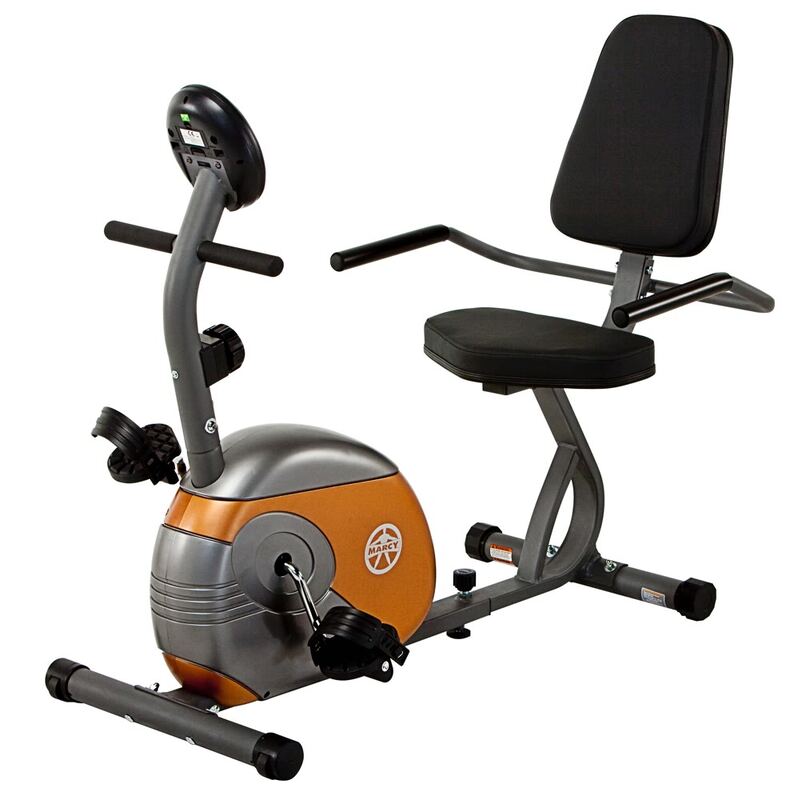
It is not the bike for a dedicated indoor-cycling enthusiast who wants a heavy flywheel and clip-in pedals for standing climbs; the YOSUDA YB001R or Sunny SF-B1002 serve that rider better. Nor is it ideal for someone with joint issues who needs a fully reclined, step-through position, where the recumbent Marcy ME-709 wins. But for the broad middle of home exercisers, the 130's feature set is unmatched at this price.
Named a Best Buy pick by Treadmill Doctor
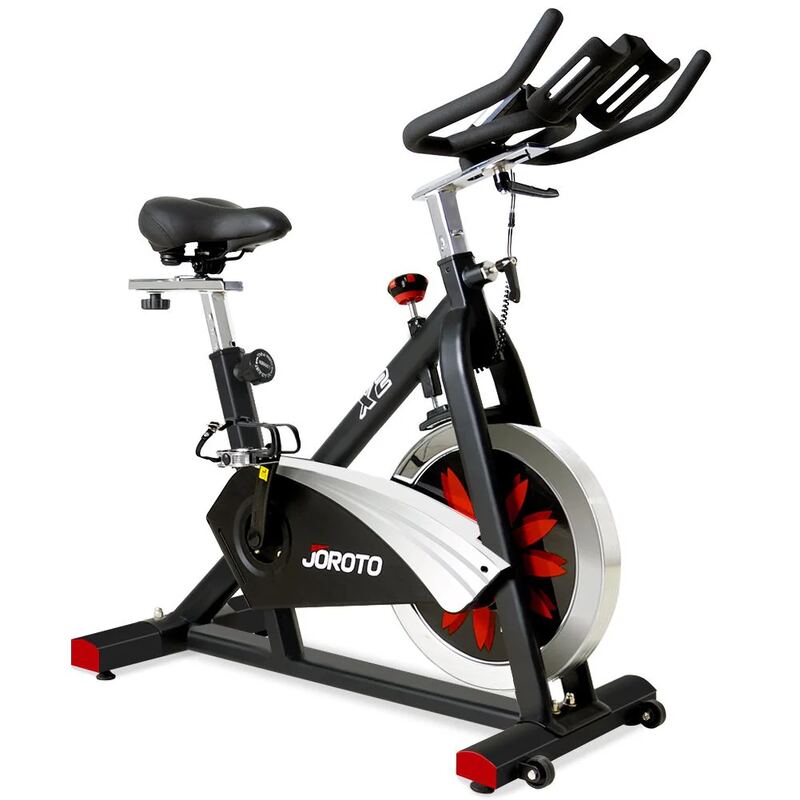
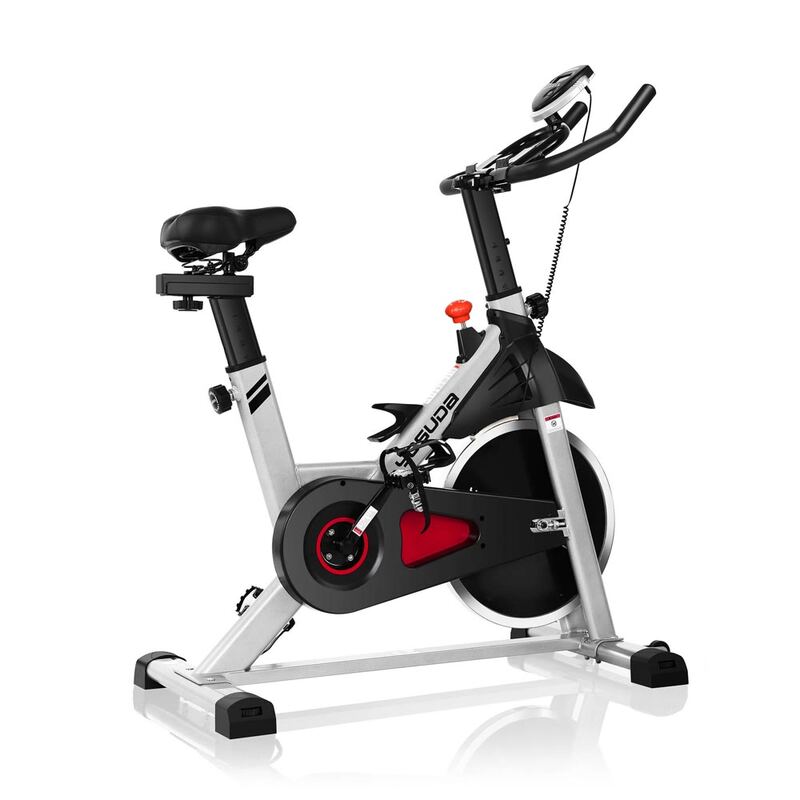
Against the spin bikes in this guide, the 130 plays a different game. The YOSUDA YB001R and Sunny SF-B1002 are forward-leaning indoor cycles built around heavy 35-to-49-pound flywheels and freeform riding; the Schwinn is an upright fitness bike that trades flywheel momentum for structure, programs, and connectivity. If your reference point is a studio spin class, the heavier-flywheel bikes feel more familiar. If your reference point is a gym cardio machine with built-in workouts and metrics, the 130 is the closer match.
Treadmill Doctor named the 130 a third-place Best Buy winner in the under-$399 category and praised its credible warranty from a stellar company, while exercisebike.net called it a unique value for its blend of affordability, exercise quality, and connectivity. That cross-publisher agreement on value, combined with OutdoorGearLab's 74/100 score, is why it earns the top spot. None of its rivals here pair a 10-year frame warranty with working Zwift support at this price.
No subscription required to use Zwift features
At $499 the 130 sits right at the top of the under-$500 bracket, and you are paying for the connectivity and program library that cheaper bikes lack. The exercisebike.net review called it a unique value given its affordability, exercise quality, and connectivity, and OutdoorGearLab's 8.0 features sub-score backs that up. Because the programs are onboard and Zwift compatibility requires no Schwinn subscription, there is no hidden ongoing cost the way there is with app-locked machines.
Compared with spending the same money on a bare spin bike with a blank console, the 130 gives you tracking, structure, and virtual-ride capability for the same outlay. That is what makes it the overall pick here rather than simply the most expensive. The 13-pound flywheel is the price of that versatility, lighter than a dedicated spin wheel, but for steady seated cardio with structure and connectivity it is a trade most buyers in this bracket will gladly make.
Strengths
- +16 levels of smooth, quiet magnetic resistance that OutdoorGearLab found suitable for all fitness levels
- +Bluetooth connectivity tested working with Zwift and Explore the World, rare under $500
- +13 built-in workout programs plus a quick-start manual mode for structure without an app
- +300 lb weight capacity on a stable steel frame with a 10-year frame warranty
- +Dual-grip heart-rate contact sensors and a clear 5-inch LCD reading RPM, speed, distance, calories, and time
Watch-outs
- −Only a 13 lb flywheel, so the pedal stroke is lighter than a heavy spin bike
- −Upright geometry is less aggressive than a standing-climb indoor cycle
- −Toe-strap pedals only, with no SPD clip-in option
- −Electronics warranty is just 1 year
How it compares
Unlike the YOSUDA YB001R and Sunny Health SF-B1002 indoor cycles, the Schwinn 130 is a programmable upright with onboard Bluetooth and preset workouts rather than a friction-or-magnet spin bike with a blank console. It is more feature-rich than the recumbent Marcy ME-709 but less comfortable for users who need the step-through seated position the Marcy provides.
Rating sources
“With 16 levels of smooth, quiet magnetic resistance, we found it provided a good range of difficulty suitable for users of all fitness levels.”
“It is incredibly budget-friendly and is backed by a credible warranty from a stellar company.”
Our 4.1 score is the average of these published ratings. Ratings marked * were derived from the reviewer’s written analysis or video transcript — the publisher didn’t print an explicit numeric score, so we inferred one from their own words. Click through to verify. More about methodology.