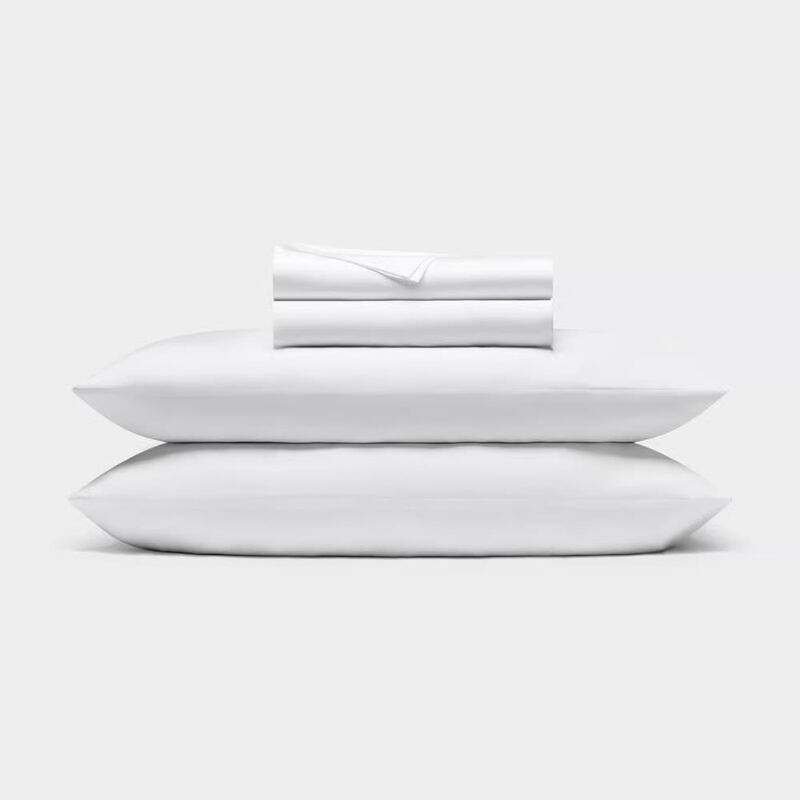
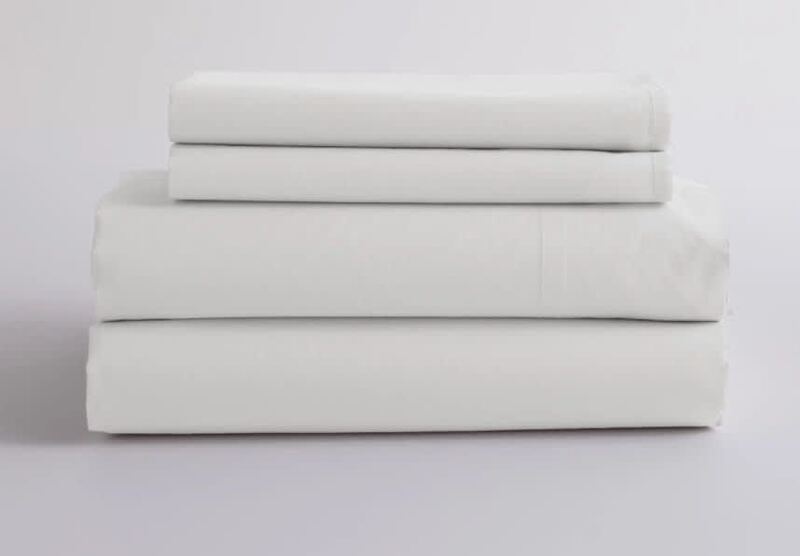
The Sijo AiryWeight Eucalyptus Sheet Set is the lightweight cooling specialist. Tom's Guide gave it 4.8/5 and made it the top cooling pick in its bed-sheet guide, and Sleep Foundation scored it 7.8/10 with particular praise for breathability. At 130 GSM the fabric is the lightest in this lineup, and Sijo's own lab measurement puts eucalyptus lyocell at 70% more moisture absorption than cotton, which points the set squarely at the hottest sleepers and the most humid climates. The trial window is short and the fabric is thin — deliberately so.
Full review
Cooling by fibre chemistry, not by weave
Tom's Guide awarded the set 4.8 out of 5 and named it the top cooling option in its bed-sheet guide, with a hot-sleeper reviewer describing the sheets as as lightweight as advertised and reporting waking up sweat-free. The Good Trade's reviewer put them into heavy rotation through hot, stressful stretches specifically for the temperature relief during night sweats.
The mechanism is the fibre rather than the weave. TENCEL lyocell has a hydrophilic microstructure that, by Sijo's own lab measurement, absorbs 70% more moisture than cotton: sweat moves off the skin into the fibre and evaporates instead of pooling against the body. Combined with a 130 GSM cloth, the lightest here, the set shifts heat by evaporation rather than relying on airflow through the weave. Sleep Foundation scored it 7.8/10, singling out exactly that breathability and moisture-wicking alongside a soft feel.
A hand that reads as almost nothing
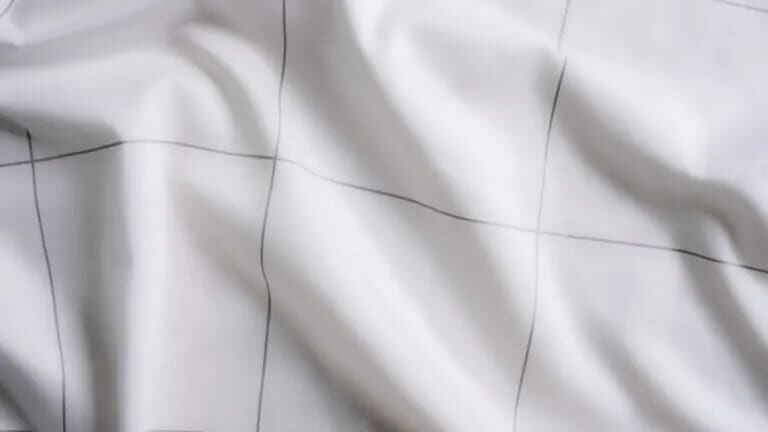
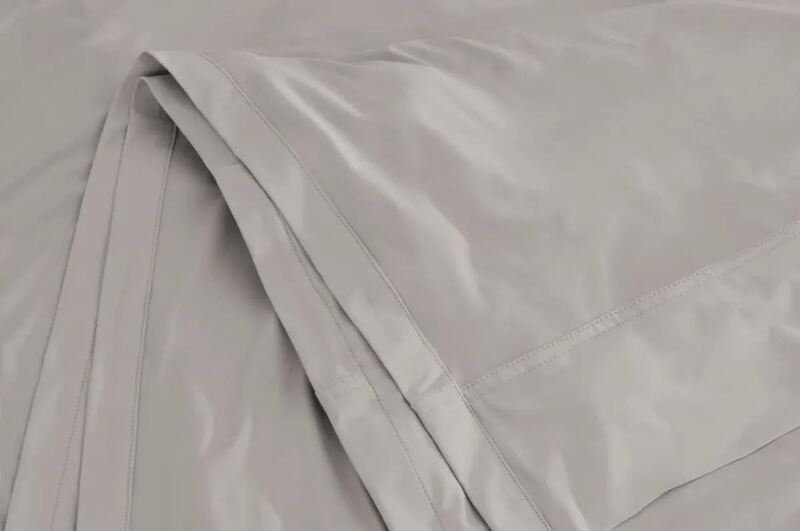
Sijo's own line is softer than silk and cooler than linen, and reviewer language lands in the same register — Tom's Guide called the sheets luxuriously soft and silky. Lightness is the defining characteristic. Anyone expecting the weight of a 300-thread-count cotton or bamboo set will notice immediately that these feel almost insubstantial in the hand, which is the design intent and also why some buyers dislike them. If you want sheets with presence on the bed, this is the wrong set.
Certifications and how it is made
The eucalyptus is sourced from FSC- and PEFC-certified forests in Central Europe and processed into TENCEL lyocell by Lenzing, in a closed loop that recycles solvent at over 99% efficiency. The finished fabric carries Oeko-Tex Class 1, the tier certified safe for infants and direct skin contact, plus an Asthma and Allergy Friendly certification. Sijo's own testing puts the fabric past 2,000 rubs without pilling. Sets can be ordered with or without a flat sheet, which is unusual and genuinely useful for the sizeable minority of people who never use one.
A 16-inch pocket and a 30-day window
The fitted sheet takes mattresses up to 16 inches, deeper than Brooklinen's 15-inch limit but short of Cozy Earth's 20 inches. Stack a cooling topper on a thick hybrid and you are at the edge of that capacity; past it, the corners lift overnight. The light fabric is easier to wrestle onto a mattress than heavier cloth, and it also shifts more under a restless sleeper.
The 30-day trial is the shortest in this lineup, against 100 nights from Cozy Earth and a 365-day return window from Brooklinen. That covers a break-in period but not a season, which is a real limitation for a product whose entire claim is about how it behaves in summer heat.
Oil marks that do not wash out
The Good Trade flagged the durability complaint that matters day to day: oil stains stay slightly visible even after washing. Lyocell takes up oils more readily than cotton does, so night-time skincare, hair products or eating in bed will eventually show on the fabric. Care is a cold machine wash and a low tumble dry, since hot water and high heat degrade the fibre. Between the staining, the short trial and the deliberately thin hand, this is a set aimed at one problem, and it trades a lot to solve it.
Against Cozy Earth, Brooklinen and Quince
Against the Cozy Earth Bamboo Sheet Set, Sijo is roughly half the price for a lighter, more breathable, more absorbent cloth, with a shorter trial and a much shorter warranty; Cozy Earth wins if you want luxury feel alongside the cooling. Against the Brooklinen Classic Percale at $189 the choice is eucalyptus lyocell versus long-staple cotton — silky and light against crisp and dress-shirt-like. The Quince Organic Percale at $80 is the budget cotton answer, and the Coop Cool+ takes the pure cool-to-touch measurement with a synthetic blend. Sijo's case is narrow and legitimate: the hottest sleepers in the most humid places.
Strengths
- +100% TENCEL lyocell from FSC and PEFC-certified eucalyptus wood
- +Absorbs 70% more moisture than cotton per Sijo's lab measurement
- +Tom's Guide top cooling pick at 4.8/5 stars
- +Sleep Foundation scored it 7.8/10, singling out breathability and moisture-wicking
- +Lightweight 130 GSM construction with 16-inch deep pocket
Watch-outs
- −Only a 30-day trial (vs Cozy Earth's 100 nights and Brooklinen's 365)
- −Oil stains stay visible even after washing
- −Thinner fabric won't suit buyers who want substantial weight
How it compares
Lighter and more breathable than the Cozy Earth Bamboo Sheet Set (130 GSM vs Cozy Earth's substantial 300 thread count), and absorbs more moisture by fiber chemistry — though the Cozy Earth feels more substantial. Cooler in absolute moisture-wicking terms than the Brooklinen Classic Percale and Quince Organic Percale (lyocell absorbs more than cotton), but the percale weave airflow advantage means Brooklinen still wins on direct convective cooling. The Coop Cool+ wins the pure cool-to-touch metric but uses synthetic nylon-spandex versus Sijo's all-natural eucalyptus lyocell.
Rating sources
“Silky, easy to maintain, feel cool, come highly-reviewed, are good for those with allergies or asthma, and are machine washable and dryer friendly.”
“I've been a bit of a sweaty sleeper as of late due to an extra stressful (and sometimes extra hot) year, so I've had these sheets on heavy rotation thanks to the cooling nature of eucalyptus.”
Our 4.4 score is the average of these published ratings. More about methodology.