The Sky-Watcher Heritage 150P is a 6-inch Dobsonian that stays portable and cheap, which makes it a strong first telescope for budget-minded stargazers. The collapsible tube is the main draw, and reviewers rated the optics good and the scope easy to operate. Criticism landed on the helical focuser and on stray light getting past an inadequate plastic baffle. It fits casual stargazing rather than serious astrophotography.
Full review
Six inches of aperture on a tabletop
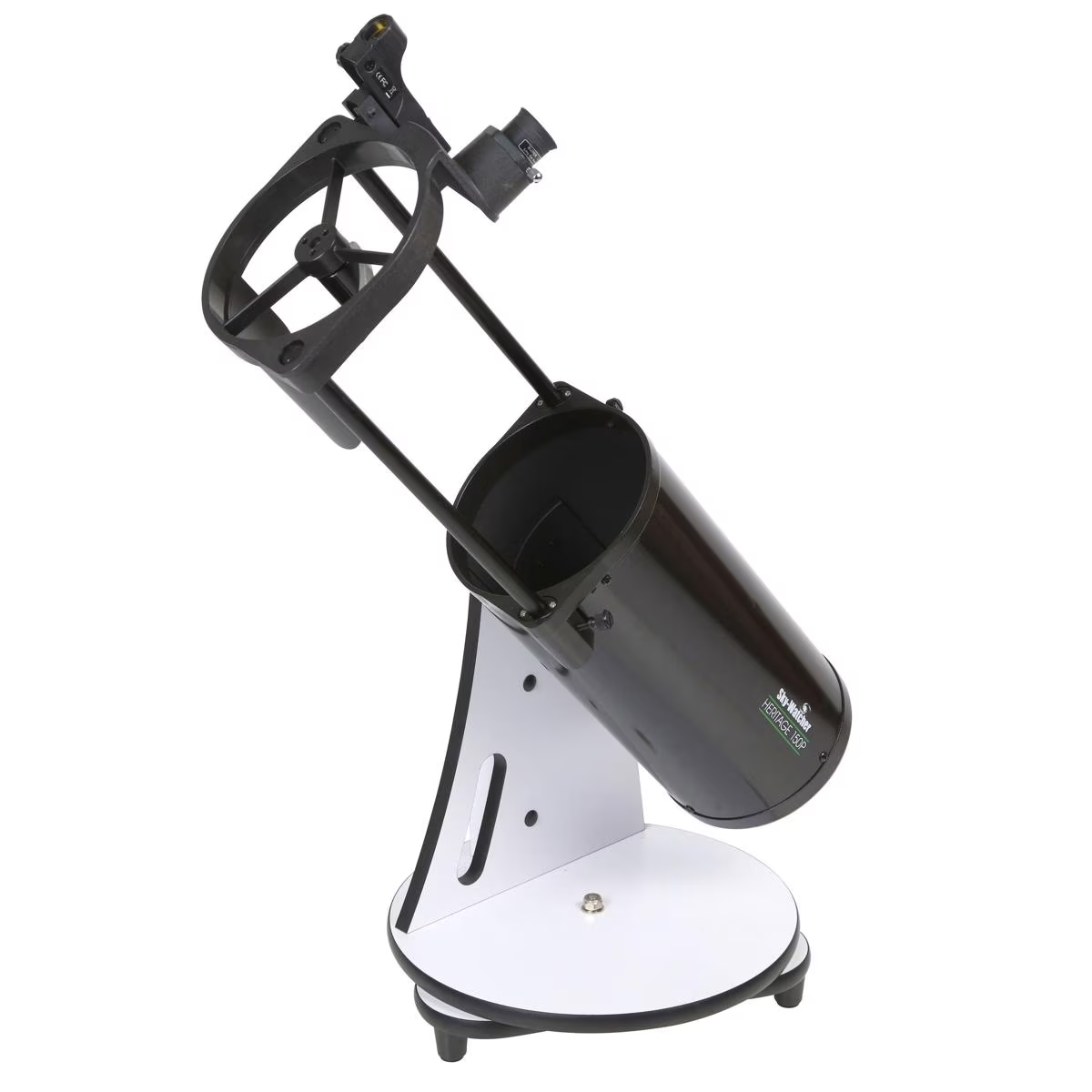
The Heritage 150P is a 150mm parabolic Newtonian at 750mm focal length, which puts it at f/5 — fast enough for wide deep-sky fields and short enough to keep the eyepiece within reach on a table. The primary is borosilicate glass with Sky-Watcher's aluminium quartz coating. TelescopicWatch rated it 4.5 out of 5 and described it as unmatched in convenience, portability and value for what it delivers, ranking it first in its price range. The aperture is the point: this is a third more glass than the 130P it sits above, and it is the cheapest route to a six-inch mirror on a beginner budget.
The collapsible tube is the whole idea
Instead of a solid tube, the Heritage uses a strut assembly that slides down for transport and holds collimation when it does. Collapsed, it fits a large backpack, a suitcase or a small car boot, and at 7.5kg one person can carry it out and set it up in a couple of minutes. The single-arm Dobsonian mount moves freely in both axes with a tension knob on the altitude bearing, so pointing it is done with finger pressure rather than clutches or clamps. Sky at Night Magazine, which scored it 4 out of 5, summed it up as a simple, portable scope that delivers a decent range of views.
Deep-sky targets it actually resolves
Sky at Night Magazine documented the Double Cluster in Perseus, the Ring Nebula M57, the Dumbbell Nebula M27 and the Swan Nebula M17 through this scope, with the supplied 10mm eyepiece giving vivid views of Albireo and splitting the Double Double in Epsilon Lyrae. On planets it shows Jupiter's belts and all four Galilean moons, and Saturn's rings with hints of the Cassini Division when the seeing cooperates. That is a realistic picture of a six-inch reflector under reasonable skies: plenty of detail on bright targets, faint fuzzies visible as shape rather than structure, and the Moon good enough to be worth a smartphone held to the eyepiece.
The focuser is the weakest component
TelescopicWatch called the 1.25-inch helical focuser perhaps the worst part of the telescope, and that is the single complaint most likely to prompt an upgrade. A helical unit rotates the eyepiece as it focuses, which is fiddly at high magnification and unpleasant with anything heavy in the drawtube — and the light secondary mirror limits how heavy an eyepiece the scope will tolerate in the first place. Sky at Night Magazine was less exercised about it. Neither view is wrong; it works, but it is the component that most obviously reflects the price.
An open tube lets stray light in
The second consequence of the collapsible design is contrast. TelescopicWatch found the plastic baffle opposite the focuser wholly inadequate to block light pollution, glare from direct light sources, moonlight, or even the light of bright stars and planets entering the eyepiece. In a suburban garden with a street lamp in view, that shows up as washed-out backgrounds rather than as a fault you can point at. An open tube also admits dust and moisture, and TelescopicWatch noted the scope drifts out of collimation more readily than a solid-tubed equivalent, though it treated that as a moderate inconvenience rather than a defect. The scope also cannot take a solar filter.
Cheapest six-inch reflector by a wide margin
TelescopicWatch was direct about the economics: this is significantly cheaper than any other six-inch reflector on the market, by quite a margin, and the compact form factor is what pays for it. The trade is real but narrow — a mediocre focuser, a baffle that needs help, and a tabletop mount that needs a steady table at the right height, since the tube cannot be rotated to bring the eyepiece somewhere comfortable. Set against a solid-tube Dobsonian of the same aperture, you give up some contrast and refinement and get back a scope that fits in a car. For a first telescope that is usually the right way round.
Strengths
- +Great value for money
- +Fairly large aperture (150mm)
- +Collapsible tube design for portability
- +Easy to set up and use
Watch-outs
- −Helical focuser is subpar
- −Stray light issues due to inadequate baffle
How it compares
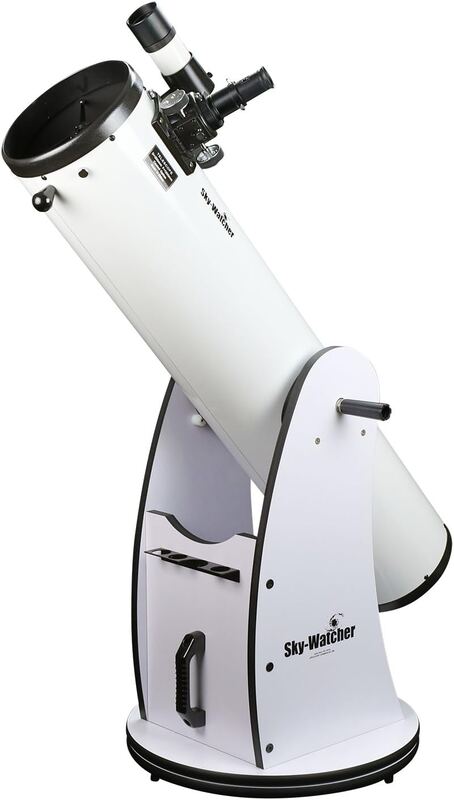
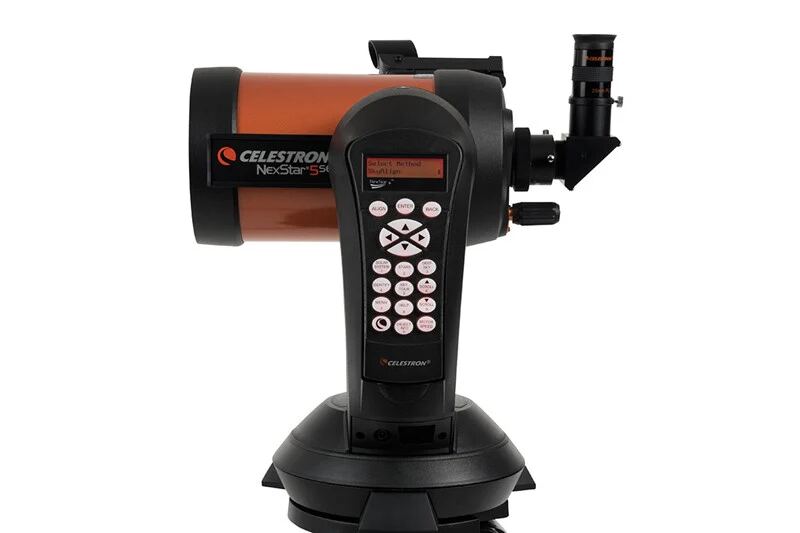
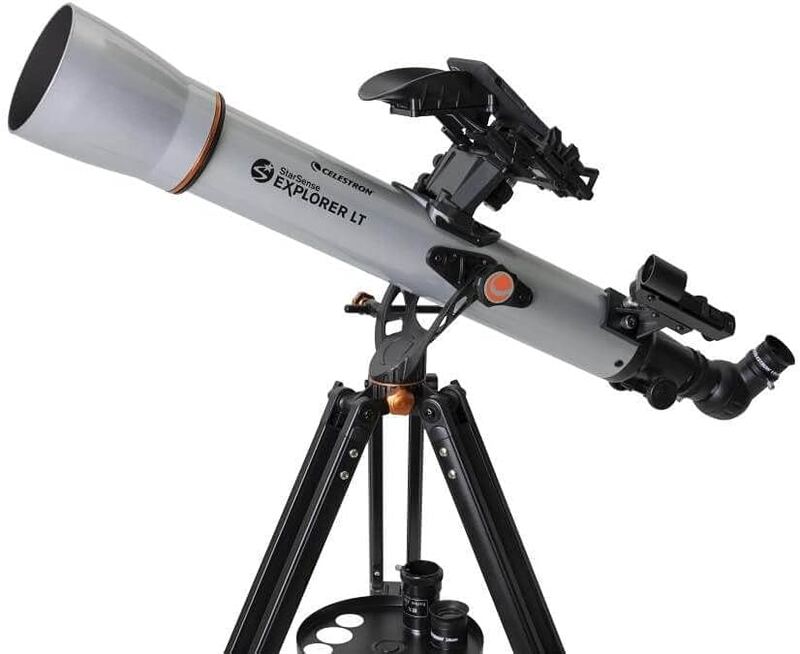
The Sky-Watcher Heritage 150P offers better value than the Celestron NexStar 5SE due to its larger aperture and simpler design, but it's less portable than the ZWO Seestar S50. While it's easier to use than the Celestron StarSense Explorer LT 80AZ, it's limited by its subpar focuser and stray light issues compared to the Sky-Watcher Classic Dobsonian Telescope (8-inch).
Rating sources
“The Sky-Watcher Heritage 150P Flextube Dobsonian is a simple to set up, portable scope that delivers a decent range of views.”
Our 4.3 score is the average of these published ratings. Ratings marked * were derived from the reviewer’s written analysis or video transcript — the publisher didn’t print an explicit numeric score, so we inferred one from their own words. Click through to verify. More about methodology.