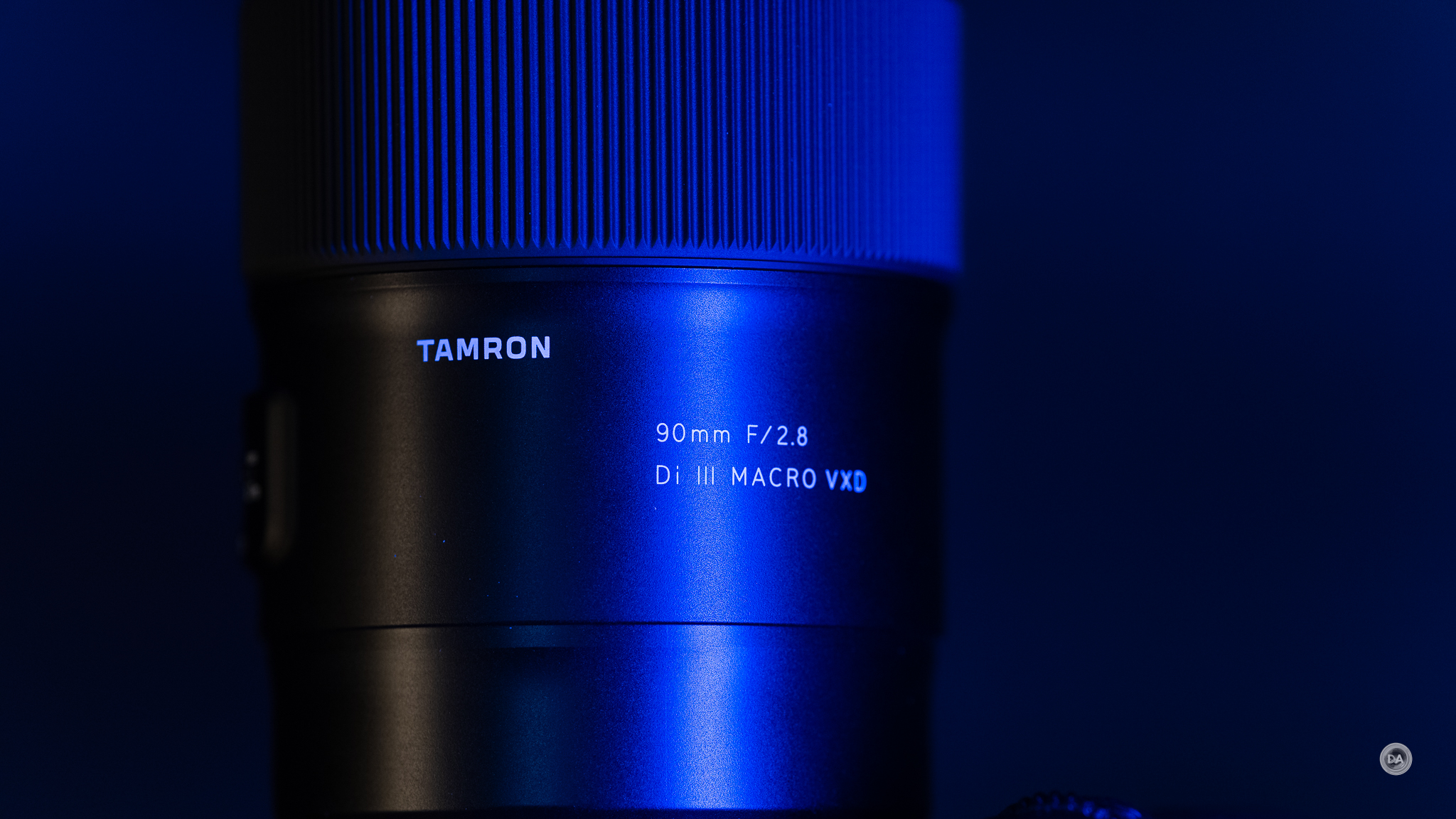
Tamron's legendary 90mm macro returns for mirrorless as the 90mm f/2.8 Di III Macro VXD, the value champion of this field. PetaPixel called it 'sharp and capable for the value-minded photographer,' and Cameralabs rated it Highly Recommended. You get first-party-grade 1:1 sharpness and fast VXD autofocus for hundreds less than the Sony or Nikon glass, minus in-lens stabilization.
Full review
Working distance of about four inches
Tamron's 90mm macro has been a legend across multiple lens generations, and the mirrorless-native Di III VXD version continues that reputation while undercutting the first-party options on price. PetaPixel titled its review 'The Legend Continues' and found 'the new 90mm f/2.8 Macro Di III VXD is incredibly sharp in the center of the image at f/2.8,' with corners that 'sharpened up well.' Cameralabs was unequivocal, stating 'the Tamron 90mm f/2.8 Di III macro clearly earns a Highly Recommended rating.'
The lens delivers true 1:1 life-size reproduction with, as PetaPixel noted, 'a working distance of about four inches' — typical for a 90mm macro. The-digital-picture summed up the experience: 'This lens is an outstanding short telephoto macro choice, offering superb optical quality, high-performing VXD AF, and great design and build qualities. The low price seals the deal.' For the price, that is performance that genuinely rivals lenses costing several hundred dollars more.
12-blade aperture produces circular bokeh wide open
Center sharpness wide open is the lens's calling card, and it holds up across the frame as you stop down. PetaPixel and the-digital-picture both emphasize that it performs at a level 'comparable with first-party lenses,' which is the whole point of the value proposition. The 12-blade circular aperture produces, as reviewers noted, 'a perfectly circular bokeh wide open,' so the out-of-focus rendering is smooth and pleasing for both macro and the portrait work the 90mm length supports.
Aberration control is strong and the flat-field performance suits both nature macro and flat-copy work. The main optical trade-off versus the flagship Canon and Sony lenses is magnification: the Tamron stops at 1:1 rather than reaching 1.4:1, so it cannot fill the frame with subjects smaller than the sensor the way those can.
Sliding hood window lets you adjust a polarizer
The Tamron is fully weather sealed and well-featured for its price. Reviewers note it 'has a focus limiter, focus set button, and its lens hood has a sliding window' — the sliding window is a clever touch that lets you adjust a polarizing filter without removing the hood. The VXD linear-motor autofocus is a highlight: testers found it 'extremely fast to autofocus,' improving both initial lock and subject tracking, which is not always a given on macro lenses that have to drive focus across a long range.
At 630g it is comparable in weight to the first-party options, and it is available in both Sony E and Nikon Z mounts, broadening its appeal. The build feels solid and the controls are sensibly placed, with the focus limiter again proving valuable for keeping AF snappy at macro distances.
First-party sharpness at a third-party price
Value, sharpness and autofocus dominate the praise. Reviewers repeatedly frame the Tamron as delivering first-party-grade results for a third-party price, with PetaPixel positioning it as 'the lowest cost alternative from the major brands' that is nonetheless 'sharp and capable.' The fast VXD AF and weather sealing add to the sense that you are not giving up much by choosing it over a Sony or Nikon lens.
Cameralabs' Highly Recommended rating reflects that, in price, quality and features, the lens is 'spot on.' For a photographer who wants excellent 1:1 macro without spending flagship money, reviewers treat it as the smart buy on the mounts it supports.
Saves $200 to $800 versus flagship lenses
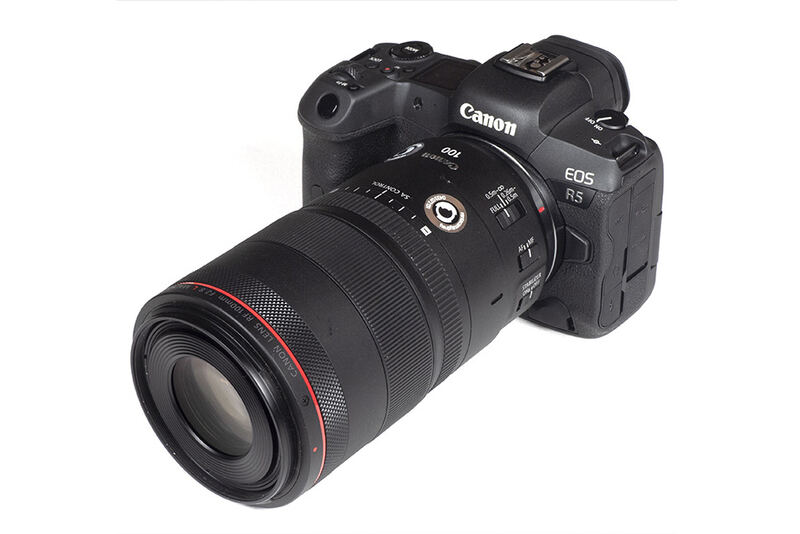
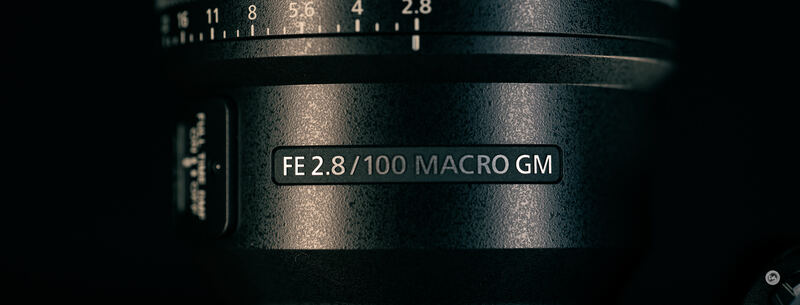
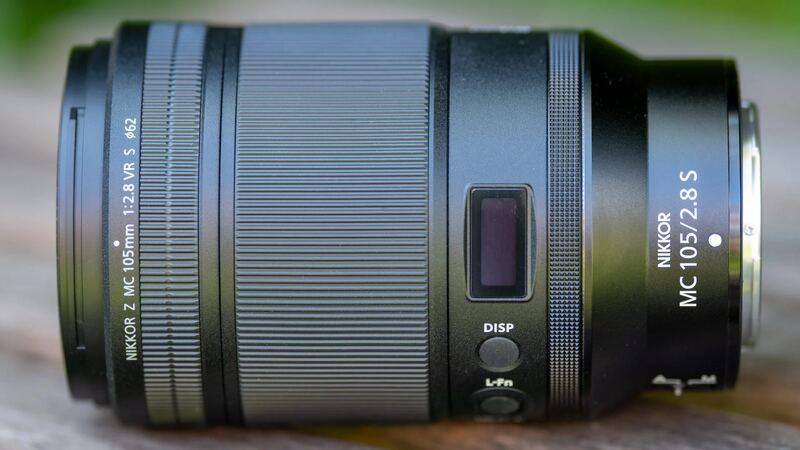
The Tamron's pitch is value against the first-party flagships. It saves roughly $200-800 versus the Sony FE 100mm GM and Nikon Z MC 105mm while delivering comparable 1:1 sharpness, which is why it is the budget recommendation on Sony E and Nikon Z. The catch is that it lacks optical stabilization and tops out at 1:1, where the Canon RF 100mm and Sony FE 100mm GM reach 1.4:1 and include in-lens IS.
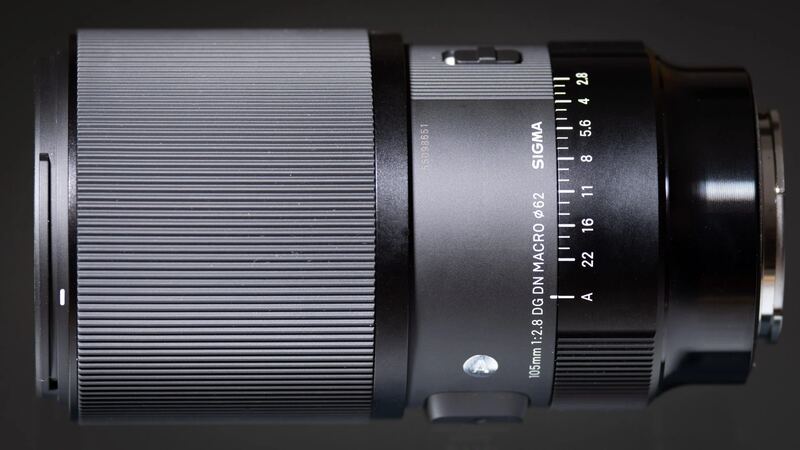
Against the Sigma 105mm f/2.8 DG DN Macro Art, the two are close rivals in the value tier: both are sharp, weather-sealed 1:1 macros without stabilization. The Tamron is a touch shorter (90mm vs 105mm) with a slightly shorter working distance, and is available in Nikon Z as well as Sony E, whereas the Sigma covers Sony E and L-mount. The choice between them often comes down to mount availability and which is cheaper at the time.
No stabilization, but a moot point on tripod
The biggest omission is optical image stabilization. That is a disadvantage compared to the high-end Sony and Nikon macro lenses for handheld macro — though, as Cameralabs points out, this 'may be a moot point' on a body with effective in-body stabilization or when shooting on a tripod, as many macro shooters do.
The 1:1 magnification ceiling is the other limit relative to the Canon and Sony flagships, and the roughly four-inch working distance is a touch shorter than the 105mm options, meaning you get slightly closer to subjects. Neither is a flaw so much as a consequence of the design and price point. For value-focused shooters, the trade-offs are easy to accept.
Best value for tripod-based macro shooters
Buy the Tamron 90mm f/2.8 Di III Macro VXD if you shoot Sony E or Nikon Z and want first-party-grade 1:1 macro sharpness and fast autofocus without paying flagship prices. It is ideal for photographers who shoot macro on a tripod or on bodies with strong in-body stabilization, and who value the savings over in-lens IS and 1.4x magnification.
If you need optical stabilization for handheld macro, the Nikon Z MC 105mm (on Z) or the flagship Sony FE 100mm GM (on E) are the stabilized choices; if you need greater-than-life-size magnification, the Canon RF 100mm or Sony FE 100mm GM reach 1.4:1. But for the value-minded shooter, the Tamron remains one of the best macro bargains available.
Strengths
- +Excellent value, considerably cheaper than first-party macros
- +Incredibly sharp in the center at f/2.8 with strong corners
- +Fast, accurate VXD linear-motor autofocus
- +True 1:1 macro with full weather sealing and a focus limiter
- +12-blade aperture renders smooth, circular bokeh
Watch-outs
- −No optical image stabilization (relies on in-body IBIS)
- −Stops at 1:1, not the 1.4:1 of the Canon and Sony flagships
- −Roughly 4-inch working distance is shorter than the 105mm options
How it compares
The Tamron 90mm undercuts the first-party Sony FE 100mm GM and Nikon Z MC 105mm on price while delivering comparable 1:1 sharpness, but unlike them and the Canon RF 100mm it has no optical stabilization; like the Sigma 105mm it relies on in-body IBIS.
Rating sources
“The new 90mm f/2.8 Macro Di III VXD is incredibly sharp in the center of the image at f/2.8.”
“The Tamron 90mm f/2.8 Di III macro clearly earns a Highly Recommended rating.”
Our 4.3 score is the average of these published ratings. Ratings marked * were derived from the reviewer’s written analysis or video transcript — the publisher didn’t print an explicit numeric score, so we inferred one from their own words. Click through to verify. More about methodology.