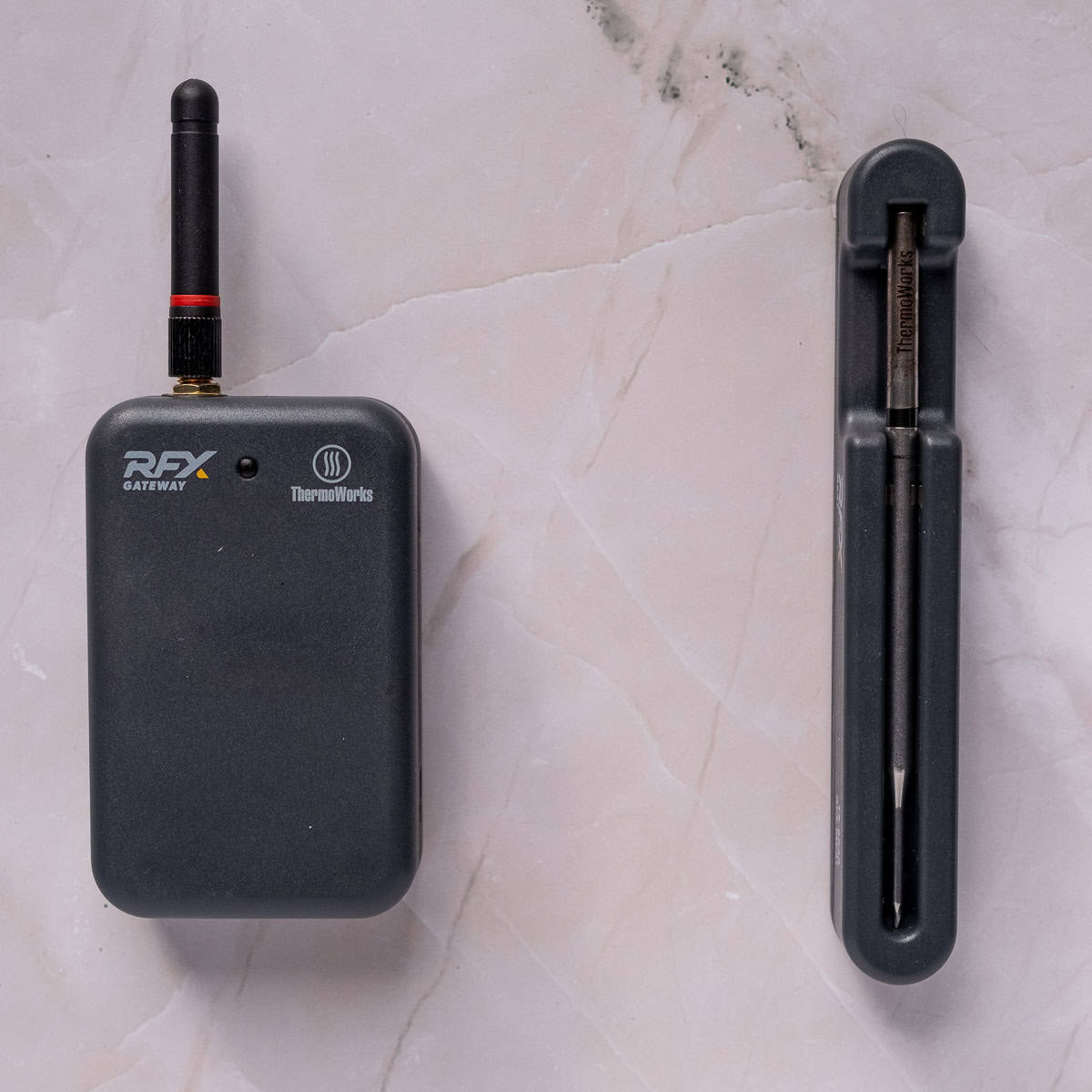
The ThermoWorks RFX utilizes patent-pending 433 MHz radio frequency to maintain a stable connection through thick grill walls and home barriers, addressing common Bluetooth dropouts. The probe features four internal sensors that identify the true thermal center for precise doneness tracking, while its high heat tolerance up to 1,000°F allows use in searing and pizza ovens. Serious Eats verified accuracy within ±0.9°F against a Thermapen ONE, and Smoking-Meat.com noted the system feels solid compared to other wireless options. However, it requires a central Wi-Fi gateway for operation, limiting portability for camping or tailgating where home internet is unavailable. The charging dock relies on a replaceable AAA battery rather than built-in rechargeable cells, which some users find less convenient. This setup fits serious pitmasters who prioritize range and accuracy over compactness, while casual cooks preferring all-in-one Bluetooth probes should look elsewhere.
Full review
Radio frequency eliminates signal dropouts
Most wireless meat thermometers rely on standard Bluetooth to communicate between the probe and a phone, which frequently results in dropped connections when thick metal grill walls or home barriers interfere with the 2.4GHz signal. The ThermoWorks RFX bypasses this limitation entirely by utilizing patent-pending sub-GHz radio frequency technology operating at 433 MHz. This lower frequency allows the wireless probe to blast through ovens, smokers, and solid walls without significant attenuation, providing a connection that reviewers describe as stable and reliable rather than intermittent.
The Barbecue Lab tested the RFX across six different cooking sessions in five distinct appliances, ranging from charcoal grilling to pizza ovens. They found that the 433 MHz signal provided significantly higher range and penetration compared to Bluetooth competitors like Meater or MeatStick. The system requires a central RFX Gateway to receive these radio signals before transmitting data over Wi-Fi to the mobile app, creating a two-step relay that ensures the probe stays connected even when the cook is inside the house.
Smoking-Meat.com noted that this architecture makes the system feel more solid than many other wireless options on the market. While Bluetooth probes often disconnect exactly when you walk away from the grill to check your phone, the RFX maintains a consistent link. The claimed line-of-sight range extends up to 1,500 feet, which easily covers large backyards and commercial setups without signal degradation, addressing one of the most persistent frustrations in wireless cooking monitoring.
Four internal sensors pinpoint thermal center
The RFX probe contains four independently calibrated thermistor sensors embedded within its shaft rather than relying on a single measurement point at the tip. This multi-sensor design allows the system to continuously monitor all four locations and automatically identify the lowest reading, which corresponds to the true thermal center of the meat. This is particularly valuable for large, irregular cuts like brisket or pork shoulder where the center does not always align perfectly with the geometric middle of the probe.
AmazingRibs highlighted that this approach solves a common issue where a single sensor might miss the actual coldest spot in a thick piece of meat, leading to inaccurate doneness tracking. The ThermoWorks app includes an Advanced Mode that allows users to view the individual readings from each of the four channels alongside the calculated lowest temperature, providing transparency into how the thermal center is being determined during long cooks.
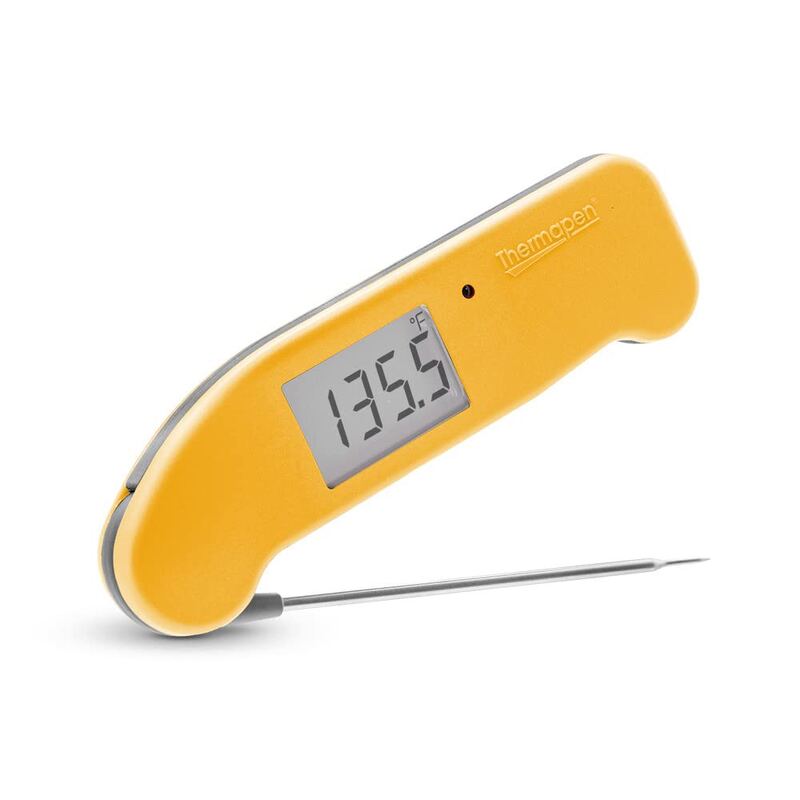
Serious Eats verified the accuracy of this system by placing the probe in a sous vide water bath set to 135°F and cross-checking it against a Thermapen ONE. The RFX delivered readings within ±0.9°F across normal cooking temperatures, demonstrating that the multi-sensor averaging does not compromise precision. Each probe ships with a digital certificate of calibration tested against recognized standards, reinforcing the reliability of these internal measurements for expensive cuts of meat.
High heat tolerance enables diverse cooking methods
ThermoWorks designed the RFX probe to withstand external operating temperatures up to 1,000°F (538°C), making it suitable for high-heat applications that would destroy standard wireless probes. This rating allows users to sear steaks directly over flames, use the probe in rotisserie cooking, or even employ it in pizza ovens without damaging the electronics.
Smoked Meat Sunday tested the probe's durability by using it for reverse-searing ribeyes on a flat top and smoking whole chickens. They noted that the reduced tip diameter of 0.21 inches causes less damage to smaller cuts like chicken breasts compared to bulkier wireless probes, while still maintaining structural integrity under high heat. The probe handle is designed to resist melting, though users must ensure full insertion past the recommended immersion line to protect internal components.
The Barbecue Lab emphasized that this extreme heat tolerance sets the RFX apart from competitors that are limited to lower temperature ranges. While most wireless probes are strictly for low-and-slow smoking or indirect grilling, the RFX can handle direct flame contact and high-heat searing stations. This versatility means a single probe can transition seamlessly from a 225°F smoker to a 900°F pizza oven without requiring hardware changes.
Wired ambient sensor avoids cold meat distortion
Many wireless thermometers attempt to measure the ambient temperature of the cooker using a sensor built into the handle end of the probe itself. This creates significant inaccuracies because the cold internal temperature of raw meat draws heat away from the handle, resulting in readings that can be 20 to 40 degrees lower than the actual oven or grill temperature. ThermoWorks addressed this flaw by removing the ambient sensor from the RFX MEAT probe entirely and providing a separate wired air probe instead.
The Barbecue Lab explained that Thermoworks observed these false readings during development, noting that placing an ambient sensor on the probe leads to confusion when monitoring cook progress. The included Pro Series air probe plugs directly into the RFX Gateway and can be clipped to the grill grate far from the food. This placement ensures accurate airflow measurements without interference from the cold mass of the meat.
Vindulge praised this design choice, stating that it prevents the false ambient readings common in competitor devices. While adding a separate wired probe means more accessories to manage, it results in genuinely useful data for monitoring smoker performance. The gateway includes dedicated ports for both wireless probes and the wired air sensor, allowing users to track internal meat temperature and cooker environment simultaneously with high accuracy.
Gateway dependency limits portability
The RFX system requires a central RFX Gateway unit to function; the wireless probe cannot connect directly to a smartphone via Bluetooth in its current configuration. This means users must always have the gateway present and connected to Wi-Fi to monitor their cook remotely. While ThermoWorks has announced plans for a future firmware update to add direct Bluetooth connectivity, the current setup restricts portability for camping or tailgating scenarios where home Wi-Fi is unavailable.
Smoked Meat Sunday noted that this dependency on the gateway adds extra hardware and setup complexity compared to all-in-one Bluetooth probes. The gateway itself requires power via USB-C and has an internal battery that lasts approximately 24 hours, but it must be charged regularly. Users who prefer a single compact device they can toss in a drawer will find the RFX system more cumbersome due to the need for the gateway, probe dock, and wired ambient sensor.
The requirement for Wi-Fi connectivity also means that real-time data syncing to the ThermoWorks Cloud only occurs when the gateway is online. If the home network goes down or the router restarts during a cook, remote monitoring becomes unavailable until the connection is restored. This trade-off between long-range radio stability and local portability defines the RFX's operational constraints.
Charging dock relies on replaceable battery
The charging block for the RFX MEAT probe runs on a single AAA battery rather than using built-in rechargeable cells. This design allows the dock to recharge the probe over 175 times before the AAA battery itself needs replacement, offering long-term convenience and avoiding the degradation issues common with internal lithium batteries. However, some reviewers find this approach less modern compared to USB-C charging docks found on competing products.
Smoking-Meat.com highlighted that the quick-charge capability is a major strength regardless of power source. A 10-minute charge provides up to 52 hours of runtime, while a full 20-minute charge extends life beyond 65 hours. This rapid charging ensures that users rarely need to wait for the probe to be ready, making the AAA battery limitation less impactful in daily use.
The Barbecue Lab pointed out that the magnetic charging dock is sturdy and features rubber pieces to prevent slipping, but the reliance on a consumable battery means users must keep spares on hand. While this avoids the risk of a dead internal cell rendering the entire system unusable, it adds a minor maintenance step that some buyers may find inconvenient compared to fully self-contained wireless chargers.
App ecosystem supports extensive scaling
The ThermoWorks app integrates seamlessly with the RFX system, allowing users to monitor cooks from anywhere via Wi-Fi and store data in the cloud. One gateway can accommodate more than 50 wireless probes simultaneously, making this setup viable for catering operations or commercial kitchens that need to track multiple large cuts at once. Users can name each probe individually to keep track of different meats during complex cooking sessions.
AmazingRibs noted that the app provides detailed graphs and alerts, enabling precise doneness tracking without constant manual checking. The ability to view historical cook data helps users refine their techniques over time. However, connecting more than 10 devices requires a paid Cloud Pro account, which may be an additional cost for heavy users who want to maximize the gateway's capacity.
Vindulge emphasized that the Wi-Fi model is essential for remote monitoring capabilities. Without the gateway connected to home internet, users cannot check their cook status while away from the house. The app also supports integration with other ThermoWorks products like the Billows fan controller and Smoke X4, creating a cohesive ecosystem for barbecue enthusiasts who already own multiple devices.
Strengths
- +Uses patent-pending 433 MHz radio frequency instead of Bluetooth, providing a stable connection that penetrates thick metal grill walls and home barriers.
- +Features four internal thermistor sensors to automatically identify the true thermal center for precise doneness tracking.
- +Handles extreme external heat up to 1,000°F (538°C), making it suitable for high-heat grilling, searing, and pizza ovens.
- +Includes a separate wired ambient air probe that plugs into the gateway to avoid false readings caused by cold meat.
Watch-outs
- −Requires a central RFX Gateway unit connected via Wi-Fi; it does not connect directly to phones via Bluetooth in its current configuration.
- −The charging dock runs on a replaceable AAA battery rather than using built-in rechargeable cells, which some users find less convenient.
How it compares
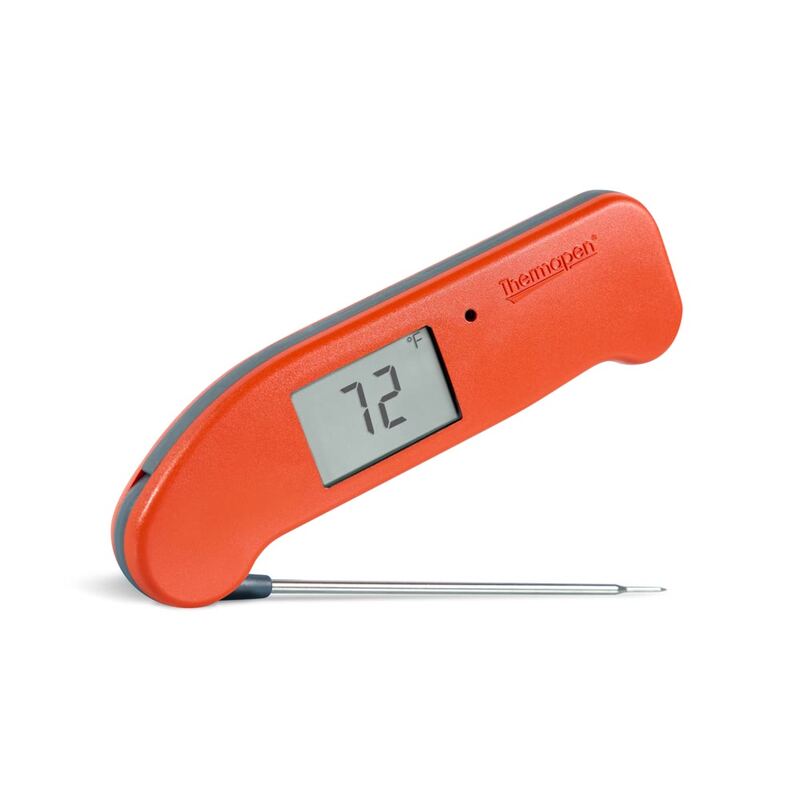
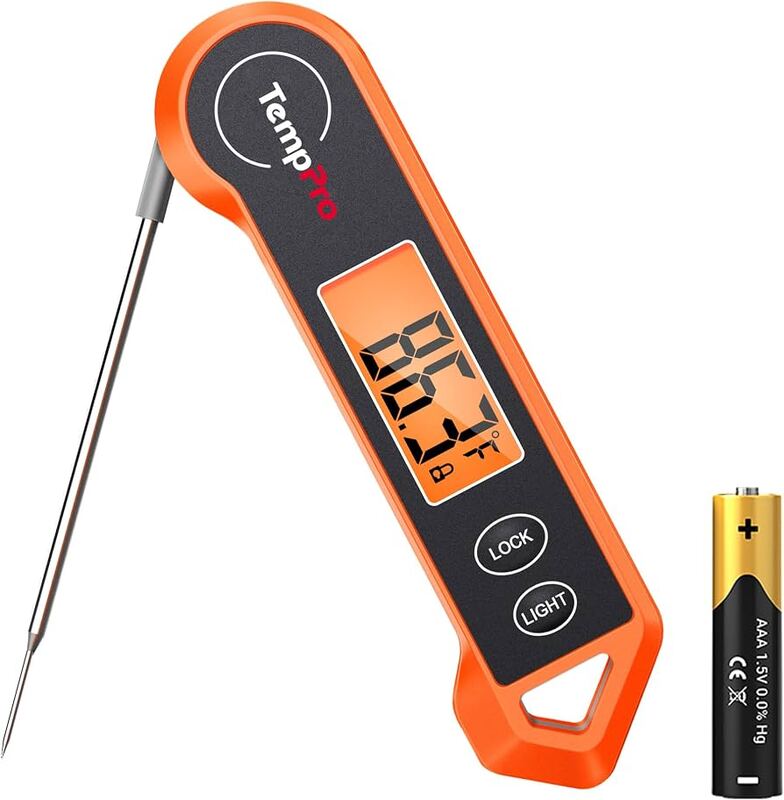
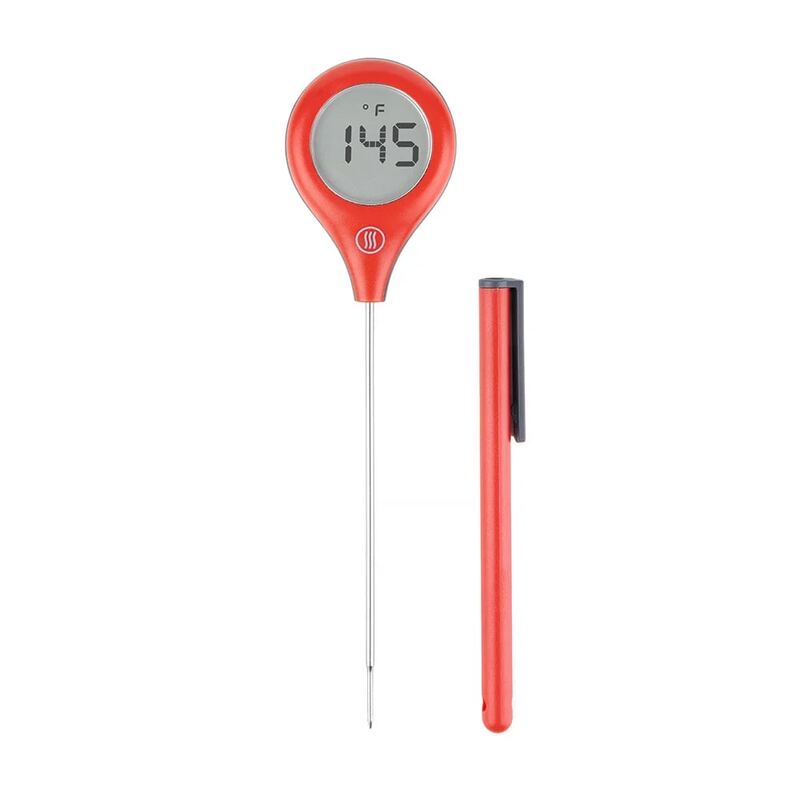
The ThermoWorks RFX uses patent-pending 433 MHz radio frequency to penetrate thick grill walls, addressing the Bluetooth dropouts common in other wireless probes, while also reaching extreme heat up to 1,000°F compared to the 572°F limit of instant-read models. Unlike all listed instant-read thermometers which provide immediate manual readings, the RFX requires a central Wi-Fi gateway and separate ambient probe for continuous monitoring.
Rating sources
Our 4.7 score is the average of the 2 scored reviews above; 4 more reviewed it without printing a score and are not in the average. More about methodology.