Verdict
Head-to-head · Best Compact Travel Cameras

Canon PowerShot G7 X Mark III vs Sony RX100 VII

Which is the better buy? Side-by-side on rating, price, strengths, and watch-outs — with the published ratings we averaged to get there.

The short answer

Canon PowerShot G7 X Mark III comes out ahead by a clear margin (4.2 vs 3.6). The gap is mostly about Travel vloggers and creators who want a genuinely pocketable camera with a flexible zoom, a flip-up selfie screen, a mic input and uncropped 4K, while still getting markedly better stills than a phone. — read the strengths below before deciding.

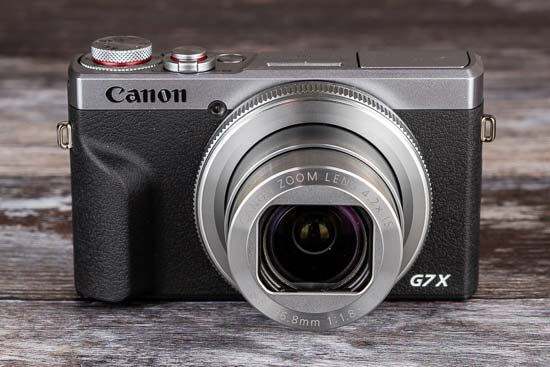
Canon PowerShot G7 X Mark III
Higher ratedRanked #1 in Best Compact Travel Cameras
Canon PowerShot G7 X Mark III
$1,459as of Jun 7

The Canon PowerShot G7 X Mark III pairs a 20.1MP 1-inch stacked sensor with a bright 24-100mm equivalent f/1.8-2.8 zoom in a pocket-sized metal body, and it is widely regarded as one of the better enthusiast and vlogging compacts of its generation. Reviewers consistently praise its image quality, handling and creator features such as uncropped 4K, a mic input and YouTube live-streaming, while noting the lack of a viewfinder, no hot shoe and only digital video stabilization. It is a 2019 design, so its autofocus and video IS trail the newest competition, and street prices have climbed above MSRP due to sustained social-media popularity. For travelers who want noticeably better stills and video than a phone in something that still fits a jacket pocket, it remains a strong, if no longer cutting-edge, choice. Buy at or near the $849 authorized price; well above that, the value argument weakens.

Strengths
  • Large 1-inch 20.1MP stacked CMOS sensor delivers far better low-light image quality and shallower depth-of-field than phones or smaller-sensor compacts
  • Bright, versatile 24-100mm equivalent f/1.8-2.8 zoom covers wide travel scenes through short-telephoto portraits in a genuinely pocketable body
  • Strong vlogging toolkit: uncropped 4K30p, 120fps Full HD slow-motion, a 3.5mm external mic input, vertical-video support and a 180-degree flip-up touchscreen
Watch-outs
  • No electronic viewfinder and no hot shoe, so bright-sun composing and mounting accessories like a mic are awkward
  • No in-body or dedicated 5-axis optical stabilization for video; the digital IS introduces a crop and softens detail at its 'high' setting
  • Real-world pricing has drifted well above the $849 MSRP because of viral creator demand and limited stock, hurting its value case
Sony RX100 VII
Ranked #3 in Best Compact Travel Cameras
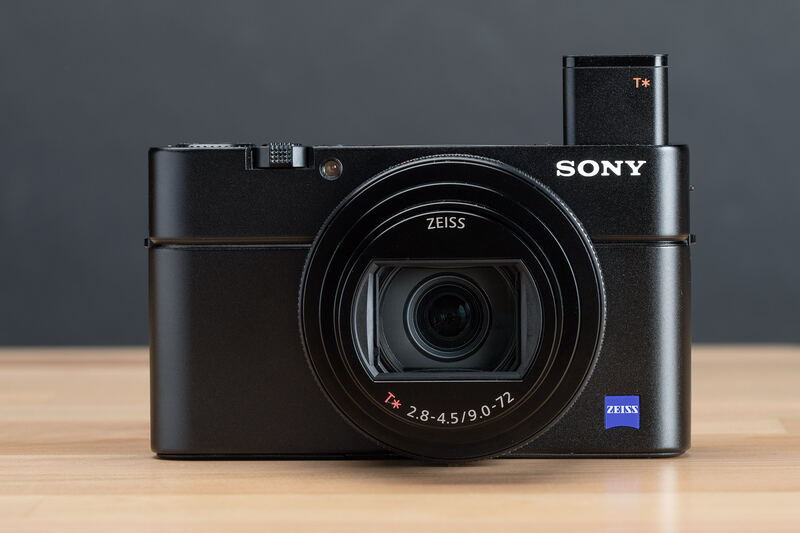
Sony RX100 VII
$1,498as of Jun 7

The Sony RX100 VII is praised as the most capable pocket camera ever made, offering industry-leading autofocus and reliable performance. DPReview called it a 'well-built little camera' with 'incredibly versatile zoom range' that fits in your pocket. The camera excels in video quality with 4K recording and stabilization, though some reviewers noted the slow buffer and confusing interface. It's ideal for travel photographers and parents seeking a reliable, pocketable camera that 'just gets the shot' regardless of subject movement or distance. However, low-light performance is limited by its 'slow' lens and default settings don't encourage optimal feature use.

Strengths
  • Industry-leading autofocus implementation with real-time tracking and eye detection
  • Excellent 4K video with minimal rolling shutter and Active SteadyShot stabilization
  • Versatile 24-200mm ZEISS lens with f/2.8-4.5 variable aperture
Watch-outs
  • Slow buffer clearing due to UHS-I slot
  • Default out-of-box settings don't encourage use of best features

How they stack up

Canon PowerShot G7 X Mark III

Against the others in this guide, the G7 X Mark III is the dedicated vlogging specialist. Its zoom (24-100mm equivalent) is far more flexible for travel framing than the fixed 28mm prime of the Ricoh GR IV or the fixed 35mm of the Fujifilm X100VI, and unlike either it offers a flip-up selfie screen, a mic input and YouTube live-streaming. The Sony RX100 VII is its closest direct rival: it shares the 1-inch class and a similar pocket size but reaches a much longer 24-200mm and has faster, more reliable autofocus plus a pop-up viewfinder, whereas the Canon counters with a brighter lens and friendlier creator features. The Ricoh GR IV and Fujifilm X100VI both use larger APS-C sensors for superior still-image quality and shallower depth of field, but neither zooms and both are more photographer-focused than the video-first Canon. Choose the G7 X Mark III when pocketable vlogging plus a flexible zoom matters more than the outright image quality of the X100VI or the street-shooting purism of the GR IV.

Specs side-by-side

SpecCanon PowerShot G7 X Mark IIISony RX100 VII
Sensor1.0-inch stacked CMOS20.1MP 1-inch stacked CMOS
Resolution20.1 MP20.1 MP
Lens24-100mm equiv. f/1.8-2.8, 4.2x zoom24-200mm f/2.8-4.5 ZEISS
Video4K 30p (no crop), FHD 120p4K HDR with stabilisation
ISO Range125-12800
Display3.0-inch tilting touchscreen (180 deg flip-up)180-degree/90-degree tilting touchscreen
Weight304 g302g
ConnectivityWi-Fi, Bluetooth
Burst RateUp to 20 fps
StabilizationOptical and Active SteadyShot
← See the full ranking of best compact travel cameras