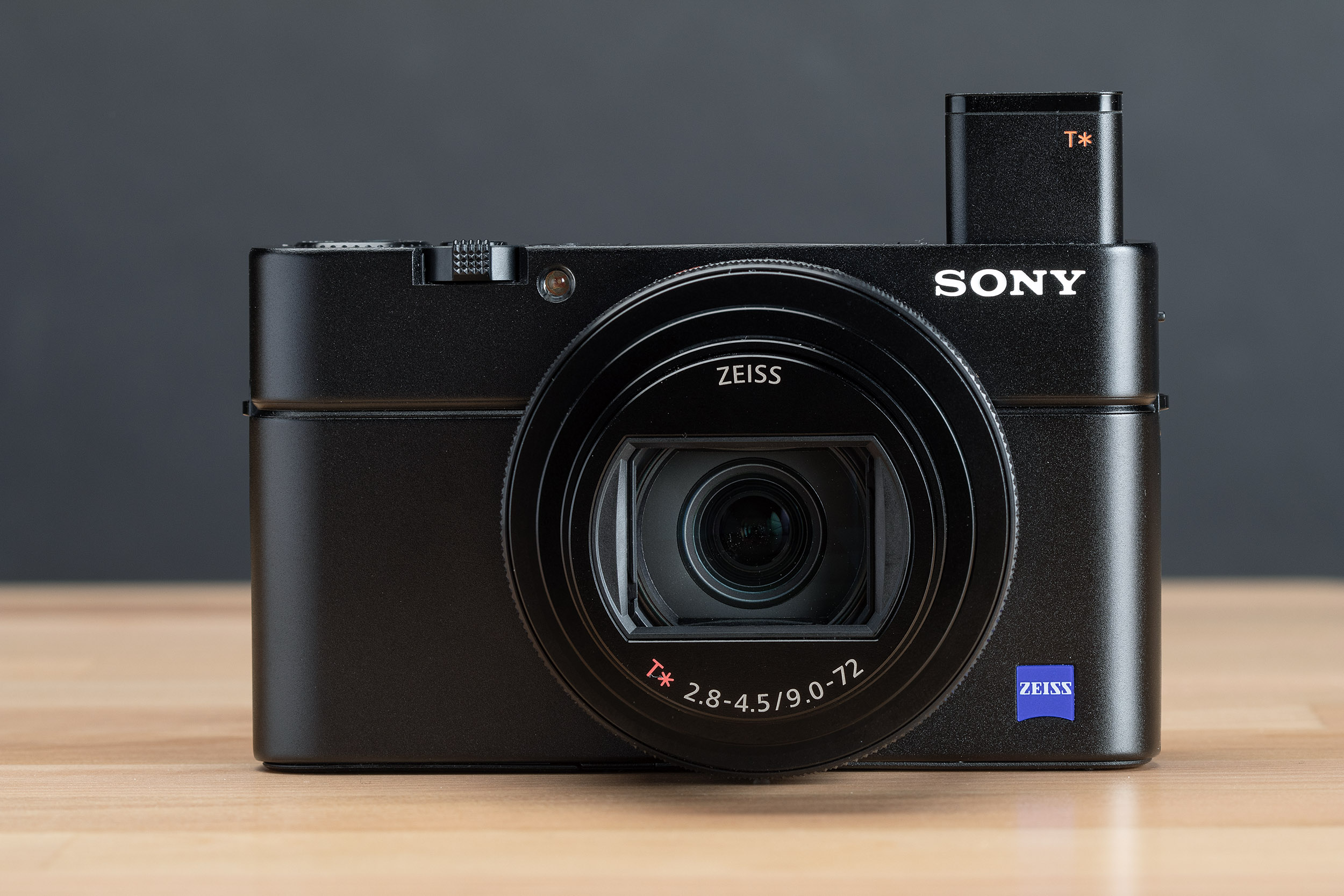
The Sony RX100 VII gets called the most capable pocket camera ever made, on the strength of industry-leading autofocus and reliable performance. DPReview called it a 'well-built little camera' with 'incredibly versatile zoom range' that fits in your pocket. Video holds up too, with 4K recording and stabilization, though some reviewers noted the slow buffer and confusing interface. Travel photographers and parents who want a reliable, pocketable camera that 'just gets the shot' regardless of subject movement or distance are the fit. Low-light performance is limited by its 'slow' lens, and the default settings do not encourage optimal feature use.
Full review
The most reliable autofocus in a pocket camera
DPReview's verdict is unusually direct: the RX100 VII has not only the easiest-to-use autofocus implementation of any compact but the most reliable one. Real-time tracking follows a subject across the frame and eye detection holds on faces, and the system does it without the user selecting a point or a mode first. On a camera designed to be pulled out of a pocket for three seconds, that matters more than any measurement of acquisition speed.
The sensor underneath is a 20.1MP stacked 1-inch design with onboard memory, which is what enables 20 frames per second bursts with no viewfinder blackout. The combination of that burst rate and tracking that actually holds makes this one of very few compacts that can cover a child running or a bird leaving a branch.
24-200mm in a jacket pocket
The zoom range is the other reason to own one. A 24-200mm equivalent lens in a 302g body covers a wide interior and a distant subject without a bag of glass, and DPReview rates image quality as excellent in good light with pleasing colour and solid detail in both raw and JPEG.
The cost of that reach is aperture. The lens runs f/2.8-4.5, and DPReview is explicit that the camera struggles a bit in low light as a direct result. There is no fixing this in software; it is the trade the zoom range demands, and it is the single biggest limit on what the camera can do indoors or after dusk.
4K with a mic jack but no hot shoe
Video is genuinely capable for the size. There is 4K HDR capture read out without pixel binning, and the Active SteadyShot mode combines digital and optical stabilisation into something usable handheld at a modest crop. Sony also added a 3.5mm microphone input, which was a real omission on earlier models.
What is not there is a hot shoe, so a shotgun microphone has to be rigged externally, and there is no built-in ND filter, which constrains shooting wide open in daylight. Between those two gaps the camera is a strong travel video tool and a poor primary production camera.
Small buttons, dense menus, no weather sealing
The handling is where opinions turn. DPReview notes that the buttons are small and the menus both dense and confusing, and that the default out-of-box settings do not encourage use of the camera's best features, which is an odd thing to have to say about a camera aimed at casual users. The touchscreen selects a focus point and tracks a subject in video, and cannot be used to navigate menus at all.
The Phoblographer was harsher, arguing the camera was designed for people with the smallest hands possible and that it is easy for it to slip out of your hands on a warm day, with too little texture where you grip it and a control ring around the lens that is a tad too sensitive. Their strongest objection was the absence of weather sealing, which they argue should be standard on any camera reaching the market now.
A UHS-I slot behind a 20 fps sensor
The design flaw that most undercuts the headline feature is the card slot. DPReview points out that a UHS-I slot means the buffer is slow to clear, so the camera can fire a fast burst and then leave you waiting while it writes. Pair that with the pop-up viewfinder, which is bright and clear at 2.36 million dots but has to be raised before it can be used, and the fastest pocket camera on the market still asks for patience at exactly the wrong moments.
Strengths
- +Industry-leading autofocus implementation with real-time tracking and eye detection
- +Excellent 4K video with minimal rolling shutter and Active SteadyShot stabilization
- +Versatile 24-200mm ZEISS lens with f/2.8-4.5 variable aperture
- +Compact design weighing only 302g with a flip-up touchscreen and built-in EVF
Watch-outs
- −Slow buffer clearing due to UHS-I slot
- −Default out-of-box settings don't encourage use of best features
How it compares
The case for the RX100 VII over its own predecessor is narrow: DPReview notes that on paper it does not offer much over the RX100 VI, and the real gains are in autofocus reliability rather than image quality. Against larger travel cameras it trades sensor size and low-light headroom for a body that genuinely fits in a pocket, and against a modern phone it offers a 24-200mm reach that no phone can match optically.
Rating sources
“The RX100 VII not only has the easiest-to-use autofocus implementation of any compact, it also has the most reliable.”
Our 3.7 score is the average of these published ratings. More about methodology.