Verdict
Head-to-head · Best Mechanical Keyboards

Drop CTRL vs Keychron Q3 Max

Which is the better buy? Side-by-side on rating, price, strengths, and watch-outs — with the published ratings we averaged to get there.

Verdict is reader-supported. As an Amazon Associate we earn from qualifying purchases. Some links on this page are affiliate links — if you click through and buy, we may earn a small commission at no extra cost to you. Our ratings are sourced from independent publications, not sponsors.
The short answer

Keychron Q3 Max comes out ahead by a clear margin (3.2 vs 4.4). The gap is mostly about Buyers who want a do-everything premium board with wireless flexibility and top-tier typing feel — read the strengths below before deciding.

Drop CTRL
Ranked #10 in Best Mechanical Keyboards
Drop CTRL
6 sources$200as of Jun 7

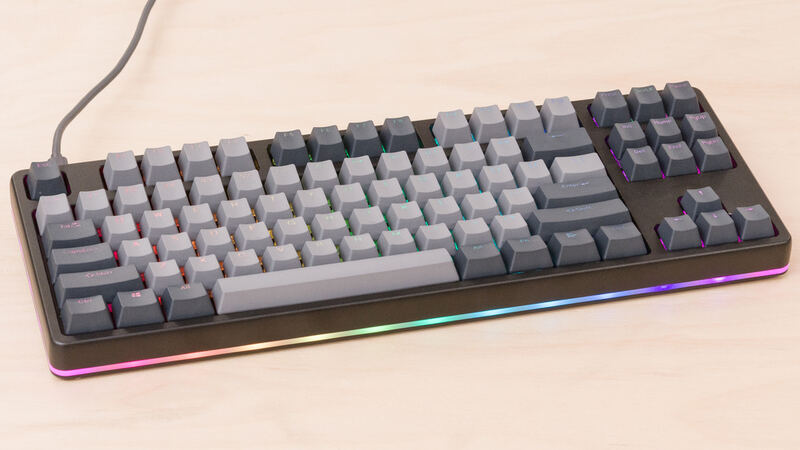
The Drop CTRL V2 is a significant upgrade on the original design, adding hot-swap compatibility, improved hardware, and more programmability. Tom's Hardware praised the sturdy build and magnetic tilt feet, and The Verge called it a great update that puts it in direct competition with Keychron's Q-series. Two catches: the $200 MSRP is prohibitive on a tight budget, and some reviewers found the documentation lacking. It fits buyers who want a premium, customizable mechanical keyboard, and it is not the best value if money is tight.

Strengths
  • Hot-swap sockets compatible with a wider variety of switches
  • Upgraded hardware that improves sound and typing feel
  • Sturdy aluminum construction with magnetic tilt feet
Watch-outs
  • Pricey at $200 fully assembled, competing directly with Keychron
  • Documentation could be better for setup and customization
Keychron Q3 Max
Higher ratedRanked #4 in Best Mechanical Keyboards
Keychron Q3 Max
3 sources$320as of Aug 1

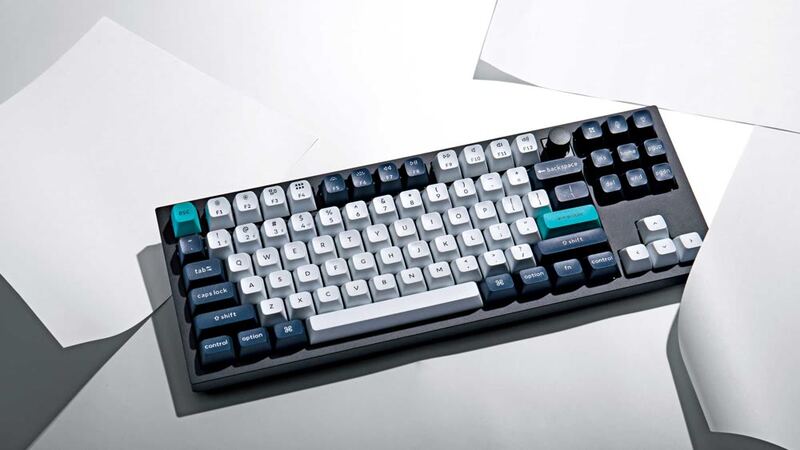
The Q3 Max keeps the wired Q3's full-aluminum TKL chassis and adds tri-mode wireless, which turns an already excellent board into one of the most complete premium keyboards you can buy. PC Gamer scored it 92/100 and called it 'the complete package,' and PCWorld gave the Q Max line an Editors' Choice, noting typing feels 'even more solid than on previous Q series designs.' Gasket mount and layered foam produce a deep, creamy sound, and QMK/VIA keep it fully programmable. The trade-offs: it is heavy, and running RGB over wireless eats battery.

Strengths
  • Full CNC-aluminum TKL body with a dense, premium feel and class-leading build quality
  • Triple connectivity: 2.4 GHz wireless with 1000 Hz polling, Bluetooth 5.1 (3 devices), and USB-C wired
  • Gasket mount plus multiple foam layers produce a deep, 'creamy' acoustic profile praised across reviews
Watch-outs
  • Very heavy at around 2.05 kg, which makes it hard to move or travel with
  • Battery life takes a hit with RGB enabled, so most users keep lighting low over wireless
  • Costs more than a wired Q-series board for the wireless modules

How they stack up

Drop CTRL

The Drop CTRL V2 offers superior hardware upgrades and magnetic tilt feet compared to the Keychron Q1 Max, but it lacks the aluminum construction and hot-swap sockets of the Keychron Q1 HE. Unlike the NuPhy Air75 V2, it provides more switch options and better documentation, though it's more expensive than the Royal Kludge RK84, making it a premium choice for those who value performance over cost.

Keychron Q3 Max

The Keychron Q3 Max is the wireless answer to the wired Glorious GMMK Pro and Keychron Q1, sharing their aluminum gasket-mount construction but adding 2.4 GHz and Bluetooth that neither offers. It is a TKL rather than the 75% layout of those two boards. Against the Wooting 60HE+ it trades analog Hall-effect gaming precision for far better acoustics and typing comfort, and it is much heavier and more substantial than the portable NuPhy Air75 V2.

Specs side-by-side

SpecDrop CTRLKeychron Q3 Max
Form FactorTKL
Switch TypeHot-swap compatible
ConnectivityWireless2.4 GHz / Bluetooth 5.1 / USB-C
BacklightRGB
Build MaterialAluminum
KeycapsPBT double-shotDouble-shot PBT
WeightApprox. 2.5 lbs4.5 lb
BatteryNone
LayoutTKL / 80% (tenkeyless)
Case MaterialCNC-machined aluminum
MountingDouble-gasket mount
SwitchesHot-swap, pre-lubed Gateron Jupiter
Polling Rate1000 Hz (2.4 GHz)
FirmwareQMK/VIA
Single-key Latency~2 ms
SoftwareQMK/VIA
ExtrasRotary encoder knob
Dimensions137 mm x 365 mm x 32.6 mm
Top PlateAluminum
FeetTwo-stage adjustable
← See the full ranking of best mechanical keyboards