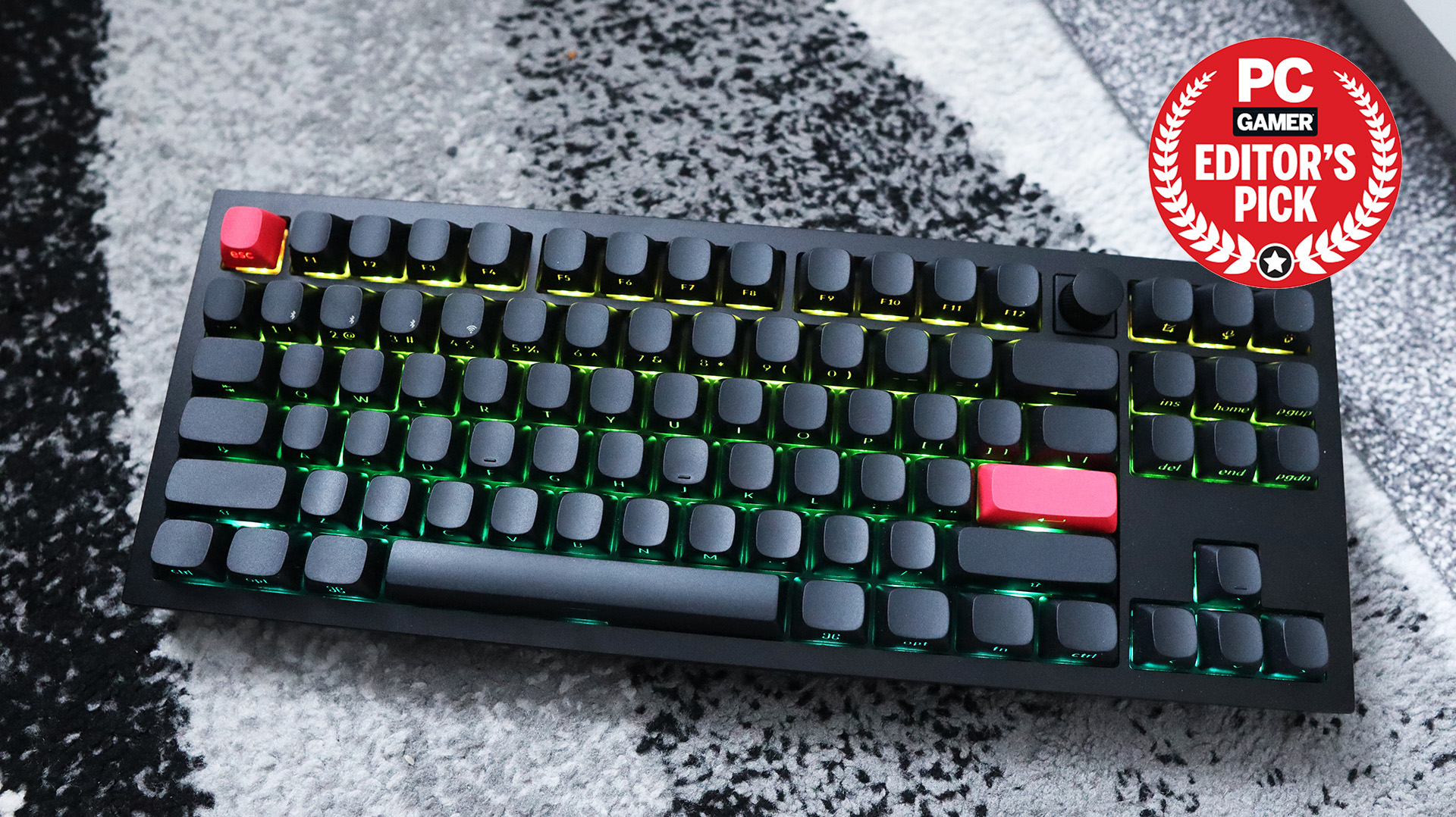
The Q3 Max keeps the wired Q3's full-aluminum TKL chassis and adds tri-mode wireless, which turns an already excellent board into one of the most complete premium keyboards you can buy. PC Gamer scored it 92/100 and called it 'the complete package,' and PCWorld gave the Q Max line an Editors' Choice, noting typing feels 'even more solid than on previous Q series designs.' Gasket mount and layered foam produce a deep, creamy sound, and QMK/VIA keep it fully programmable. The trade-offs: it is heavy, and running RGB over wireless eats battery.
Full review
The Complete Package
The Keychron Q3 Max is the keyboard that happens when an already-acclaimed wired board gets every modern convenience bolted on. PC Gamer gave it 92 out of 100 and a two-word verdict, 'The complete package,' arguing that no rival offers as much class-leading build quality, smooth switches, and acoustic polish at the price. PCWorld went further, handing the Q Max series an Editors' Choice and writing that typing on it is 'even more solid than on previous Q series designs.' The pitch is simple: take the wired Keychron Q1's metal chassis and typing feel, shrink it to a tenkeyless footprint, and add tri-mode wireless. The result is a board that works equally well chained to a desktop or roaming between a work laptop and a tablet.
2.05 kilograms of machined aluminum
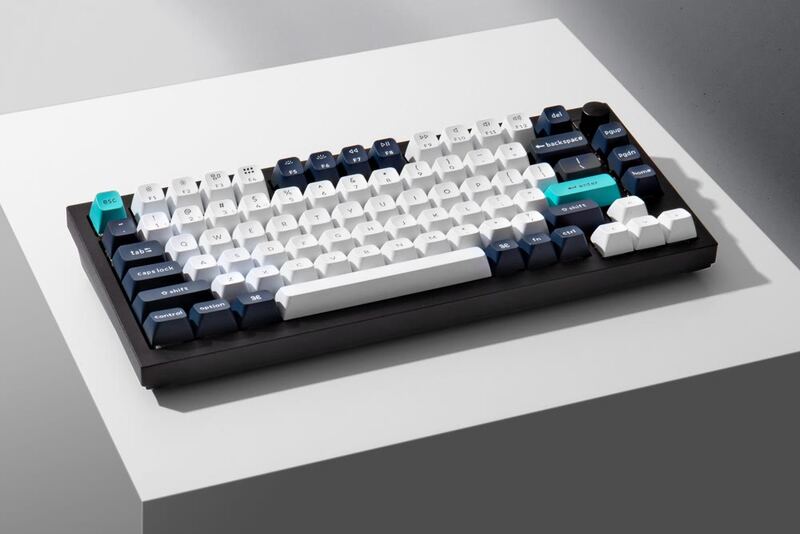
Reviewers do not undersell the heft. PC Gamer measured the Q3 Max at roughly 2.05 kg, calling it 'a heavy beast' and 'very weighty for a TKL,' which is both a compliment to its solidity and a warning about portability. The full machined-aluminum case has no flex, and the tenkeyless layout drops the numpad to reclaim desk space for a mouse. As with other Q-series boards it uses a double-gasket mount, suspending the plate in silicone for a softer keystroke. The fit and finish are the kind buyers expect from a board in this tier: tight tolerances, a clean anodized coating, and a programmable knob in the corner.
Typing Feel and Sound
Acoustics are where the Q3 Max separates itself. PC Gamer described the combination of lubed switches and several internal foam layers as producing a 'creamy' sound, and the gasket mount adds a slight bounce when you bottom out hard. The assembled version ships with pre-lubed Gateron Jupiter switches, so it sounds tuned out of the box without the lube session a barebones GMMK Pro demands. Tom's Guide praised the 'smooth switches' and 'excellent acoustics' as core reasons to buy. For typists who care as much about how a board sounds as how it feels, this is among the best stock experiences in the category.
Connectivity and Software
The headline upgrade over the wired Q3 is connectivity. The Q3 Max offers a low-latency 2.4 GHz wireless link with a 1000 Hz polling rate, Bluetooth 5.1 that pairs with up to three devices, and USB-C wired operation as a fallback. Because it runs QMK/VIA, every key, layer, and macro is remappable through a browser, no proprietary app required, and the configuration is stored on the board itself. That combination of open firmware and full wireless is still rare among aluminum customs, and it is the main reason reviewers treat the Q3 Max as a flagship rather than just another Keychron.
RGB drains the battery fast over 2.4 GHz
The Q3 Max's strengths come with predictable costs. The all-metal body that feels so reassuring also makes it heavy enough that nobody is tossing it in a backpack. Running RGB lighting over the 2.4 GHz connection drains the battery quickly, so most owners dim or disable lighting in wireless mode, which undercuts one of the board's flashier features. The wireless modules push the price above the wired Q-series boards, and the tenkeyless layout sacrifices the numpad that spreadsheet-heavy office users may want. None of these are dealbreakers, but they are the reasons it isn't a universal pick.
Made for switching between a desktop and laptop
The Q3 Max is the board to buy when you want one premium keyboard that does everything: type beautifully, sound great, and connect to anything. It suits multi-device users who switch between a desktop and a laptop, and typists who value acoustics and a refined stock experience over building from a kit. Buyers who never go wireless can save money with the wired Keychron Q1 or the build-it-yourself GMMK Pro. Competitive shooter players who want adjustable actuation should pick the Wooting 60HE+, and anyone who needs a board light enough to travel daily should choose the low-profile NuPhy Air75 V2.
Strengths
- +Full CNC-aluminum TKL body with a dense, premium feel and class-leading build quality
- +Triple connectivity: 2.4 GHz wireless with 1000 Hz polling, Bluetooth 5.1 (3 devices), and USB-C wired
- +Gasket mount plus multiple foam layers produce a deep, 'creamy' acoustic profile praised across reviews
- +Hot-swappable PCB with pre-lubed Gateron Jupiter switches on the assembled version
- +Full QMK/VIA support for browser-based remapping, layers, and macros
Watch-outs
- −Very heavy at around 2.05 kg, which makes it hard to move or travel with
- −Battery life takes a hit with RGB enabled, so most users keep lighting low over wireless
- −Costs more than a wired Q-series board for the wireless modules
- −Tenkeyless layout drops the numpad some office users still rely on
How it compares
The Keychron Q3 Max is the wireless answer to the wired Glorious GMMK Pro and Keychron Q1, sharing their aluminum gasket-mount construction but adding 2.4 GHz and Bluetooth that neither offers. It is a TKL rather than the 75% layout of those two boards. Against the Wooting 60HE+ it trades analog Hall-effect gaming precision for far better acoustics and typing comfort, and it is much heavier and more substantial than the portable NuPhy Air75 V2.
Rating sources
“The complete package.”
“I'm surprised it's possible, but if anything, typing on a Q Max is even more solid than on previous Q series designs.”
Our 4.4 score is the average of these published ratings. More about methodology.