Verdict
Head-to-head · Best AI Workstations

HP Z6 G5 A vs Puget Systems Genesis II

Which is the better buy? Side-by-side on rating, price, strengths, and watch-outs — with the published ratings we averaged to get there.

Verdict is reader-supported. As an Amazon Associate we earn from qualifying purchases. Some links on this page are affiliate links — if you click through and buy, we may earn a small commission at no extra cost to you. Our ratings are sourced from independent publications, not sponsors.
The short answer

HP Z6 G5 A and Puget Systems Genesis II score essentially the same (4.5 vs 4.5). Pick the one whose trade-offs match your priorities — the strengths and watch-outs below are where they actually differ.

HP Z6 G5 A
Ranked #1 in Best AI Workstations
HP Z6 G5 A
5 sources4 derived$1,327as of Jul 1

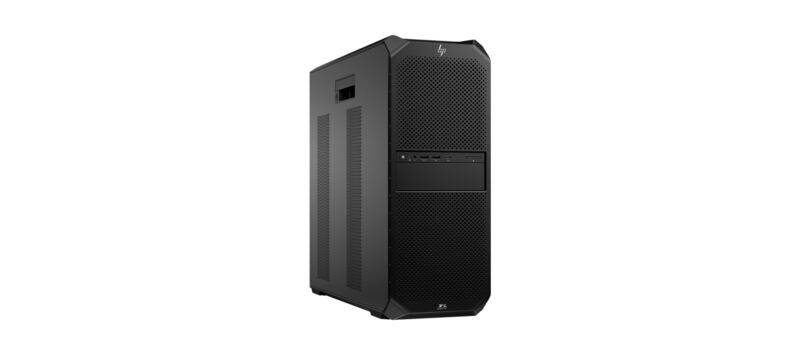
HP's Z6 G5 A is the smallest Threadripper Pro OEM workstation on the market and the rational mid-tier pick below the flagship Z8 Fury G5. Reviewers at PCMag, AnandTech, StorageReview, Phoronix, and DEVELOP3D consistently praised the build quality, toolless serviceability, and 96-core CPU ceiling, with StorageReview giving it their 'highest recommendation for a high-end tower workstation.' For local-LLM use, configurations with 1-3 RTX 6000 Ada GPUs (48 GB VRAM each at ~960 GB/s) land in the 25-40 tokens/sec range on Llama-3-70B Q4 with a single GPU, and go substantially higher with multi-GPU tensor parallelism. One caveat: none of the published professional reviews ran formal Llama-3 70B Q4 benchmarks, so the LLM-specific numbers here come from single-GPU norms rather than measurements on the HP Z6 itself.

Strengths
  • Smallest Threadripper Pro OEM tower on the market — compact 4U chassis with built-in handle
  • AMD Ryzen Threadripper Pro 7000 WX-Series scales from 12 to 96 cores at the same chassis price floor
  • Toolless serviceability, modular interior, ECC DDR5 — enterprise pedigree at mid-tier pricing
Watch-outs
  • 95°C all-core CPU thermals reported under sustained load (StorageReview)
  • Pricing scales steeply — 96-core configs push $18,000+
  • No published Llama 70B Q4 tokens/sec figures in mainstream reviews — LLM-specific benchmarking is thin
Puget Systems Genesis II
Ranked #2 in Best AI Workstations
Puget Systems Genesis II
3 sources$10,569as of Apr 25

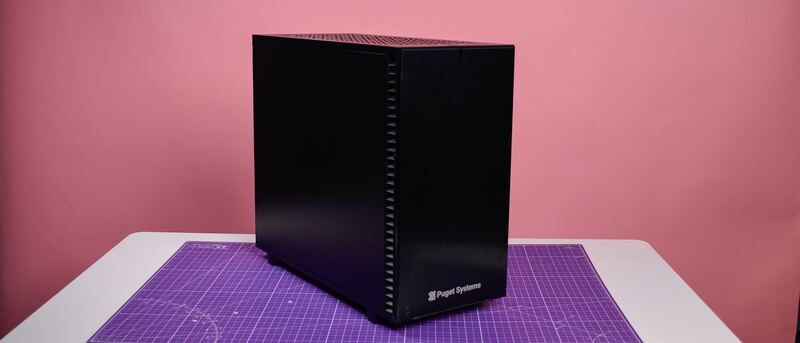
Enterprise buyers who need configurations the major OEMs can't match are the audience for the Puget Systems Genesis II, a professionally built and deeply customizable workstation. Specs run to AMD Threadripper Pro, up to 4x RTX 4090 (or RTX Ada workstation cards), and 256 GB ECC DDR4, and Puget's hand-tuned assembly shows in both performance and build quality, with a quiet edition among the options. On local LLM work, a single RTX 4090 (24 GB VRAM at 1008 GB/s) runs 70B Q4 with system-RAM offload at roughly 10-20 tokens/sec; a 4x RTX 4090 configuration pools 96 GB of VRAM, holds 70B Q4 entirely in VRAM, and reaches 30-40 tokens/sec through tensor parallelism. The steep entry price limits it to buyers who can justify a $10K+ workstation. If local LLMs are the only goal, the DGX Spark below offers comparable model-size headroom at less than half the price.

Strengths
  • Highly customizable with a wide assortment of mainstream and pro-channel components like Nvidia Ada workstation GPUs
  • Serious professional build quality with careful component selection and assembly
  • Exceptional customer experience including an easy-to-use configuration tool with detailed component comments
Watch-outs
  • Extremely expensive, with review units costing over $10,000 and configurations reaching nearly $61,000
  • Configurations with 4x RTX 4090 lose the NVLink that would have helped tensor-parallel LLM inference
  • Price can be prohibitive compared to a DGX Spark or HP Z6 G5 A for buyers whose only need is local LLMs

Derived means the reviewer published no score, so one was inferred from their written verdict. Everything else is a number the publisher printed. How we rank.

How they stack up

HP Z6 G5 A

The HP Z6 G5 A is the mid-tier sweet spot in this lineup. Versus the HP Z8 Fury G5 (its flagship sibling), it's a smaller chassis with the same Threadripper Pro CPU family at a noticeably lower entry price — trading the Z8's 4-GPU ceiling for a 3-GPU ceiling and a more desk-friendly footprint. Versus the Puget Genesis II, it offers similar build pedigree without Puget's bespoke configurator and handpicked components, at a meaningfully lower starting price. Versus the DGX Spark, it's a different class of machine — the HP Z6 G5 A is a multi-GPU general workstation, the Spark is a single-purpose 128 GB unified-memory dev box. Pick the HP Z6 G5 A when you need both AI horsepower and traditional workstation workloads (rendering, simulation, multi-app productivity) on the same machine.

Puget Systems Genesis II

The Puget Systems Genesis II is the enterprise pick. Versus the HP Z8 Fury G5, it offers comparable scale-up capability but in a quieter chassis with a more thoughtful configurator. Versus the HP Z6 G5 A, it's two tiers up in price and ceiling. Versus the NVIDIA DGX Spark, it's a different class of machine entirely — the DGX Spark is a 128 GB unified-memory dev box, the Genesis II is a multi-GPU training/inference workstation. For buyers whose only goal is running large local LLMs, the DGX Spark is the more cost-effective answer; the Genesis II earns its premium when training, fine-tuning, or multi-application workstation duty are part of the picture.

Specs side-by-side

SpecHP Z6 G5 APuget Systems Genesis II
CPUAMD Ryzen Threadripper Pro 7000 WX-Series (12–96 cores)AMD Threadripper Pro 5975WX (32-core)
GPUUp to 3x dual-height pro GPUs (RTX A6000, RTX 6000 Ada)Up to 4x Nvidia RTX 4090 (96 GB pooled VRAM)
RAMUp to 1 TB DDR5-5600 ECC (8 channels)256 GB DDR4-3200 ECC
StorageHP Z Turbo NVMe (multiple M.2 + bays)4 TB Sabrent Rocket 4 Plus NVMe
Memory Bandwidth~358 GB/s system; ~960 GB/s per RTX 6000 Ada VRAM~76 GB/s system; ~1008 GB/s per RTX 4090 VRAM
Form FactorCompact 4U tower (169 x 465 x 445 mm, built-in handle)Full tower (Fractal Define 7)
← See the full ranking of best ai workstations