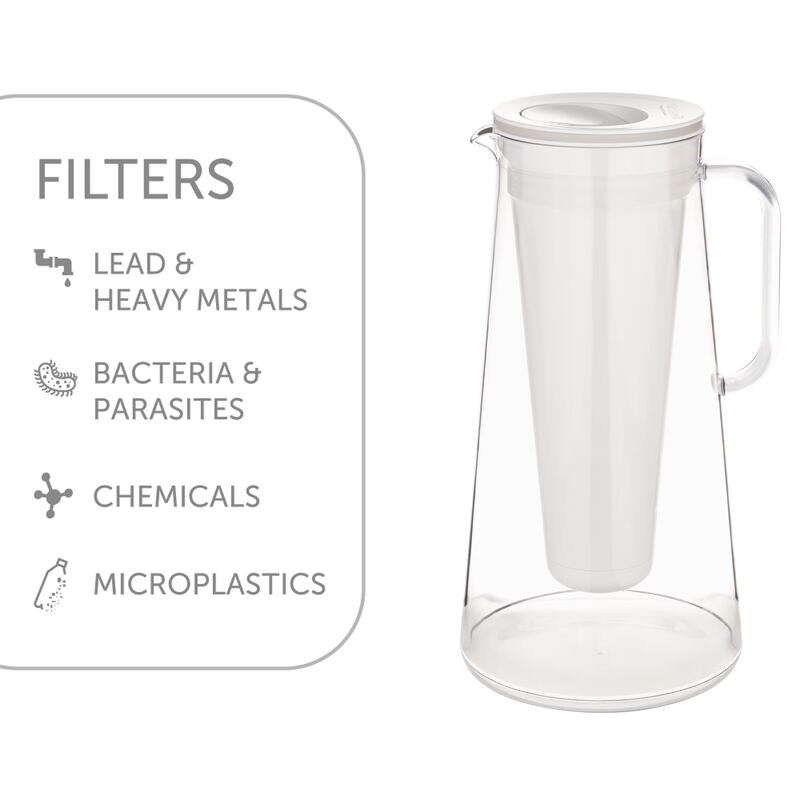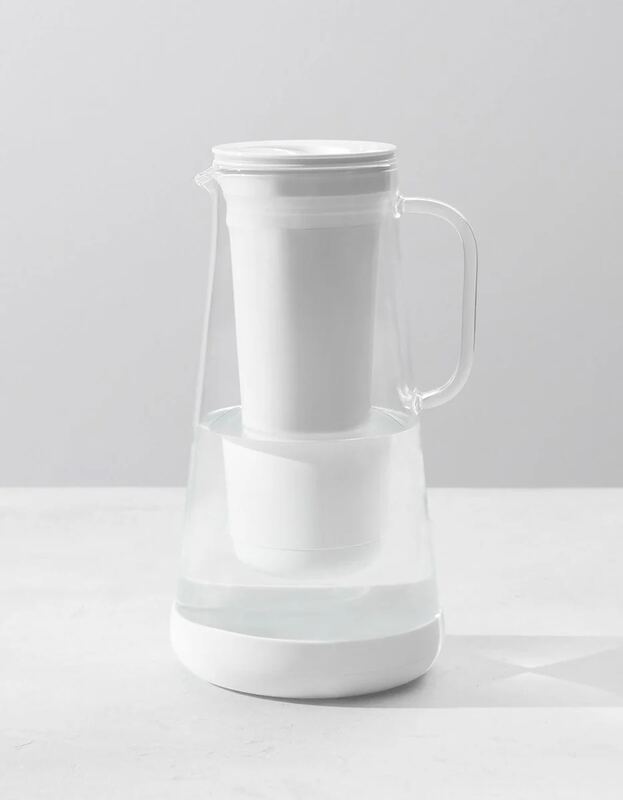
The LifeStraw Glass Water Filter Pitchster uses a hand-blown borosilicate glass body to eliminate plastic leaching from the reservoir, though The Safe Healthy Home notes that remaining plastic components still pose risks. Its two-stage filtration removes bacteria, parasites, and microplastics via a 0.2-micron membrane while activated carbon reduces PFAS and heavy metals, with Food & Wine finding this system improves taste enough to encourage higher water intake. However, Modern Castle reported that independent laboratory tests detected trace amounts of volatile organic compounds attributed to off-gassing from the plastic filter housing. The filtration process is notably slow, requiring over ten minutes per batch as noted by Food & Wine, and connect.mayoclinic.org users report the snug plastic housing is difficult to remove for cleaning. This pitcher fits individuals or small households prioritizing aesthetic design and chemical reduction who can accommodate maintenance delays and potential VOC exposure.
- — Hand-blown borosilicate glass body eliminates plastic leaching risks associated with standard pitcher reservoirs.
- — Two-stage filtration removes bacteria, parasites, and microplastics via a 0.2-micron membrane filter while reducing PFAS and heavy metals through activated carbon.
- — Provides superior taste by effectively removing chlorine and odors from tap water.
- — Filtration flow rate is notably slow, often requiring over ten minutes to filter a full batch of water.
- — The plastic filter housing fits extremely snugly into the pitcher neck, making it difficult for users to remove and clean.
- — Independent laboratory tests detected trace amounts of volatile organic compounds (VOCs) in filtered water attributed to off-gassing from the plastic components.