The LifeStraw Glass Water Filter Pitchster uses a hand-blown borosilicate glass body to eliminate plastic leaching from the reservoir, though The Safe Healthy Home notes that remaining plastic components still pose risks. Its two-stage filtration removes bacteria, parasites, and microplastics via a 0.2-micron membrane while activated carbon reduces PFAS and heavy metals, with Food & Wine finding this system improves taste enough to encourage higher water intake. However, Modern Castle reported that independent laboratory tests detected trace amounts of volatile organic compounds attributed to off-gassing from the plastic filter housing. The filtration process is notably slow, requiring over ten minutes per batch as noted by Food & Wine, and connect.mayoclinic.org users report the snug plastic housing is difficult to remove for cleaning. This pitcher fits individuals or small households prioritizing aesthetic design and chemical reduction who can accommodate maintenance delays and potential VOC exposure.
Full review
Borosilicate glass eliminates reservoir leaching
The Safe Healthy Home found that peer-reviewed research confirms plastic filter jugs release chemicals into the water they are supposed to filter. Nowak et al. tested six household pitchers and discovered organophosphate esters, benzothiazole, per- and polyfluoroalkyl substances (PFAS), and BPA leaching from housing materials into filtered water. These contaminants were not present in the source water. The Safe Healthy Home noted that glass pitcher bodies are chemically inert and do not contribute to this specific contamination vector.
The investigation highlighted a critical nuance regarding plastic alternatives. ConsumerLab testing found one unnamed product increased microplastics in filtered water by more than 1,200 percent above source levels across two test rounds. The Safe Healthy Home further cited Bittner et al., who discovered that even BPA-free hard plastics like Tritan and polystyrene released chemicals with estrogenic activity under normal use conditions. Yang et al. found over ninety percent of plastic food-contact products released detectable estrogenic chemicals, a rate significantly increased by dishwashing.
While the glass body eliminates reservoir leaching, The Safe Healthy Home emphasized that it does not eliminate risks from the plastic lid and filter housing. Modern Castle reported that SimpleLab detected 1.65 parts per billion of dichloromethane in filtered water attributed to potential off-gassing from these remaining plastic components. France's National Agency for Food Safety also found glass bottles contained more microplastics than plastic ones, traced to cap coatings rather than the glass itself.
Two-stage filtration targets PFAS and parasites
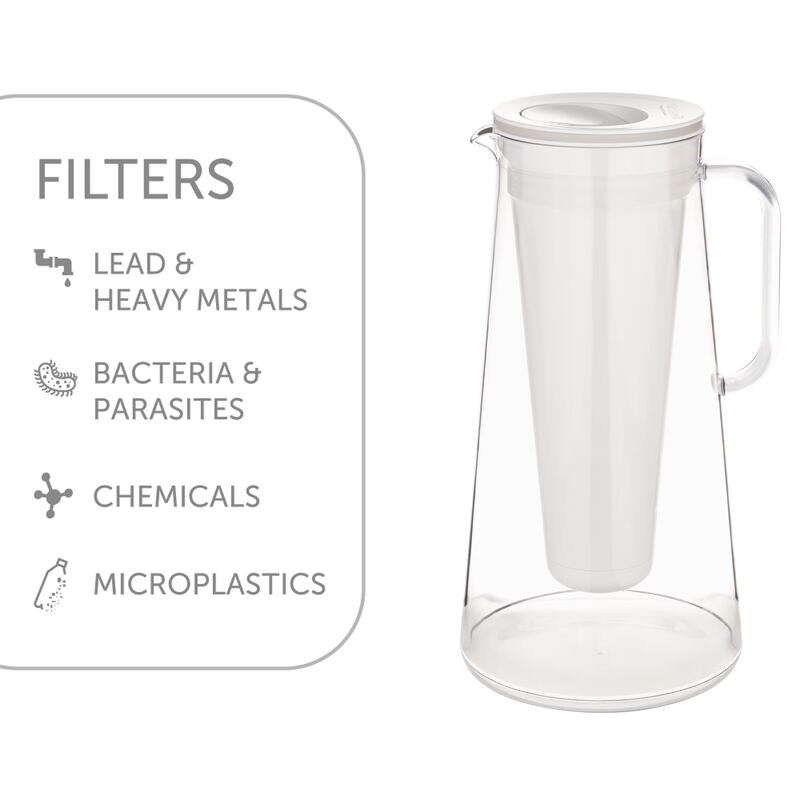
Trailandkale detailed a two-stage approach that pairs a 0.2-micron membrane microfilter with an activated carbon and ion exchange filter. The membrane claims to remove ninety-nine point nine nine nine percent of bacteria, parasites, and microplastics. Trailandkale noted the carbon stage targets chlorine taste, heavy metals like lead and mercury, and chemicals including PFAS, pesticides, and herbicides. This combination allows for ambitious filtration claims compared to standard single-stage pitchers.
Food & Wine highlighted that this dual-filtration system provides peace of mind against both biological threats and chemical runoff. The outlet noted the membrane filter removes bacteria and parasites while the second stage handles heavy metals and forever chemicals. Food & Wine observed that users frequently report drinking more water because it tastes noticeably better, with one user noting their husband exclusively uses the filtered water for morning coffee.
Trailandkale pointed out specific limitations in this filtration strategy. Trailandkale emphasized that LifeStraw products are not designed to remove fluoride, meaning users seeking comprehensive mineral modification will find gaps in this specific system.
Slow flow rate demands habit adjustment
Food & Wine found the impressive filtration system demands significant patience. The outlet reported waiting over ten minutes before there was room to add more water after an initial fill. Food & Wine noted that while the process gets slightly faster with use, users must flood it immediately after pouring to avoid extended waits. This slow flow rate means the seven-cup size is better suited for households of one to three people rather than large families needing rapid hydration.
The outlet noted that refilling can be tedious because the reservoir is small and requires multiple fills to meet daily needs. Despite the slow drip, the reviewer argued this speed allows sufficient time for the product to remove bacteria and absorb chemicals, framing it as a necessary trade-off for thorough filtration.
Community feedback supports adapting routines around this limitation. Food & Wine cited Amazon shoppers who described forming habits of filling the pitcher before bed and in the morning. One shopper explicitly stated they liked that it takes a while to filter because it means the water is actually being filtered, viewing the delay as proof of efficacy rather than a functional flaw.
Snug plastic housing complicates maintenance
Users on connect.mayoclinic.org reported significant difficulty removing the plastic filter housing from the glass container. One user described being unable to remove it despite pulling, twisting, and jiggling, noting it was difficult to insert initially due to an extremely snug fit. Another user confirmed the struggle, stating they usually require a spoon or assistance from their husband to pop it off.
The community shared workarounds for this tight seal. One user on connect.mayoclinic.org suggested using a butter knife to separate the plastic components. Another user found success by simply not pushing the filter housing all the way down during reassembly, which maintains functionality while making future removal easier. These reports highlight that cleaning and maintenance require more effort than typical pitcher designs.
The tight fit also raises concerns about long-term durability and hygiene. If users cannot easily remove the housing to wash it with mild detergent as recommended by LifeStraw, soap or debris could accumulate in hard-to-reach areas. The struggle indicates a design choice that prioritizes a secure seal over user-friendly maintenance.
Independent tests detect VOCs from plastic parts
Modern Castle reported that SimpleLab detected 1.65 parts per billion of dichloromethane in LifeStraw Home filtered water during independent laboratory testing. The contaminant was not present in the source water, and Modern Castle attributed it to potential off-gassing from the plastic filter housing. This finding directly challenges the safety narrative surrounding the pitcher's remaining plastic components.
A YouTube reviewer noted that while the pitcher passed E.coli tests, it failed CIFOR tests regarding heavy metal removal like uranium and selenium. The outlet also highlighted that independent testing found volatile organic compounds (VOCs) like methylene chloride added to the filtered water. These results raised questions about the effectiveness of the plastic housing in a purely inert filtration context.
The Safe Healthy Home noted that LifeStraw has not publicly addressed these SimpleLab findings directly. No rebuttal or explanation appears on their website, help center, or social channels as of May 2026. Instead, LifeStraw strengthened its general testing messaging by emphasizing an ISO-certified in-house lab and third-party accreditation, without providing a specific response to the dichloromethane detection.
Design balances aesthetics with practical flaws
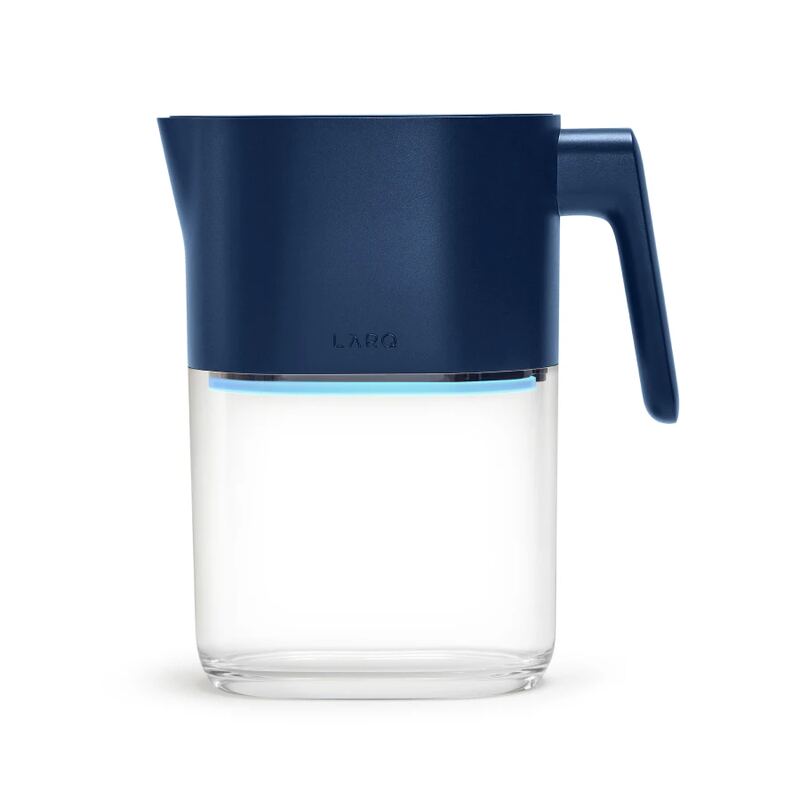
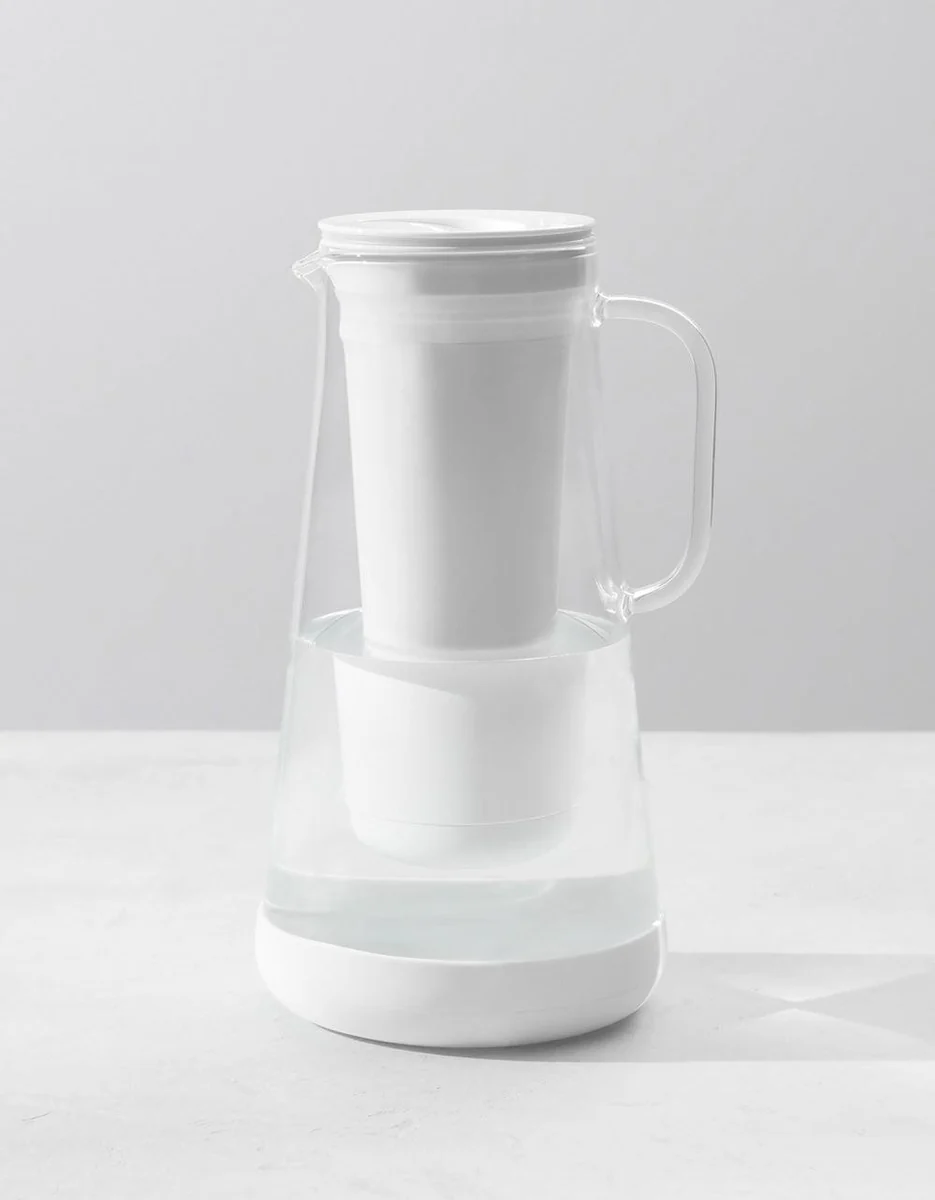
GreenactiveFamily praised the pitcher for its sleek design and clean lines that resemble high-end kitchen accessories. The outlet highlighted the hand-blown borosilicate glass body paired with a BPA-free silicone base, which provides cushioning against hard countertops like Corian. This combination prevents the loud clinking sound typical of glass pitchers and protects both the counter and the pitcher from impact.
Trailandkale noted the pitcher is available in multiple colors including Pebble, Juniper, Wisteria, White, Terrazzo, and Stormy Blue. The outlet emphasized that the silicone base makes it feel stable on the counter despite being bottom-heavy with a high handle. This design choice can make pouring difficult for users with smaller hands or limited wrist strength.
A YouTube reviewer pointed out that the center compartment is not transparent, making it hard to see when water reaches the top fill line. Users must watch carefully to avoid overflows during refilling. The outlet also noted the pitcher weighs two pounds four ounces empty, adding significant weight when filled with seven cups of water.
Filter replacement costs add up annually
Trailandkale detailed that the activated carbon and ion exchange filter requires replacement every two months or after 40 gallons, while the membrane microfilter lasts up to a year or 264 gallons.
A YouTube reviewer calculated that these replacement parts cost seventy-six dollars annually to maintain optimal performance. The outlet noted this keeps the overall maintenance cost reasonable compared to under-sink reverse osmosis systems, but it is a recurring expense users must budget for. The carbon filters are particularly frequent replacements due to their role in absorbing chemicals and improving taste.
GreenactiveFamily emphasized that getting replacement parts at the start ensures users know where everything is when needed. Both the membrane and carbon filters require specific installation steps: rinsing the carbon filter, removing the housing, and pressing the new components into place. Users must discard a full pitcher of water after installing new filters to flush out any initial debris.
Strengths
- +Hand-blown borosilicate glass body eliminates plastic leaching risks associated with standard pitcher reservoirs.
- +Two-stage filtration removes bacteria, parasites, and microplastics via a 0.2-micron membrane filter while reducing PFAS and heavy metals through activated carbon.
- +Provides superior taste by effectively removing chlorine and odors from tap water.
- +Features a sleek design with a BPA-free silicone base that cushions the glass against hard countertops.
Watch-outs
- −Filtration flow rate is notably slow, often requiring over ten minutes to filter a full batch of water.
- −The plastic filter housing fits extremely snugly into the pitcher neck, making it difficult for users to remove and clean.
- −Independent laboratory tests detected trace amounts of volatile organic compounds (VOCs) in filtered water attributed to off-gassing from the plastic components.
How it compares
The LifeStraw Glass Water Filter Pitchster uses a hand-blown borosilicate glass body to eliminate plastic leaching risks, offering a more aesthetic reservoir than the BPA-free plastic construction of the Brita Everyday Elite. However, like the standard LifeStraw Home model, it suffers from a slow filtration rate requiring over ten minutes per batch.
Rating sources
“Filtering is slow but the clean drinking water is well worth the wait.”
Our 4.4 score is the average of the 2 scored reviews above; 5 more reviewed it without printing a score and are not in the average. Ratings marked * were derived from the reviewer’s written analysis or video transcript — the publisher didn’t print an explicit numeric score, so we inferred one from their own words. Click through to verify. More about methodology.