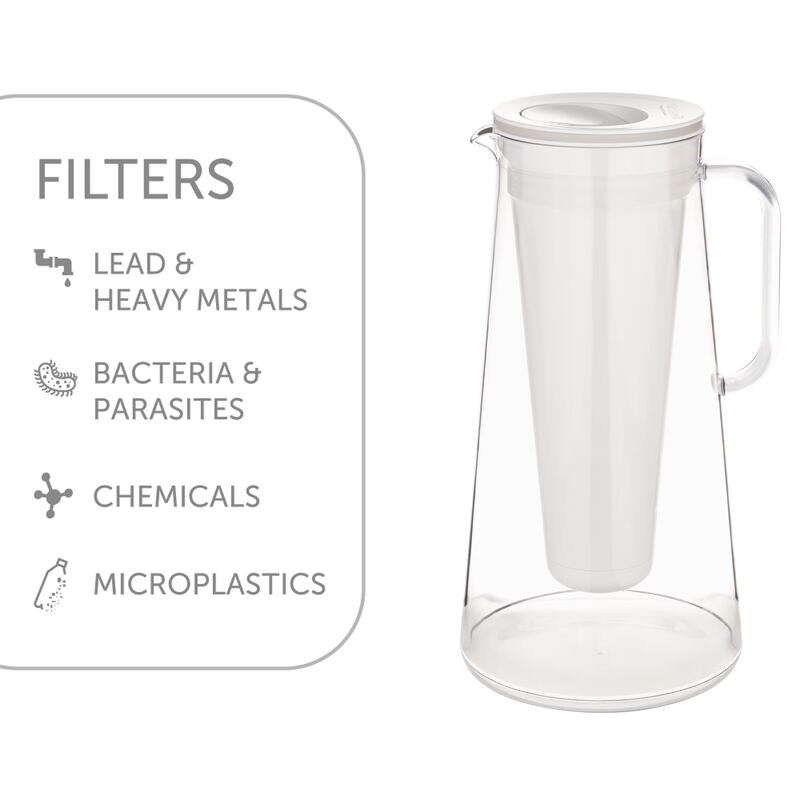
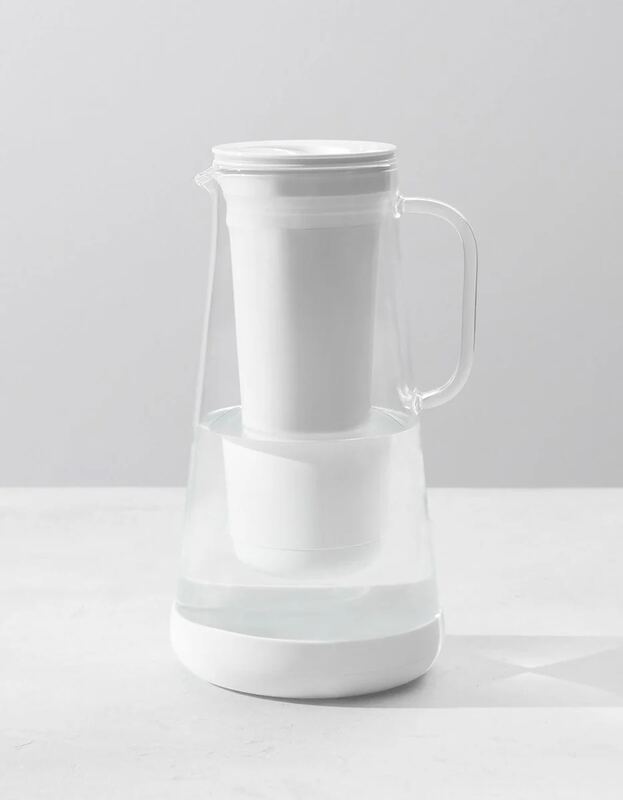
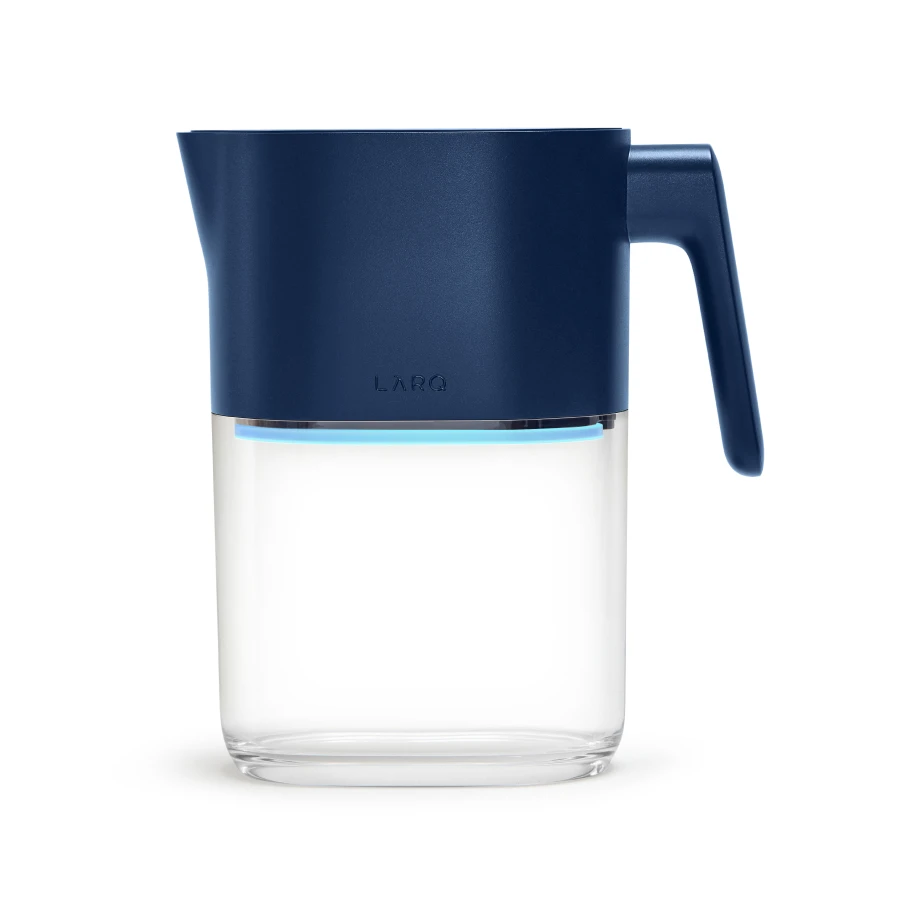
The Larq PureVis Water Filter Pitcher combines a two-stage carbon filter with UV-C purification to eliminate contaminants and prevent bacterial growth in its reservoir. trailandkale found that the smart sensor activates self-cleaning cycles automatically, while housebeautiful noted zero evidence of mold or soap scum after one month of use. However, waterfilterguru found filtration speed is excruciatingly slow at 0.6 gallons per hour, and qualitywaterlab emphasized the lack of formal NSF, WQA, or IAPMO certification raises performance doubts for safety-conscious buyers. This model fits users prioritizing hygiene and app-based tracking on iOS devices, but those needing rapid water access or certified contaminant reduction should look elsewhere.
Full review
UV-C purification prevents reservoir biofilm
The defining feature of this pitcher is the integrated UV-C light, which runs a self-cleaning cycle inside the filtered-water reservoir every six hours for fifteen seconds. This automated process destroys biological contaminants by destroying their DNA and reverses contamination buildup without requiring daily manual scrubbing. trailandkale found that this smart sensor tracks water flow to activate the purification automatically when filling begins, or manually via the lambda button on the lid. The light pulses blue during operation, providing a visual confirmation that the system is sanitizing the stored water.
This self-cleaning capability directly addresses the hygiene issues common in traditional pitchers where stagnant water breeds mold and mildew. housebeautiful noted zero evidence of soap scum or mold after one month of use, contrasting sharply with their previous experience of constantly breaking filters covered in grime. The pitcher does not require daily hand washing to remain sanitary; while the body is dishwasher safe, the UV-C cycle handles the heavy lifting for internal cleanliness.
The PureVis wand containing the light technology never needs replacement itself, though it requires periodic charging via a proprietary magnetic cable that fits into the top of the unit. A charge lasts up to a month under normal usage conditions. According to House Beautiful, the system alerts users when power is low by flashing an orange light on the lid. This maintenance schedule keeps the pitcher hygienic without adding significant daily chores for the user.
Filtration speed measured at 0.6 gallons per hour
waterfilterguru found that the filtration rate is excruciatingly slow, clocking in at just 0.6 gallons per hour during their objective lab testing. This sluggish pace resulted in a low score of seven for filtration speed compared to other pitchers on the market. The pitcher holds an eight-cup capacity in its top reservoir, but filling it requires patience as water drips through the filter media rather than flowing rapidly.
qualitywaterlab measured the actual fill time for four cups at three minutes and forty-five seconds, which breaks down to roughly fifty-six seconds per cup. This timing is a direct result of the gravity-fed design combined with the dense Nano Zero carbon media used in the Advanced cartridge. Users must accept this delay as the trade-off for the thorough contaminant reduction process.
The slow flow rate means that households needing large volumes of filtered water quickly, such as during cooking or filling multiple glasses simultaneously, may find the pitcher frustrating to use daily. The reservoir size is adequate for individual hydration but insufficient for rapid bulk preparation. This limitation persists regardless of whether the user selects the Essential or Advanced filter cartridge.
Advanced filter removes uranium and PFAS
waterfilterguru found that the plant-based Advanced filter effectively eliminates a wide range of heavy metals and inorganic contaminants. In their specific testing using treated groundwater, the pitcher completely eliminated uranium at 0.014 PPM, barium, molybdenum, strontium, and chlorine. It also reduced copper by 97 percent and nitrate by 20 percent. The filter media targets harsh substances including lead, mercury, pharmaceuticals, benzene, and PFAS compounds.
This makes it a strong option for households concerned about emerging chemical pollutants in their municipal water supply. The Nano Zero technology is independently tested to NSF/ANSI standards 42, 53, and 401, though the pitcher itself lacks formal performance certification.
However, the filter does not reduce fluoride levels. waterfilterguru recorded that fluoride remained unchanged at 1.1 PPM after filtration, which is a significant oversight for users in areas with high natural fluoride concentrations or those seeking to avoid it entirely. The inability to tackle this specific contaminant limits the pitcher's utility for health-conscious buyers who prioritize fluoride removal above all else.
Potassium exchange alters mineral profile
Analysis of post-filtration water chemistry reveals a distinct shift in the mineral content caused by the filter media. waterfilterguru found an 88 percent increase in sulfate levels, rising from 8.4 PPM to 15.8 PPM after filtration. While this concentration remains well below the Health Guideline Level of 500 PPM, elevated sulfates can cause a temporary laxative effect in sensitive individuals or infants.
The filter also introduces potassium into the water through a cation exchange resin process. Pre-filtration samples contained no detectable potassium, while post-filtration results showed levels reaching up to 150 PPM according to qualitywaterlab and 77 PPM according to other lab tests. This addition is not inherently harmful as potassium is an essential nutrient, but it fundamentally changes the mineral composition of the source water.
Calcium and magnesium levels drop significantly during this process, with reductions recorded at 83 percent and 93 percent respectively in some tests. The combination of reduced hardness minerals and added potassium suggests a deliberate chemical exchange designed to improve taste and reduce scale buildup. Users sensitive to these mineral shifts may notice a difference in the mouthfeel or flavor profile of their drinking water.
iOS app tracks hydration and filter life
The pitcher pairs with a dedicated mobile application that provides smart tracking capabilities for both cartridge replacement and daily water intake. trailandkale found the app process to be straightforward, similar to pairing wireless headphones or speakers. The sensor in the PureVis wand monitors flow rate and volume filtered, automatically alerting users when the 60-gallon filter life is exhausted.
qualitywaterlab noted that the app-based tracking is uncommon among standard filter pitchers and adds a layer of convenience for maintaining optimal filtration performance. Users can monitor their hydration goals directly through the interface, ensuring they meet daily water consumption targets. The integration turns a passive kitchen appliance into an active health monitoring tool.
A notable limitation exists in platform support; Water Filter Guru found the application currently pairs only with iOS devices. Google Play users cannot access the smart features for this specific pitcher model. This restriction excludes Android users from utilizing the filter tracking and hydration logging capabilities, forcing them to rely solely on manual estimation or the physical indicator lights on the lid.
Lack of certification raises performance doubts
Despite marketing claims of third-party testing, the pitcher lacks formal performance certification from major bodies such as NSF, WQA, or IAPMO. qualitywaterlab emphasized that this absence means consumers cannot verify the manufacturer's contaminant reduction claims through independent regulatory standards. The distinction between lab-tested media and certified finished products is critical for buyers relying on verified safety data.
waterfilterguru found that while the filter media meets NSF/ANSI 42, 53, and 401 standards in isolation, the pitcher as a complete system does not hold these certifications. This gap leaves users without the guarantee that the specific design of the pitcher prevents bypass or leakage issues that could compromise filtration integrity. Competitors like Clearly Filtered offer certified systems for those requiring verified performance metrics.
The lack of certification forces buyers to trust manufacturer data over independent verification. For households with severe water quality concerns, such as high levels of lead or industrial pollutants, this uncertified status may be a dealbreaker. The pitcher relies on its UV-C technology and brand reputation rather than formal regulatory approval to assure consumers of its safety.
Build quality feels solid but plastic
qualitywaterlab found that the body, lid, and handle feel sturdier than budget pitchers in daily use. The construction utilizes premium-grade BPA-free plastic that resists flexing and cracking under normal handling conditions. The aesthetic is modern and sleek, with a clean white finish that complements contemporary kitchen designs better than utilitarian alternatives.
Trail and Kale notes the swing lid mechanism opens via water pressure when filling the reservoir, eliminating the need to manually hold a door open during refills. This design choice improves usability by allowing hands-free operation while pouring tap water into the top chamber. The magnetic charger connects securely to the top of the unit without interfering with the pitcher's stability on countertops.
While the build quality is robust, the reliance on plastic construction remains a point of contention for environmentally conscious buyers or those who prefer glass alternatives. The proprietary nature of the charging cable and filter cartridges also creates long-term dependency on manufacturer replacements. Users must weigh the premium feel against the potential environmental impact of single-use plastic components.
Strengths
- +Uses a two-stage process combining an Advanced carbon filter with UV-C purification to reduce contaminants and prevent bacterial growth in the reservoir.
- +Features self-cleaning technology that activates every six hours, significantly reducing manual cleaning frequency for the pitcher body.
- +Includes app-based tracking capabilities (iOS) to monitor hydration intake and cartridge life replacement needs.
- +Constructed from plant-based filter media and feels sturdier than budget alternatives according to reviewer assessments.
Watch-outs
- −Lacks formal performance certification from NSF, WQA, or IAPMO despite third-party lab testing claims by the manufacturer.
- −Filtration speed is notably slow, with reviewers measuring a rate of approximately 0.6 gallons per hour (four cups in nearly four minutes).
- −The replacement filter has a relatively short rated life of only 60 gallons, per Quality Water Lab.
How it compares
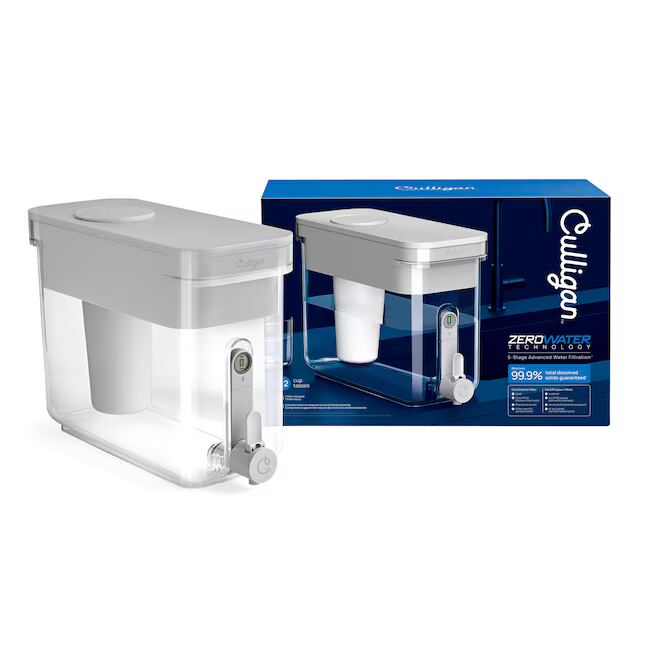
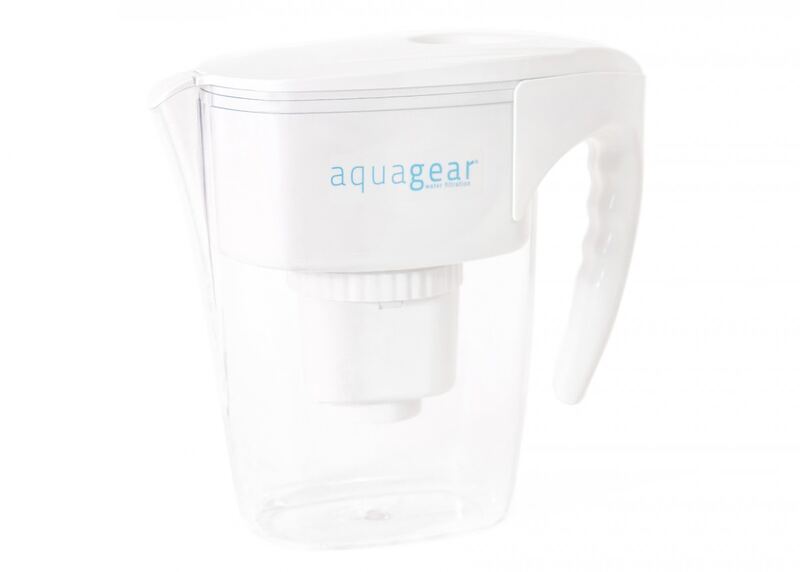
The Larq PureVis Water Filter Pitcher distinguishes itself with UV-C self-cleaning technology that prevents bacterial growth, a feature absent in the Culligan pitcher which relies solely on filtration. Although it offers app-based tracking for iOS users, its filtration speed of 0.6 gallons per hour is notably slower than the Aquagear’s rapid flow rate.
Rating sources
“I've had the Larq PureVis pitcher for a month now, and I have to admit, it's perfect and well worth the $168.”
Our 4.2 score is the average of the 3 scored reviews above; 2 more reviewed it without printing a score and are not in the average. Ratings marked * were derived from the reviewer’s written analysis or video transcript — the publisher didn’t print an explicit numeric score, so we inferred one from their own words. Click through to verify. More about methodology.