The Swift Go 14 is the performance-and-portability pick in this bracket: a thin-and-light 14-inch machine whose AMD Ryzen 7 outruns the U-series chips in most rivals. Laptop Mag measured a Geekbench multi-core score of 12,612, calling it fantastic and far above the category average of 9,910, and XDA scored the laptop 7.5 out of 10. The trade-offs are a flat IPS panel and battery life below the category average, but at the right sale price it is strong value for productivity on the move.
Full review
12,612 against a category average of 9,910
Performance is the headline. Laptop Mag recorded a Geekbench multi-core score of 12,612, called it fantastic, and noted it sits far above the category average of 9,910. The Ryzen 7 8845HS brings genuine multi-core capability to a budget chassis, which shows up in document exports, heavy browser sessions and light content creation rather than only in synthetic scores. Integrated graphics are unusually capable too: XDA's reviewer said it was the first time they felt confident that integrated graphics could run the games they install, which is a notable line for a laptop with no discrete GPU.
The most portable machine in the bracket
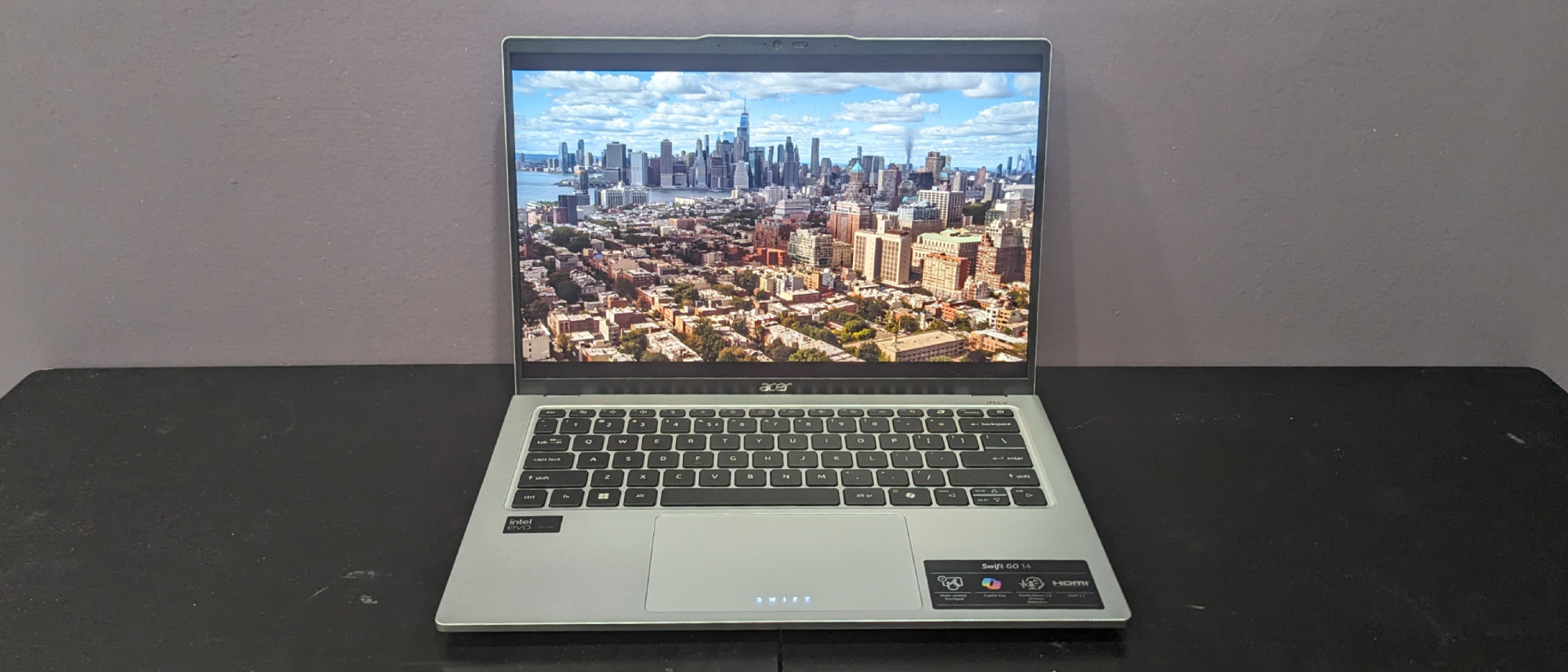
This is the smallest and lightest laptop in the group, a genuinely thin 14-inch that disappears into a bag and works on an airline tray. The chassis is sturdier than the price implies, and despite the slim profile Acer kept a full port spread - USB-C, full-size USB-A, HDMI and microSD - so an external monitor and peripherals connect without a dongle. The touch display adds everyday convenience. Size-to-power ratio is the best in the category by a clear margin.
A good IPS panel, and no better than that
XDA measured 99% sRGB, 70% NTSC, 75% Adobe RGB and 75% P3 on the WUXGA touch panel, which is solid for web and document work. Digital Trends called it a pretty good IPS display while noting it cannot rival an OLED for contrast and punch, and Laptop Mag was harsher about the Intel configuration, saying the image looked flat next to an OLED screen and the contrast left much to be desired. The verdict is consistent across all three outlets: perfectly usable, but not a selling point.
Eight and a half hours, below average
Battery is the clear weakness. Laptop Mag recorded 8 hours and 25 minutes in its rundown test and noted that is far below the category average of 10 hours and 3 minutes. That covers a work or class day with an outlet nearby, and it is directly connected to the performance advantage - the faster chip costs endurance. Anyone who needs to work untethered all day should look at an ARM machine instead. Speakers and webcam are merely adequate, which is normal at this price.
Buy the AMD configuration deliberately
Value depends entirely on which configuration you buy. The Ryzen 7 build lands near $699 on sale, which is where the value case works; the Intel Core Ultra 7 versions reviewers tested often list closer to $999, which takes the machine out of this bracket entirely. Digital Trends' overall read is the fair one - reasonably fast, decent battery, a pretty good IPS display, but not among its favorite recent laptops. At the right price it is one of the best performance-per-dollar ultraportables in the budget tier; at list price it is not.
Strengths
- +Fast multi-core performance that beats the budget category average
- +Thin, light 14-inch chassis that is genuinely portable
- +Plenty of ports including USB-C and full-size HDMI for a slim laptop
- +Touch display with good sRGB coverage for everyday content
- +Strong value when the AMD Ryzen 7 config drops to around $699
Watch-outs
- −Battery life is below the budget category average
- −IPS panel looks flat next to OLED rivals with weaker contrast
- −Speakers and webcam are merely adequate
- −Best pricing depends on sale availability
How it compares
Its weak spot is battery life, where the HP OmniBook 5 14 dramatically outlasts it, and its IPS panel cannot match the OmniBook's OLED for contrast.
Rating sources
“With the Acer Swift 14, it's the first time I felt confident in integrated graphics to play the games I install.”
“The Swift Go 14's multi-core score of 12,612 is fantastic. This puts it far above the category average of 9,910.”
Our 3.6 score is the average of these published ratings. More about methodology.