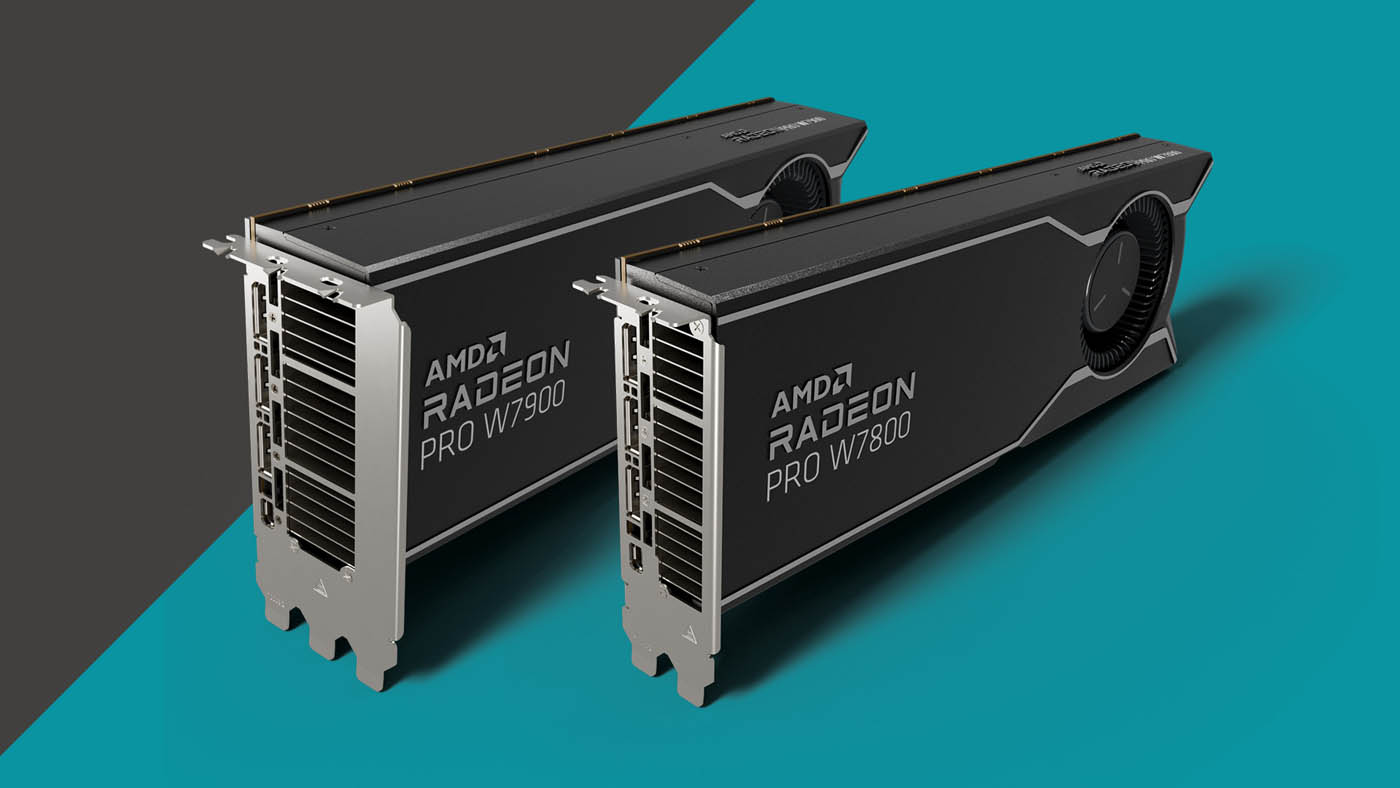
The AMD Radeon Pro W7900 is a high-end workstation GPU based on RDNA 3 architecture featuring 48 GB GDDR6 memory with ECC support. It delivers 61 teraflops of FP32 performance and includes full hardware AV1 encode/decode capabilities. While priced at around $4,000, it offers competitive performance for AEC professionals working with large visualization datasets. The card supports DisplayPort 2.1 and is compatible with modern visualization tools through open APIs like Vulkan and DirectX Raytracing, though it requires significant power and has a larger physical footprint than previous generations.
Full review
RDNA 3 architecture leap
The AMD Radeon Pro W7900 represents a significant architectural shift from previous generations, adopting the RDNA 3 foundation that delivers enhanced performance and efficiency. StorageReview notes this new architecture moves away from monolithic design to a chiplet approach, combining different process nodes for improved flexibility and power management. The transition to chiplet design allows for better integration of specialized components and more efficient manufacturing processes, which AMD positions as a key advantage in balancing performance with cost-effectiveness. This architectural evolution sets the foundation for the card's capabilities across professional workflows, particularly in demanding visualization and rendering applications where computational power directly impacts productivity and output quality.
Memory capacity and bandwidth
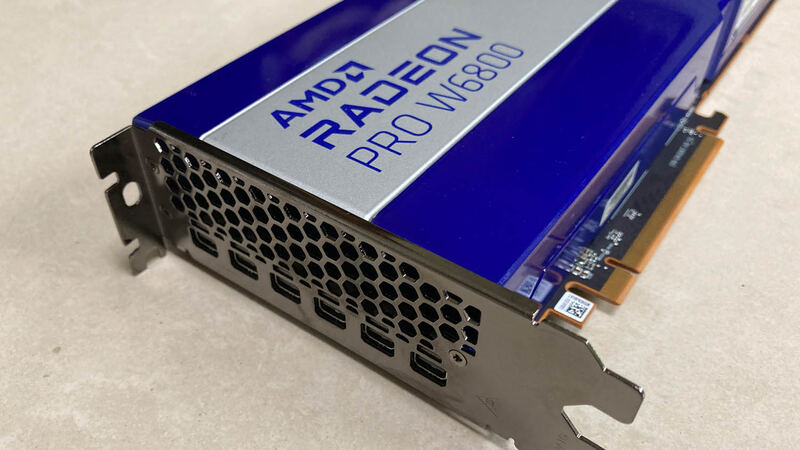
The W7900's 48GB of GDDR6 memory provides substantial headroom for complex professional workloads, particularly in visualization and rendering tasks that demand large datasets. This memory configuration surpasses the 32GB capacity of its predecessor, the W6800, and offers significant advantages in handling large-scale models, high-resolution textures, and detailed asset libraries. The card's 384-bit memory bus delivers peak memory bandwidth of 864 GB/s, per postPerspective, which is notably higher than the W7800's 576 GB/s and represents a substantial improvement over the W6800's 512 GB/s. This enhanced bandwidth becomes particularly important in applications that require rapid data access, such as real-time rendering, complex simulations, and multi-layered video editing workflows where memory throughput directly affects performance and responsiveness. The increased memory capacity and bandwidth combination allows professionals to work with larger datasets without encountering bottlenecks that might otherwise limit productivity in demanding creative environments.
Performance benchmarks and efficiency
Benchmark testing reveals the W7900 delivers impressive performance across professional applications, particularly in compute-intensive tasks where its 6144 stream processors and 96 compute units demonstrate clear advantages over previous-generation cards. The card achieves 61.32 TFLOPS of FP32 performance, which represents a significant leap from the W6800's 17.83 TFLOPS and provides substantial gains in rendering, simulation, and computational workloads. Power efficiency becomes evident when comparing the card's performance per watt, as it consumes 295W of total board power while delivering superior performance metrics. This efficiency advantage becomes particularly valuable in multi-GPU configurations where power consumption and thermal management become critical factors. The card's performance scales well across different professional applications, with particular strength in tasks that benefit from its enhanced memory bandwidth and compute capabilities, making it competitive with similarly priced NVIDIA solutions while offering better value in terms of raw performance metrics.
Display output capabilities
The W7900 supports DisplayPort 2.1 technology, which provides 54 Gbps of bandwidth compared to the 27 Gbps of DisplayPort 1.4, enabling support for high-resolution displays with enhanced refresh rates and color depth. The card can drive up to four 4K displays at 120Hz with DSC support, two 6K displays at 60Hz, one 8K display at 60Hz, and even a single 12K display at 120Hz when such displays become available. This level of display support positions the card well for future-proofing creative workflows, particularly in environments where high-resolution output and multiple display setups are common. The card's display capabilities extend beyond basic resolution support, incorporating HDR and 12-bit color output that supports professional color workflows.
Software compatibility and ecosystem support
The card's professional software support includes AMD Software: PRO Edition, which provides certified drivers and application compatibility for over 100 professional applications through AMD's Independent Software Vendor program. This certification program ensures stability and performance across key creative and engineering applications, though it requires ongoing investment from AMD to maintain compatibility with evolving software versions. The card supports open APIs including OpenGL, DirectX, Vulkan, and DirectX Raytracing, which helps bridge compatibility gaps with applications that have historically favored NVIDIA's proprietary technologies. While NVIDIA's CUDA ecosystem remains dominant in many professional rendering applications, AMD's adoption of open standards and development of HIP (Heterogeneous-Compute Interface for Portability) provides better integration opportunities for software developers. The card's support for hardware-accelerated AV1 encoding up to 8K60 and simultaneous encode/decode streams for AVC and HEVC demonstrates AMD's commitment to multimedia processing capabilities that benefit video editing and content creation workflows.
Thermal performance and cooling
The W7900 maintains stable operating temperatures under sustained workloads, with junction temperatures peaking around 90°C during intensive rendering and visualization tasks. The card's cooling solution effectively manages heat dissipation, with HotHardware reporting fan speeds rarely exceeding 2,100 RPM during normal operation, resulting in relatively quiet operation in properly configured systems. The triple-slot design, while requiring more physical space, accommodates the necessary cooling infrastructure without compromising performance or thermal management. Power consumption during benchmarking tests demonstrates the card's efficiency, using only marginally more power than its predecessor while delivering significantly improved performance. The card's thermal design allows for consistent performance throughout extended usage periods, which is crucial for professional workflows that may involve long rendering sessions or sustained high-load operations. The card's thermal performance remains consistent across different workloads, with minimal temperature fluctuations that could impact performance stability.
Market positioning and competitive comparison
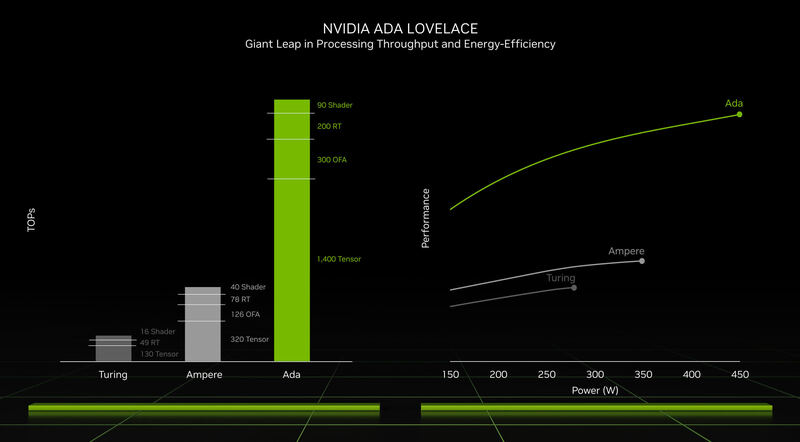
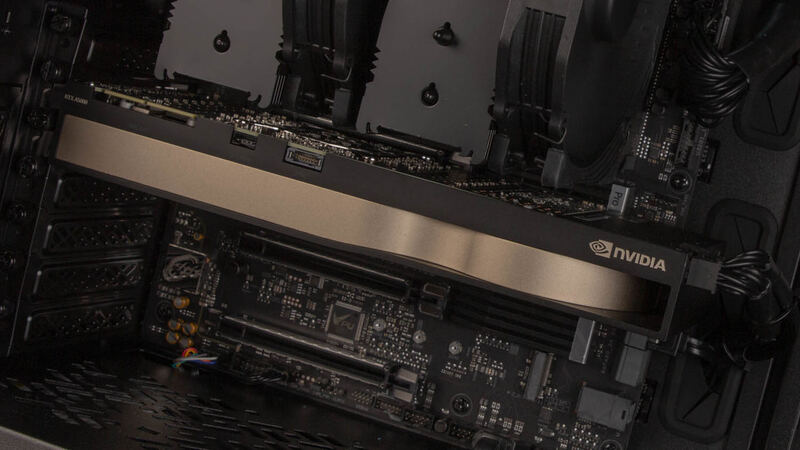
The W7900's pricing at $3,999 positions it as a premium workstation solution that competes directly with NVIDIA's RTX A6000 while offering better value in terms of performance per dollar. The card's performance characteristics make it particularly attractive for professionals who require substantial memory capacity and high bandwidth for complex visualization workloads, though it may not match the absolute performance ceiling of NVIDIA's Ada Generation cards. Compared to the RTX A5000, the W7900 offers superior performance metrics while maintaining a competitive price point, though it lacks some of the specialized features that NVIDIA's higher-end cards provide. The card's competitive positioning becomes clear when considering its 48GB memory capacity and 864 GB/s bandwidth, which provide advantages over similarly priced alternatives. The card's value proposition becomes particularly strong for users who prioritize memory capacity and performance over specialized ray tracing features that NVIDIA's Ada Generation cards emphasize, making it an attractive choice for visualization and rendering professionals who work with large datasets and complex scenes.
Strengths
- +48 GB of GDDR6 memory with ECC support for handling large visualization datasets
- +Based on RDNA 3 architecture with 96 compute units offering 61 teraflops of FP32 performance
- +Supports DisplayPort 2.1 with three times the data rate of DisplayPort 1.4
- +Features full hardware AV1 encode and decode capabilities
- +Compatible with open APIs like Vulkan and DirectX Raytracing for modern visualization tools
Watch-outs
- −Price of approximately $4,000 USD makes it a premium workstation solution
- −Requires 2 x 8-pin PCIe power connectors and minimum 650W PSU, per AEC Magazine
How it compares
The AMD Radeon Pro W7900 features 48 GB of GDDR6 memory with ECC support and is based on the RDNA 3 architecture, matching the memory capacity of the RTX 6000 Ada Generation. However, it lacks the advanced ray tracing performance and AI compute capabilities of the NVIDIA cards, with the RTX 6000 Ada Generation delivering 211 TFLOPs of RT performance and 1,457 TFLOPs of Tensor performance. While the W7900 offers hardware AV1 encode/decode capabilities, it's priced higher than the RTX A6000 and lacks NVLink support.
Rating sources
“AMD's new high-end workstation GPUs might lack the horsepower to truly rival the Nvidia RTX 6000 Ada, but they can compete on price/performance”
“The AMD Radeon Pro W7800 and W7900 GPUs are the latest in professional GPUs from the company, and they are powerful.”
“Radeon PRO W7900 performs above average with 61.32 TFLOPS provides more performance overall GPU's in its class.”
Our 4.4 score is the average of the 4 scored reviews above; 5 more reviewed it without printing a score and are not in the average. Ratings marked * were derived from the reviewer’s written analysis or video transcript — the publisher didn’t print an explicit numeric score, so we inferred one from their own words. Click through to verify. More about methodology.