The NVIDIA RTX 3500 Ada Generation is a professional-grade laptop GPU built on TSMC's 5nm process with Ada Lovelace architecture. It features 5,120 CUDA cores and 12 GB of ECC GDDR6 VRAM, delivering strong performance for 3D rendering and AI tasks. While it supports advanced features like DLSS 3 and ray tracing, its variable TGP range leads to significant performance differences between systems. The card is designed for professional users requiring reliable graphics performance in mobile workstations.
Full review
Architecture and core specifications
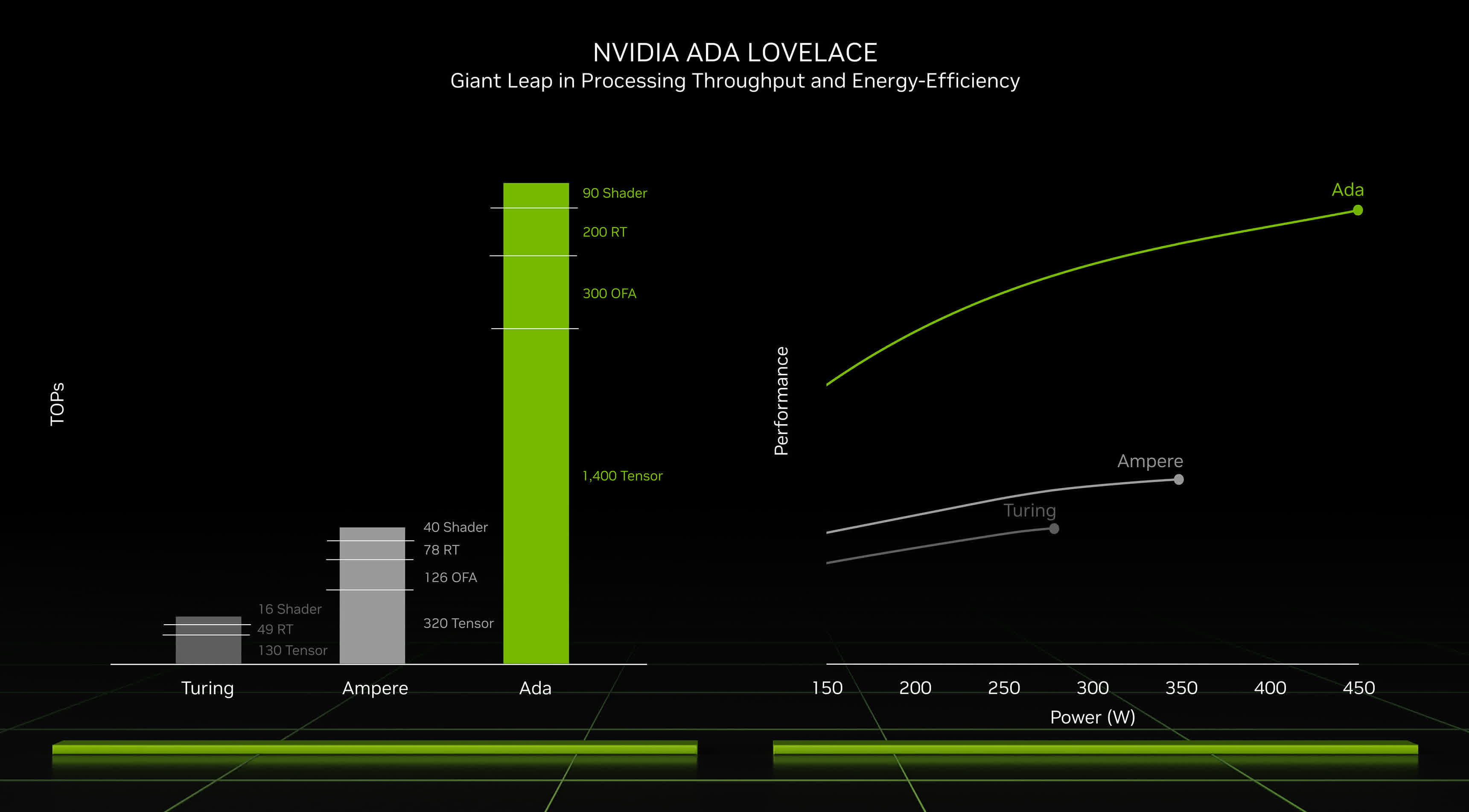
The NVIDIA RTX 3500 Ada Generation represents a professional-grade graphics solution built on the Ada Lovelace architecture with TSMC's 5nm manufacturing process. This laptop GPU features 5,120 CUDA cores, 40 RT cores of the 3rd generation, and 160 Tensor cores of the 4th generation, operating at base frequencies between 1,110 MHz and 1,545 MHz boost. The card is equipped with 12 GB of GDDR6 memory running at 2000 MHz over a 192-bit memory bus, delivering a memory bandwidth of approximately 432 GB/s. The chip uses the AD104 die and is designed for professional applications requiring high performance and stability, with ECC GDDR6 memory support indicating its target for enterprise and creative workflows.
According to Notebookcheck, the card's design reflects a cut-down version of the desktop RTX 4070, sharing the same core chip but optimized for laptop form factors. It supports advanced technologies including DLSS 3, Optimus, NVENC, NVDEC, and various video codecs such as AVC, HEVC, and AV1. The power target range is notably wide, spanning from 60 W to 140 W, which creates significant performance variations across different laptop implementations. This flexibility in thermal design allows manufacturers to tailor the card to their cooling solutions, though it results in inconsistent performance outcomes between systems.
Performance benchmarks from PassMark show the RTX 3500 Ada Generation achieving an average G3D Mark of 19,644, placing it in the high-mid range among laptop GPUs. The card's performance is heavily dependent on the system's cooling and TGP settings, with some configurations showing up to 60% slower performance than others. The memory configuration includes 12 GB of ECC GDDR6, which can reduce available memory by up to 1 GB when error correction is enabled.
Performance in creative applications
In content creation workloads, the RTX 3500 Ada Generation shows moderate performance gains over previous-generation cards, particularly in video editing and rendering tasks. The card delivers solid performance in applications like DaVinci Resolve and Adobe Premiere Pro, where GPU acceleration significantly improves workflow efficiency. However, the performance is not as dominant as in higher-end models like the RTX 6000 Ada or 5000 Ada, which offer substantial improvements in rendering and compute-intensive tasks. The card's performance in these applications is largely dependent on the system's configuration and cooling solution, with some configurations showing significant performance variations.
The card's ability to handle professional applications is supported by its 12 GB of memory and 432 GB/s memory bandwidth, which allows for efficient handling of large datasets and complex projects. However, in more demanding scenarios such as 3D rendering, the performance gains are modest compared to the RTX 4000 and 5000 Ada series. The card's performance in these applications is also limited by the 12 GB memory capacity, which may not be sufficient for very large projects.
When compared to other professional GPUs in the same class, the RTX 3500 Ada Generation offers a balanced performance-to-price ratio, particularly for users who do not require the absolute highest performance. The card's support for professional technologies such as DLSS 3, NVENC, and NVDEC makes it suitable for a wide range of creative workflows, including video editing, 3D modeling, and AI tasks. However, for users requiring maximum performance, the card falls short of the RTX 6000 Ada and 5000 Ada, which offer significantly better performance in compute-intensive tasks.
Power consumption and thermal design
The RTX 3500 Ada Generation's power consumption varies significantly based on the system's TGP settings, with a recommended range of 60 W to 140 W. This wide range allows manufacturers to optimize for either performance or battery life, but results in inconsistent performance outcomes. The card's power consumption is also influenced by the memory configuration, with error correction enabled reducing available memory by up to 1 GB.
The thermal design of the card is optimized for laptop form factors, with the wide TGP range allowing for flexible cooling solutions. However, this flexibility can lead to performance inconsistencies, as some systems may not be able to utilize the full potential of the card. The card's performance is heavily dependent on the cooling solution, with some configurations showing up to 60% slower performance than others. This variability makes it difficult to provide a consistent performance baseline across different laptop implementations.
The card's design also includes support for PCIe 4.0 and DisplayPort 1.4a, which are important for connecting to high-resolution displays and external graphics solutions. The card's support for 8K SUHD monitors is also a notable feature, though Notebookcheck says the DP 1.4a output may prove to be a bottleneck in some scenarios. The card's power consumption is also influenced by the system's configuration, with some configurations showing significant power usage differences compared to others.
Comparison with other Ada generation models
When compared to other models in the Ada generation, the RTX 3500 Ada Generation sits in the mid-range, offering performance that is better than the RTX 3000 series but not as powerful as the higher-end RTX 5000 or 6000 series. This performance improvement is primarily due to the architecture upgrade and the increased number of CUDA cores, though the gains are modest compared to the higher-end models.
The card's performance is also compared to the RTX 4000 Ada Generation, where it shows a 11.8% performance advantage in G3D Mark scores. However, this advantage is not significant enough to make it a compelling upgrade for users already equipped with the RTX 4000 Ada Generation. The card's performance is also lower than the RTX 5000 Ada Generation, which offers a 18% performance advantage. The performance differences between these models are primarily due to the number of CUDA cores and the memory configuration, with the higher-end models offering more cores and larger memory capacities.
In terms of value, the RTX 3500 Ada Generation offers a good balance of performance and price for users who do not require the absolute highest performance. The card's performance is also compared to the RTX PRO 3000 Blackwell Generation, where it shows a 7% performance advantage. However, the performance gains are not substantial enough to justify an upgrade for users already equipped with the RTX PRO 3000 Blackwell Generation, particularly given the price premium associated with the newer model.
Real-world usage scenarios
In real-world usage, the RTX 3500 Ada Generation performs adequately for most professional tasks, particularly in video editing and 3D modeling. The card's performance is sufficient for handling large projects and complex workflows, though it may not be ideal for users requiring maximum performance. The card's support for DLSS 3 and NVENC allows for efficient video encoding and decoding, which is beneficial for users working with high-resolution content. However, the card's performance is limited by its 12 GB memory capacity, which may not be sufficient for very large projects.
The card's performance in gaming is also noteworthy, with Notebookcheck noting most 2024 games playable at 2160p on High settings. The card's performance in gaming is primarily limited by the system's cooling solution, with some configurations showing significant performance variations. The card's performance is also dependent on the game's optimization for RTX features, with some games showing better performance than others. The card's support for ray tracing and DLSS 3 also provides a significant performance boost in games that support these features.
For users working in creative industries, the card's performance is suitable for most workflows, though it may not be ideal for users requiring maximum performance. The card's support for professional technologies such as NVENC, NVDEC, and DLSS 3 makes it suitable for a wide range of applications, including video editing, 3D modeling, and AI tasks. However, for users requiring the absolute highest performance, the card falls short of the RTX 6000 Ada and 5000 Ada, which offer significantly better performance in compute-intensive tasks.
Limitations and drawbacks
The RTX 3500 Ada Generation's wide TGP range creates significant performance inconsistencies across different laptop implementations, with some systems showing up to 60% slower performance than others. This variability makes it difficult to provide a consistent performance baseline, and users may experience different outcomes depending on their specific system configuration. The card's performance is also limited by its 12 GB memory capacity, which may not be sufficient for very large projects. The error correction feature, while beneficial for professional applications, reduces available memory by up to 1 GB, which can be a limiting factor in memory-intensive tasks.
The card's performance in compute-intensive tasks is also limited by its architecture and memory configuration. While it offers improvements over previous-generation cards, the gains are modest compared to the higher-end RTX 5000 and 6000 Ada series. The card's performance in rendering tasks is also not as dominant as in the higher-end models, which offer substantial improvements in rendering performance. The card's support for professional technologies such as DLSS 3 and NVENC is beneficial, but the performance gains are not as significant as in the higher-end models.
Another limitation is the card's dependency on system cooling, which can significantly impact performance in laptops with inadequate cooling solutions. The card's performance is also limited by its 12 GB memory capacity, which may not be sufficient for very large projects. The card's power consumption is also a consideration, particularly in laptops where battery life is a concern. The wide TGP range allows for flexible power management, but it also means that some configurations may not be able to utilize the full potential of the card.
Strengths
- +5,120 CUDA cores for high parallel processing capability
- +12 GB of ECC GDDR6 VRAM for professional workloads
- +Supports DLSS 3 for enhanced frame rates in compatible applications
- +Hardware-accelerated ray tracing with 3rd generation RT cores
Watch-outs
- −Wide TGP range (60 W to 140 W) causes inconsistent performance across systems
- −Error correction reduces available video memory by up to 1 GB
How it compares
The NVIDIA RTX 3500 Ada Generation is a professional-grade laptop GPU with 12 GB of ECC GDDR6 VRAM and 5,120 CUDA cores, making it suitable for mobile workstations. While it supports DLSS 3 and hardware-accelerated ray tracing, it falls short of the memory capacity of the RTX 6000 Ada Generation and the RTX A6000, which both offer 48 GB of VRAM. Compared to the RTX A5000, it has less memory but is designed for mobile applications and supports DLSS 3.
Rating sources
“The Nvidia RTX 3500 Ada Generation is a higher-end professional graphics card for use in laptops that sports 5,120 CUDA cores and 12 GB of ECC GDDR6 VRAM.”
Our 4.0 score is the average of the 1 scored review above; 6 more reviewed it without printing a score and are not in the average. Ratings marked * were derived from the reviewer’s written analysis or video transcript — the publisher didn’t print an explicit numeric score, so we inferred one from their own words. Click through to verify. More about methodology.