The Anker Prime (20K, 200W) is the most capable charger in this group, pushing 200W total across two 100W USB-C ports and a 65W USB-A so it can top up two laptops and a phone simultaneously. Its color display and PowerIQ 4.0 power management make it the enthusiast pick, though it is heavier and runs warmer than the slimmer options. Reviewers consistently call it a near-flawless do-everything bank held back only by price and heft.
Full review
Real-World Performance
The Anker Prime is the charger reviewers reach for when a laptop is the actual target rather than an afterthought. XDA measured a real-world refill of an M2 MacBook Air from 47% to 75% in just 23 minutes, and Popular Science framed it as the bank for people whose laptops 'laugh at most power banks.' The two USB-C ports each hit 100W independently, which is the architectural detail that lets the Prime carry two notebooks at once rather than throttling down to a shared trickle the way single-controller banks do. Notebookcheck's hands-on testing confirmed it regularly held 100W to two laptops plus roughly 15W for a phone simultaneously, a combined draw that most 20,000mAh banks in this class simply cannot sustain without dropping one device to a slow profile.
Recharge speed is equally aggressive, and it is one of the reasons reviewers treat the Prime as a daily driver rather than an emergency-only pack. With a 100W input, Digital Camera World clocked a full refill in about 1 hour 15 minutes, so the bank itself is rarely the bottleneck on a travel day, you can top it up over a lunch break and head out again. The trade-off shows up as heat: Notebookcheck recorded 43C after 20 minutes at sustained 100W output and a worst-case peak of 48C during back-to-back high-draw sessions. That is warm enough to notice through a bag, but it stays within the safe operating range thanks to Anker's ActiveShield 4.0 system, which the company says monitors temperature millions of times a day and trims output if a cell runs hot.
Build Quality and Design
Anker built the Prime as a premium object. The body is a dense aluminum-and-glass brick that Popular Science measured at 1.73 by 1.99 by 5.79 inches and roughly 510g, with Digital Camera World logging 544g on its sample. That heft is the price of the cell density and the metal shell, and it is the single most common complaint across reviews. It is still TSA-compliant at 72Wh, so it clears carry-on rules without issue.
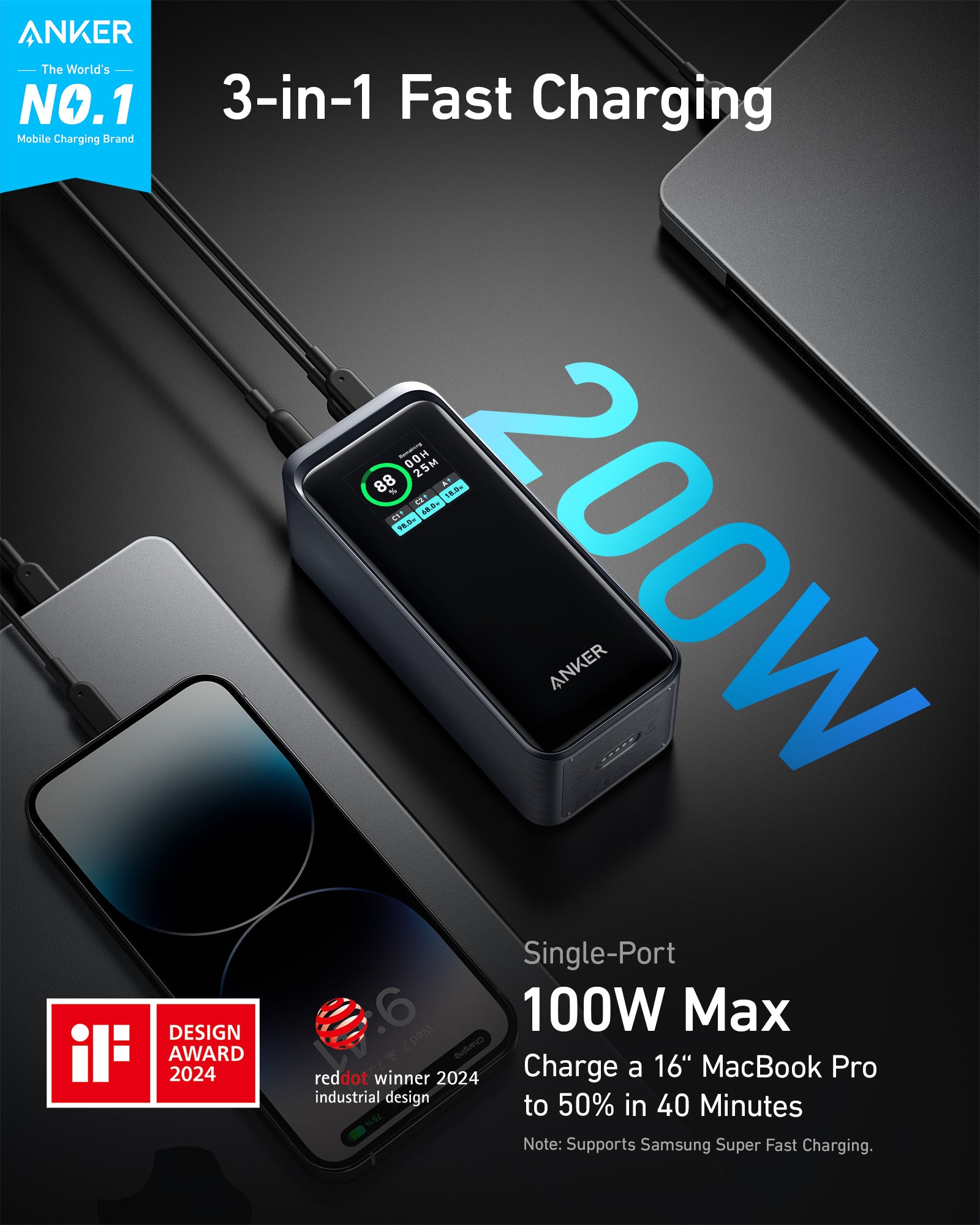
The standout design feature is the full-color LCD. Rather than four LED dots, it reports the exact wattage flowing into and out of each port, the input speed while recharging, and an estimated runtime at the current draw. TrustedReviews and XDA both singled out the screen as genuinely useful rather than gimmicky, since it lets you confirm a laptop is actually pulling 100W instead of negotiating down to a slower profile.
What Reviewers Loved
The consensus is that the Prime is a near-complete package. Digital Camera World said flatly that 'this Anker Prime has become my new go-to,' and XDA scored it 9/10, calling the combination of high capacity, fast charging and the informative screen close to must-have territory for travelers and remote workers. The PowerIQ 4.0 system, which shifts energy toward whichever port needs it most, drew praise for keeping a laptop topped up without manually rationing the other ports.
Reviewers also liked that Anker did not cut corners on the bundle: the bank ships with a 240W-rated USB-C cable and a 24-month warranty, which is longer coverage than several rivals in this roundup offer.
Where It Falls Short
Two issues recur. The first is weight: at 510-544g this is the heaviest bank in this comparison, and reviewers who prioritize a slim, pocketable form factor steered toward thinner options. The second is heat under sustained load, which Notebookcheck documented climbing into the high 40s Celsius during back-to-back 100W charging. Neither is a safety problem, but both matter if you want something light or something that stays cool in a packed bag.
Price is the other sticking point. At around $130 the Prime sits at the top of the 20,000mAh class, and TrustedReviews noted cost as the chief consideration. If you only charge phones and earbuds, you are paying for headroom you will never use.
Who It's Best For
Buy the Anker Prime if a laptop, or two, is the primary thing you need to charge away from an outlet. The dual 100W USB-C ports, fast self-recharge and detailed display make it the clear enthusiast and frequent-traveler pick in this group. Photographers, video editors and anyone running a power-hungry notebook will get the most out of the 200W ceiling.
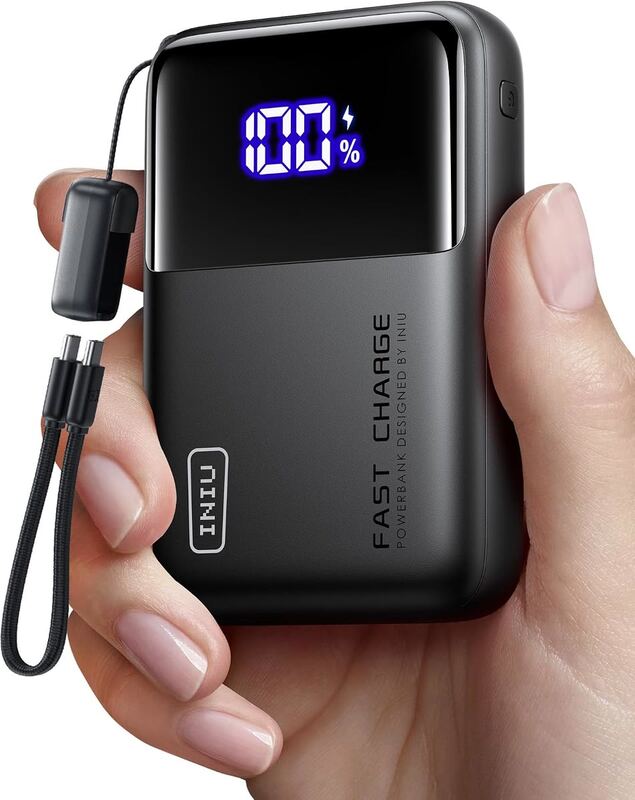
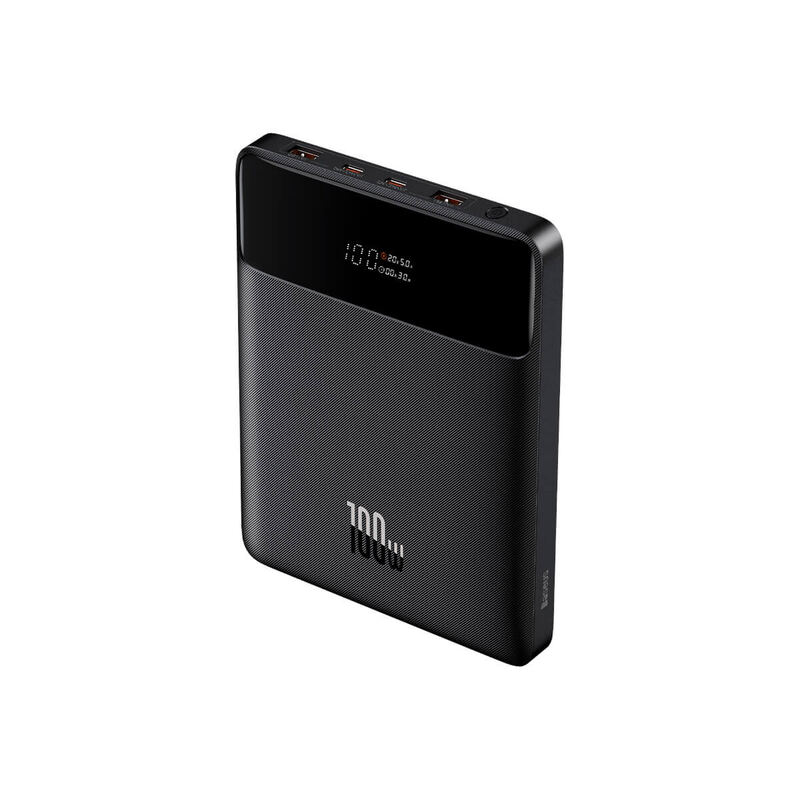
Skip it if you mostly charge phones and want something light. In that case the slimmer Baseus Blade or the much smaller INIU P62-E1 deliver more comfortable everyday carry for less money, and you will not miss the 200W ceiling you were never going to use.
Display and Smart Features
Where most banks in this price range offer four LED dots, the Prime puts a full-color LCD on the front face, and reviewers were consistent that it is the rare power-bank screen that earns its place. It reports the exact wattage flowing out of each individual port, the input speed while the bank is recharging, the remaining capacity as a percentage, and an estimated runtime at the current draw. XDA and TrustedReviews both called it genuinely useful for confirming that a laptop has negotiated the full 100W rather than dropping to a slower PD profile, which is a common and invisible failure on lesser banks.
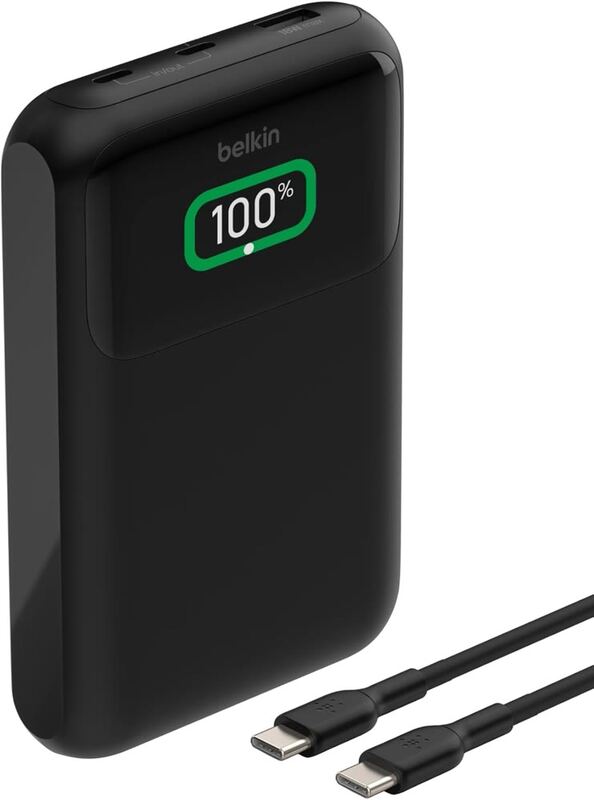
The Prime also pairs with Anker's companion app, which exposes deeper telemetry, lets you adjust power distribution between ports, and even swap the screensaver shown on the display. PowerIQ 4.0 is the underlying intelligence: it identifies which connected device needs the most power and shifts energy away from low-demand ports in real time, so a laptop on one port is not starved when you plug a phone into another. It is the kind of feature that sounds like marketing until you watch the on-screen numbers rebalance themselves, and it is a meaningful step beyond the static port allocation of the Belkin BoostCharge Pro or INIU P62-E1.
Value at This Price
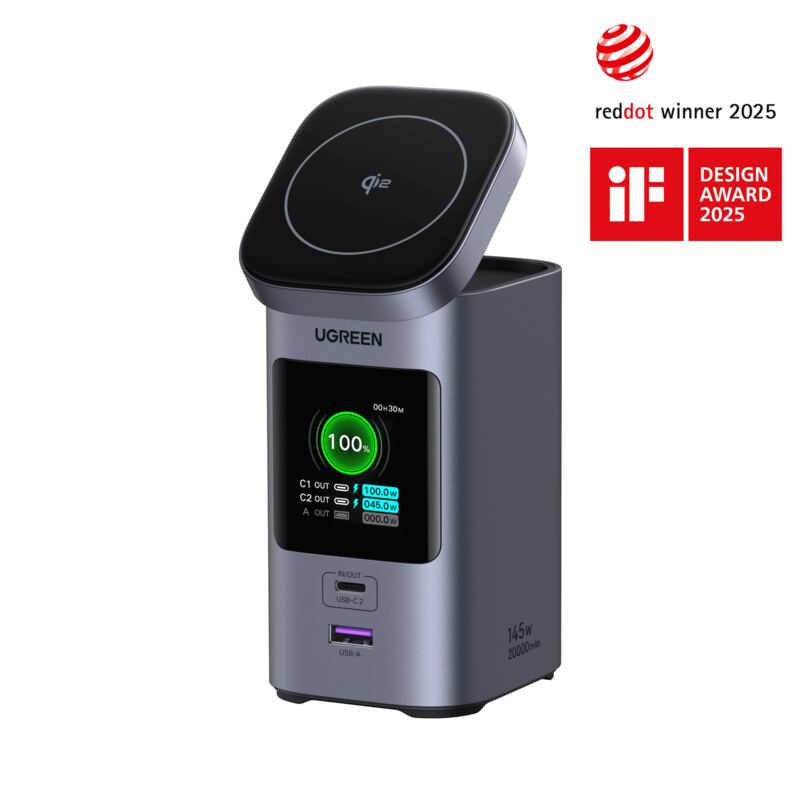
At roughly $130 the Prime is an investment, but reviewers broadly agreed the price tracks the capability rather than chasing a spec sheet. You are buying genuine dual-laptop output, a fast 100W self-recharge, a useful color display, an app with real controls, and a 24-month warranty that is longer than several rivals here offer. Compared with the UGREEN Nexode's wireless extras or the lower-wattage Baseus, Belkin and INIU picks, the Prime's value proposition is raw, reliable wired throughput in a durable aluminum shell that feels like it will outlast the cells inside it.
The honest caveat is that the value only materializes if you use the headroom. For phone-only users the Prime is overkill, and the $130 buys nothing a $51 INIU would not also deliver for charging an iPhone. For laptop users, and especially for anyone who routinely needs to keep two machines alive away from an outlet, it is one of the very few 20,000mAh banks that earns the premium, which is why it tops this ranking despite being the priciest and heaviest option.
Strengths
- +200W total output with two 100W USB-C ports charges two laptops at once
- +Color LCD shows per-port wattage, input speed and runtime in real time
- +100W max recharge refills the bank itself in about 1 hour 15 minutes
- +PowerIQ 4.0 dynamically shifts power between ports based on device demand
- +TSA-approved 72Wh capacity with premium aluminum build and travel pouch
Watch-outs
- −At roughly 510-544g it is one of the heavier 20K banks here
- −Runs warm, reaching 43-48C under sustained 100W draw per Notebookcheck testing
- −Premium pricing around $130 is high for a 20,000mAh class bank
- −The charging base is sold separately on most listings
How it compares
The Anker Prime out-powers everything else here: its 200W total beats the UGREEN Nexode's 145W and the Baseus Blade's 100W, and unlike the 65W Belkin BoostCharge Pro and 65W INIU P62-E1 it can drive two laptops at full speed. It costs more and weighs more than all of them, so the Baseus Blade is the slimmer travel alternative and the INIU P62-E1 the lighter one.
Who this is for
At a glance: Power users who need to fast-charge two laptops plus a phone from one bank and want a detailed real-time display.
Why you’d buy the Anker Prime Power Bank (20K, 200W)
- 200W total output with two 100W USB-C ports charges two laptops at once.
- Color LCD shows per-port wattage, input speed and runtime in real time.
- 100W max recharge refills the bank itself in about 1 hour 15 minutes.
Why you’d skip it
- At roughly 510-544g it is one of the heavier 20K banks here.
- Runs warm, reaching 43-48C under sustained 100W draw per Notebookcheck testing.
- Premium pricing around $130 is high for a 20,000mAh class bank.
Rating sources
“In a test with my M2 MacBook Air, the Anker Prime charged my laptop from 47% to 75% in just 23 minutes.”
“The Anker Prime is a powerful but portable high-capacity battery pack; power and speed are the key appeals.”
“If you're truly a power user-or you just have a laptop that laughs at most power banks-this Anker Prime makes a compelling case.”
“This Anker Prime has become my new go-to.”
Our 4.6 score is the average of these published ratings. Ratings marked * were derived from the reviewer’s written analysis or video transcript — the publisher didn’t print an explicit numeric score, so we inferred one from their own words. Click through to verify. More about methodology.