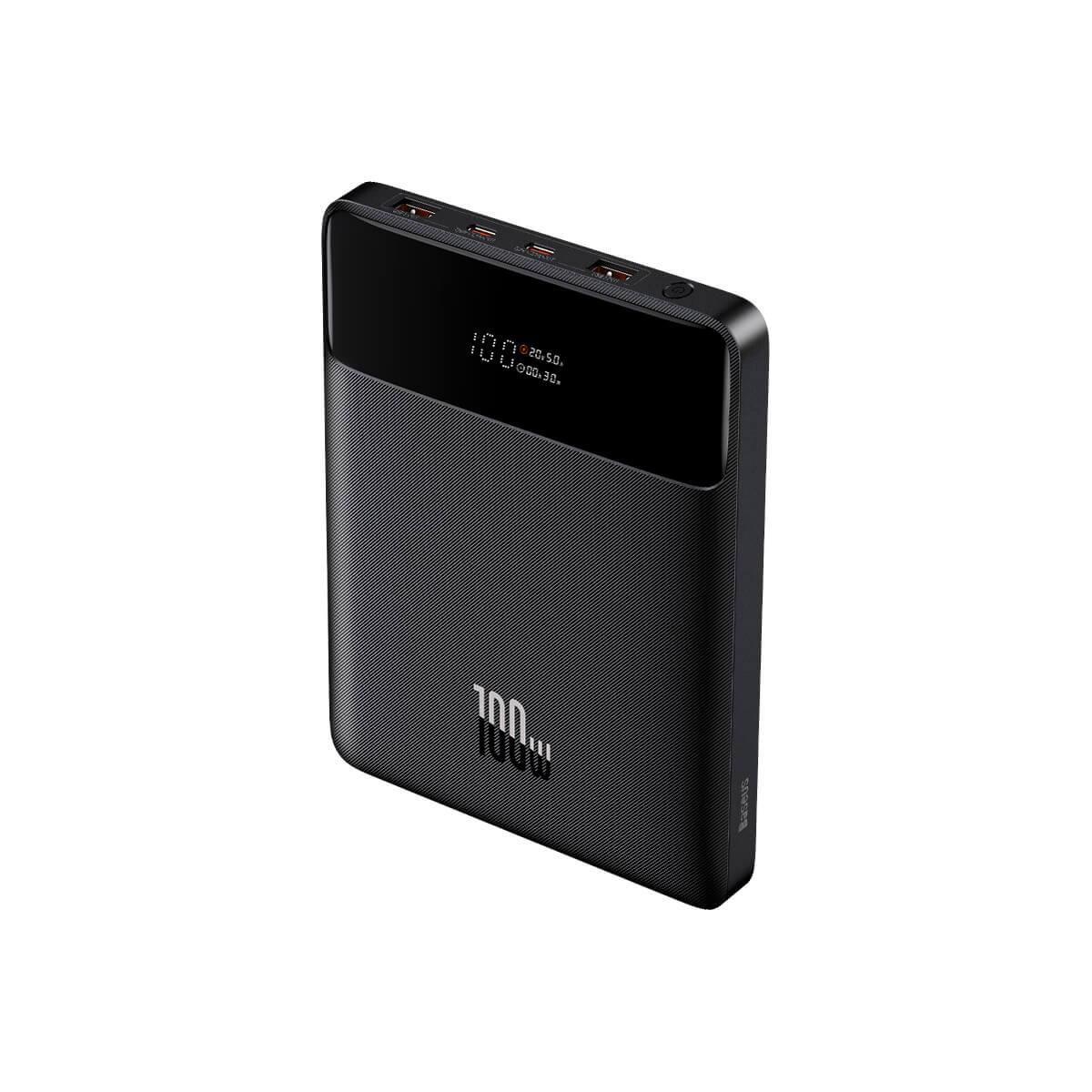
The Baseus Blade is the slim-form-factor favorite: a 0.7-inch-thick flat slab that carries like a second laptop and still pushes 100W from its USB-C ports. Reviewers from How-To Geek to The Gadgeteer praised how easily it slides into a bag while charging a MacBook Pro to about 50% in 30 minutes. It is the value laptop bank of the group, trading the Anker Prime's dual-100W muscle and the UGREEN's wireless pad for a thin, travel-friendly shape.
Full review
36% to a 16-inch MacBook Pro in 30 minutes
The Blade is built around one idea: full laptop wattage in a flat package. How-To Geek confirmed its two PD 3.0 / PPS USB-C ports deliver up to 100W and fast-charged a 16-inch MacBook Pro by 36% in 30 minutes. Macworld's testing of the Blade HD added 37% to an M1 MacBook Air, 57% to an iPhone 15 and 30% to an iPad Pro in a single 30-minute charging session. The Gadgeteer ran a Rog Ally handheld at 30-65W and squeezed out more than two extra hours of play.
Recharging is reasonably quick. Macworld measured the bank hitting 90% in 90 minutes and a full refill in under two hours at its 65W input. With four ports active, the 100W ceiling is shared, so the Blade is happiest charging one laptop at full speed plus a couple of phones rather than two demanding laptops at once.
LCD washes out in bright sunlight
The slim chassis is the whole point. Macworld measured it at 5.27 by 5.27 by 0.7 inches (later Blade revisions stretch to 6.37 inches tall) and described the flat design as 'practical for stowing in a bag or backpack.' At roughly 490-506g it is genuinely lighter than the Anker Prime and the UGREEN Nexode despite matching them on capacity, and the textured black plastic body resists fingerprints. The Gadgeteer summed up the appeal by making it their permanent travel bank thanks to the shape and TSA-legal capacity.
An LCD on the top edge reports input and output wattage plus an estimated time to full or empty based on current usage. The LCD is easy to read indoors but washes out in bright sunlight.
Ships with a cable and protective sleeve
The form factor wins almost every review. The Gadgeteer called it slim enough to slide into nearly any laptop-bag pocket, Macworld declared it 'flat-out impressive,' and How-To Geek scored it 7/10 while praising the premium charging performance for the money. The combination of true 100W output and a notebook-thin profile is rare, and it is the reason the Blade keeps appearing on best-of laptop-bank lists.
Reviewers also appreciated the practical extras: a bundled USB-C cable and a protective storage sleeve in the box, which keeps the flat body from getting scuffed in transit.
Empties in about 40 minutes at full draw
The honest limitation is runtime under heavy load. A single 72Wh cell feeding a 100W laptop empties in roughly 40 minutes, so the Blade is a top-up tool for a notebook rather than an all-day off-grid solution. How-To Geek's 7/10 reflected that it is very good rather than class-leading on raw endurance.
The display's poor outdoor legibility is a minor but consistent gripe, and the bank's habit of selling out at its best sale price means you sometimes pay closer to full MSRP. It is also wide and flat rather than truly pocketable, so it lives in a bag, not a jacket.
Slides into the same sleeve as your laptop
The Blade is ideal for commuters and travelers who carry a laptop and want a charger that vanishes into the same sleeve. If you value a thin, bag-friendly shape over maximum wattage or wireless tricks, this is the pick, and its sub-$80 sale pricing makes it the value laptop bank of the group.
Look elsewhere if you need to charge two laptops at once (the Anker Prime), want magnetic wireless charging (the UGREEN Nexode), or want the absolute smallest bank for phone-first use (the INIU P62-E1).
Full 100W for less than Anker or UGREEN
At a street price often around $40-80, the Blade is the bargain of this lineup for anyone who specifically wants 100W laptop charging. You give up the Anker Prime's dual-port muscle and the UGREEN's wireless pad, but you get the same 20,000mAh capacity and full 100W output in a thinner, lighter body for less money. Reviewers consistently framed it as punching above its price, and How-To Geek's 7/10 with a 'premium power and performance' headline captures the value-for-money story well.
Thinnest bank that still hits 100W
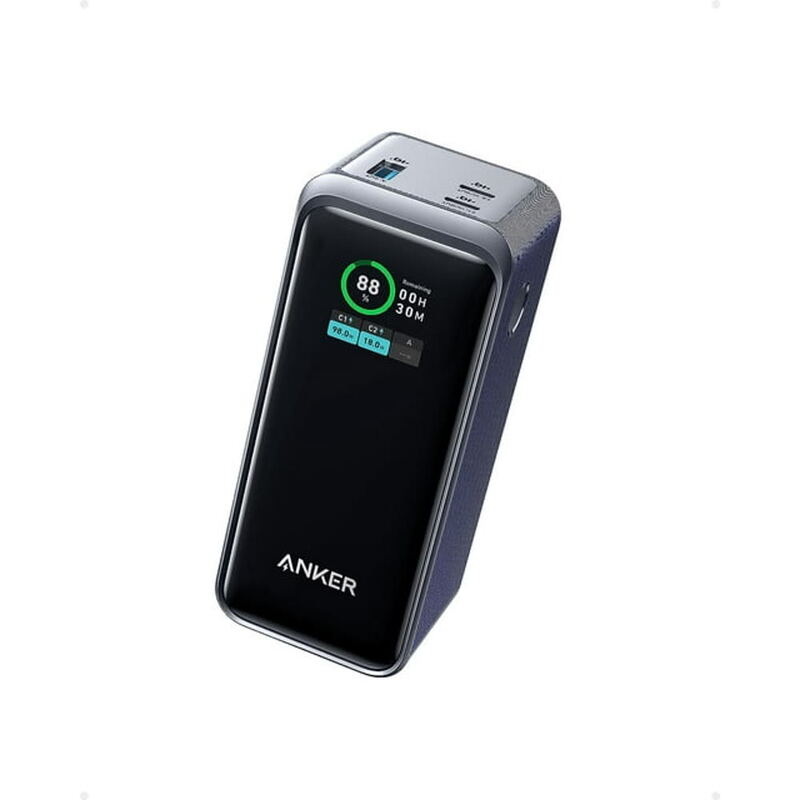
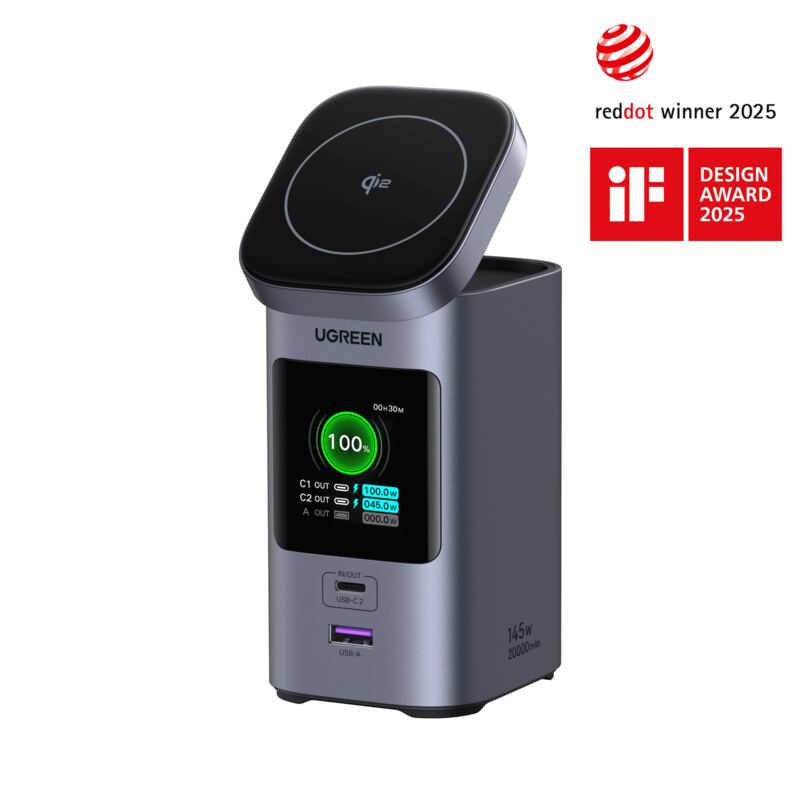
Within this roundup the Blade occupies a clear niche: it is the thinnest bank by a wide margin while still delivering true 100W laptop charging. The Anker Prime doubles its output to 200W and can run two laptops at once, but it is a chunky aluminum brick that weighs more and costs far more. The UGREEN Nexode adds a Qi2 wireless pad and a slightly higher 145W ceiling, yet it is a tall, heavy column that lives on a desk rather than in a bag. Against those two, the Blade's pitch is simple, it gives you laptop-grade wattage in the most bag-friendly shape here.
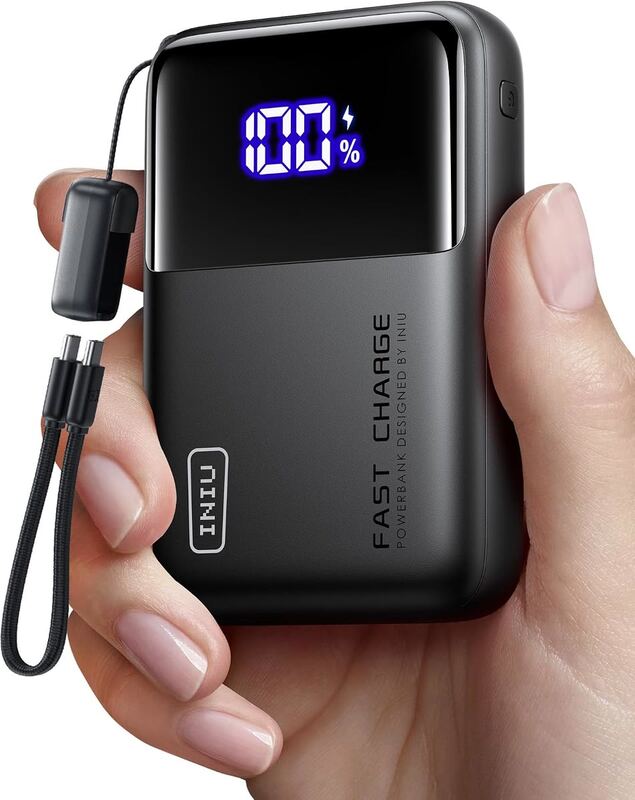
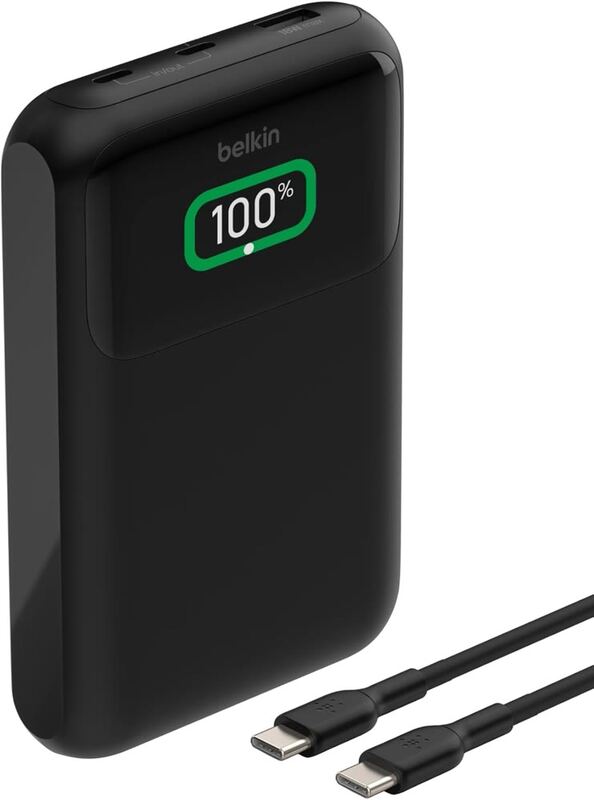
Stepping down, the Belkin BoostCharge Pro and INIU P62-E1 are both lighter than the Blade but cap out at 65W, so they charge thin-and-light laptops fine but throttle a 16-inch MacBook Pro or a gaming laptop that the Blade's 100W can feed at full speed. The Gadgeteer's experience of running a Rog Ally handheld off the Blade for two-plus extra hours of play is the kind of high-draw scenario the 65W banks struggle with. So the Blade is the sweet spot for anyone who wants genuine 100W output but refuses to carry the Anker Prime's weight, which is exactly the niche it fills.
Strengths
- +Ultra-slim 0.7-inch flat body slides into a laptop bag like a notebook
- +Two USB-C ports deliver up to 100W for full-speed laptop charging
- +Four ports total (2x USB-C, 2x USB-A) charge multiple devices at once
- +Built-in LCD shows input/output wattage and estimated time remaining
- +Recharges itself to full in roughly 1.5 hours at 65W input
Watch-outs
- −100W draw drains the 20,000mAh cell in about 40 minutes
- −LCD can be hard to read in bright outdoor light
- −At ~490-506g it is light for the wattage but not pocketable
- −Frequently goes out of stock at the lower sale price
How it compares
The Baseus Blade is the slimmest bank here at 0.7 inches thick, a clear contrast to the brick-shaped Anker Prime and the tall UGREEN Nexode column. Its 100W matches a single Anker Prime port but it cannot run two laptops at once the way the Anker Prime can, and it lacks the UGREEN Nexode's wireless pad. It out-powers the 65W Belkin BoostCharge Pro and 65W INIU P62-E1 on wired output while staying lighter than the UGREEN Nexode.
Rating sources
“Featuring two PD USB-C ports and certified for PD 3.0 and PPS with a power output going up to 100W, the power bank allows you to fast charge your MacBook Pro 16-inch up to 36% in only 30 minutes.”
“The flat design of the Baseus Blade HD Laptop Power Bank is practical for stowing in a bag or backpack.”
“It will also be my go-to power bank for any travel in the future with its handy slim shape and under-TSA-battery-limit capacity.”
Our 3.8 score is the average of these published ratings. Ratings marked * were derived from the reviewer’s written analysis or video transcript — the publisher didn’t print an explicit numeric score, so we inferred one from their own words. Click through to verify. More about methodology.