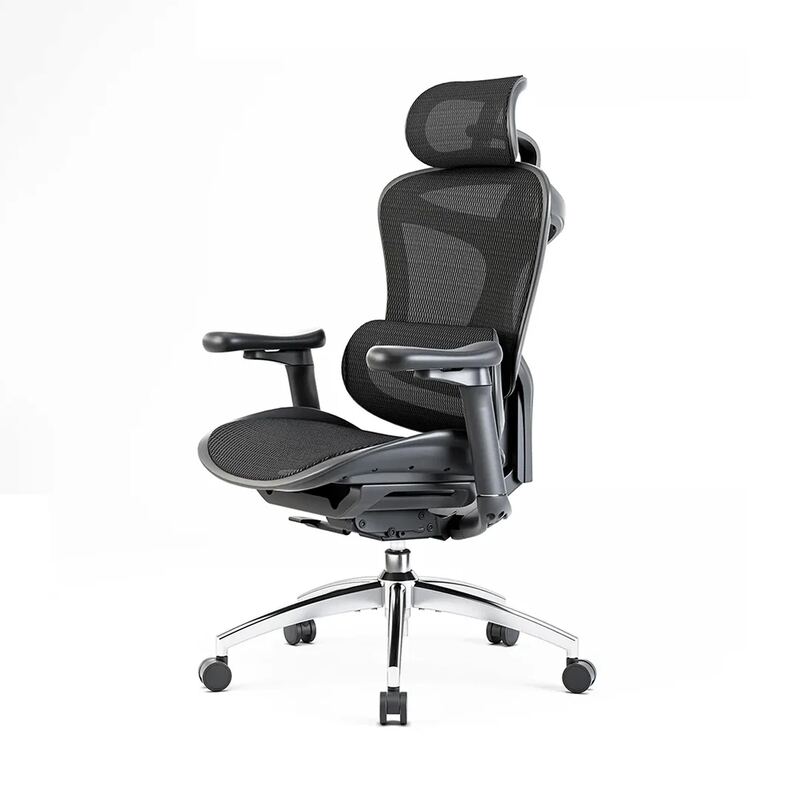
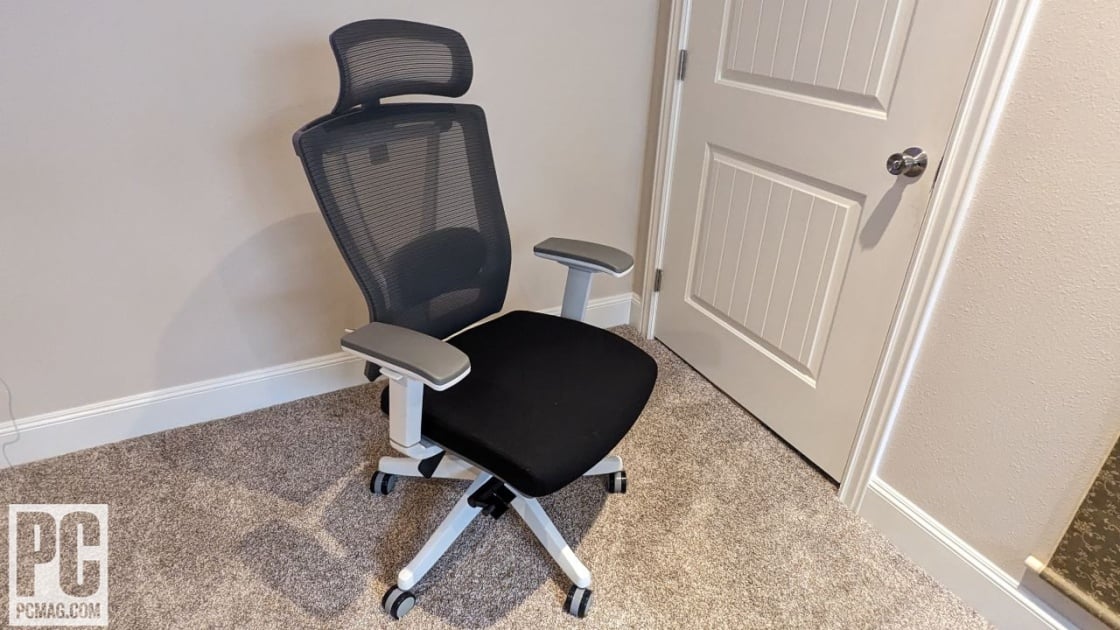
The Autonomous ErgoChair Core is the entry model in Autonomous's mesh range, and Tom's Hardware's 3 out of 5 reads as a chair that covers the basics and stops there. A dual backrest follows the spine's S-curve, the mesh with polyurethane leather accents looks more expensive than $349, and at 42 lb it moves easily. The lumbar and headrest adjust over narrow ranges, there is no backrest tension control, and rated capacity is 243 lb.
Full review
A dual backrest and a 130-degree recline
The back is split so the upper and lower sections support separately, which is the feature Tom's Hardware singles out and the reason the chair holds a spine shape better than a flat mesh panel at this money. Recline runs to 130 degrees, far enough to lean back and decompress rather than merely tilt. The Chair Institute describes the adaptive mesh as flexing with the sitter as they shift through the day, with polyurethane leather on the high-contact areas where plain mesh would wear. Seat height, seat depth, back tilt and the 3-way armrests all adjust; backrest tension does not.
Where the adjustment range runs out
Lumbar and headrest travel are the weak points: both move, but over ranges narrow enough that a sitter outside the middle of the population will run out of adjustment before finding the position they want. There is no tension control for the backrest, so recline resistance is fixed regardless of body weight. The headrest is also the awkward part of assembly, since its screw holes are inset and hard to line up, and it is the step that turns a quick build into a slow one.
Mesh back, cushioned seat, and a warm afternoon
Breathability is uneven. The mesh back moves air the way mesh should, but the seat is the part that gets sat on for eight hours, and it collects heat and pressure in a way the back does not. Owners in hot rooms describe the chair getting warm over a long afternoon rather than staying cool throughout. It is a comfortable chair for a working day and a mediocre one for a working day in a room without air conditioning.
243 lb capacity behind a mostly plastic frame
Rated capacity is 243 lb, lower than the Pro models in the same range, and it is a firm number rather than a cautious one because the frame is largely rigid plastic. That plastic is also why the chair weighs only 42 lb and why it costs $349; the trade is longevity, and the components most likely to give are the fasteners holding the back support after a few years of daily use. Tom's Hardware's 3 out of 5 reflects that ceiling rather than any single failure.
Assembly is about 30 minutes with the supplied hex key
The chair arrives in one reinforced box, well packed, with a single hex key and instructions Tom's Hardware found clear. Assembly runs to roughly 30 minutes for one person and quicker with a power driver, and the parts thread together without forcing. The headrest is the exception and can add a frustrating stretch to the end of the job. Nothing here needs a second pair of hands, and at 42 lb the finished chair can be carried to the desk rather than dragged.
Strengths
- +Lightweight design at 42 pounds, making it easier to move than most office chairs
- +Ultra Adaptive Mesh upholstery with Polyurethane leather accents provides a premium look and feel
- +Solid back and lumbar support for long hours of sitting
- +Easy assembly with clear instructions, taking about 30 minutes with power driver
Watch-outs
- −Lumbar and headrest adjust over narrow ranges that run out quickly
- −No backrest tension adjustment, so recline resistance is whatever the chair decides
- −243 lb rated capacity, below the Pro models in the same range
- −Headrest screw holes are inset and awkward to align during assembly
- −Seat holds heat over a long day in a warm room
How it compares
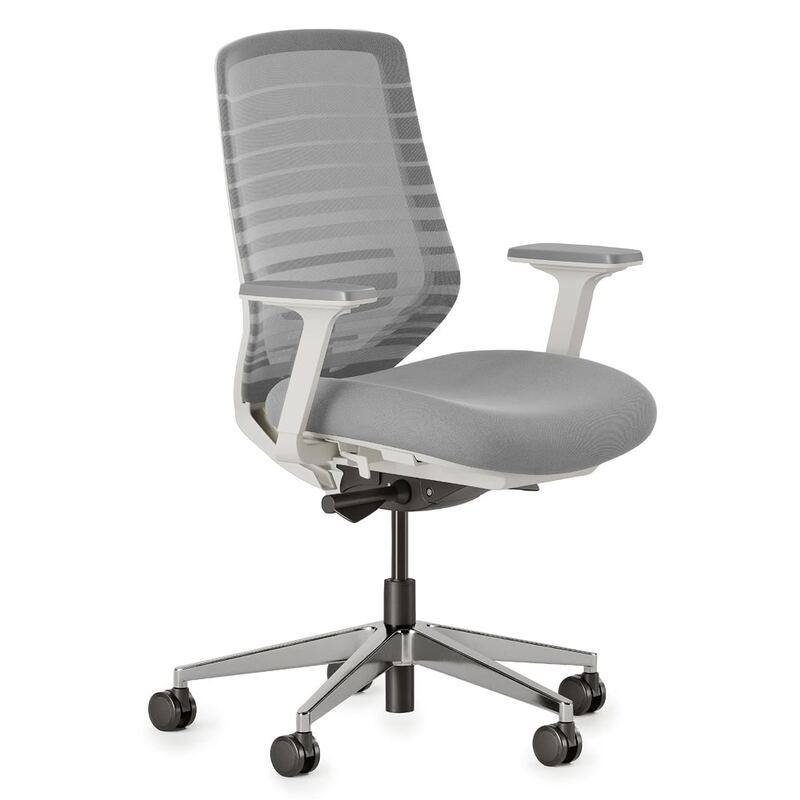
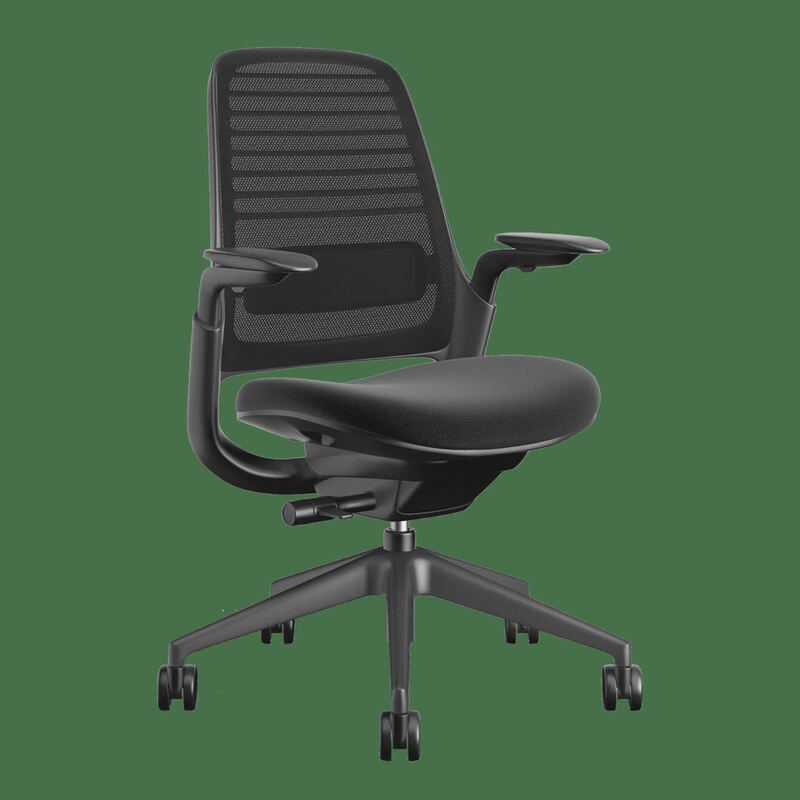
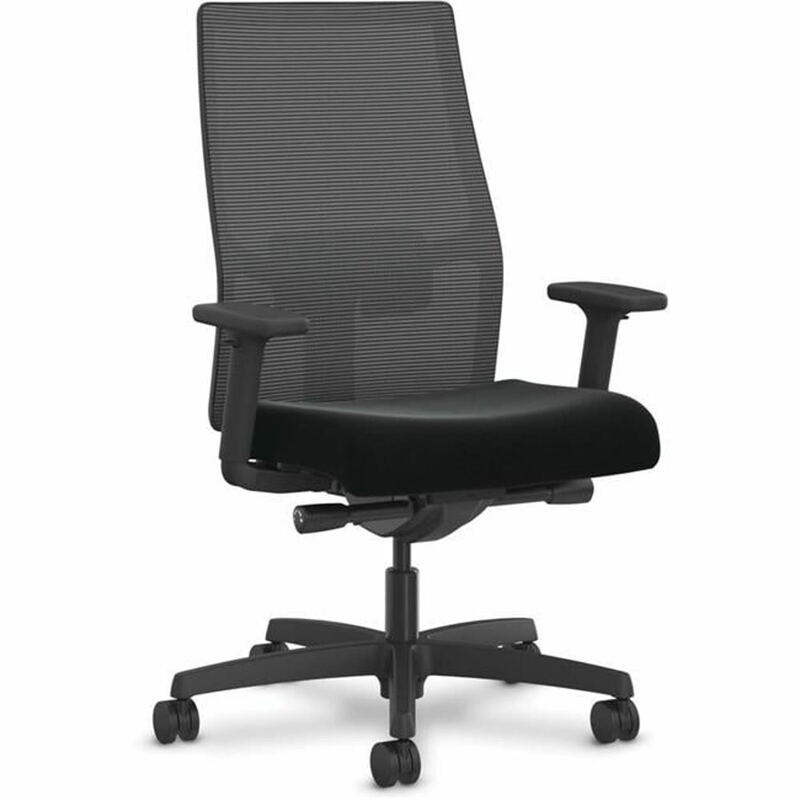
The Autonomous ErgoChair Core is the lightweight, easy-to-assemble option, undercutting the Steelcase Series 1 and Branch Ergonomic Chair on price. It offers less structured back support than the Branch Ergonomic Chair or the all-mesh Sihoo Doro C300 and lacks the brand polish of the Steelcase Series 1, but it is more affordable than the HON Ignition 2.0 while covering the same basic ergonomic adjustments.
Rating sources
Our 3.6 score is the average of these published ratings. More about methodology.