The Bluetti PV350 collapses into a compact 35.6 by 24.1 inch package that fits easily in vehicle trunks, featuring integrated handles and a zippered cable bag for transport convenience. StorageReview noted its spring-loaded leg mechanism allows infinite angle adjustment from flat to 45 degrees, maximizing solar efficiency without fixed snap-set limitations. However, Gear Diary found the integrated stands can be frustrating to deploy initially, with a tendency to collapse during setup until users develop a rhythm. The panel’s IP65 splashproof rating prevents use in heavy rain or snow, limiting it to fair-weather portable applications only. This model fits campers and preppers needing flexible, high-output solar power who prioritize portability over permanent installation.
Full review
Portable form factor and transport convenience
The Bluetti PV350 collapses into a compact package measuring 35.6 by 24.1 inches with a thickness of just 2.5 inches, allowing it to fit easily in the trunk of a car or the back of a truck without dominating storage space. The folded unit weighs 30.6 pounds and functions as its own carrying case, featuring sturdy integrated handles with rubberized grips that make moving the heavy panel around manageable for most users. This design philosophy prioritizes portability over permanent installation, making it ideal for campers who need to break down their gear quickly or preppers storing equipment during non-emergency periods.
StorageReview noted that when completely collapsed, the portfolio lays down relatively flat with only the built-in wire storage zipper creating a minor protrusion. The exterior is covered in a black canvas-like fabric secured by two elastic fabric straps at the top with easy snap plastic buckles. This simple closure system allows for rapid deployment without fumbling with complex zippers or Velcro, which is critical when setting up power sources in changing weather conditions or low-light scenarios.
The barefoot nomad highlighted that the carrying case and handles make it easy to pack, store, and move the panels when not in use. Additionally, a built-in zippered storage bag sown onto the front holds the cables neatly, preventing tangling during transport. The inside of this storage bag features printed specifications for the PV350, providing a handy reference for open circuit voltage and other technical details if users are setting up remotely without internet access.
Spring-loaded leg mechanism enables infinite angle adjustment
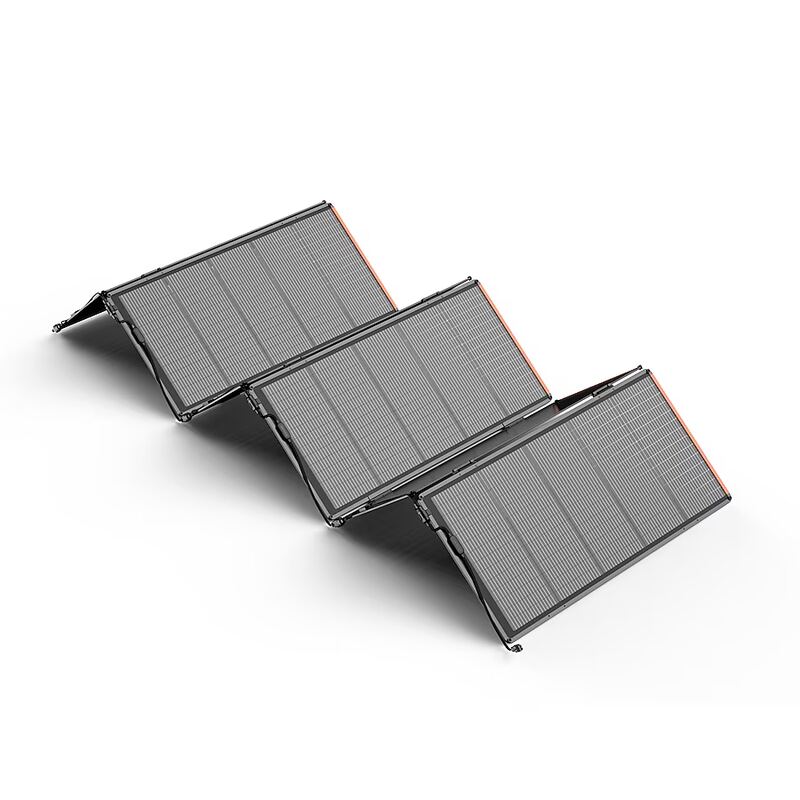
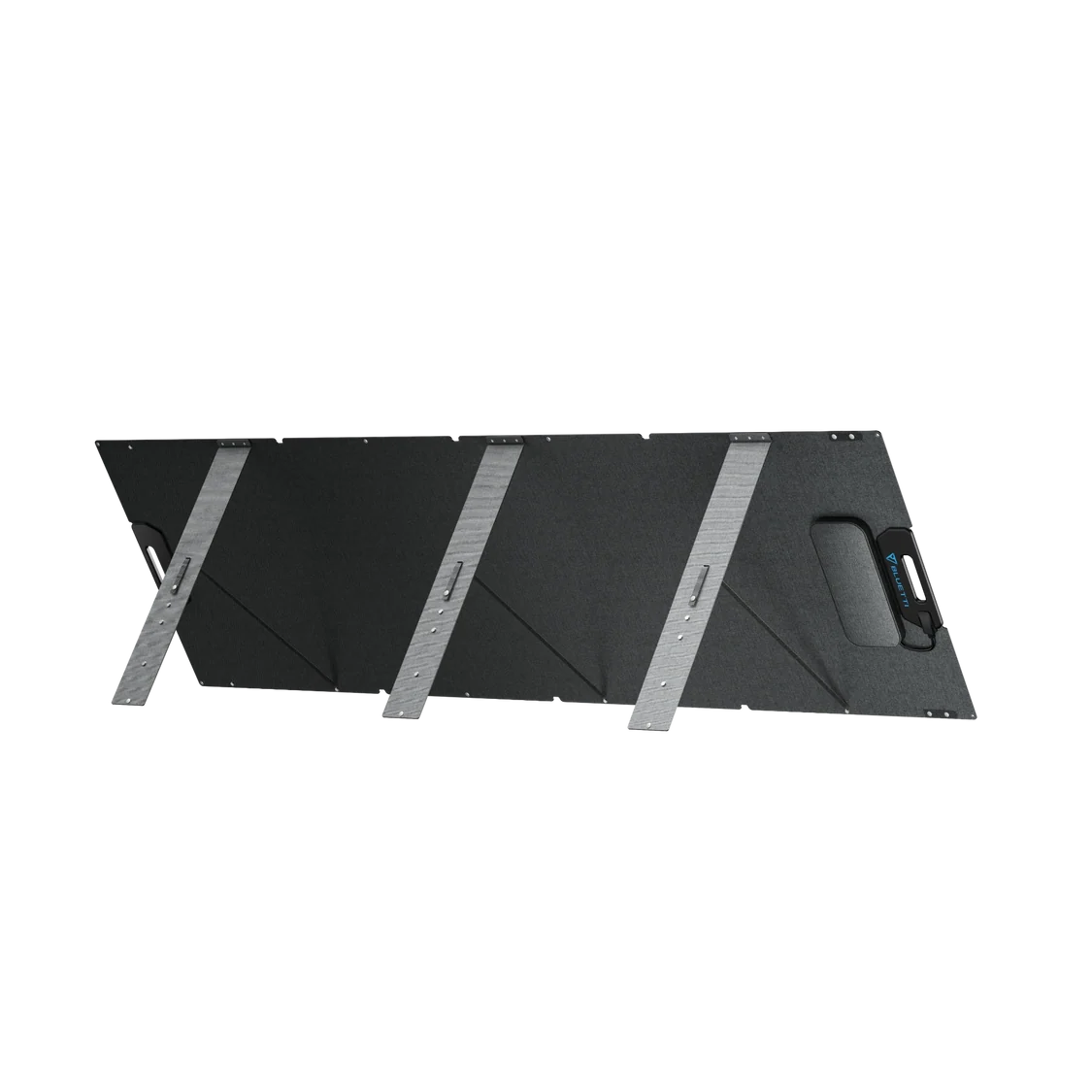
Unlike many folding solar panels that rely on snap-set systems forcing the legs into fixed angles like 15, 30, or 45 degrees, the PV350 utilizes a spring-loaded leg system. This allows users to adjust the panel's angle almost infinitely from flat against the ground up to 45 degrees simply by pulling back on the elastic strap. This feature is particularly valuable because solar efficiency depends heavily on hitting the sun at a perpendicular angle; as the sun moves across the sky, users can fine-tune the tilt without having to reconfigure the entire panel structure.
Bowman's Woods described this spring-loaded contraption as one of the coolest features of such a large panel, noting that it makes adjusting the angle relatively easy despite the cumbersome size. The ability to change the angle dynamically means users do not need to guess the optimal position at noon versus late afternoon; they can simply pull the leg back to match the sun's current elevation, maximizing energy harvest throughout the day without interrupting their workflow.
Each of the four panel sections has a 6-inch wide, flat, reinforced stand with this retractable nylon tape mechanism. While the system offers superior flexibility compared to snap-based competitors, it requires some physical effort to manipulate the springs, especially in windy conditions where keeping the legs stable can be challenging until they are fully locked into position by the tension of the strap.
Setup friction with integrated support stands
Despite the innovative leg design, Gear Diary reported that the integrated stands can be a bit of a handful during the first few setups. Users inevitably knock one of them over while trying to unfold the sections and position the legs, which creates frustration before the panel is even ready for use. This learning curve means new owners should expect a clumsy initial deployment where multiple attempts are needed to get all four stands upright simultaneously.
The barefoot nomad confirmed that knocking over a stand is almost a rite of passage during early use but noted that once users develop a rhythm, the process becomes smoother. They suggested unfolding the middle two stands first as a strategy to stabilize the base before attaching the outer panels one at a time. This tip helps mitigate the instability issues that plague beginners who attempt to deploy all four sections simultaneously.
Once deployed and adjusted, however, the stands hold the panels securely upright. The elastic strap attaching each stand to the panel body provides consistent tension, ensuring the angle remains fixed even if bumped lightly. This reliability after setup contrasts with the initial chaos of deployment, meaning the frustration is temporary but real enough to warrant caution during first-time use.
Real-world power output in varied conditions
StorageReview measured a peak output rate of 295 watts when testing the panel under optimal conditions with clear skies and the sun directly overhead. This figure falls slightly short of the rated 350-watt capacity, which is typical for real-world scenarios due to heat loss and minor inefficiencies in the monocrystalline silicon cells. The panel achieved this output while powering a remote data collection pack consisting of a Synology NAS, a Netgear PoE switch, and two cameras, demonstrating its ability to sustain continuous loads.
The performance remains robust even under sub-optimal conditions. When tested with shallow sun angles through tree cover, StorageReview recorded 38 watts of power output. This indicates that while heavy shade significantly reduces efficiency, the panel does not completely shut down like some series-connected systems might. The ability to generate partial power in dappled light makes it more versatile for camping under canopy than rigid glass panels.
This scenario showed that the panel can offset significant household loads during blackouts, providing enough surplus to keep essential appliances running while topping off the connected power station battery.
Cable length and connector compatibility
The PV350 includes an 118-inch (3-meter) cable with standard MC4 connectors, providing substantial distance between the panel and the portable power station. This length allows users to position the panel in direct sunlight while keeping the power station under shelter or inside a vehicle if rain threatens. The thick, high-quality cabling is typical of Bluetti's build standards, ensuring durability against abrasion from rough terrain.
Bowman's Woods noted that the cable quality is nice and substantial, avoiding the short, flimsy cords found on cheaper competitors. However, they suggested using zip ties to bundle the positive and negative leads together for easier management, as running two separate long cables can lead to tangling or accidental disconnection in windy conditions. This minor organizational tip helps maximize the utility of the generous cable length.
The panel is universally compatible with most portable power stations rated to handle 350 watts and up, provided they support MC4 inputs. It works seamlessly with Bluetti models like the AC200MAX, which can accept up to 900 watts of solar input, as well as other brands that use standard solar connectors. Users must verify their power station's open circuit voltage limit, as the PV350 outputs 46.5 volts, which exceeds the capacity of smaller units like the EB3A.
Water resistance limits to fair-weather use
The Bluetti PV350 carries an IP65 water-resistant rating, meaning it can withstand splashes from any direction but is not designed for submersion or heavy rain. StorageReview explicitly warned that the panel should not be exposed to heavy rain or submerged in water, limiting its use to fair-weather portable applications. This splashproof capability protects against sudden light showers or morning dew but does not justify leaving it unattended during storms.
Gear Diary emphasized that this model is splashproof but not waterproof or snowproof, advising users never to leave it out in the elements if precipitation is expected. The ETFE lamination and scratch-resistant surface are durable, but prolonged exposure to moisture can damage the internal wiring connections at the MC4 ports if water seeps into the housing over time.
This limitation means the PV350 is unsuitable for permanent roof mounting on RVs or homes where it would be exposed to year-round weather. It is strictly a portable solution that requires user intervention to bring indoors when conditions deteriorate. Users relying on this panel for emergency backup must have a plan to deploy and retrieve it quickly based on weather forecasts.
Thermal performance and operating limits
The official operating temperature range spans from -10°C to +65°C (14°F to 149°F), allowing functionality in extreme cold or heat. The barefoot nomad noted that while they hope never to use the panels at 149°F, the lower limit of 14°F is a critical boundary; below this temperature, effective charging becomes impossible, likely due to snow cover or battery chemistry limitations in the connected power station.
The best working temperature is listed as 25°C (77°F), which aligns with standard test conditions for solar panels. As temperatures rise above this point, efficiency drops due to thermal losses in the monocrystalline cells. Users in hot climates should expect reduced wattage output during midday heat spikes, even if irradiance is high.
The ETFE surface material helps dissipate some heat and provides scratch resistance, but it does not actively cool the panel. In direct summer sun, the back of the panel can become too hot to touch comfortably, indicating significant thermal energy that reduces electrical conversion efficiency. Proper airflow behind the deployed panels is essential to maintain peak performance.
Strengths
- +Compact folded dimensions (35.6 x 24.1 x 2.5 inches) with integrated handles allow for easy transport and storage.
- +Spring-loaded support legs enable infinite angle adjustment from flat to 45 degrees without snap-set limitations.
- +Long 118-inch MC4 cable provides significant distance between the panel and the power station.
Watch-outs
- −Integrated stands can be frustrating to deploy initially, with a tendency to collapse during setup.
- −Splashproof rating (IP65) prevents use in heavy rain or snow, limiting it to fair-weather portable applications only.
How it compares
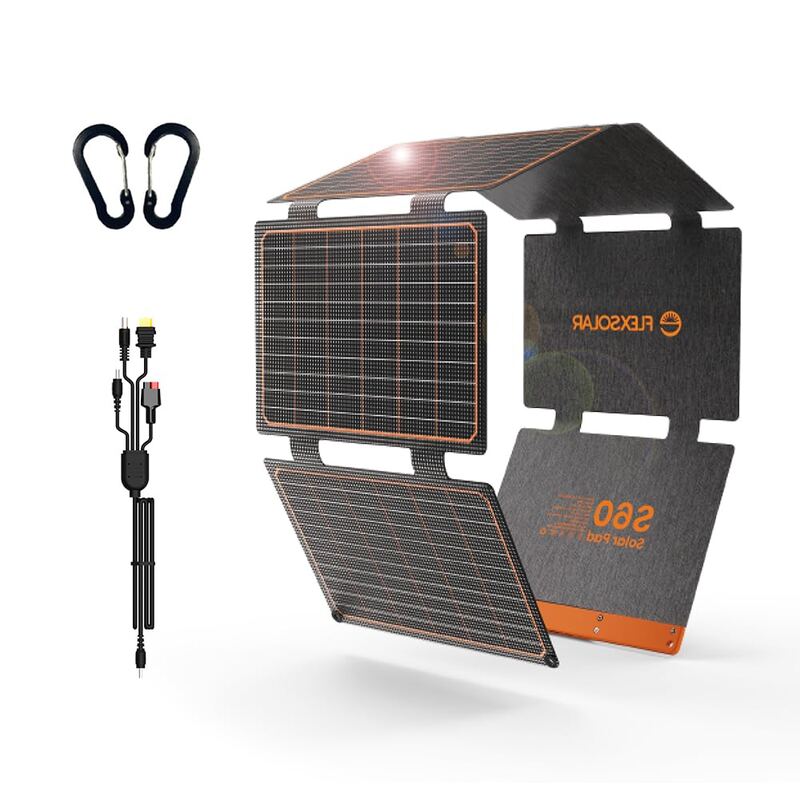
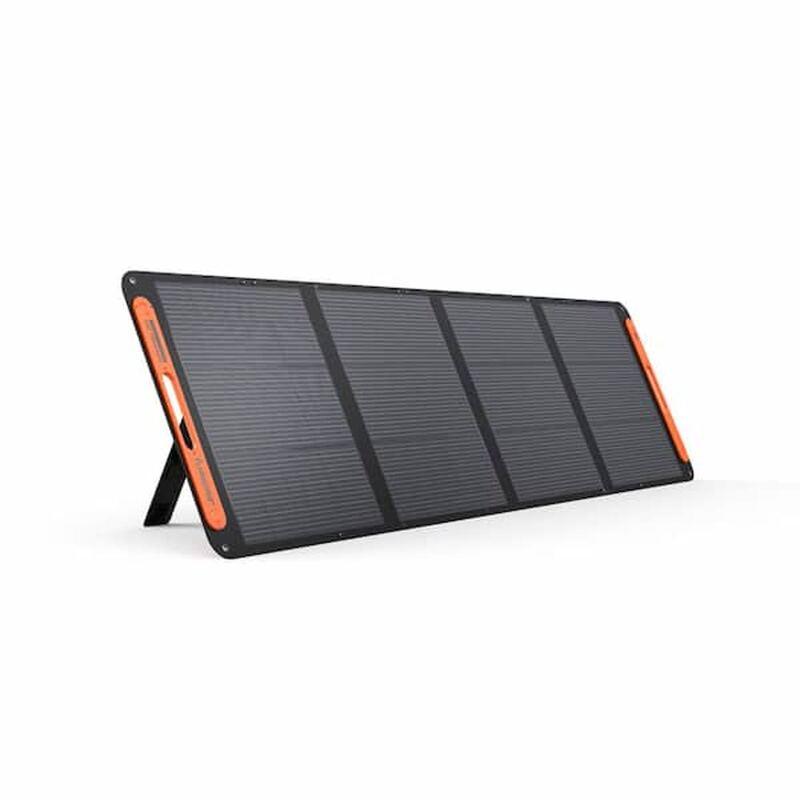
The Bluetti PV350 offers significantly higher wattage (350 W) than the FlexSolar 40W and 60W, making it suitable for charging larger power stations rather than just small electronics. Unlike the Jackery SolarSaga 200 which uses a proprietary DC8020 connector, the PV350 utilizes standard MC4 connectors for broader compatibility with third-party gear.
Rating sources
“The BLUETTI PV350 Solar Panel works well, it is portable, and it is quite easy to set up and operate.”
“this thing did very well um almost as good as two 200 watt panels and I think it actually outperformed when you shaded an area of the panel versus the glass panels that were in series”
Our 4.8 score is the average of the 2 scored reviews above; 2 more reviewed it without printing a score and are not in the average. Ratings marked * were derived from the reviewer’s written analysis or video transcript — the publisher didn’t print an explicit numeric score, so we inferred one from their own words. Click through to verify. More about methodology.