The 'Nifty Fifty' reputation is earned: the Canon EF 50mm f/1.8 STM puts excellent optics in a compact, affordable package. Photography Blog praised its sharpness and minimal chromatic aberration, and KenRockwell.com highlighted the value and compatibility across all Canon EOS cameras. The STM motor focuses quietly and smoothly, which suits video work, though the lack of hard infinity stops can complicate manual focusing. Beginners and enthusiasts after an entry-level fast prime are the fit; anyone who wants premium build quality should look elsewhere.
Full review
Metal mount replaces the old plastic one
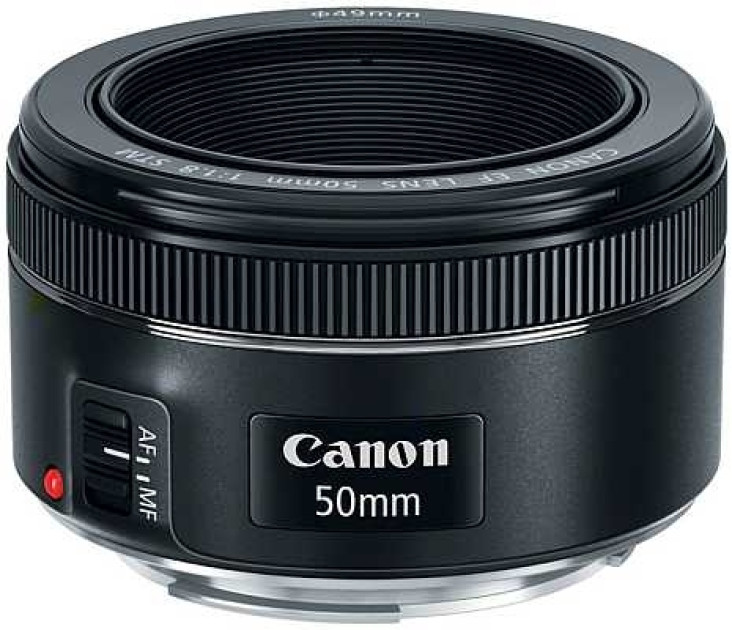
The Canon EF 50mm f/1.8 STM delivers a compact, lightweight form factor that weighs just 160g, making it one of the smallest prime lenses in Canon's lineup. According to Photography Blog, the lens measures only 40mm in length and features a metal mount that adds to its solid feel despite its all-plastic construction. Ken Rockwell notes that this lens replaces the previous 50mm f/1.8 II's plastic mount with a metal one, improving durability while maintaining the same small footprint. The lens accepts 49mm filters and includes a narrow focus ring with a ridged, rubberized grip band that facilitates fingertip operation. However, the focus ring's narrow design makes it difficult to set focus at infinity, as noted by Ken Rockwell, who also points out that the 49mm filter thread doesn't rotate during focus adjustments, which is beneficial for polarizer users. The lens lacks a lens hood in the box, a minor inconvenience that users must address separately to prevent flare.
Autofocus Performance
The Canon EF 50mm f/1.8 STM incorporates Canon's STM (Stepping Motor) autofocus system, which provides quiet, smooth operation for both stills and video. Digital Camera World reports that the autofocus system is much more accurate and reliable than that of the older Canon EF 50mm f/1.4 USM lens, and performs better in sharpness especially in the f/1.8-2.8 aperture range. It achieves 0.3 seconds to lock onto subjects on the Canon EOS 5Ds, with minimal hunting in both good and poor lighting conditions. The STM motor also allows for smooth autofocus transitions during video capture, which is a significant improvement over previous versions. However, the autofocus system does require power from the camera body, and the focus ring is a fly-by-wire type that lacks hard stops at either end, making manual focusing at infinity more challenging.
Optical Performance
Optical performance of the Canon EF 50mm f/1.8 STM is consistently praised across multiple reviews. The lens features a 6-element, 5-group optical design with Super Spectra Coating (SSC) that minimizes ghosting and flare. Photography Blog highlights that chromatic aberrations are impressively well controlled, with examples showing the worst-case scenario. The lens also includes a 7-bladed rounded diaphragm, which produces smoother bokeh compared to the previous 5-bladed design, eliminating pentagonal shapes in out-of-focus highlights. Digital Camera World notes that the lens outperforms the Canon EF 50mm f/1.4 USM in sharpness, particularly in the f/1.8-2.8 aperture range, and provides better edge/corner sharpness on APS-C bodies. The lens delivers excellent image quality at f/1.8, with minimal color fringing and distortion. However, light fall-off is noticeable at f/1.8, though distortion remains well-controlled.
Image Quality and Bokeh
Image quality from the Canon EF 50mm f/1.8 STM is consistently strong, with excellent sharpness across the frame and pleasing bokeh characteristics. Digital Camera World's verdict is that 'for the price you get an excellent all-purpose lens with solid optical quality, pleasing bokeh, fast autofocus and more' and that 'it's so good that in pretty much every respect except maximum aperture, it's better than the now-outdated 50mm f/1.4.' The 7-bladed rounded diaphragm creates smooth, creamy bokeh that enhances subject separation. Ken Rockwell's sample images show that the lens performs well in various lighting conditions, including low-light scenarios where the f/1.8 aperture allows for faster shutter speeds and better background blur. The lens also delivers consistent results on both full-frame and APS-C cameras, with the 50mm focal length providing a natural perspective on full-frame and a short-telephoto equivalent on APS-C bodies. However, the lens does not include a focus distance scale, which is a feature present on the Canon EF 50mm f/1.4 USM.
Balances well on a full-frame 5D Mark III
In practical use, the Canon EF 50mm f/1.8 STM proves to be a versatile and reliable lens for a wide range of photography applications. The lens performs well in portrait photography, where the f/1.8 aperture allows for shallow depth of field and pleasing background blur. Digital Camera World's review notes that the lens is particularly effective for portraits, street photography, and casual video work, thanks to its quiet autofocus and portability. The lens balances well on full-frame cameras like the EOS 5D Mk III and provides a natural perspective that works well for everyday reportage and environmental portraits. Ken Rockwell's sample images include a variety of scenarios, from jewelry photography to landscape shots, demonstrating consistent performance across different subjects and lighting conditions. The lens is also suitable for low-light photography, where its fast aperture allows for handheld shooting without a tripod. However, the lens's narrow focus ring can make precise manual focusing challenging, and the lack of a lens hood in the box means users must purchase one separately to avoid flare issues.
Autofocus takes about 0.3 seconds to lock
Despite its many strengths, the Canon EF 50mm f/1.8 STM has several notable drawbacks. The lens lacks a focus distance scale, which is present on the Canon EF 50mm f/1.4 USM, and the narrow focus ring can make manual focusing at infinity difficult. The autofocus system, while improved, still takes about 0.3 seconds to lock onto subjects, which may be too slow for action photography. Additionally, the lens does not include a lens hood in the box, a minor inconvenience that users must address separately. The build quality, while solid, is still primarily plastic, which may not satisfy users seeking a more premium feel. Photography Blog notes that the lens doesn't ship with a lens hood or protective bag, and the focus ring is very narrow, making it difficult to set focus at infinity. The lens also has a relatively narrow minimum focusing distance of 0.35m (1.15 ft), which limits macro capabilities compared to dedicated macro lenses. The lack of image stabilization is also a limitation, especially for handheld shooting in low light.
A no-brainer starter lens for Canon shooters
The Canon EF 50mm f/1.8 STM is ideal for beginners and intermediate photographers who are looking for an affordable, versatile prime lens. It's particularly well-suited for portrait photography, low-light situations, and general-purpose shooting due to its fast f/1.8 aperture and natural field of view. The lens is also excellent for street photography and casual video work, thanks to its quiet autofocus and portability. According to Digital Camera World, the lens is a 'no-brainer for Canon shooters' and 'an affordable marvel that any Canon photographer should own.' The lens works well on both full-frame and APS-C cameras, making it a versatile choice for photographers with different camera systems. However, it's not ideal for users who require a dedicated macro lens or those who need a faster maximum aperture, as it lacks an f/1.4 or faster aperture option. The lens is also not recommended for professional photographers who require a more robust build or specific features like image stabilization or a focus distance scale.
$125 versus $400 for the f/1.4 USM
The Canon EF 50mm f/1.8 STM offers exceptional value for its price point, making it one of the most popular lenses in Canon's lineup. The same Digital Camera World verdict rates it 'so good that in pretty much every respect except maximum aperture, it's better than the now-outdated 50mm f/1.4.' The lens is significantly more affordable than the Canon EF 50mm f/1.4 USM, which is priced at around $400, while the STM version is available for approximately $125. Digital Camera World's review emphasizes that the lens is 'an affordable marvel that any Canon photographer should own' and that it 'goes large in value for money and still manages to deliver some great quality.' The lens also provides better performance than the older 50mm f/1.8 II, which had a noisy autofocus system and a 5-blade diaphragm that produced harsh bokeh. The STM version's improved autofocus, build quality, and aperture design make it a worthwhile upgrade for photographers who are looking for a fast, affordable prime lens.
Strengths
- +Bright f/1.8 aperture allows for shallow depth of field and better low-light performance
- +Quiet STM stepping motor enables smooth and silent autofocus during video recording
- +Compact and lightweight design at only 159g with metal mount for improved durability
- +Good sharpness and minimal chromatic aberration, especially at wider apertures
Watch-outs
- −No hard stops at infinity focus, making manual focusing challenging
- −Light fall-off at f/1.8 in corners, though distortion is well-controlled
- −All-plastic construction feels less premium despite metal mount addition
How it compares
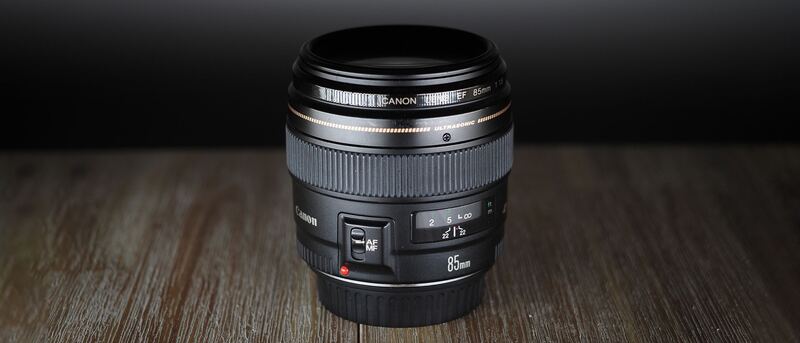
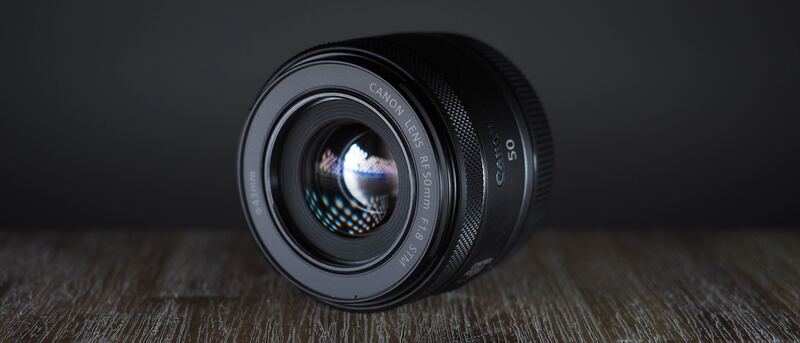
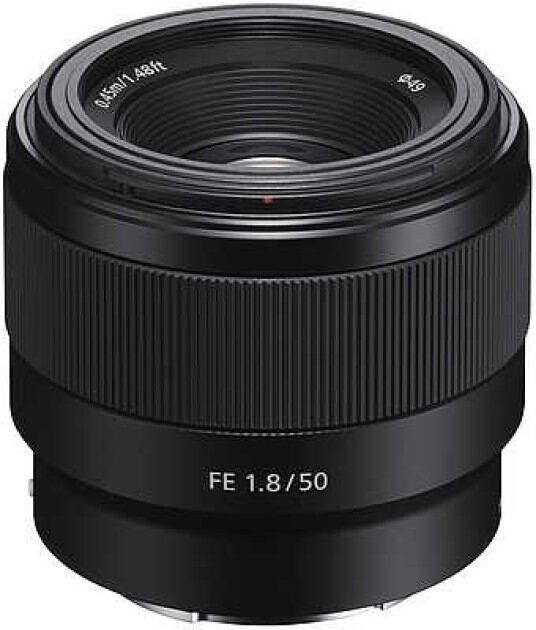
The Canon EF 50mm f/1.8 STM surpasses the Sony FE 50mm f/1.8 in terms of autofocus quietness and manual focus capability, but it's not as sharp as the Canon RF50mm F1.8 STM. Compared to the Canon EF 85mm f/1.8 USM, it lacks the telephoto reach and professional build quality, though it's more affordable and offers better low-light performance. It's the most balanced option for beginners but doesn't match the premium features of the RF50mm F1.8 STM or the telephoto capabilities of the 85mm lens.
Rating sources
“Canon 50mm f/1.8 STM (Full-frame, 35mm EOS, 1.3x and APS-C coverage, 49mm filters, 1.1'/0.35m close-focus, 5.6 oz./159g, about $125, or about $80 used if you know How to Win at eBay.”
Our 4.3 score is the average of these published ratings. Ratings marked * were derived from the reviewer’s written analysis or video transcript — the publisher didn’t print an explicit numeric score, so we inferred one from their own words. Click through to verify. More about methodology.