Digital Camera World and Ken Rockwell both like the Canon EF 85mm f/1.8 USM for budget portrait and low-light work, praising the compact design, fast autofocus, and sharpness beyond what the price suggests. There is no weather-sealing and no hood in the box, yet reviewers still rate the value highly next to pricier options like the f/1.2L II. Stopped down it performs well; wide open, sharpness is only modest. Enthusiasts and beginners who want an affordable telephoto prime that covers a lot of ground are the fit, while professionals may prefer the tougher L-series options.
Full review
425 grams, nearly half the f/1.2L's weight
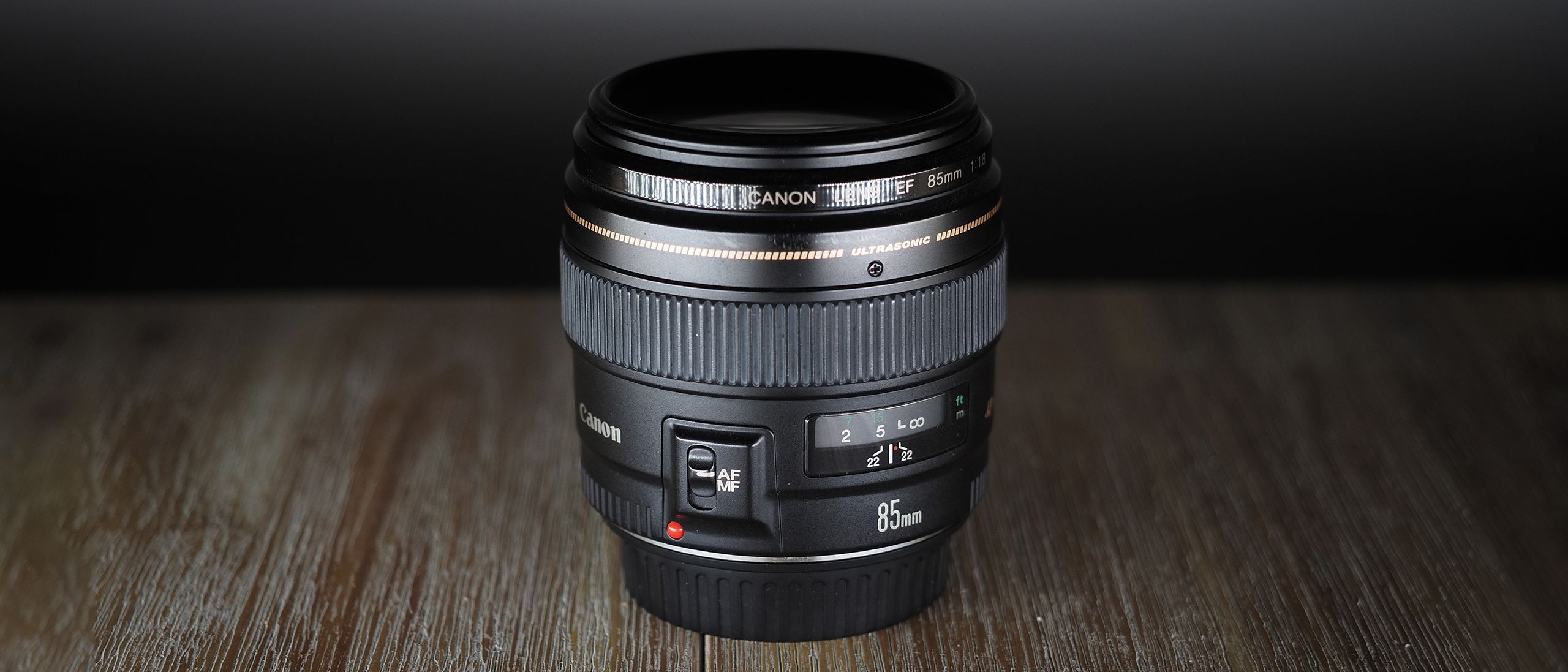
The Canon EF 85mm f/1.8 USM maintains a compact and lightweight profile that makes it exceptionally portable for a telephoto prime lens. Weighing just 425 grams (15 ounces), this lens is significantly lighter than many of its competitors, including the Canon EF 85mm f/1.2L II USM, which weighs 765g. The lens measures 72mm in length and 75mm in diameter, making it easy to slip into a camera bag without adding bulk. According to Ken Rockwell, the lens features a ring-type ultrasonic motor (USM) that provides fast, whisper-quiet autofocus, and the manual focus ring is easily accessible at any time, a feature he praises as superior to many modern alternatives. The build quality is solid, with a matte black finish that resists fingerprints and shows minimal wear over time. However, the lens lacks weather sealing, which may be a concern for outdoor photographers. The filter size is 58mm, matching several other Canon lenses, and the hood is sold separately, adding to the overall cost for those who want full protection.
Autofocus and Handling
Autofocus performance on the Canon EF 85mm f/1.8 USM is fast and accurate, with Ken Rockwell noting that it focuses faster than his own eyes can track. The lens uses a ring-type USM motor, which delivers quiet operation and precise focusing, particularly useful in environments where noise could be disruptive. The autofocus system consistently achieved sharp focus across the frame, even when shooting at f/1.8. However, some users have noted that the lens may slightly over-focus at f/1.8 on certain camera models, such as the Canon EOS 5D Mark II, where adjustments to the focus micrometer were necessary to achieve accurate results. The manual override is seamless, allowing photographers to fine-tune focus without switching modes, a feature that sets it apart from some competitors like the Nikon 85mm f/1.8 AF-D, which requires a manual switch to toggle focus modes. The lens also supports full-time manual focus, which is particularly valuable for portrait and low-light photography where precise control is essential.
Image Quality and Sharpness
Image quality from the Canon EF 85mm f/1.8 USM is notably good, especially when stopped down to f/2.8 or smaller. Digital Camera World reported that while the lens is not exceptionally sharp wide open, it delivers sufficient detail for portrait photography, particularly in the eyes and facial features. The lens uses a 9-element, 7-group optical design with Super Spectra coating to minimize flare and ghosting. According to The Digital Picture, the lens is sharp wide open but exhibits some vignetting on full-frame bodies, particularly at f/1.8. However, this issue is less pronounced when stopped down to f/2.8 or f/4, where sharpness improves significantly. The lens produces excellent bokeh with an 8-blade diaphragm that creates a pleasing background blur. The bokeh quality is described as soft yet natural, with minimal color fringing. Expert Photography's Gabor Holtzer found 'basically no distortion' and reported that the lens 'retains contrast when the sun is in the frame,' but also recorded 'a visible level of chromatic aberration, both lateral and longitudinal' that shows up as purple and green fringing on contrasty edges. The lens also shows excellent performance in low-light conditions, where its f/1.8 aperture allows for faster shutter speeds and reduced camera shake.
Bokeh and Background Blur
The Canon EF 85mm f/1.8 USM excels in creating beautiful background blur, or bokeh, which is one of its strongest selling points. The 8-blade diaphragm produces a smooth and natural-looking out-of-focus effect, though it tends to create an octagonal shape at smaller apertures, which some photographers find less pleasing than the circular bokeh of higher-end lenses. The bokeh quality is particularly impressive at f/1.8, where the background becomes beautifully blurred and the subject remains sharply defined. The lens is ideal for portraits, where the shallow depth of field helps isolate the subject from the background. Digital Camera World noted that the bokeh is very pleasing and contributes significantly to the lens's appeal for portrait photography. The lens also performs well in low-light situations, where its wide aperture allows for creative lighting control and artistic blur effects. However, some users have noted that the bokeh can appear slightly harsh at very wide apertures, particularly when shooting against bright backgrounds.
Performance in Low Light
The Canon EF 85mm f/1.8 USM is well-suited for low-light photography, thanks to its wide f/1.8 aperture. This makes it an excellent choice for indoor events, church photography, or any scenario where lighting is limited. The lens allows for faster shutter speeds, reducing camera shake and enabling sharper images in dim conditions. According to The Digital Picture, the lens performs exceptionally well in low-light situations, where its aperture enables photographers to maintain proper exposure without relying heavily on high ISO settings. The autofocus system remains accurate even in low-light conditions, and the lens's ability to gather light makes it a favorite for indoor and event photography. However, some users have reported that the lens can struggle with backlit subjects or high-contrast scenes, where the wide aperture may lead to overexposure in highlights. Despite this, the lens's performance in low-light scenarios remains one of its strongest attributes, particularly for portrait and event photographers who often work in challenging lighting conditions.
Vignettes at f/1.8, focuses no closer than 0.85m
Despite its many strengths, the Canon EF 85mm f/1.8 USM does have some notable drawbacks. The most significant limitation is its fixed focal length, which restricts versatility compared to zoom lenses. This makes it less ideal for situations where photographers need to quickly adjust their composition without changing lenses. Additionally, the lens lacks weather sealing, which can be a concern for outdoor photographers or those working in challenging environments. The filter size of 58mm is standard, but the lens hood is sold separately, adding to the overall cost. Some users have also reported minor issues with vignetting at f/1.8, particularly on full-frame cameras, though this is less of a problem when stopped down. The lens also has a relatively close focusing distance of 0.85 meters, which may limit its usefulness for certain types of portraits or macro work. Furthermore, while the lens is fast and sharp, it does not match the performance of higher-end Canon lenses like the EF 85mm f/1.2L II USM, which offer better sharpness, more advanced coatings, and superior build quality.
Suited to portraits and events, not macro or wildlife
The Canon EF 85mm f/1.8 USM is best suited for photographers who prioritize portability, image quality, and cost-effectiveness in portrait and low-light photography. It is particularly ideal for amateur and semi-professional photographers who want a high-performing lens without breaking the bank. According to Expert Photography, the lens is excellent for portrait work, especially when shooting at f/1.8, where the shallow depth of field creates a beautiful background blur. The lens is also well-suited for indoor and event photography, where its wide aperture allows for faster shutter speeds and better low-light performance. However, it is not recommended for photographers who require a versatile zoom lens or those who work in harsh outdoor environments where weather sealing is essential. The lens is also not ideal for macro or wildlife photography, where a longer focal length or greater versatility is required. For those seeking a budget-friendly, high-quality telephoto prime lens, the Canon EF 85mm f/1.8 USM is a strong contender.
A fifth of the f/1.2L's price
When compared to other lenses in its category, the Canon EF 85mm f/1.8 USM stands out for its balance of performance, portability, and affordability. It is significantly cheaper than the Canon EF 85mm f/1.2L II USM, which costs around five times as much but offers better sharpness and build quality. The lens also outperforms many budget alternatives in terms of optical quality, though it lacks the advanced features of higher-end models. The Nikon 85mm f/1.8 AF-D and Nikon 85mm f/1.4 AF-D are often compared to the Canon EF 85mm f/1.8 USM, but Ken Rockwell noted that the Canon lens is easier to use, with better manual focus access and faster autofocus. The lens is also more compact and lighter than many of its competitors, making it a preferred choice for photographers who value portability. However, it does not match the performance of premium lenses like the Zeiss 85mm f/1.4 ZE Planar T* or the Sigma 85mm f/1.4 EX DG HSM, which offer superior sharpness and bokeh. For photographers seeking a budget-friendly option that still delivers excellent performance, the Canon EF 85mm f/1.8 USM is a strong choice.
Strengths
- +Small, compact build and lightweight at 425g, making it highly portable for travel and everyday use
- +Good overall image quality with sufficient sharpness for portraiture, especially when stopped down
- +Fast f/1.8 aperture allows for decent low-light performance and shallow depth of field effects
- +Quick and quiet ultrasonic autofocus system with full-time manual override capability
Watch-outs
- −No weather-seals, making it less durable in harsh conditions
- −Hood sold separately, adding to the overall cost
- −Edge-sharpness could be better, particularly when shooting wide-open
How it compares
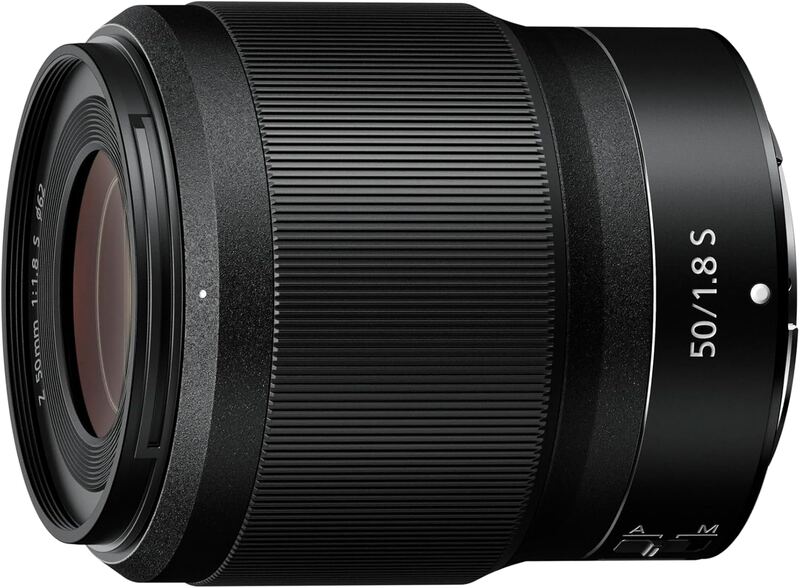
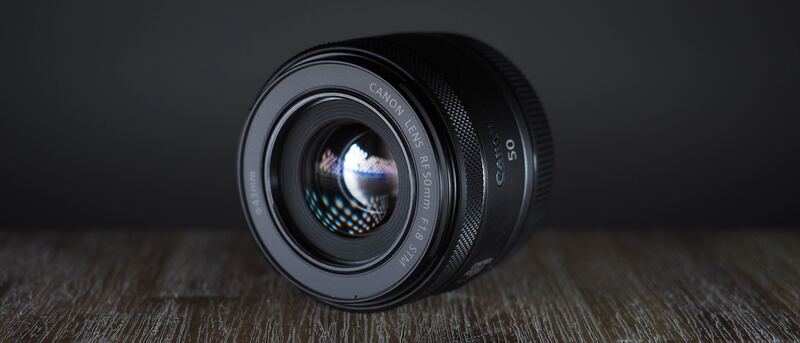
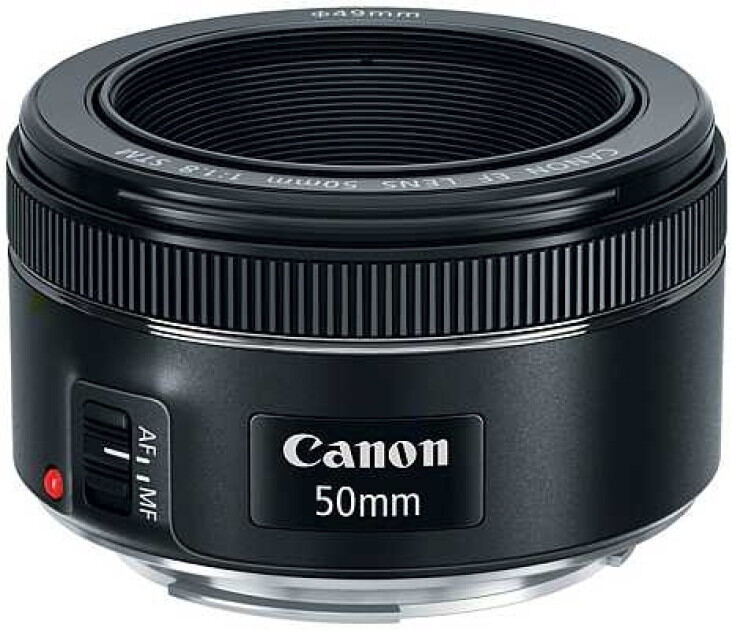
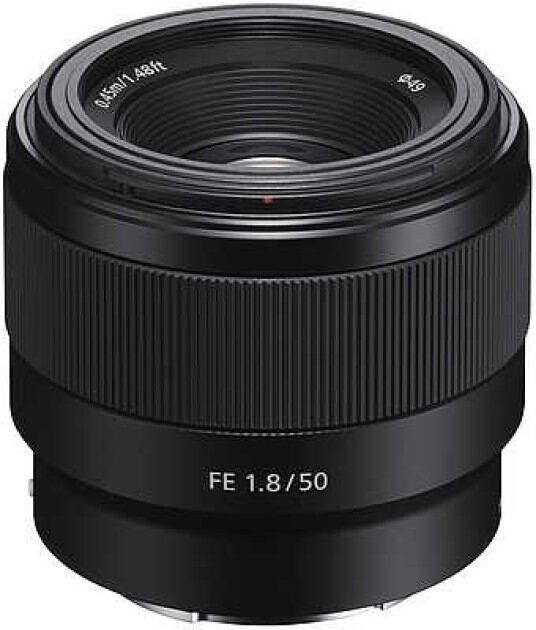
The Canon EF 85mm f/1.8 USM provides the telephoto reach and portability that the Sony FE 50mm f/1.8 lacks, but it's significantly heavier and more expensive than the Canon EF 50mm f/1.8 STM. Compared to the Canon RF50mm F1.8 STM, it offers less advanced optical design and doesn't include the aspherical element, though it's more versatile for portrait work. It's the most versatile of the group for telephoto applications but lacks the image stabilization and weather-sealing found in higher-end L-series lenses.
Rating sources
Our 4.6 score is the average of the 2 scored reviews above; 2 more reviewed it without printing a score and are not in the average. More about methodology.