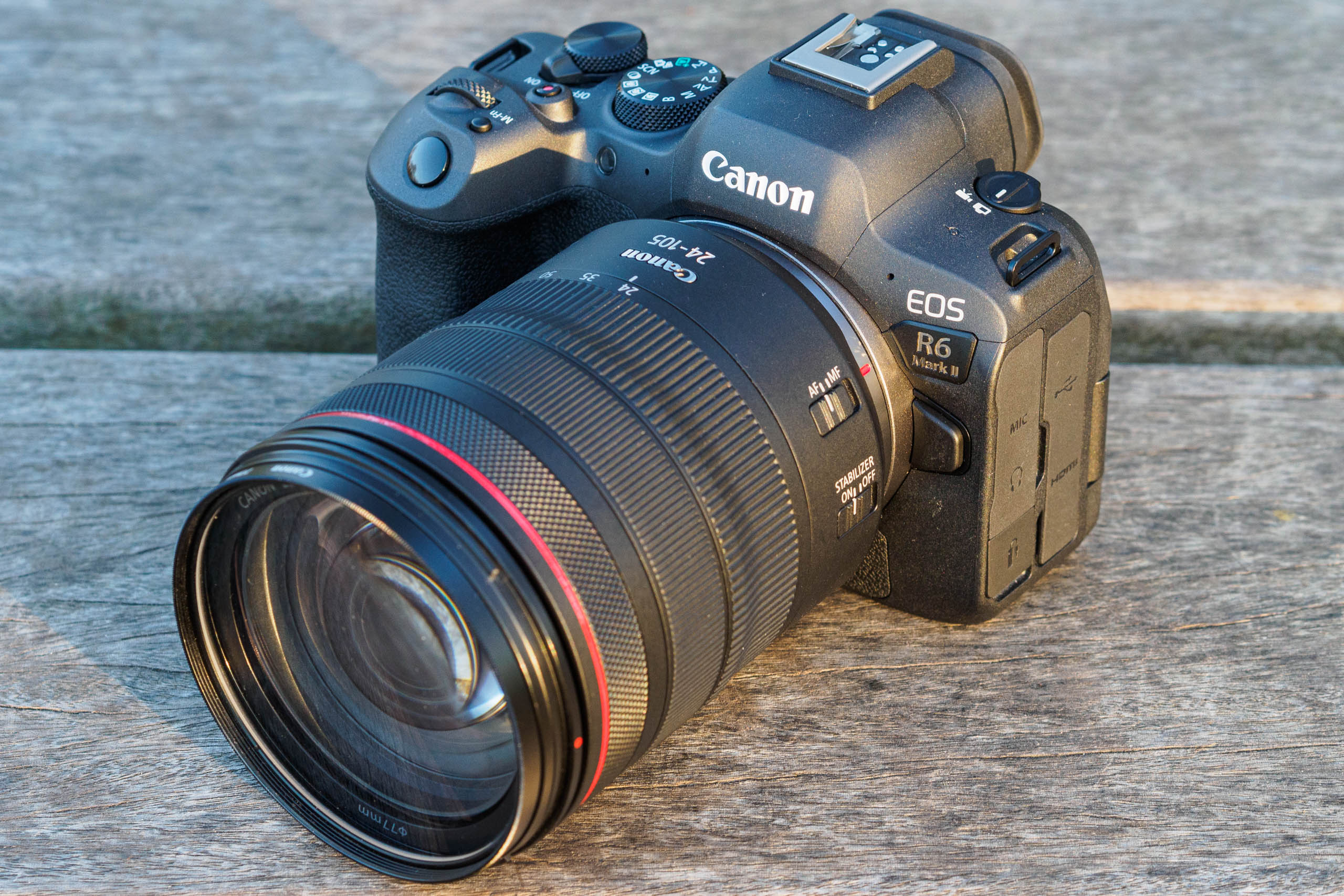
The Canon EOS R6 Mark II is a 24.2MP full-frame mirrorless hybrid camera that improves on its predecessor with higher resolution, faster burst shooting (up to 40fps electronic), and significantly better video thermal management. Reviewers praised its excellent image quality, fast Dual Pixel AF II with AI subject tracking, improved ergonomics, and versatile stills-and-video performance. The Mark II removed the original R6's problematic recording limits while maintaining strong low-light capability and reliable IBIS up to 8 stops. It is widely considered one of the best all-around hybrid cameras at its price point, ideal for photographers who shoot both photos and video but may not suit professional videographers needing unlimited recording times or C-Log 3 support.
Full review
Improved grip and D-pad over the original R6
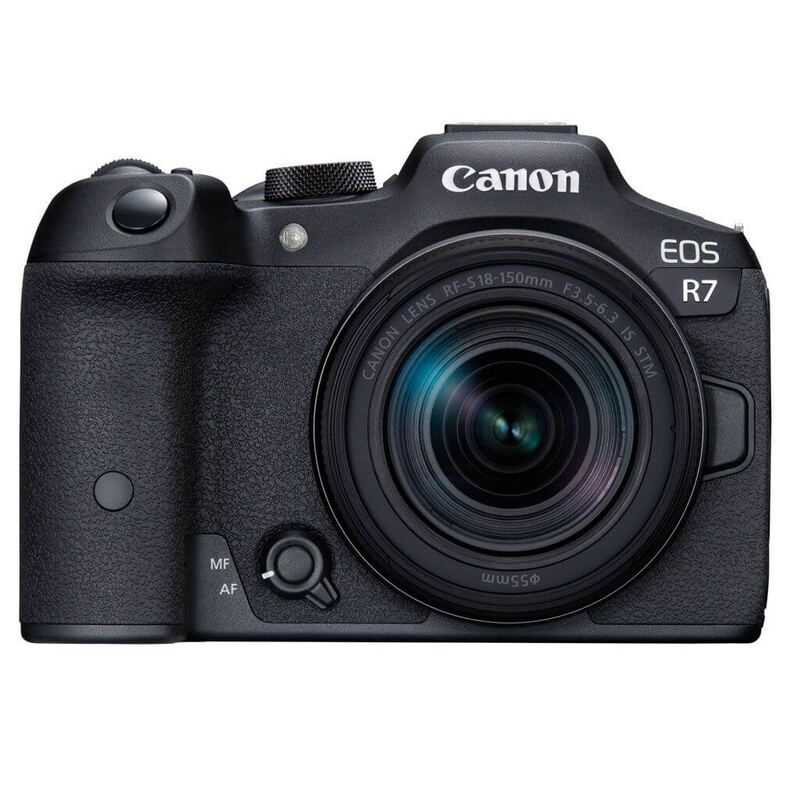
The Canon EOS R6 Mark II refines its predecessor's design with improved texturized rubber grip and more natural D-pad placement that reviewers praised for manual focus point selection. The camera maintains a robust, weather-sealed magnesium-alloy body at 680g (with memory cards), feeling well-balanced even with heavier RF lenses.
Autofocus Performance
Canon's Dual Pixel CMOS AF II system in the R6 Mark II delivers impressive tracking performance that rivals flagship bodies. The autofocus covers approximately 100% of the frame and features AI-trained subject detection for humans, animals (dogs, cats, birds, horses), and vehicles.
Image Quality and Sensor Performance
The R6 Mark II's 24.2MP full-frame CMOS sensor—derived from Canon's professional 1D X Mark III sports body—delivers excellent image quality across both JPEG and RAW formats.
Video Capabilities and Limitations
The R6 Mark II records oversampled 6K UHD 4K at up to 60p (no crop) and Full HD at up to 180fps for slow motion, with 10-bit 4:2:2 internal recording in C-Log or HDR PQ. A major improvement over the original R6 is the removal of the 30-minute recording limit—there's no artificial time cap on video capture.
Battery Life and Power Management
The R6 Mark II features Canon's improved LP-E6NH battery, delivering approximately 760 shots per charge using the LCD (CIPA rating) or around 510 shots via the EVF—a significant improvement over the original R6's ~380-shot rating.
Thermal throttling after 30-45 minutes of 4K60
The R6 Mark II is genuinely improved over the original in nearly every way, but some limitations remain: thermal throttling during extended 4K/60p recording in warm conditions (typically after ~30-45 minutes), no C-Log 3 support for color grading flexibility, and IBIS wobble with certain wide-angle lenses.
Built as an all-around wedding and event camera
The Canon EOS R6 Mark II is best suited for hybrid photographers and videographers who need a single versatile camera. It excels as an all-around body for weddings, portraits, travel, events, and action photography where fast AF and high burst rates matter.
33MP body compared against the similar a7 IV
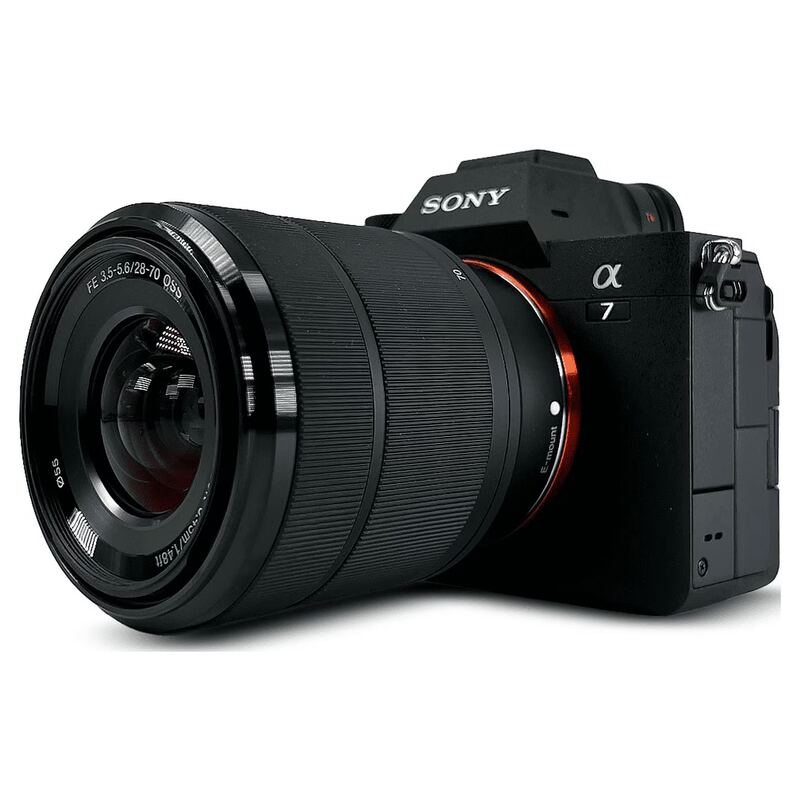
Against its direct rivals: the Sony α7 IV offers comparable 33MP resolution and strong video (S-Cinetone, 4K/60p) with slightly better dynamic range but less intuitive ergonomics. The Nikon Z6 III provides excellent AF performance and improved thermal management in a similar price bracket. Fujifilm's X-H2 (APS-C) delivers 40MP and great color science but lacks full-frame low-light advantage.
Strengths
- +24.2MP full-frame CMOS sensor derived from the 1D X Mark III for excellent image quality
- +Dual Pixel AF II with AI-trained subject tracking (humans, animals, vehicles) and near-100% AF coverage
- +In-body stabilization rated at up to 8 stops of correction when paired with compatible lenses
- +Up to 40 fps electronic shutter or 12 fps mechanical shutter for fast action capture
- +Oversampled 6K UHD 4K video recording at up to 60p with 10-bit 4:2:2 internal recording and no time limit
Watch-outs
- −Can still overheat during extended 4K/60p or high-bitrate video recording in warm environments
- −No C-Log 3 support, limiting color grading flexibility for some filmmakers
- −IBIS wobble reported with certain wide-angle lenses (e.g., RF 15-35mm f/2.8)
How it compares
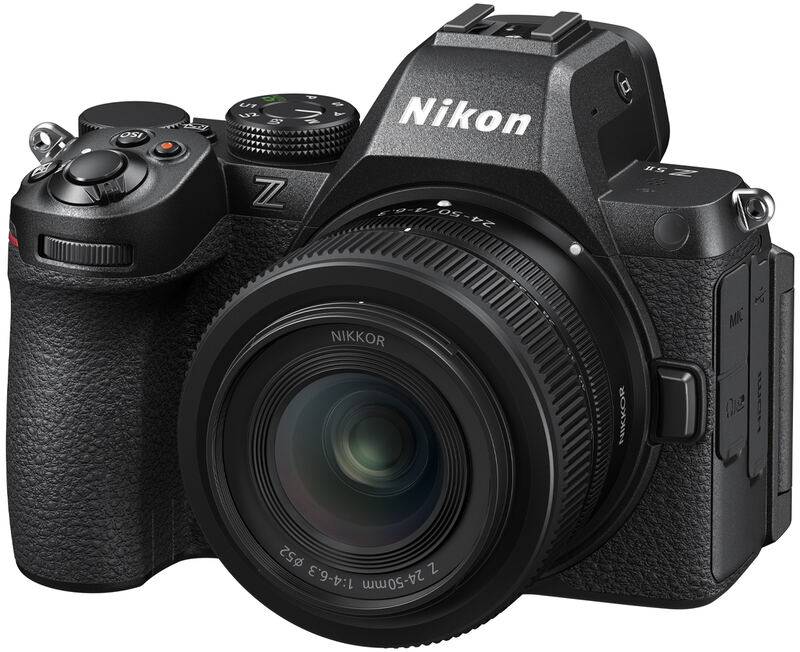
The Canon EOS R6 Mark II offers better image quality and in-body stabilization than the Sony α7 IV, but unlike the Nikon Z5II, it lacks dual card slots and has a shorter battery life. Compared to the Fujifilm X-S20, it provides more advanced video features and higher frame rates, though the X-S20 has better vlog mode and 4K/60 4:2:2 recording.
Rating sources
Our 4.3 score is the average of these published ratings. More about methodology.